- New!
- Band
- Percussion
- Orchestra
- Brass Band
- Jazz
- Chamber
- Voice
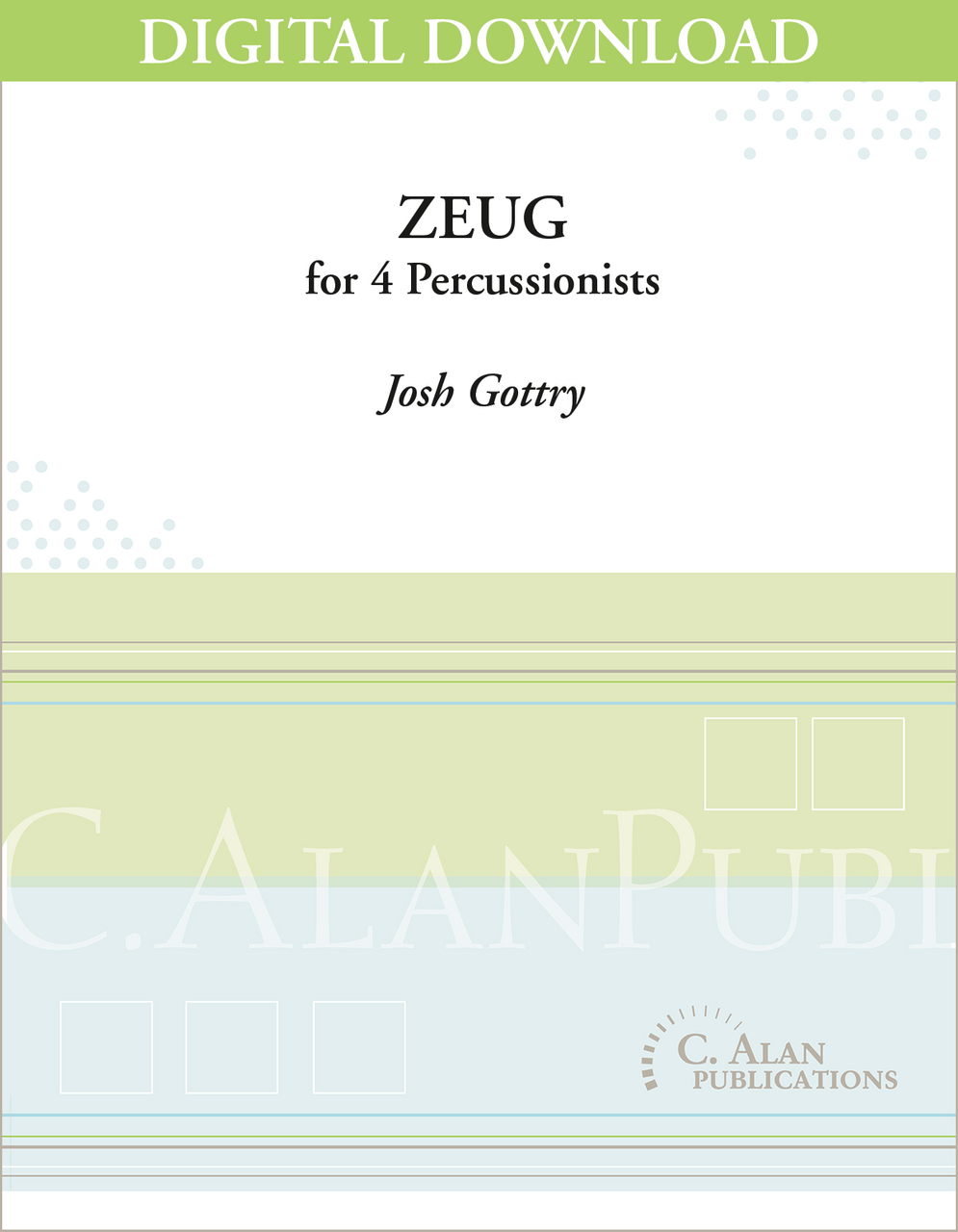
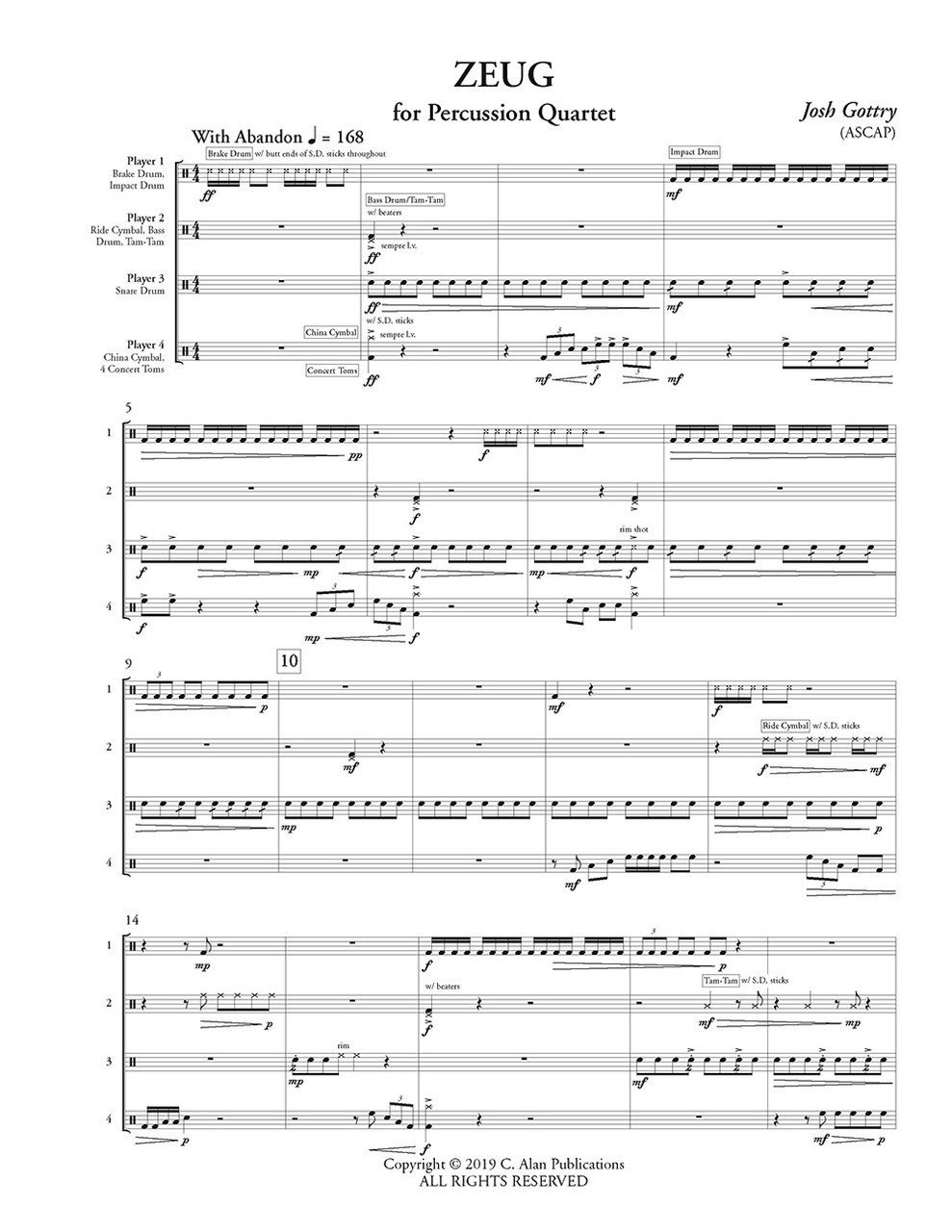
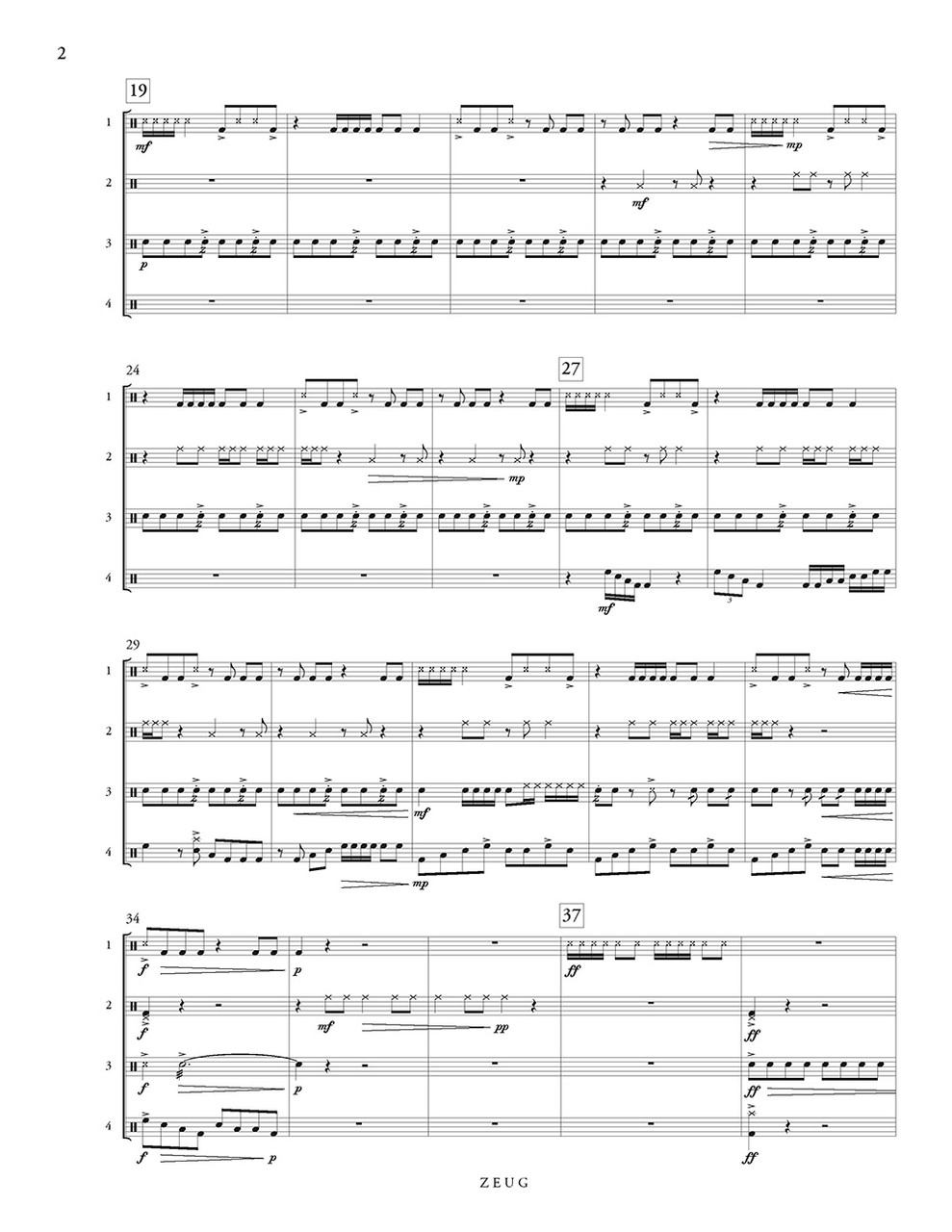
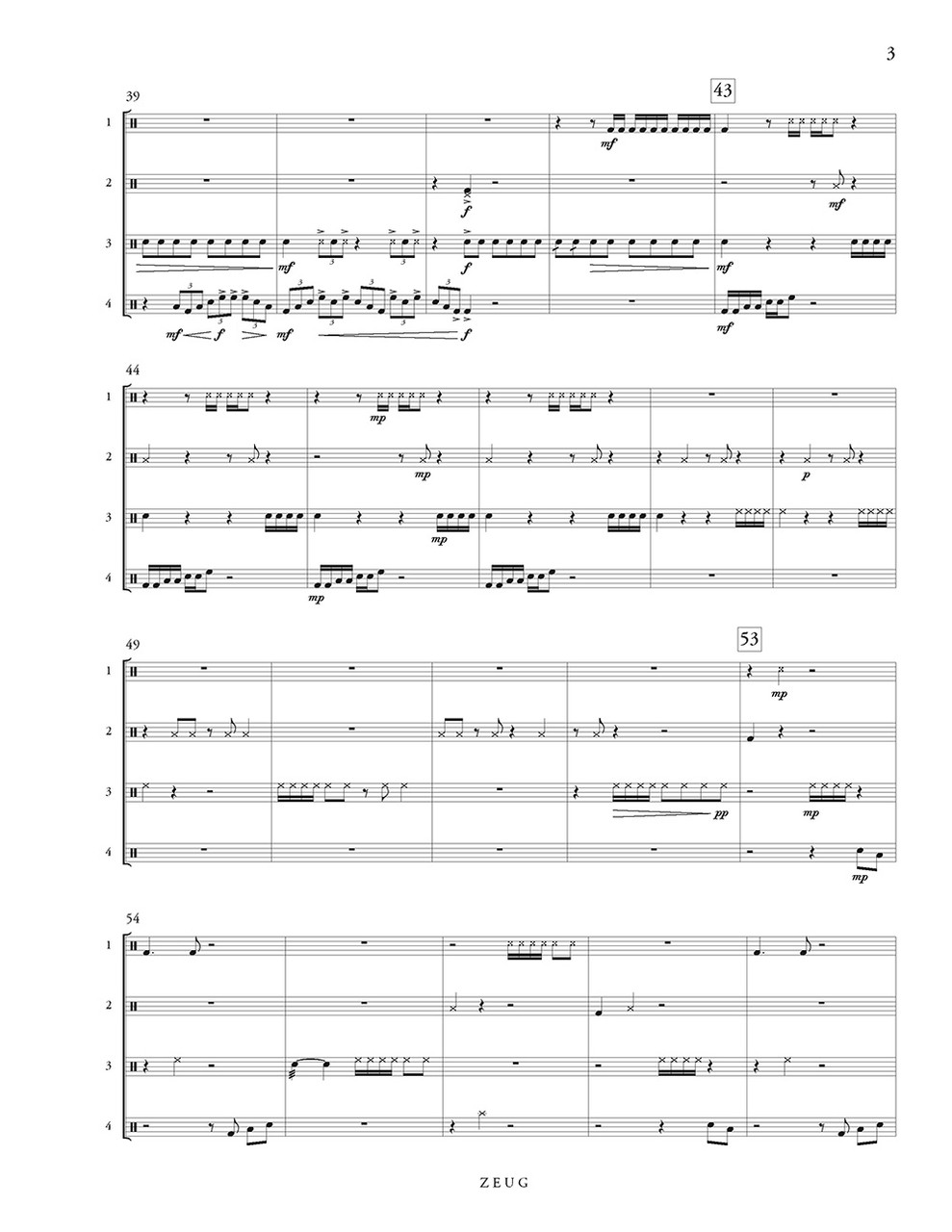
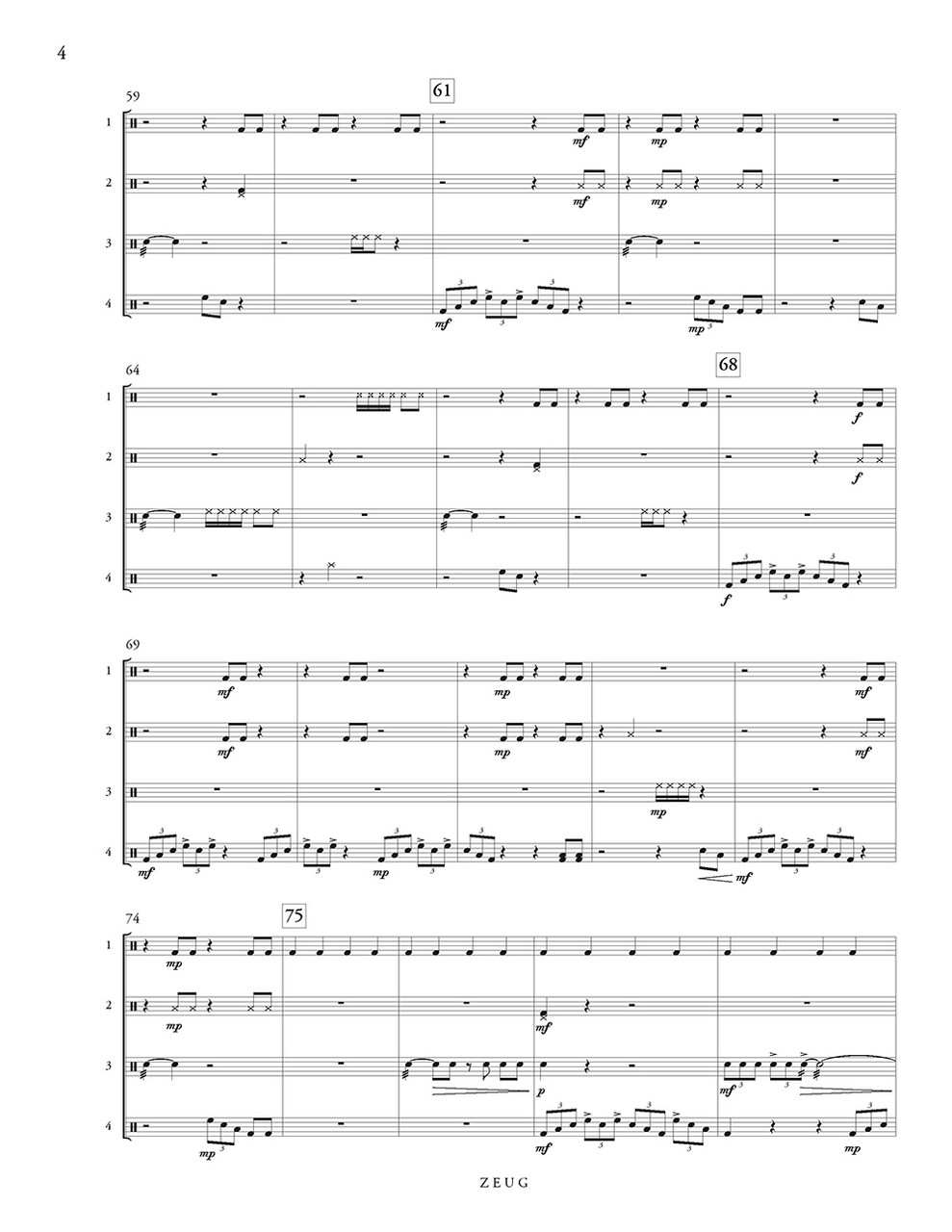
Zeug - Josh Gottry [DIGITAL]
Genre: Percussion Ensemble
# of Players: 4
Level: Medium | Duration: 3:40
Publisher: C. Alan Publications | Copyright: 2019
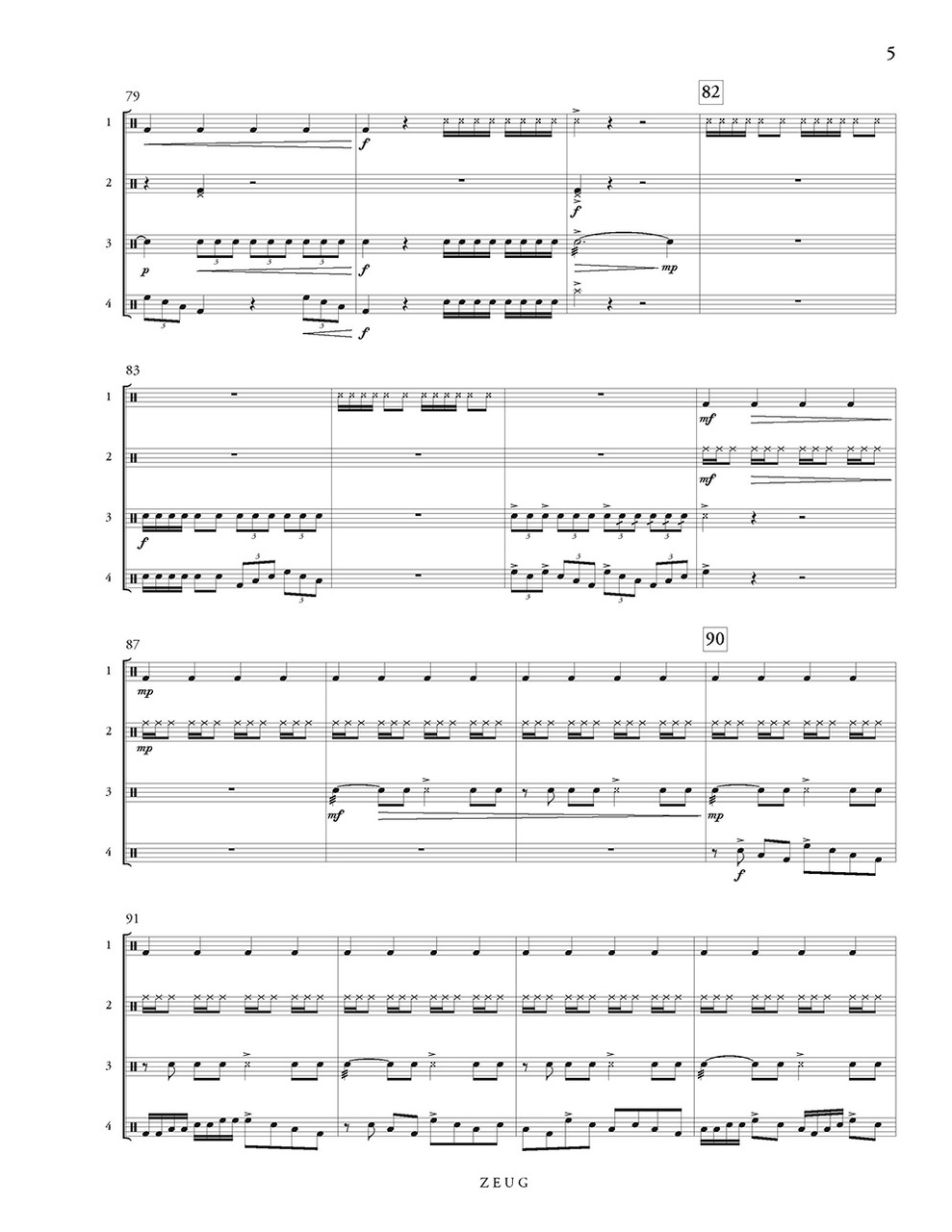
Download mp3 | Click on images to left for score sample

Rating:
Price:
$29.00
Item #:
26380D
-
Notes & Instrumentation
Zeug is a German word loosely translated into English as "stuff." The collection of instruments required - brake drum, impact drum, ride and china cymbal, concert bass drum, tam-tam, snare drum, and four concert toms - suitably fit into the category of typical percussion, without being able to be further categorized into a single percussion family such as drums, cymbals, accessories, etc.
Genre: Percussion Ensemble | # of Players: 4
Level: Medium | Duration: 3:40
Instrumentation
Player 1: Brake Drum, Impact Drum (or Kick Drum laid flat)
Player 2: Ride Cymbal, Bass Drum, Tam-Tam
Player 3: Snare Drum
Player 4: China Cymbal, 4 Concert Toms
Program Notes
The title of this percussion quartet, Zeug, is a German word loosely translated into English as "stuff." The collection of instruments required – brake drum, impact drum, ride and china cymbal, concert bass drum, tam-tam, snare drum, and four concert toms – suitably fit into the category of typical percussion, without being able to be further categorized into a single percussion family such as drums, cymbals, accessories, etc. The writing, similarly, is generally loud and impactful, somewhat groove based, but not overtly, based on a few recurring motives or themes, but again not such that it fully codifies the work ... in short, just some stuff written to be played on percussion stuff. -
Product Reviews
-
Percussive Notes New Literature Review
Josh Gottry’s “Zeug” is an energetic work for percussion quartet that is sure to appeal to performers and audience members. The instrument list is modest and common to most percussion or band programs, making the piece accessible to a wide variety of schools, ensembles traveling to a state festival, or even a college group on a recruiting trip.
The work is exciting and “drummy,” coupled with Gottry’s signature use of recurring rhythmic motives. Set at a brisk tempo of quarter note equaling 168, the rhythms are mainly quarter-, eighth-, and sixteenth-note based, with occasional eighth-note triplets that cut across the grain of the largely duple texture. I can’t help but hear a contemporary marching percussion influence in the “melodic” way rhythms are voiced and traded between the instruments. The charm and economy in which the rather small array of instruments is scored, often alternating between drum and metal sounds, also invokes a nostalgia for the early percussion ensemble works of the 1930s and ’40s.
The technical demands should fall within the capabilities of medium/advanced high school to early college students. However, if performed without a conductor, the piece will serve as a strong teaching tool for ensemble awareness regardless of individual student ability. Sections alternate between those where one of the instruments provides a repeated pulse and others with true “hocket” textures that provide a greater challenge. While this might require some explanation and rehearsal for less experienced performers, the recognizable and straightforward rhythms will aid in developing the appropriate listening skills. I certainly plan to try this piece with my students and hope that others find it appealing, especially when considering smaller, socially distanced repertoire.
Jason Baker
PERCUSSIVE NOTES
VOL. 59, NO. 2, APRIL 2021 Jason Baker on Jun 29th 2022
-