- New!
- Band
- Percussion
- Orchestra
- Brass Band
- Jazz
- Chamber
- Voice

-
Notes & Instrumentation
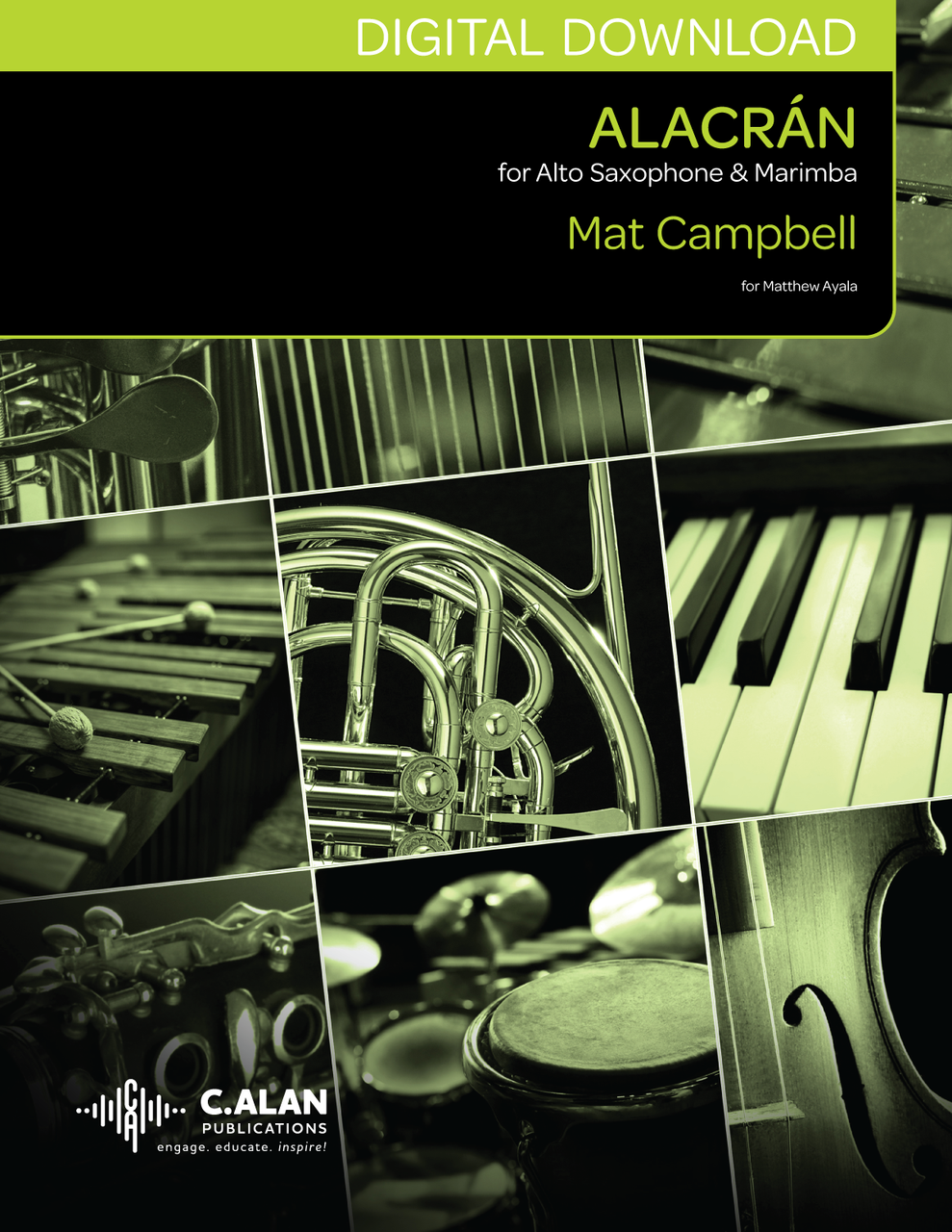
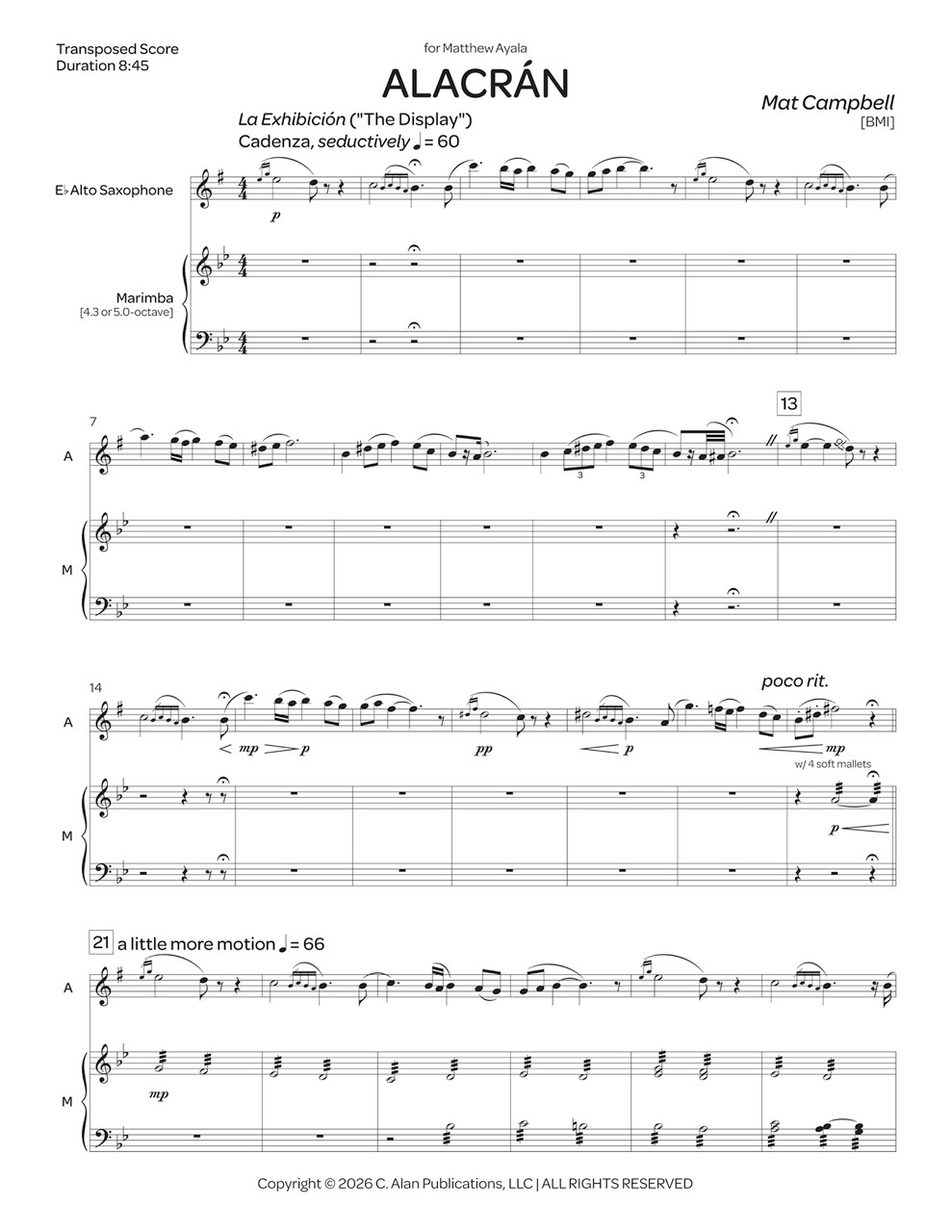
Alacrán is a dramatic tone poem that explores the intricate and often perilous mating ritual of scorpions and is re-imagined through the voices of alto saxophone and marimba. Structured in two main continuous sections, the work traces a narrative arc from solitary display to shared movement and culminates in a fiery rhythmic climax.
Genre: Duet for Alto Saxophone & Marimba | # of Players: 2
Level: Intermediate | Duration: 8:40
Instrumentation
Score (8.5"x11" stapled booklet)
Alto Saxophone
Marimba (4.3 or 5-octave)
Program Notes
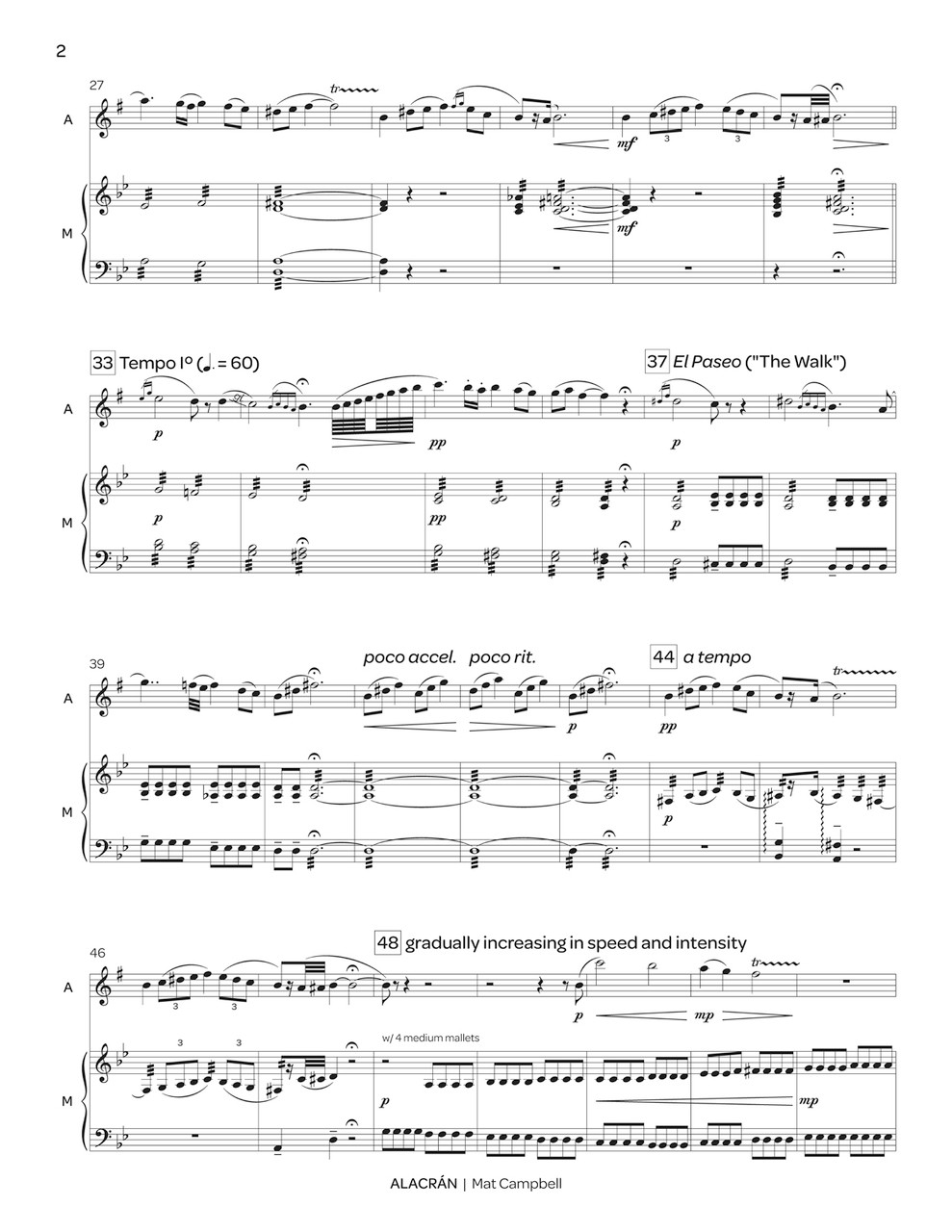
Alacrán is a dramatic tone poem that explores the intricate and often perilous mating ritual of scorpions and is re-imagined through the voices of alto saxophone and marimba. Structured in two main continuous sections, the work traces a narrative arc from solitary display to shared movement and culminates in a fiery rhythmic climax.The piece opens with “La Exhibición” (The Display), where a lone saxophone initiates a slow, freeform and seductive cadenza that depicts the scorpion's solitary ritual of attraction. The marimba responds gradually with complementary harmonies that build an feeling of curious suspense. As the music transitions into “El Paseo” (The Walk), these metaphorical scorpions exchange lyrical phrases as they "dance" in tandem: an intricate and hypnotic promenade. The marimba and saxophone move closer in musical dialogue, portraying intimacy laced with a quiet tension.
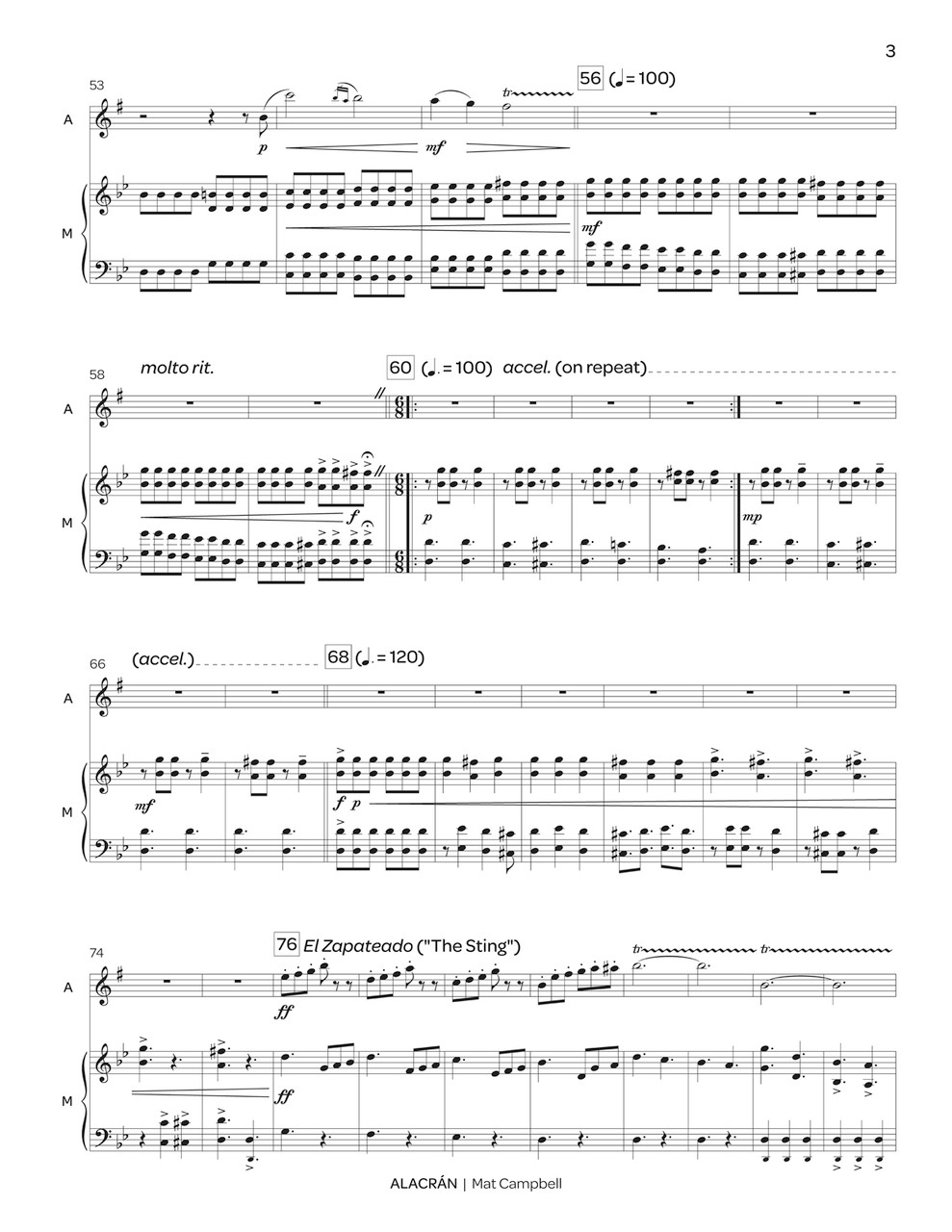
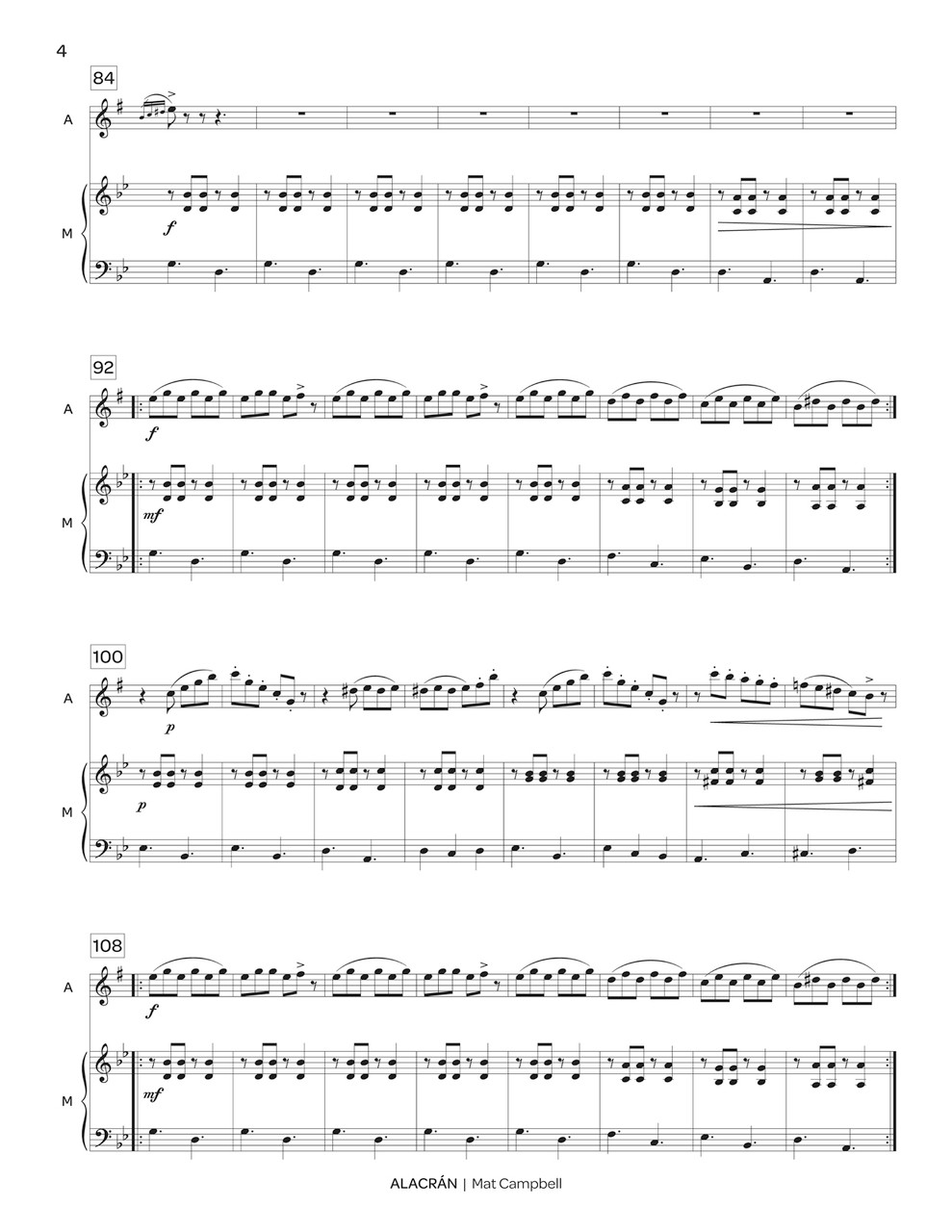
The second main section, appropriately named “El Zapateado” (The Sting), ignites the mood with a bright tempo starting from the marimba. Drawing inspiration from the spirited rhythms of traditional zapateado dance, long elegant lines to depict a treacherous dance while chromatic harmonies evoke the intensity and unpredictability of the scorpions’ increasingly climactic movement. The piece drives to a sharp, thrilling conclusion as only one scorpion walks away in search of their next suitor.
On a personal note, Alacrán pays homage to my fond memories of playing in the “Marimbalacrán” Mexican Marimba Band during my undergraduate studies at the University of Texas Rio Grande Valley. Much of this piece is inspired by the Mexican traditional folk song La Tortuga del Arenal, or as we affectionately liked to call it, “Blastoise.”
-
Product Reviews