- New!
- Band
- Percussion
- Orchestra
- Brass Band
- Jazz
- Chamber
- Voice








-
Notes & Instrumentation
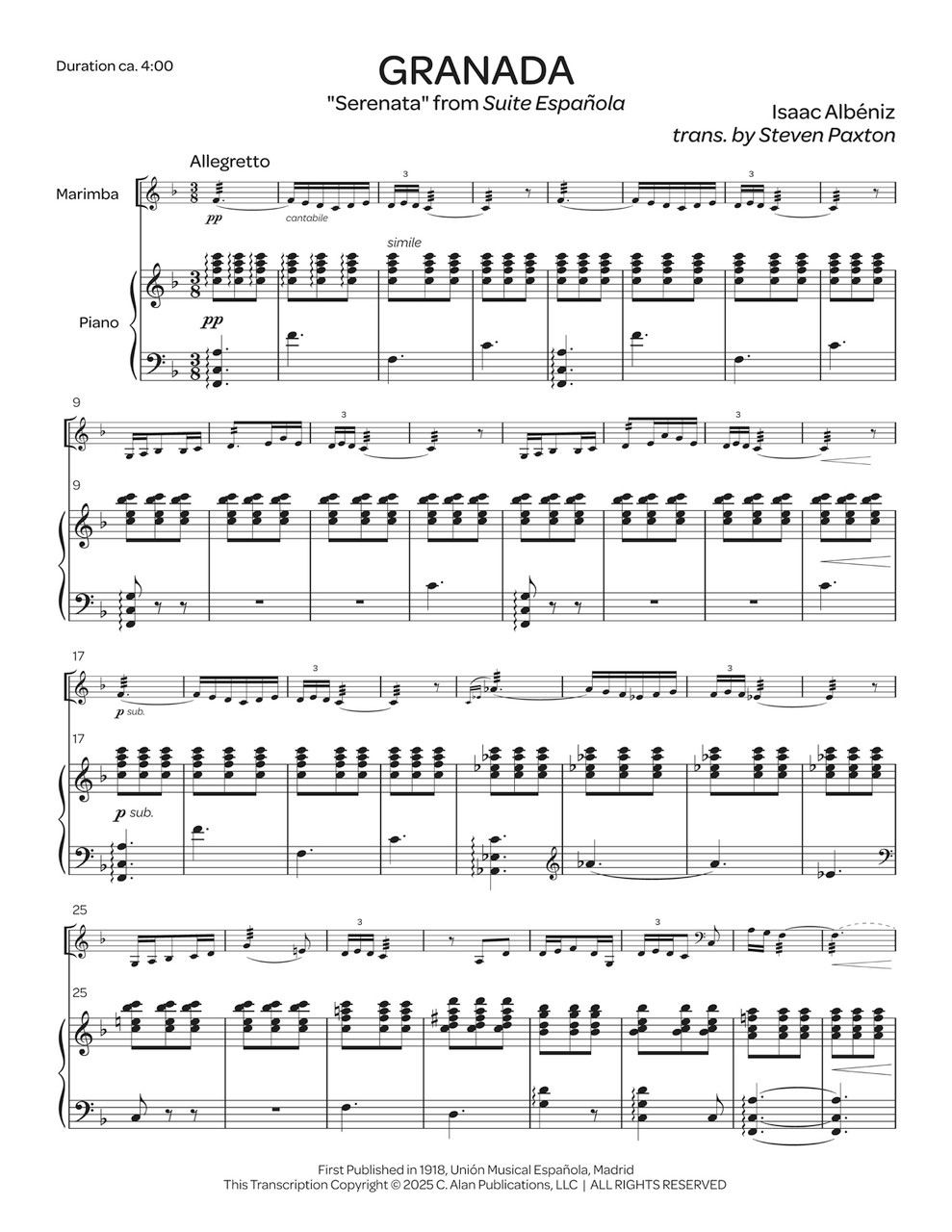
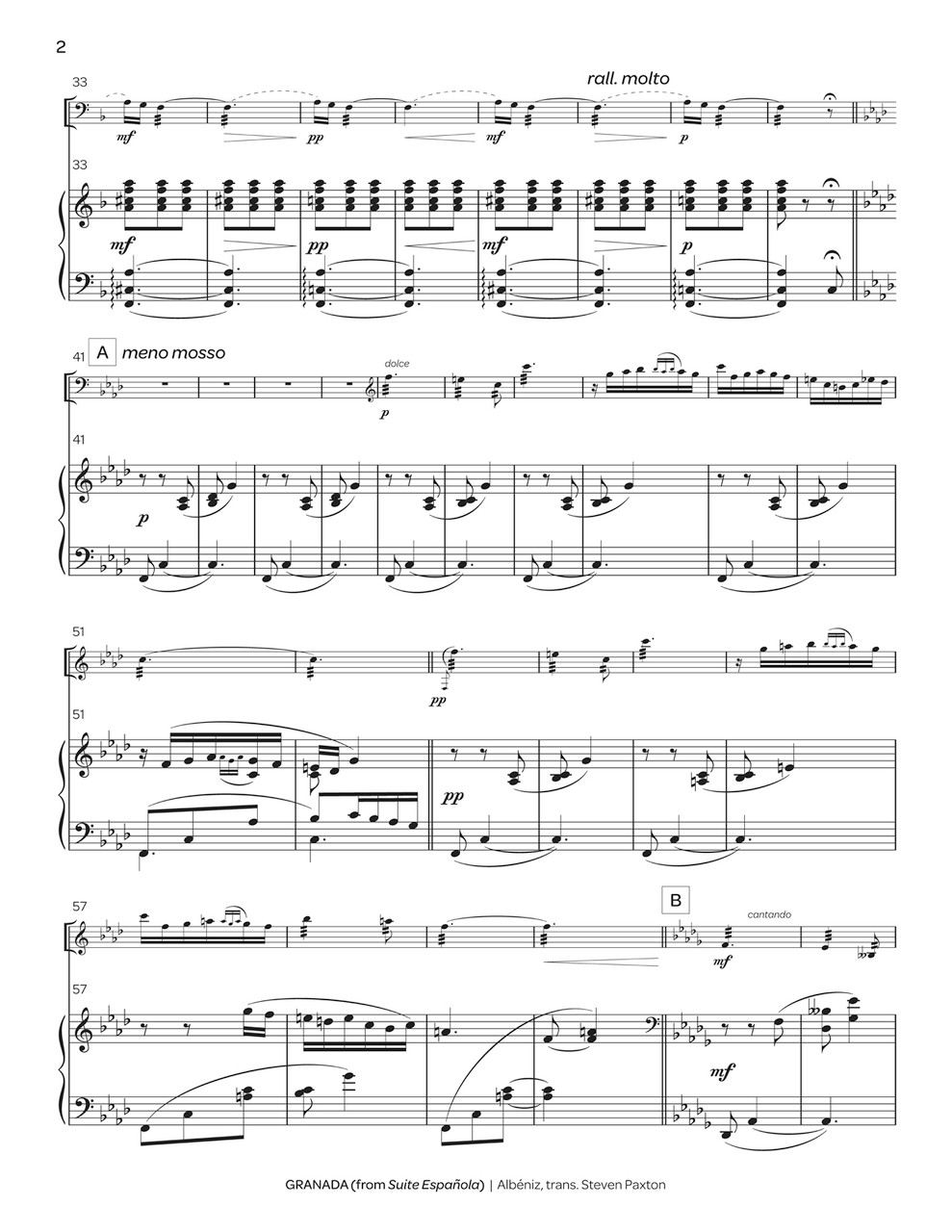
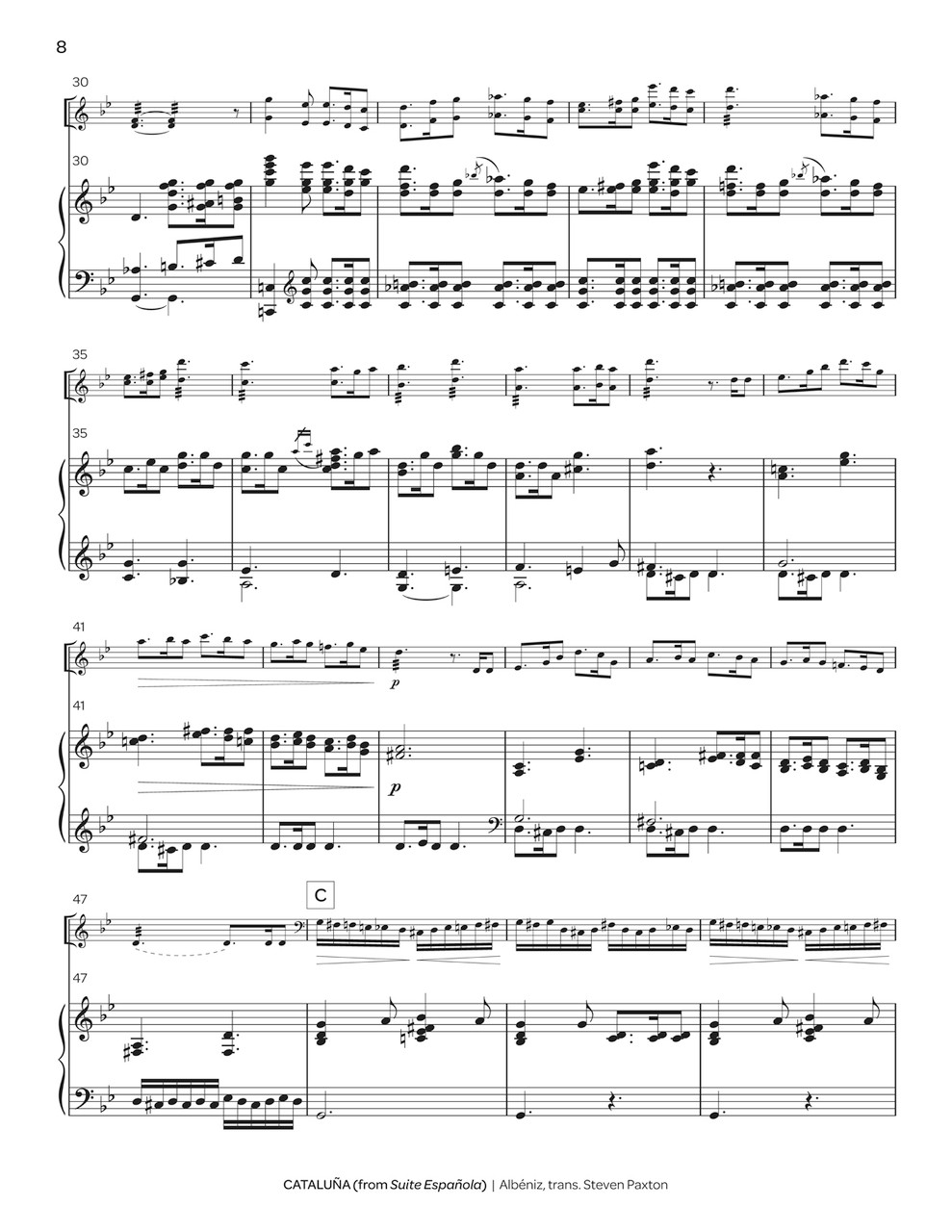
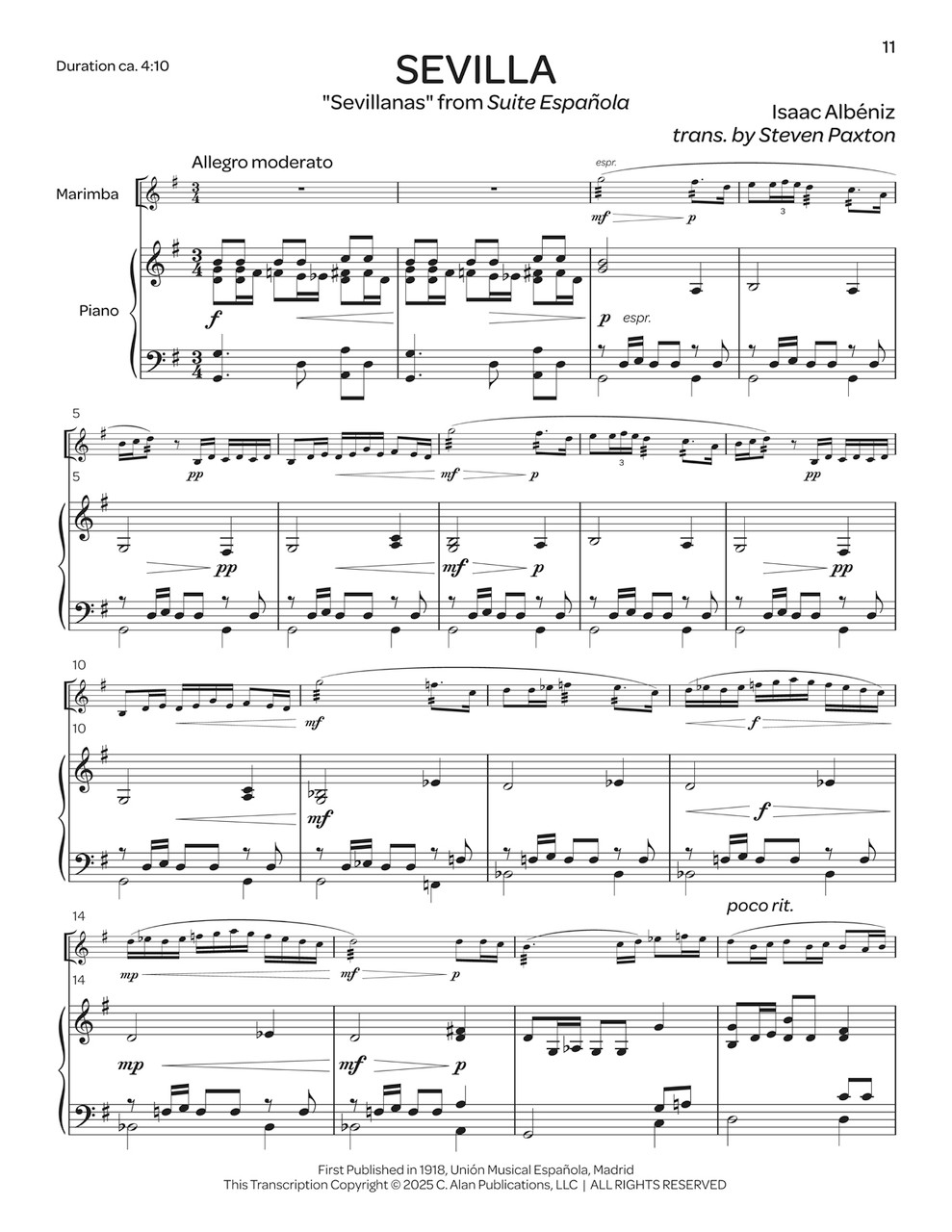
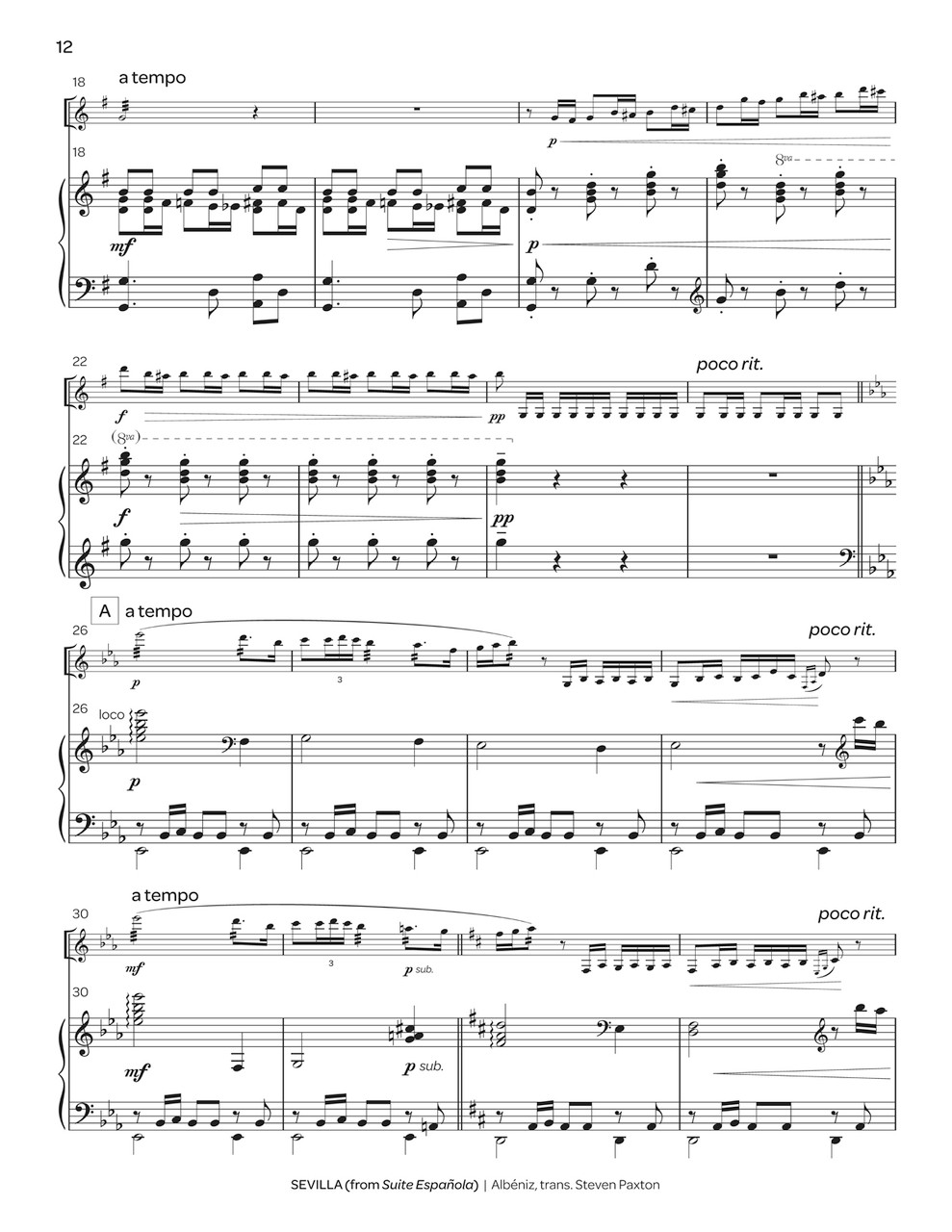
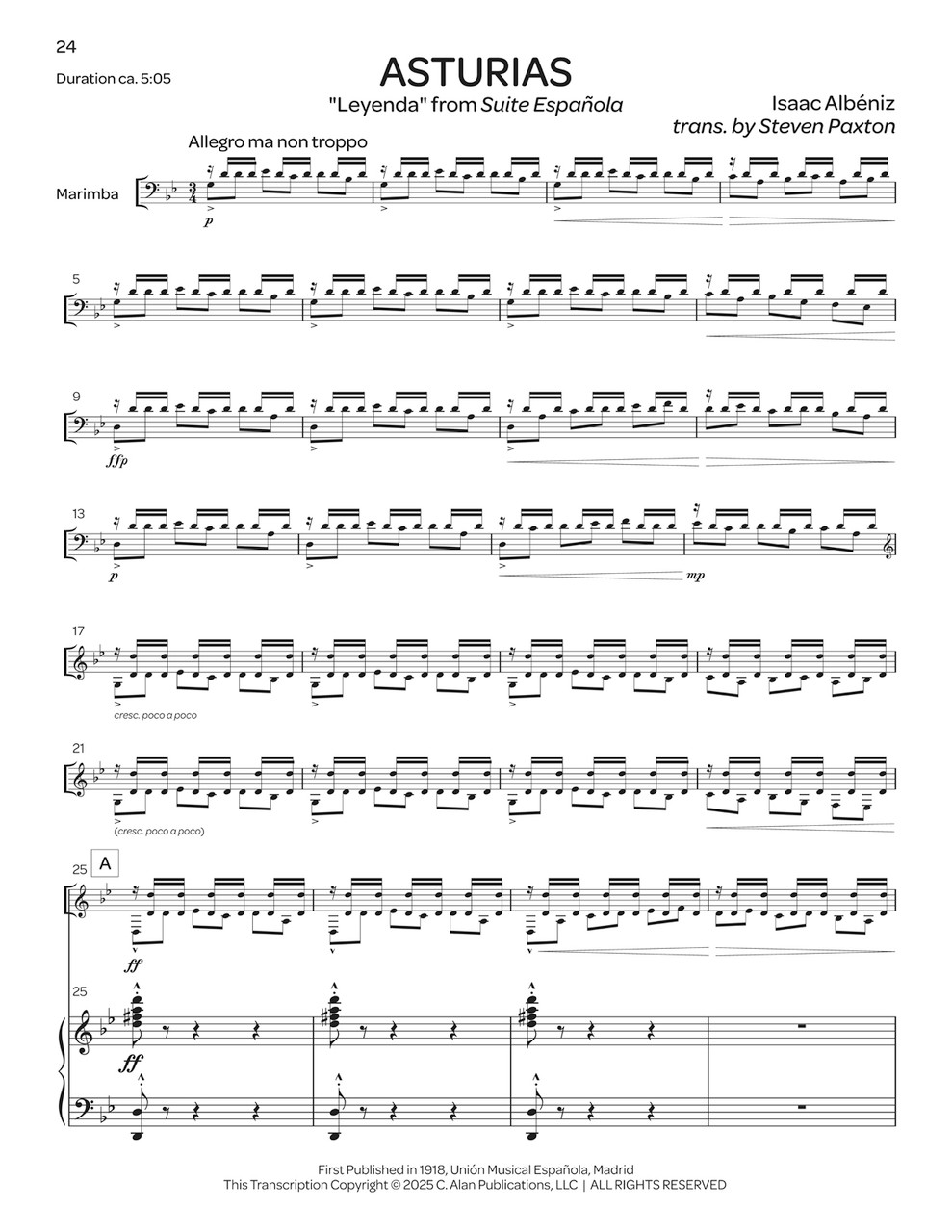
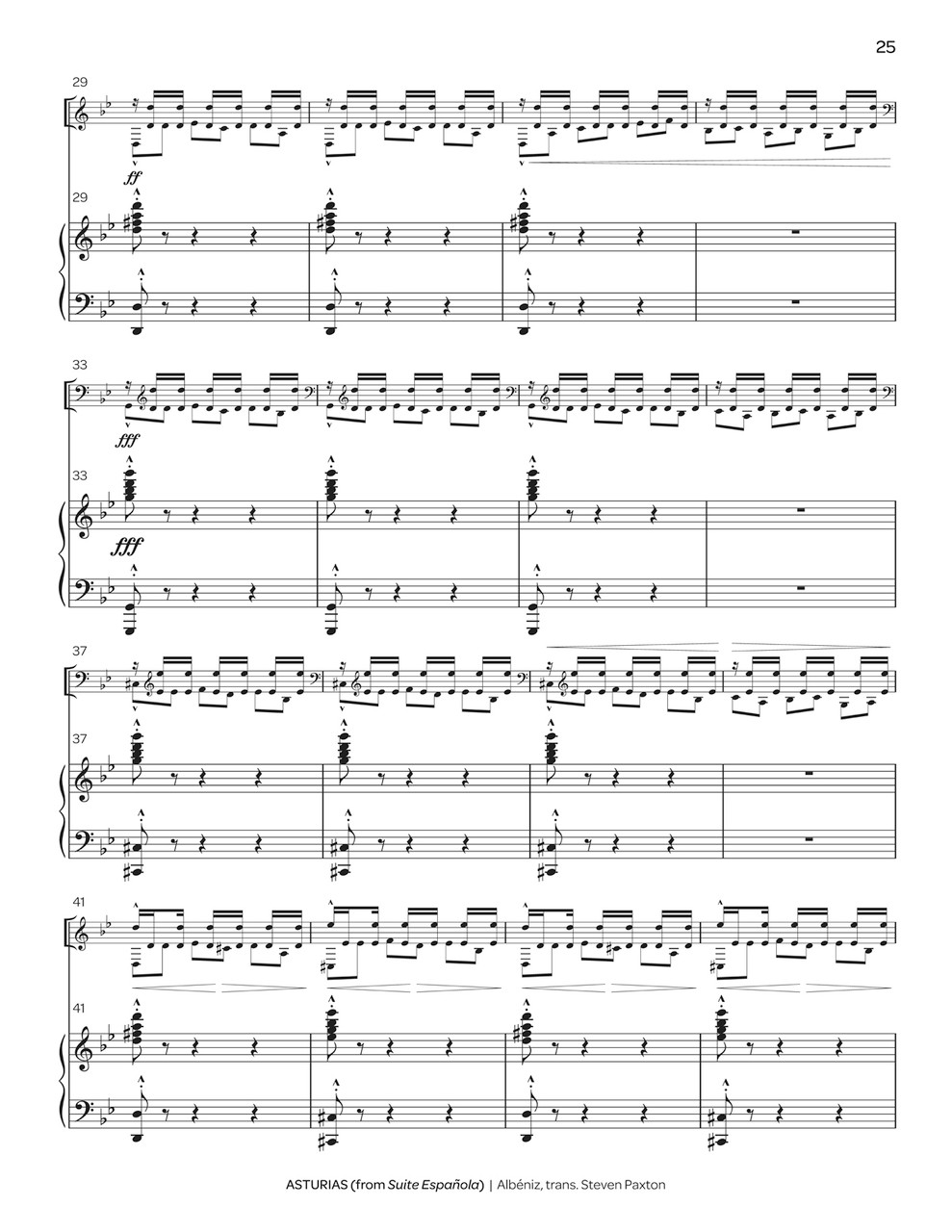
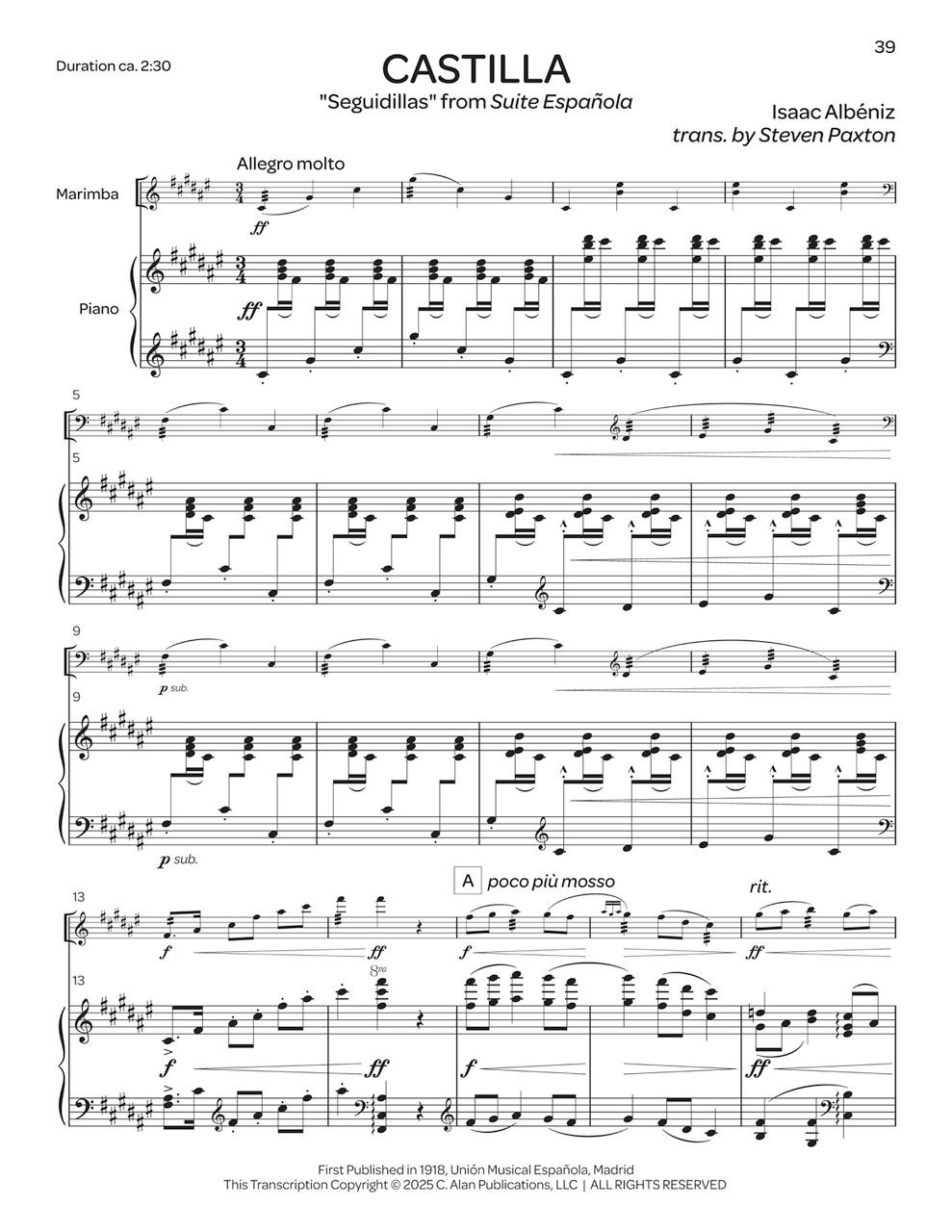
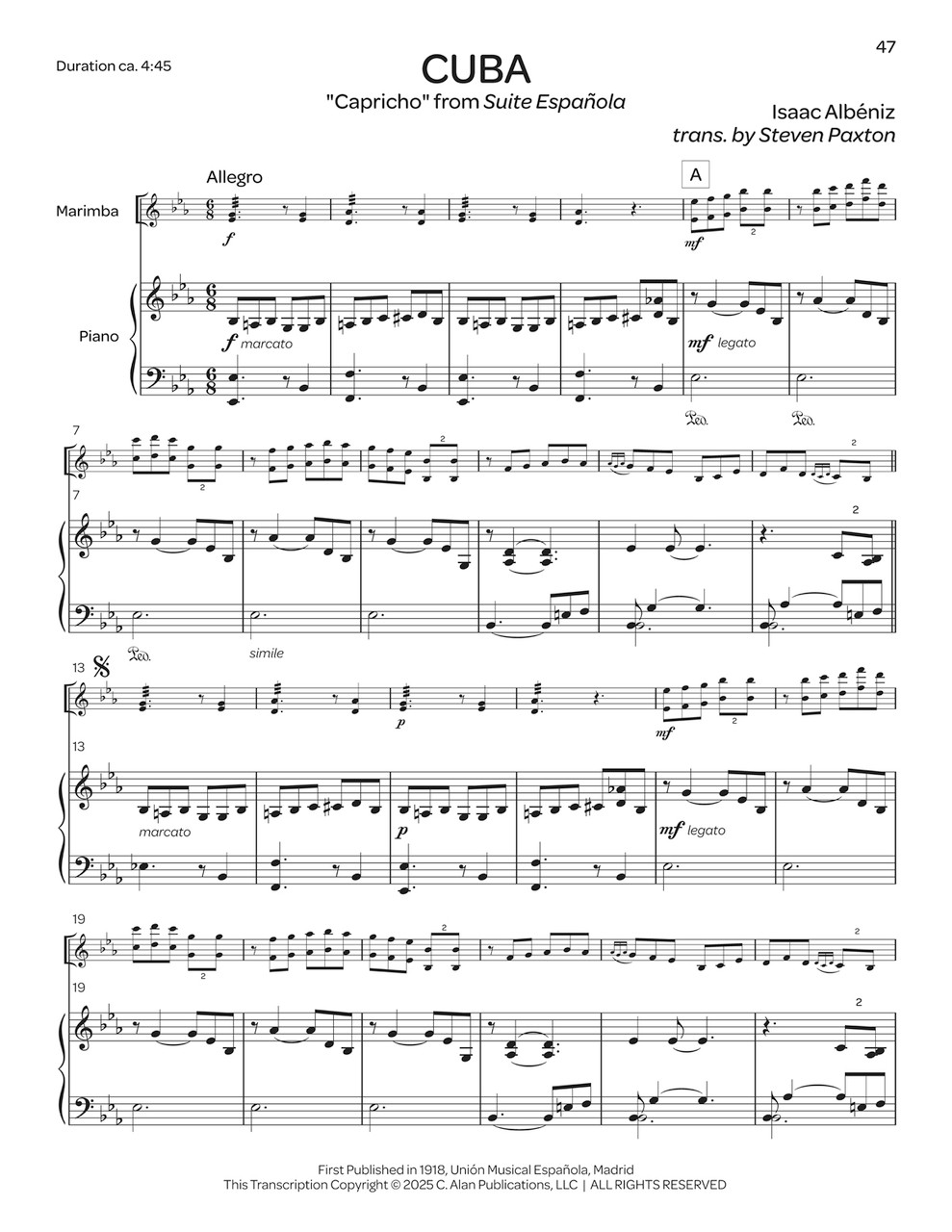
In the eight compositions comprising Suite Española, Isaac Albéniz captures the beautiful and distinctive music of the various regions of Spain and its colonies. Originally composed for solo piano, and most widely known in transcriptions for solo guitar, Steven Paxton has created colorful duos for marimba and piano.
Genre: Marimba (2 & 4-mallet) + Piano | # of Players: 1
Series: N/A
Level: Intermediate to Medium Advanced | Duration: 32:15
Instrumentation
Marimba (4.5-octave)*
Piano
*Options are provided to make all movements playable on either a 4.3 or 4.0-octave instrument.
Program Notes
Isaac Albéniz’ Suite Española, Op. 47, for solo piano, was composed in 1886 and 1887 and originally consisted of four movements, each named for a region of Spain and a dance or musical form from the region:
Granada (Serenata)
Cataluña (Corranda)
Sevilla (Sevillanas)
Cuba (Saeta) [Cuba was a Spanish colony until 1989]The suite was republished in 1912, after Albéniz’ death, with four additional movements added, all of which having been previously published in other editions with other titles:
Cádiz (Cancíon)
Asturias (Leyenda)
Aragón (Fantasia)
Castilla (Seguidillas)The composer himself was a pianist, a child prodigy, touring internationally from the age of 12. Compositions such as those in the Suite Española, were therefore intended as showpieces for the performer, and were meant to introduce international audiences to the beautiful and distinctive music of the various regions of Spain and its colonies. However, most of these compositions were transcribed for classical guitar in later years, and although Albéniz himself never composed for guitar, these works are today probably more famous as part of the solo guitar repertoire than as solo piano works.
Albéniz was born in Catalonia in 1860. His father was a civil servant, holding posts in many cities throughout Spain, as well as in the Spanish possessions of Puerto Rico and Cuba. Consequently, the childhood of this piano prodigy was one of international travel, networking with notable figures in music, politics, and the aristocracy. By the age of 20 he was an international musical figure, having performed throughout North and South America and Europe. During the final decade of the 19th century, he lived in London and Paris, devoting much of his work to light opera and zarzuela. His most famous composition of all, however, was another set of solo impressions of Spain, entitled Iberia. Composed between 1904 and 1908, it became his final masterpiece. Albéniz died in 1909 at the age of 48 in southwestern France.
– Notes by Steven Paxton
-
Product Reviews