- New!
- Band
- Percussion
- Orchestra
- Brass Band
- Jazz
- Chamber
- Voice
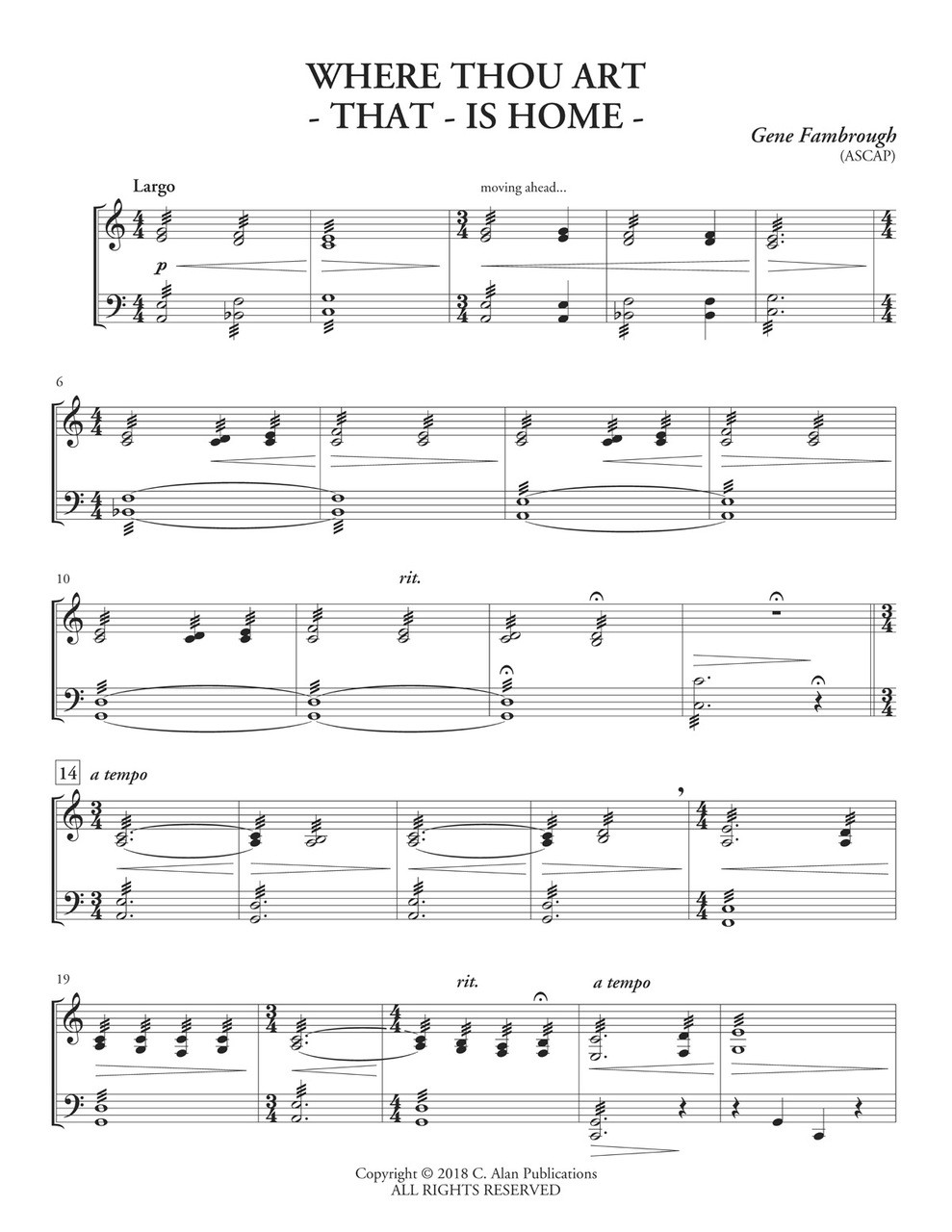
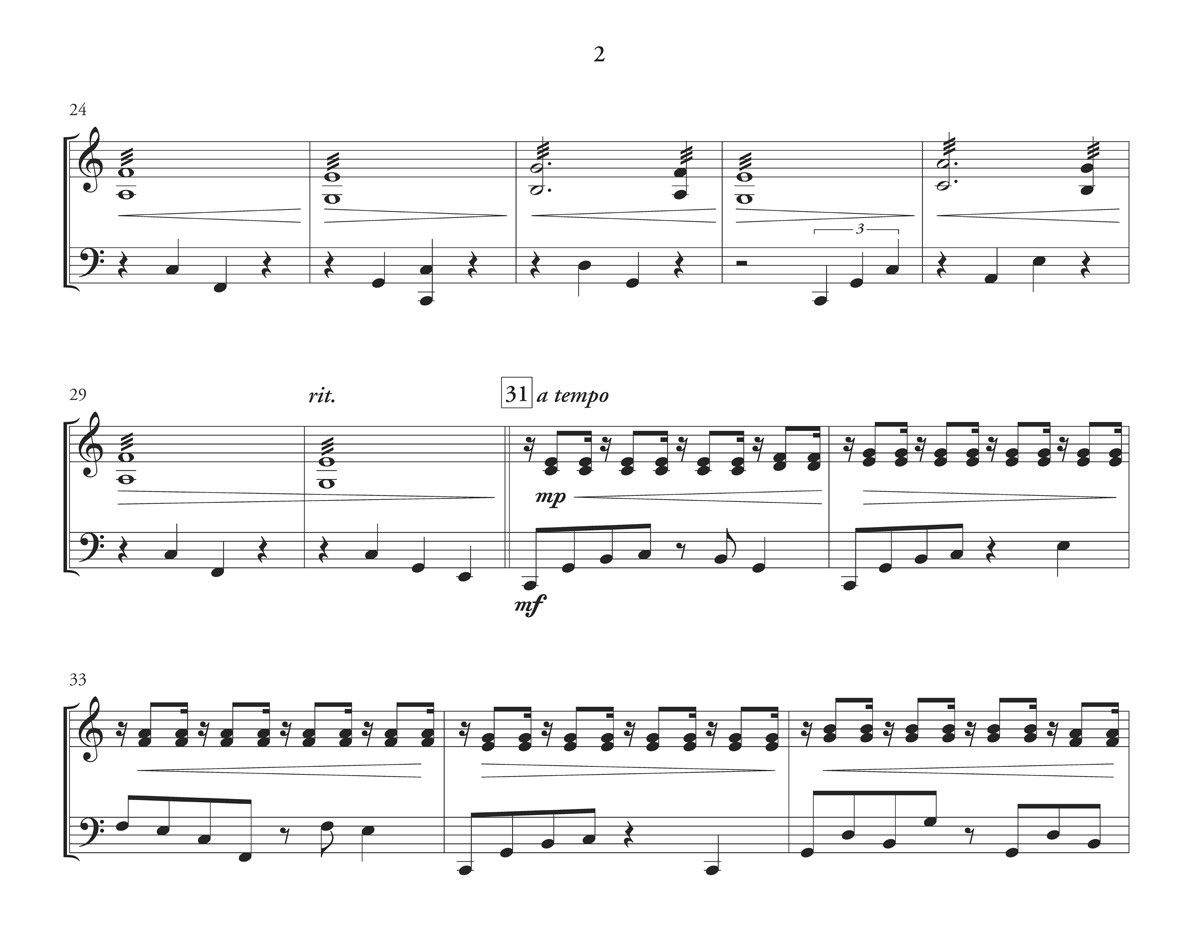
Where Thou Art–That–Is Home (Solo Marimba)
Genre: Marimba (4-mallet)
# of Players: 1
Level: Medium | Duration: 3:45
Publisher: C. Alan Publications | Copyright: 2018
Download mp3 | Click on images to left for score sample

Rating:
Price:
$15.00
Item #:
24730
-
Notes & Instrumentation
Based on an Emily Dickinson poem of the same name, "Where Thou Art – That – is Home" is a beautiful, lush chorale for solo marimba.
Genre: Marimba (4-mallet) | # of Players: 1
Level: Medium | Duration: 3:45
Instrumentation
Marimba (5.0-octave)
Program Notes
The title of this work comes from the poem bearing that title by Emily Dickinson (1830-1886), one of the towering figures of American literature. I was in the middle of writing another piece for my wife, Anna, and during this process still searching for an appropriate title. By some miraculous intervention, she started posting some of her favorite quotes and sayings around this time on social media, and this came across my screen one day. The meaning in the title is self-evident, and the poem described what I was trying to say perfectly.Where Thou art — that — is Home
Cashmere — or Calvary — the same —
Degree — or Shame —
I scarce esteem Location's Name —
So I may Come —
What Thou dost — is Delight —
Bondage as Play — be sweet —
Imprisonment — Content —
And Sentence — Sacrament —
Just We two — meet —
Where Thou art not — is Woe —
Tho' Bands of Spices — row —
What Thou dost not — Despair —
Tho' Gabriel — praise me — Sire — -
Video
-
Where Thou Art, That is Home
Chorale for solo marimba, composed for my wife, Anna. The title is the first line of a poem by Emily Dickinson.
-
-
Product Reviews
-
Percussive Notes New Literature Review
...inspired by the poem of the same title by Emily Dickinson. This piece is a beautiful, lush chorale for solo marimba. Fambrough has done a wonderful job evoking Dickenson’s poem and each of the three stanzas. The first section is a traditional chorale that allows the player a degree of expression and interpretation. The second section is more rhythmic and places the moving line in the left hand. The final section is another chorale that is a variation of the first section.
Pedagogically speaking, this would be a great piece for players looking to develop both their rolls (hand-to-hand and one-handed) and their musicality—specifically, their phrasing over large section. Middle school and high school percussion directors should have this solo in their libraries, and this would be a great piece for anyone looking to showcase the marimba’s sustain qualities.
Joe Millea
Percussive Notes
Vol. 57, No. 3, July 2019 Joe Millea on Jul 11th 2022
-