
- New!
- Band
- Percussion
- Orchestra
- Brass Band
- Jazz
- Chamber
- Voice
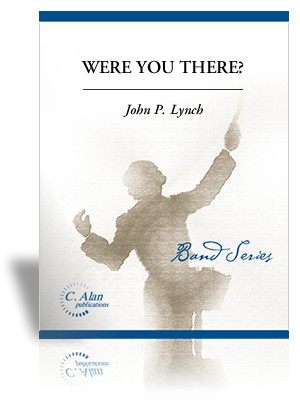
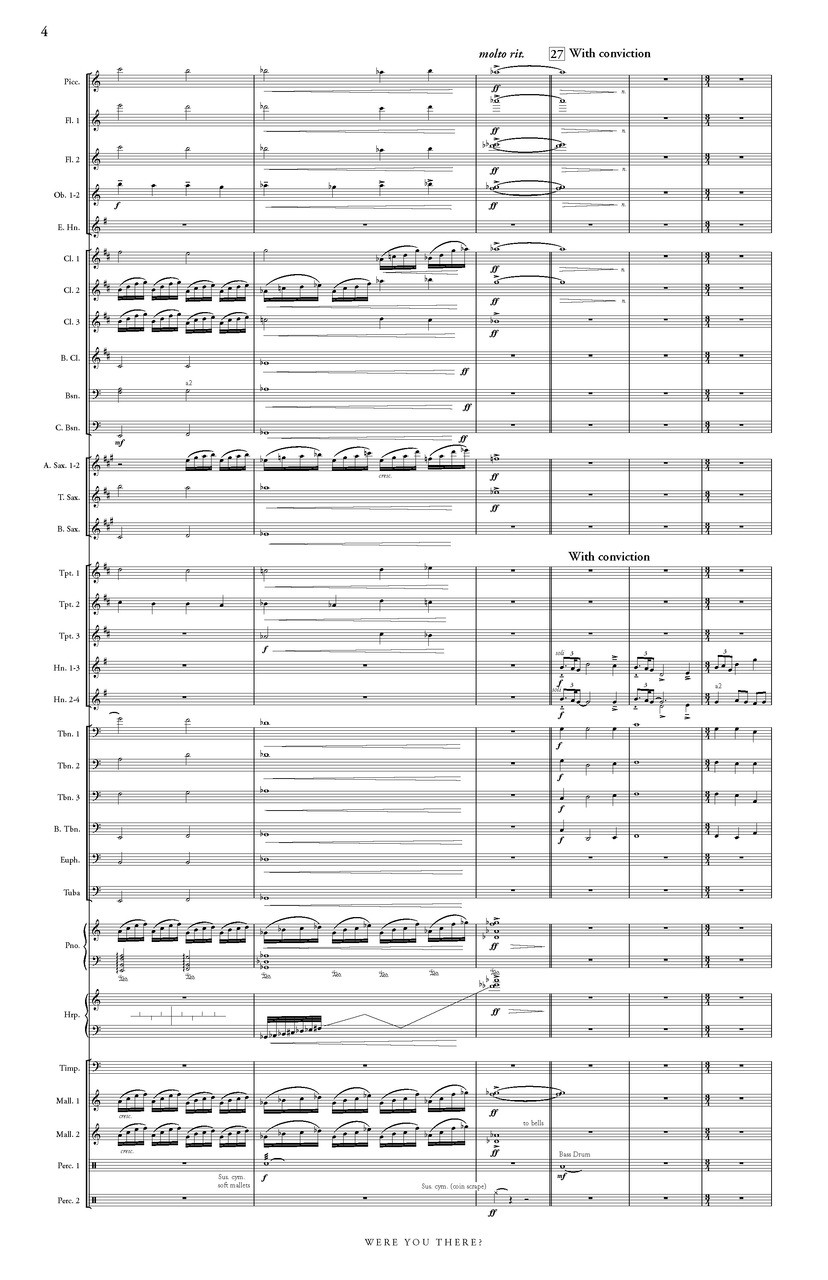
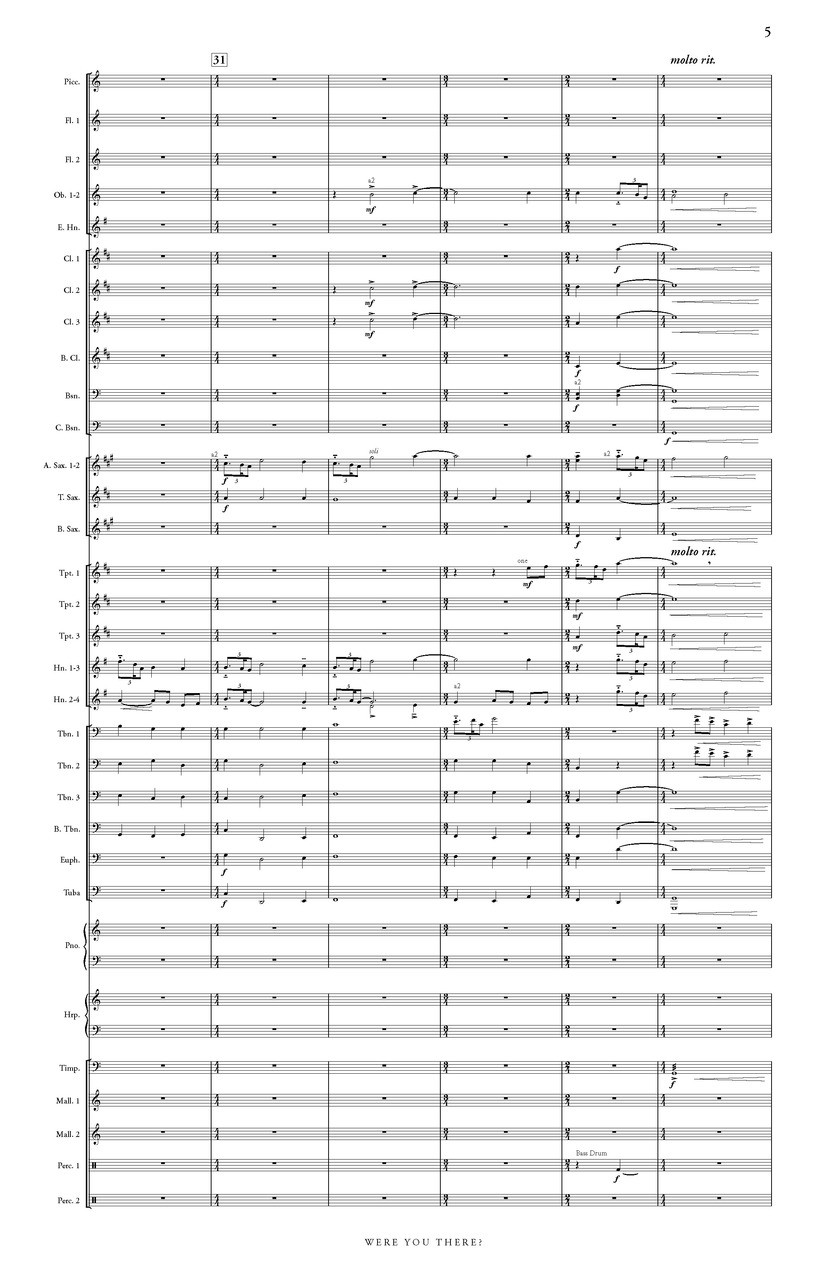
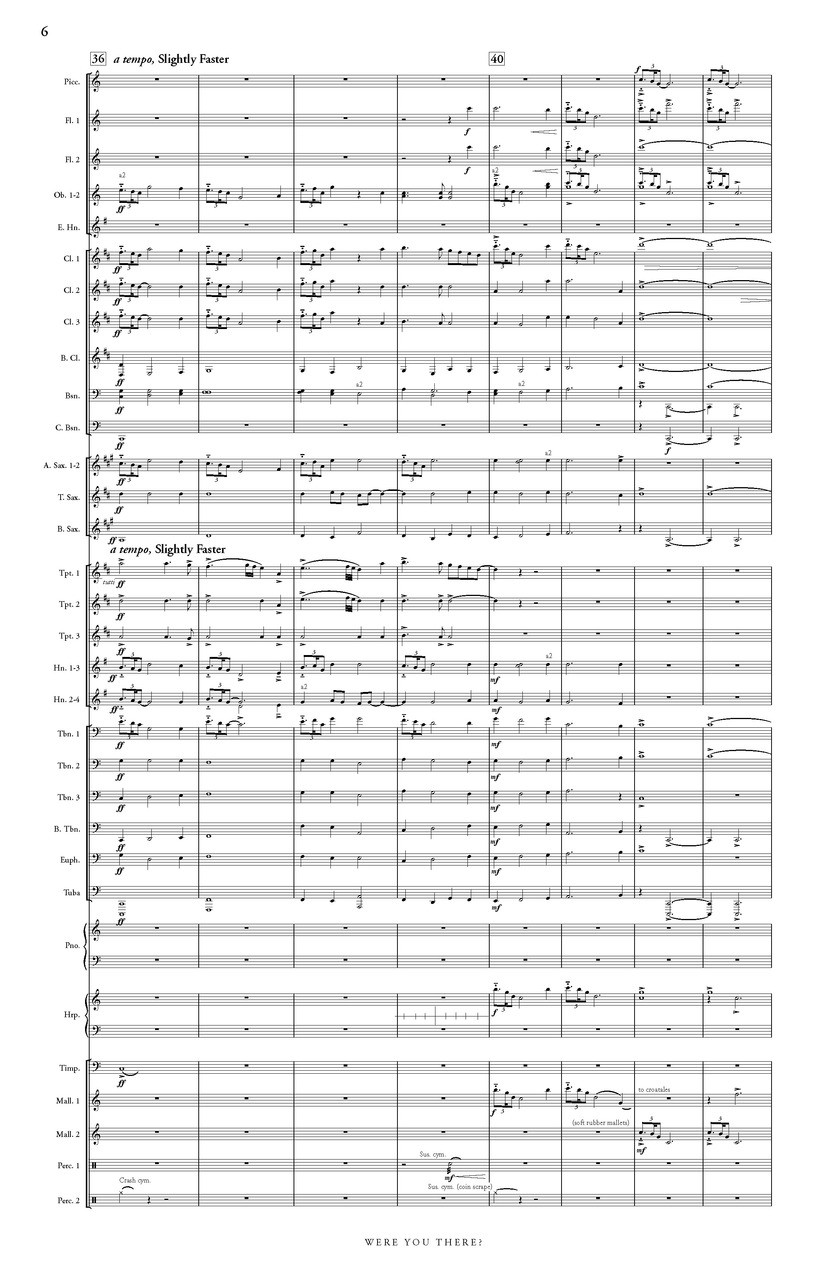
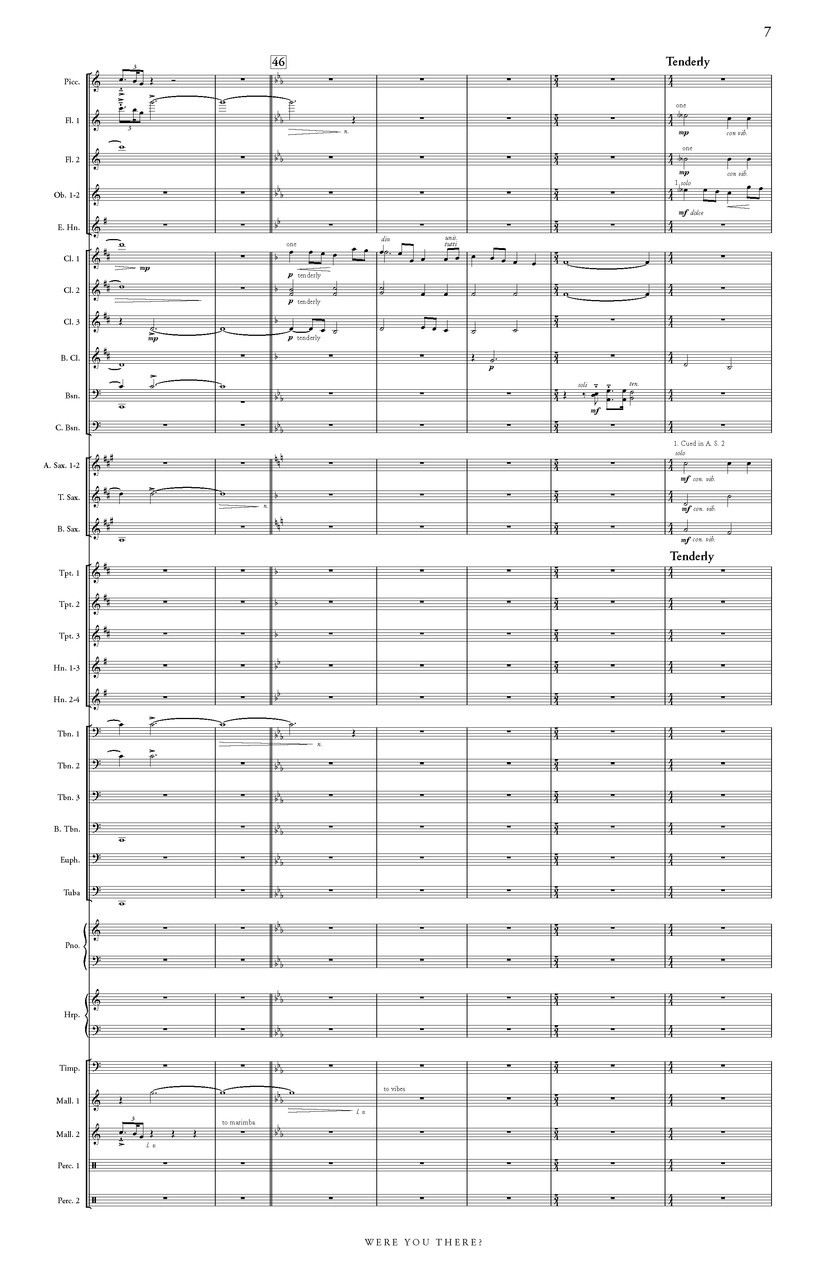
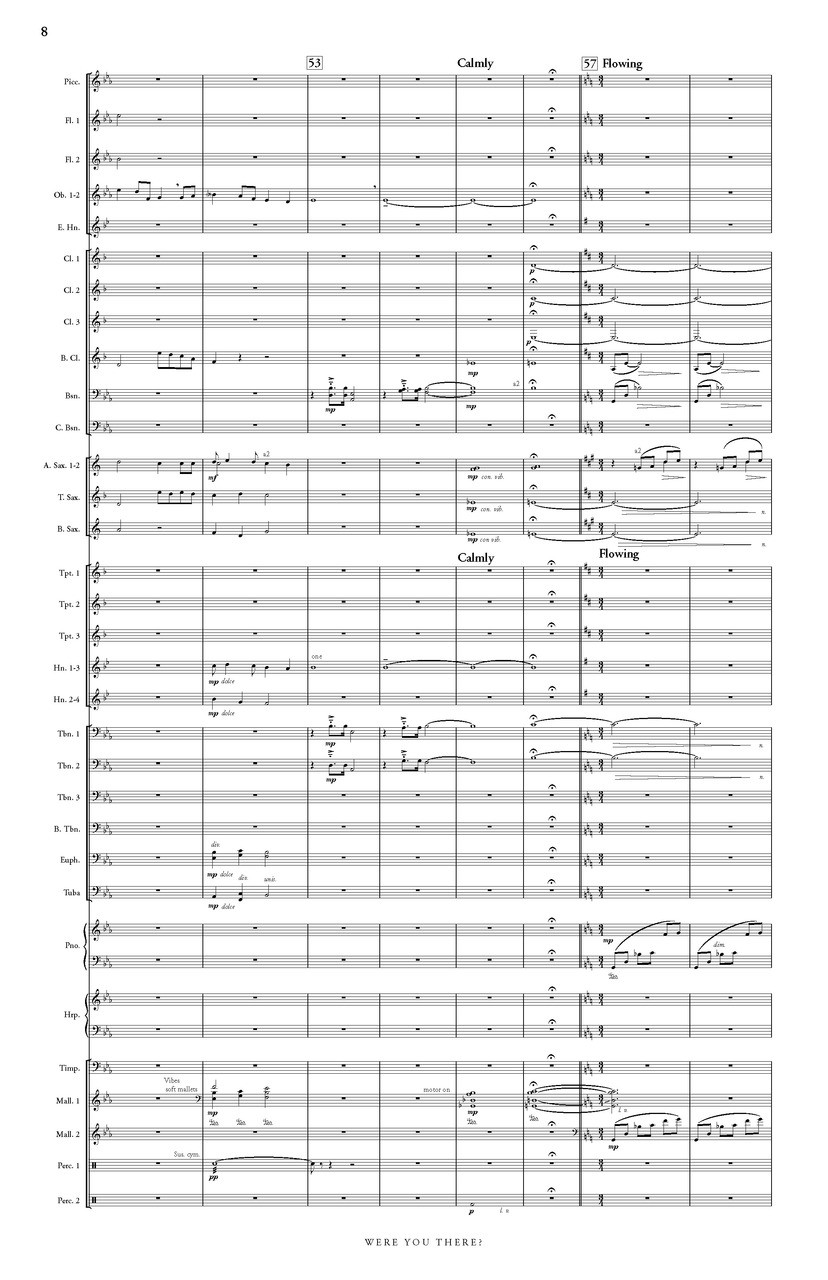
Were You There?
Genre: Band
# of Players: Standard
Level: 4 | Duration: 6:10
Publisher: C. Alan Publications | Copyright: 2006
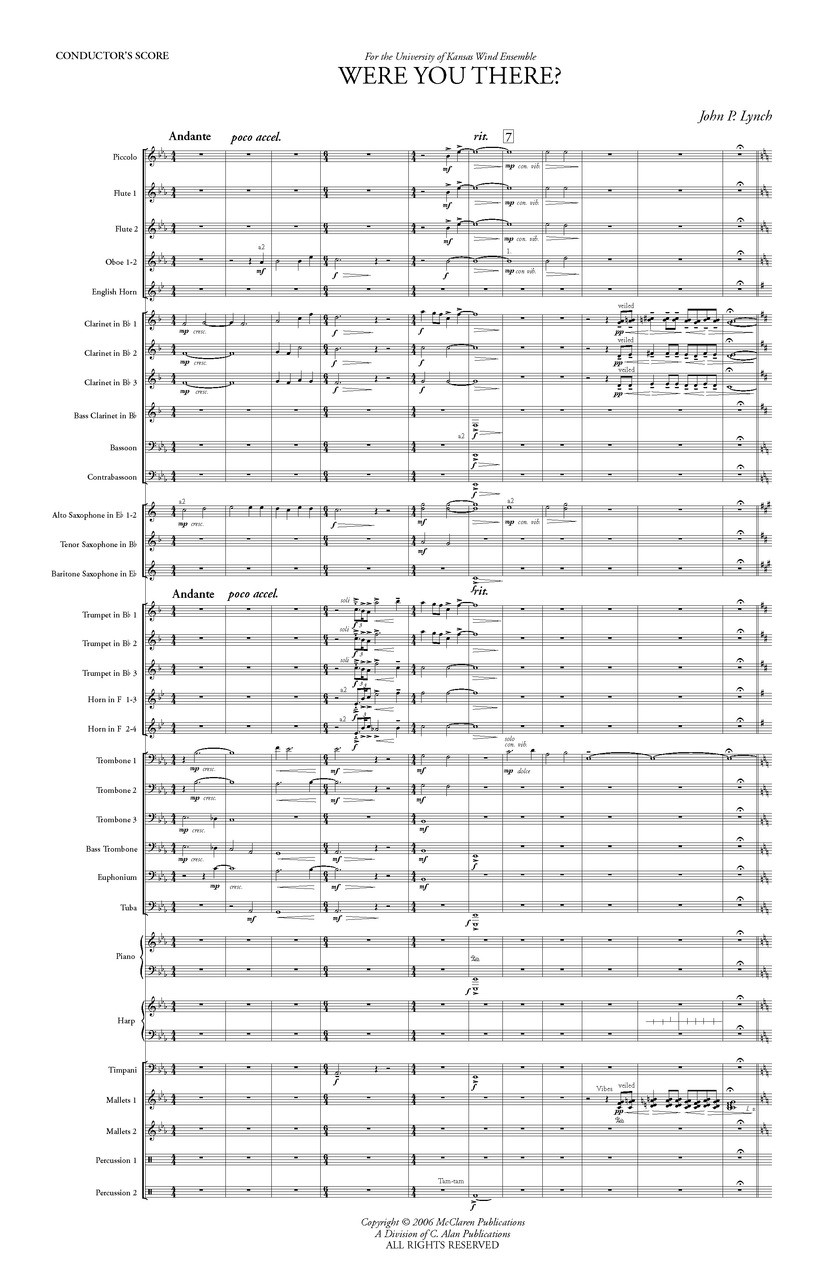
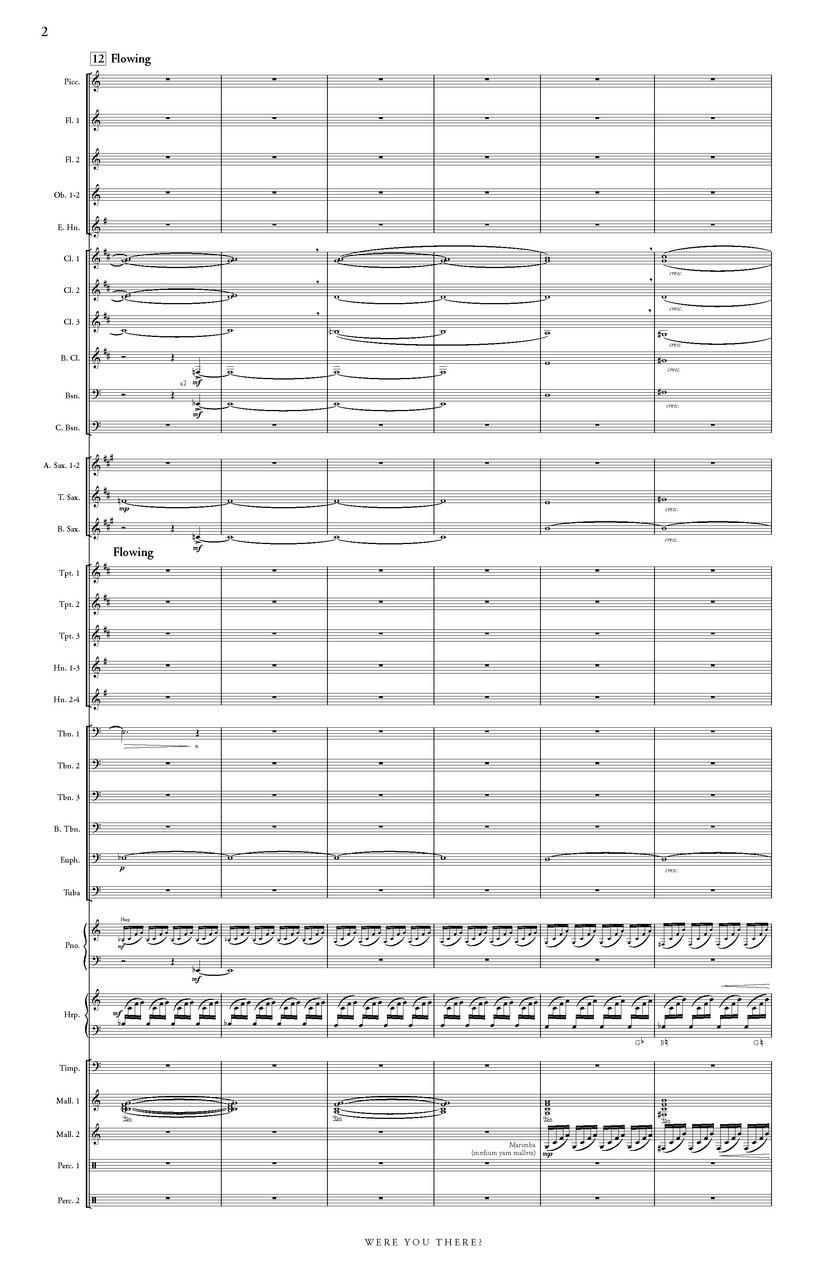
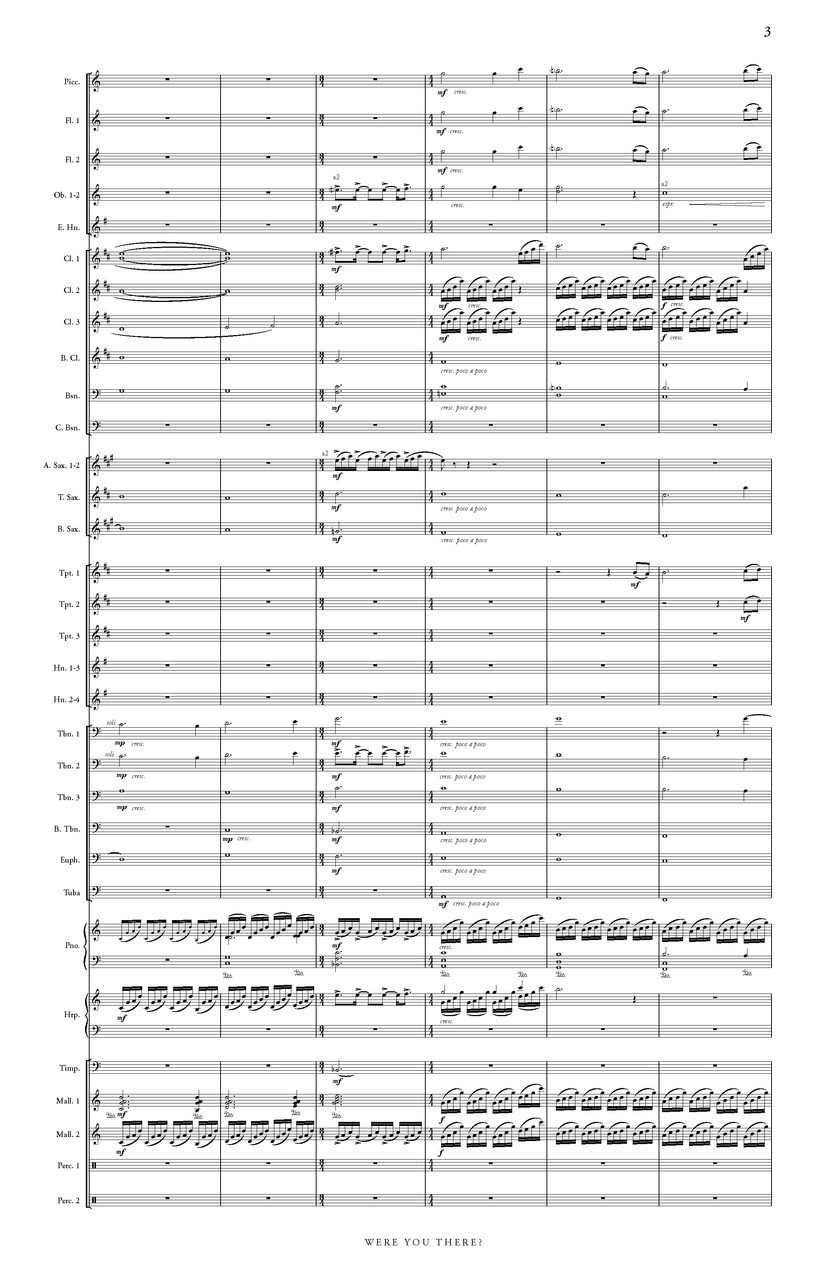
Download mp3 | Click on images to left for score sample
Price:
$75.00
Item #:
11030
-
Notes & Instrumentation
Were You There? is a tone poem based on the traditional hymn tune. Tender, flowing themes permeate the work as the rich scoring carries the listener to many levels of musical expression.
Genre: Band | # of Players: Standard
Level: 4 | Duration: 6:10
Instrumentation
Flute 1
Flute 2
Oboe 1/2
English Horn
Clarinet in Bb 1
Clarinet in Bb 2
Clarinet in Bb 3
Bass Clarinet in Bb
Bassoon
Contrabassoon
Alto Saxophone 1/2
Tenor Saxophone
Baritone Saxophone
Trumpet in Bb 1
Trumpet in Bb 2
Trumpet in Bb 3
Horn in F 1/3
Horn in F 2/4
Trombone 1
Trombone 2
Trombone 3
Bass Trombone
Euphonium
Tuba
Piano
Harp
Timpani
Mallet 1 (vibraphone, crotales)
Mallet 2 (marimba, bells)
Percussion 1 (suspended cymbal, bass drum)
Percussion 2 (tam-tam, suspended cymbal, crash cymbals)
Program Notes
Were You There? is a tone poem based on the traditional hymn tune. The title becomes a philosophical and rhetorical question as the piece examines various contemporary views of the message of religion. A primary unifying musical element is the river motive, marked “flowing,” a metaphor for life. Two new themes are introduced: One, marked “with conviction,” presents a righteous viewpoint whose interpretation of the message of Christianity is literal, and a second, marked “tenderly,” that expresses an interpretation based on compassion. The ensuing section is a transformation of the river motive. An ongoing ostinato creates a sense of stasis and introduces a third point of view reflecting Buddhist philosophy, in which the themes are posed as questions. A brief piano solo, a cyclic idea that could go on forever, alludes briefly to the atheist point of view. This section culminates in the most straightforward presentation of “Were You There?”The piece draws to a close with a forceful statement of the three main themes in juxtaposition to the hymn tune, which appears in augmentation in the horn and chime parts. The final conclusion is thus left to the listener.
-
Product Reviews
![With You [DIGITAL SCORE ONLY]](https://cdn10.bigcommerce.com/s-uhegu0/products/3638/images/25636/26251D__88354.1586478182.200.200.png?c=2)
![Were the Whole Realm... - Allen Houston [DIGITAL]](https://cdn10.bigcommerce.com/s-uhegu0/products/4740/images/41200/09390D__23486.1595895984.200.200.png?c=2)
![Were the Whole Realm... - Allen Houston [DIGITAL SCORE]](https://cdn10.bigcommerce.com/s-uhegu0/products/4741/images/41207/09390D__39821.1595895975.200.200.png?c=2)