- New!
- Band
- Percussion
- Orchestra
- Brass Band
- Jazz
- Chamber
- Voice

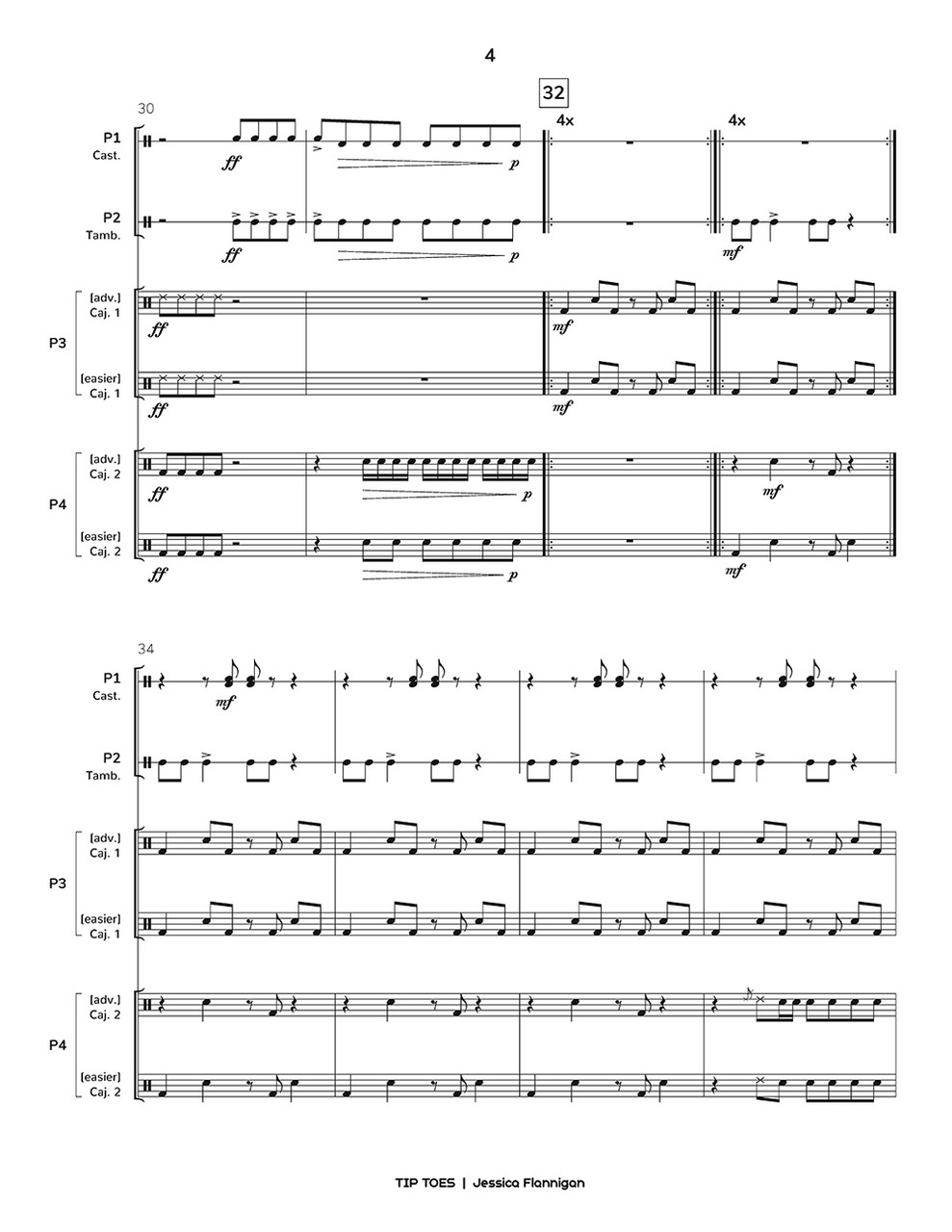
Tip Toes (Perc Ens 4+)
Genre: Percussion Ensemble
# of Players: 4
Level: Medium | Duration: 2:30-3:00
Publisher: C. Alan Publications | Copyright: 2020
Download mp3 | Click on images to left for score sample

Rating:
Price:
$32.00
Item #:
27020
-
Notes & Instrumentation
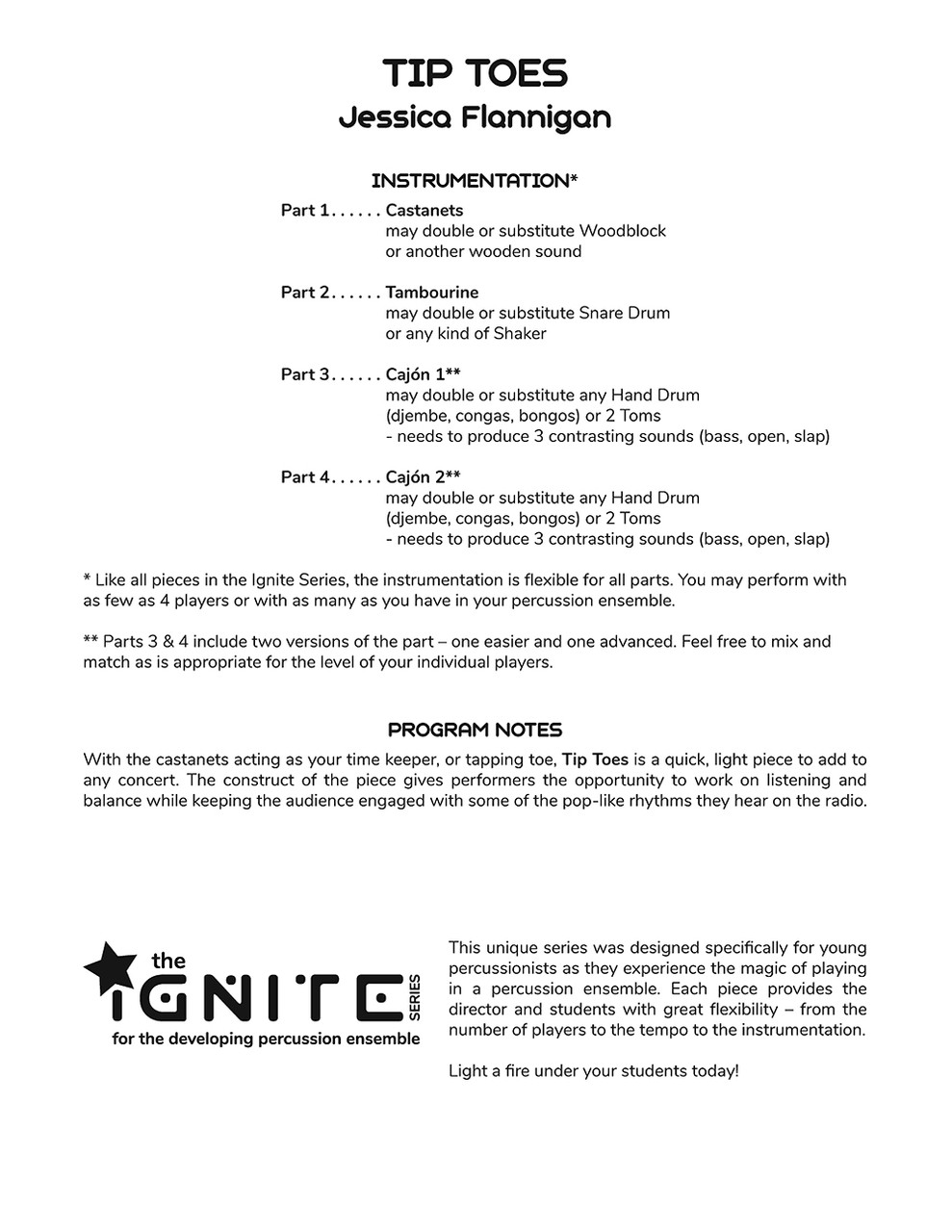
With the castanets acting as your time keeper, or tapping toe, Tip Toes is a quick, light piece to add to any concert. The construct of the piece gives performers the opportunity to work on listening and balance while keeping the audience engaged with some of the pop-like rhythms they hear on the radio.
Genre: Percussion Ensemble | # of Players: 4
Level: Medium | Duration: 2:30-3:00
Instrumentation
Part 1: Castanets (may double or substitute Woodblock or another wooden instrument)
Part 2: Tambourine (may double or substitute Snare Drum or any kind of shaker)
Part 3: Cajón 1* (may double or substitute any hand drum, like djembe, congas, bongos, etc. or 2 Toms)
- needs to produce three contrasting sounds
Part 4: Cajón 2* (may double or substitute any hand drum, like djembe, congas, bongos, etc. or 2 Toms)
- needs to produce three contrasting sounds
* Parts 3 & 4 include two versions of the part – one easier and one advanced. Feel free to mix and match as is appropriate for the level of your individual players.
** Like all pieces in the Ignite Series, the instrumentation is flexible for all parts. You may perform with as few as 4 players or with as many as you have in your percussion ensemble. -
Product Reviews
-
Percussive Notes New Literature Review
“Tip Toes” is part of C. Alan’s “Ignite” series for the developing percussion ensemble. As is characteristic of this series, the number of players and exact instrumentation is flexible to allow the piece to adapt to specific situations. As such, the instrumentation in the score provides at least two instrument options for each part. This is such a great idea, as many schools may not have the two cajons (or even one) required. Additionally, there are both “advanced” and “easier” versions of the cajon parts that can be used as necessary.
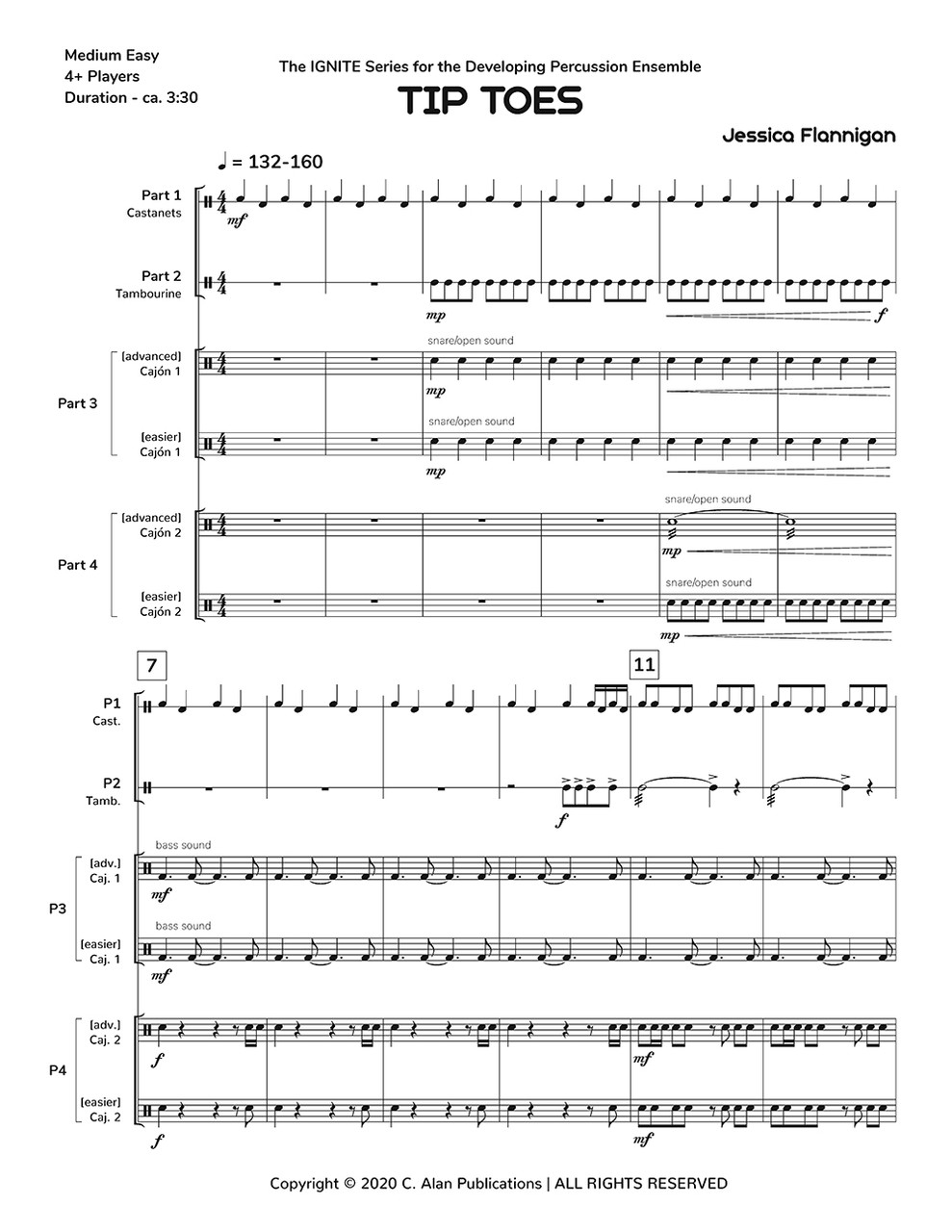
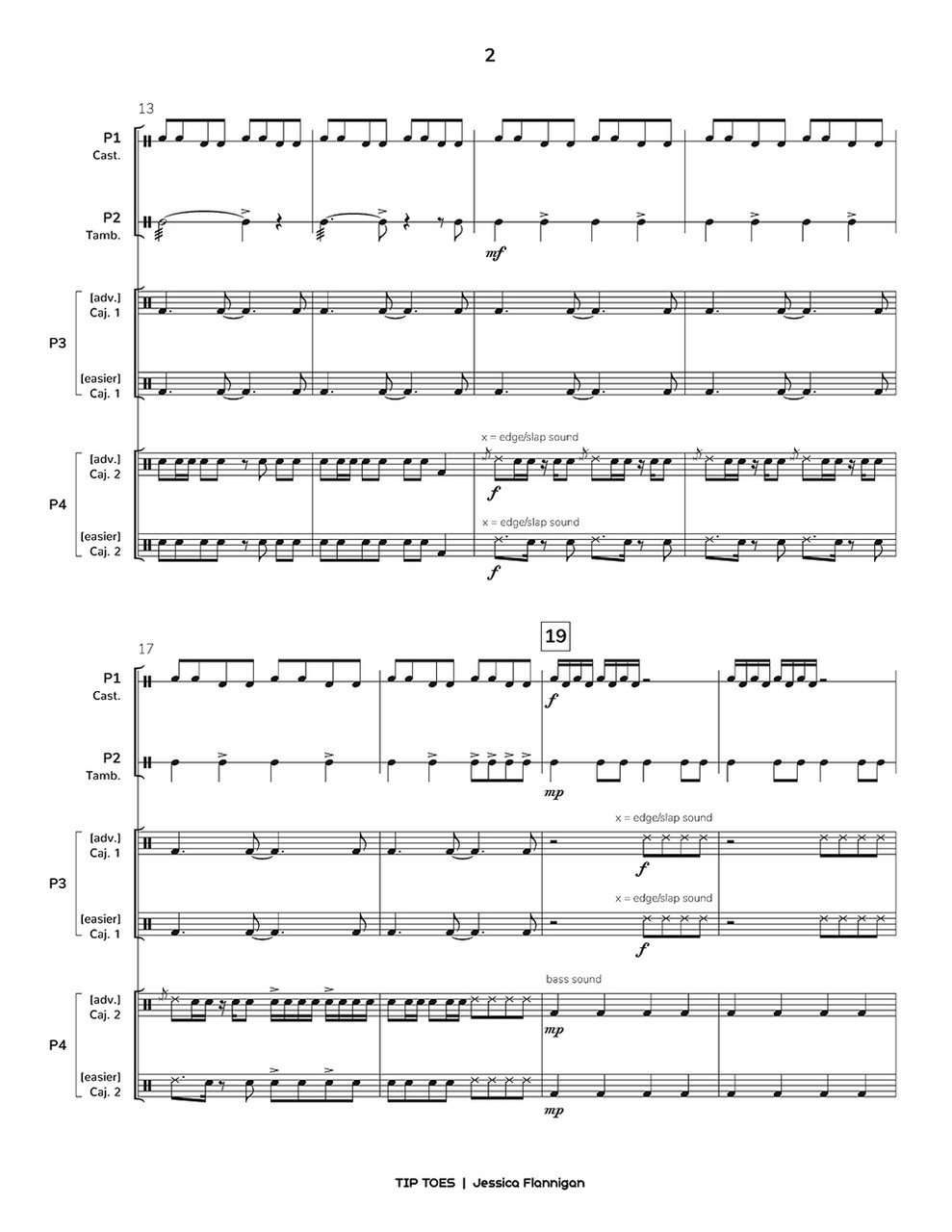
This piece is bright, fun, and quick (only about 2:30 long). Flannigan writes, “The construct of the piece gives performers the opportunity to work on listening and balance while keeping the audience engaged with some of the pop-like rhythms they hear on the radio.” The rhythms primarily consist of quarter and eighth notes. There are a few sixteenth notes in the castanet part, and many more in the “advanced” cajon parts. There seems to have been a concerted effort by the composer to include a large dynamic range with frequent changes from loud to soft. The importance of early work on dynamics cannot be overstated.
I strongly recommend this piece to whom it is marketed: the developing percussion ensemble. No individual part is overly difficult, and if one is, it likely has an “easier” version included to use instead. The level of customization available on this piece makes it a must-have for any director teaching a young ensemble.
Justin Bunting
Percussive Notes
Vol. 59, No. 6, December 2021 Justin Bunting on Jul 6th 2022
-