- New!
- Band
- Percussion
- Orchestra
- Brass Band
- Jazz
- Chamber
- Voice
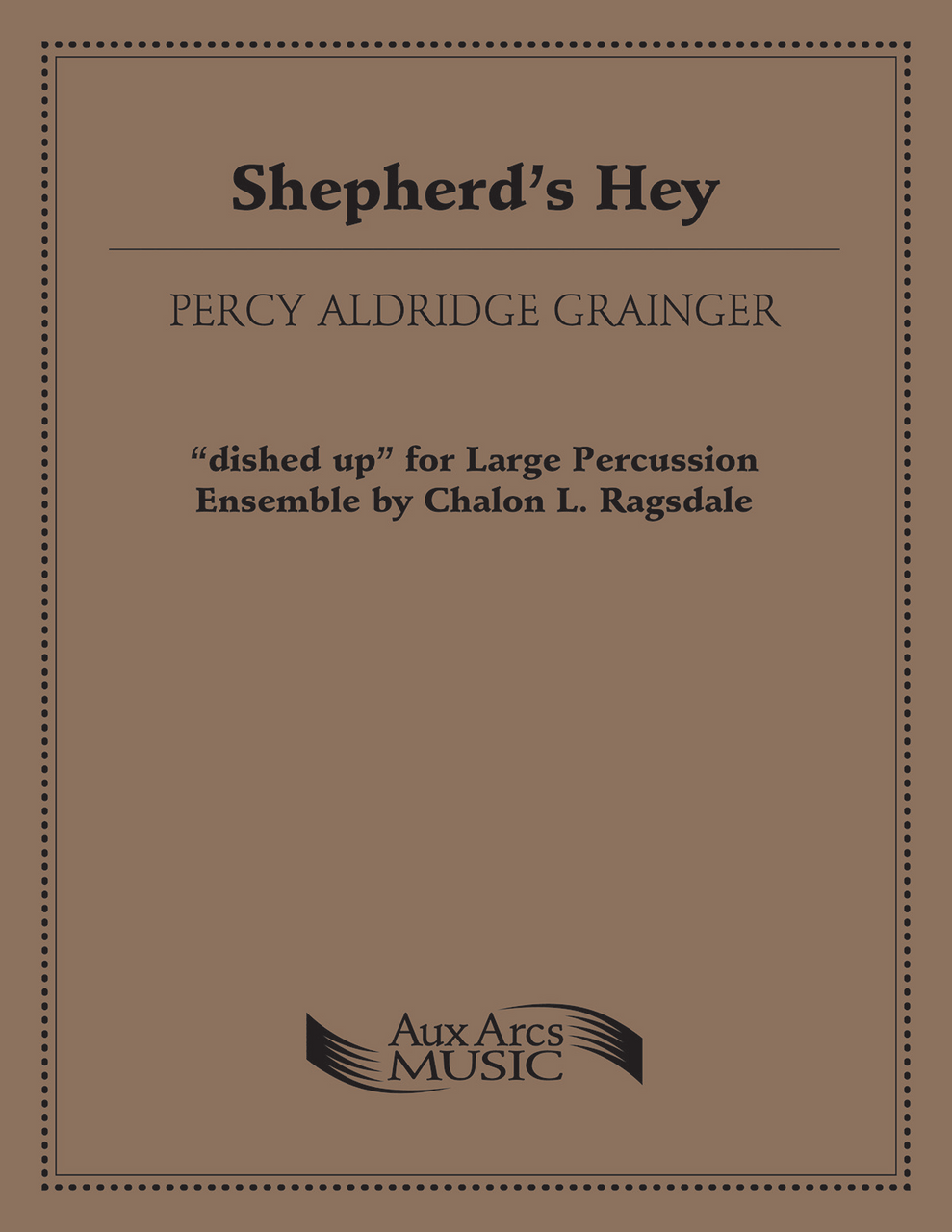

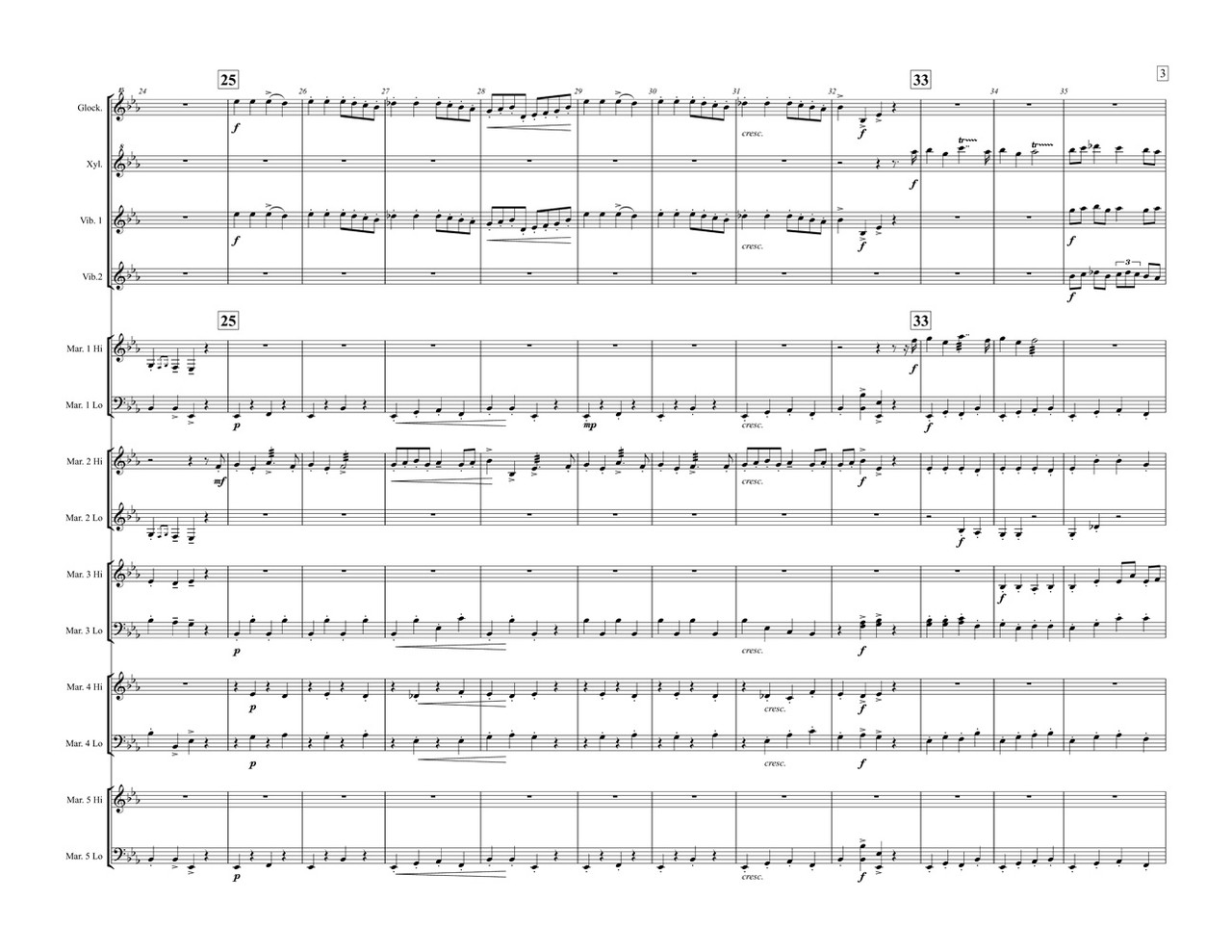
Shepherd's Hey (Perc Ens 14)
Genre: Percussion Ensemble
# of Players: 14
Level: 4 | Duration: 3:00
Publisher: Aux Arcs Music | Copyright: 2019
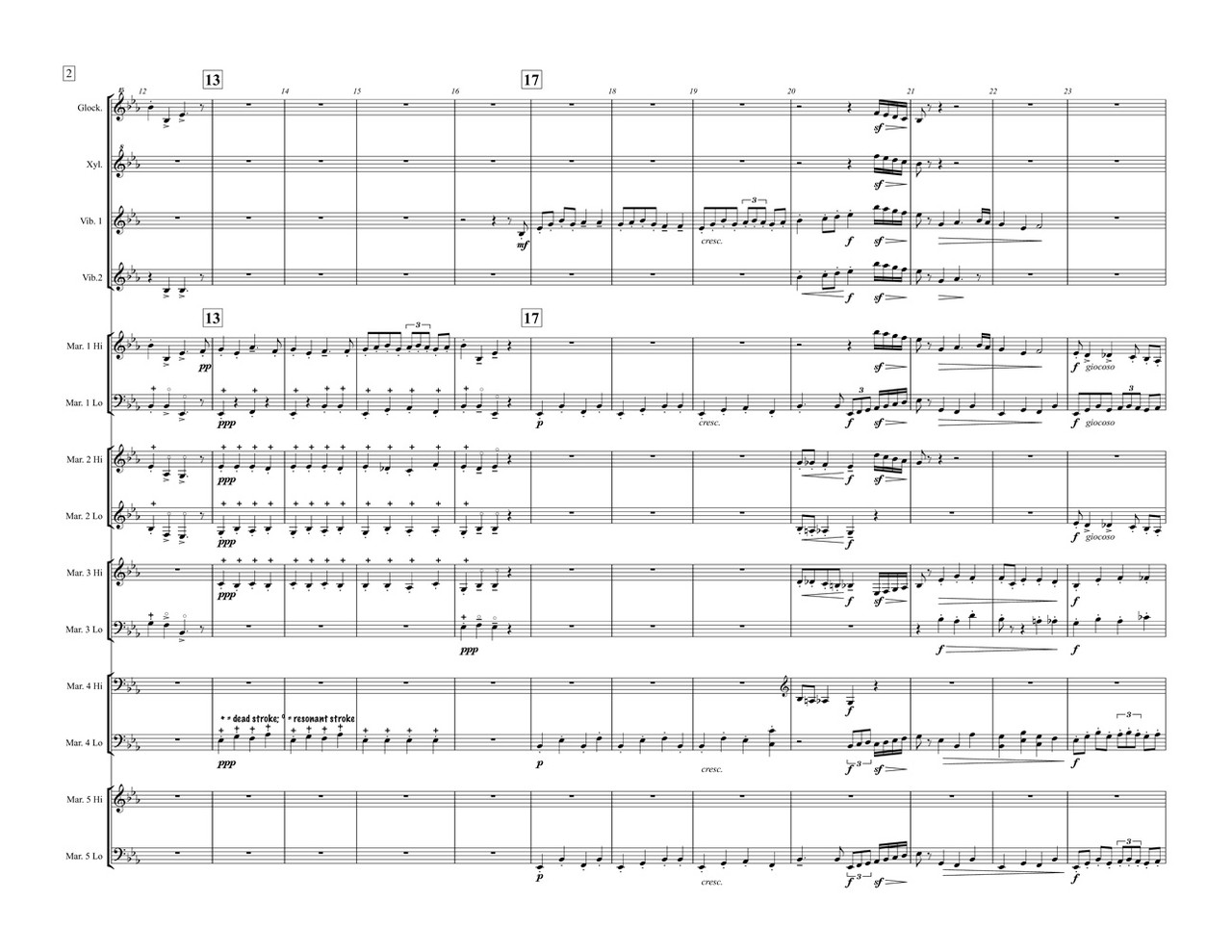
Download mp3 | Click on images to left for score sample
Rating:
Price:
$60.00
Item #:
AAMPE-02
-
Notes & Instrumentation
Percy Grainger’s Shepherd’s Hey is an iconic work in the Grainger oeuvre, along with "Irish Tune from County Derry," "Handel in the Strand," "Molly on the Shore," and "Country Gardens," establishing Grainger as perhaps the greatest “setter” of British folk song.
Genre: Percussion Ensemble | # of Players: 14
Level: 4 | Duration: 3:00
Instrumentation
Glockenspiel
Xylophone
Vibraphone 1
Vibraphone 2
Marimba 1 Hi and Lo
Marimba 2 Hi and Lo
Marimba 3 Hi and Lo
Marimba 4 Hi and Lo
Marimba 5 Hi and Lo
Program NotesPercy Grainger’s Shepherd’s Hey is an iconic work in the Grainger oeuvre, along with Irish Tune from County Derry, Handel in the Strand, Molly on the Shore, and Country Gardens, establishing Grainger as perhaps the greatest “setter” of British folk song. It was as pianist in the New York Symphony Orchestra performance of Shepherd’s Hey that Grainger made his New York debut in 1914. Characteristically, Grainger re-set the number for a variety of ensembles, mostly between 1908-1913. His earliest setting for 11 instruments included the English baritone concertina, flute, clarinet, 8 strings and horn. His arrangements for band and orchestra date from this period as well. In 1922 Grainger set Shepherd’s Hey for solo piano, and in 1947 for 2 pianos, 4 hands (a medium of which he was a master).
The Grainger scholar and pianist Joseph Smith said, “Grainger’s Shepherd’s Hey is a tricky, ingenious setting of an English Morris dance tune, The Keel Row. Percy adds stylistically authentic contrapuntal (he would have said ‘many-stranded’) lines derived from the melody itself. Percy commented of such early pieces as Shepherd’s Hey that ‘where other composers would have been jolly setting such dance tunes I have been sad or furious. My dance settings are energetic rather than gay.’”
Using Smith’s observations, the attentive conductor will search out, and bring forward, secondary lines, and will establish and maintain an attitude of fierceness among the musicians, a quality Grainger appreciated as much as any in the performance of his works. A clangorous approach to the “all fall down” at the end would be especially appropriate.
Our setting calls for a large mallet ensemble (Grainger called it “tuneful percussion”), with 10 marimbists sharing 5 instruments, 2 vibraphones, xylophone and glockenspiel. Grainger was a “perpendicularist” - where the horizontal and vertical writing is equally important. Choose mallets soft enough to bring out the sonorities of the chord progressions, while also firm enough to render the articulations clearly. Oh, and be sure to have fun!
-
Product Reviews
-
Percussive Notes New Literature Review
This arrangement puts a classic concert band piece into a large percussion ensemble setting. Although 14 players are required, 10 of those players will be sharing marimbas, requiring only nine instruments on stage. The piece follows the original band work very closely, allowing only minor adjustments for it to make more sense in the percussion setting. This arrangement provides an excellent opportunity for percussion students to experience all parts of the band setting. Along these lines, studying the band arrangement would allow music-education majors to learn the different roles of the instruments in the band, and then have the opportunity to perform them. This opportunity is rare in our field. Percussion students could gain more understanding of the wind ensemble while studying and performing this piece. The percussionists will face the same challenges as those who play the wind band piece. One of the largest challenges is to bring out the appropriate lines at the right time, and not allow the ensemble to become a cacophony of notes and rhythms. This will require some direction from the conductor, and a firm understanding of the piece from the ensemble. Along with the thickness of the texture comes the preciseness of the rhythms, which have to be exact for the piece to be effective.
Chalon L. Ragsdale has done an excellent job of bringing this band standard into the percussion world. This work will require a large ensemble with the necessary equipment and qualified players. Therefore, it would be more appropriate for a larger university setting where these assets are more readily available. This piece would go well on any university ensemble concert and should be performed and studied by percussionists everywhere.
Josh Armstrong
Percussive Notes
Vol. 59, No. 2, April 2021 Josh Armstrong on Jun 17th 2022
-