- New!
- Band
- Percussion
- Orchestra
- Brass Band
- Jazz
- Chamber
- Voice
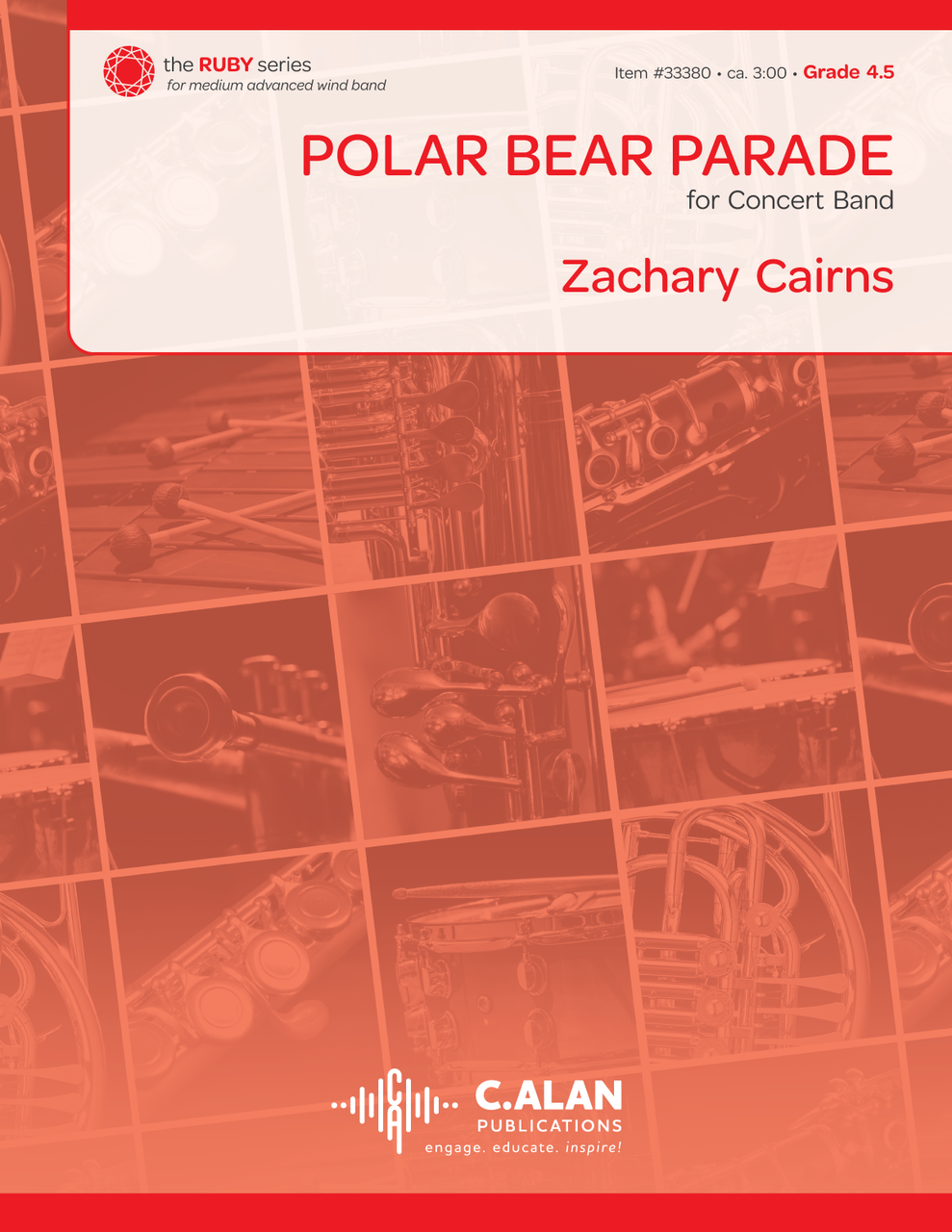

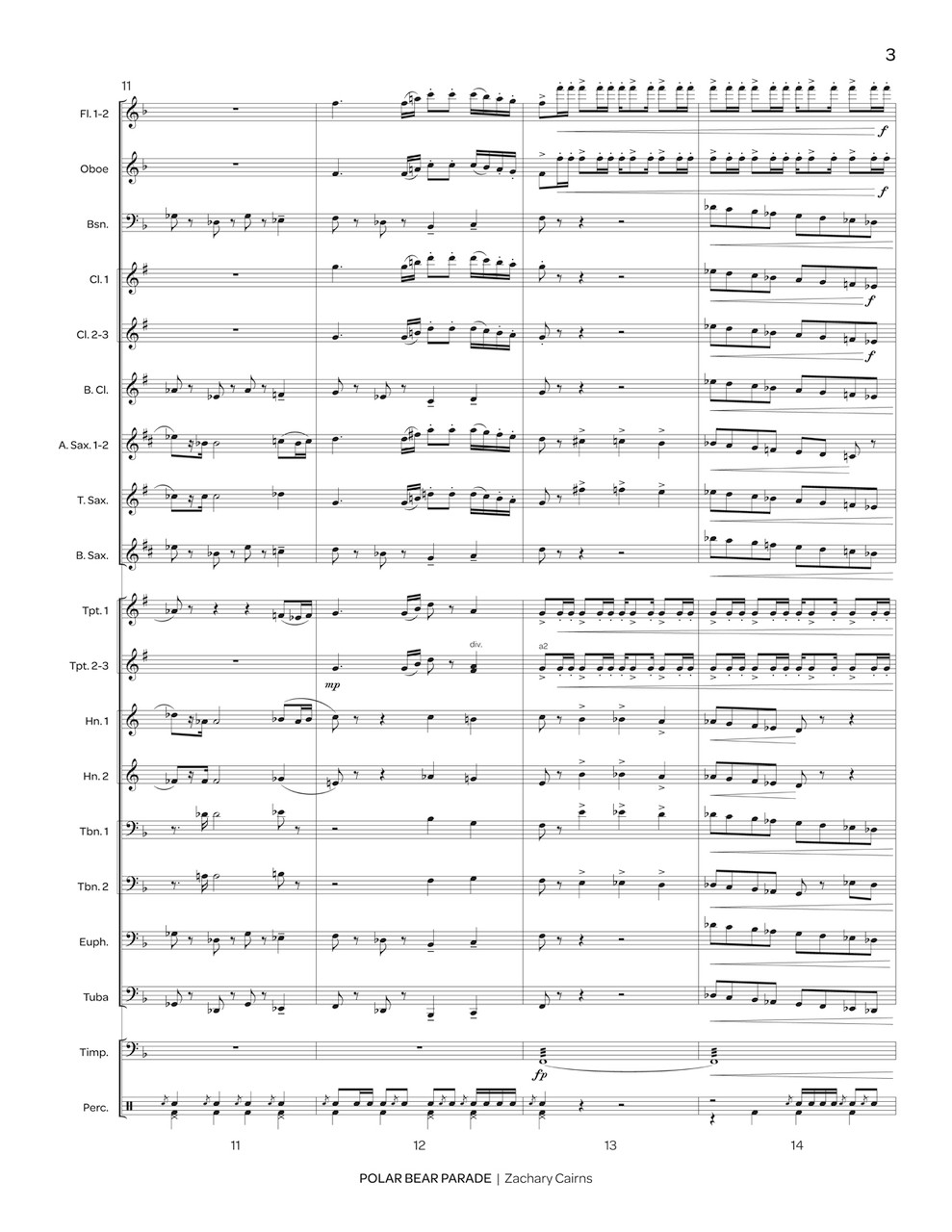
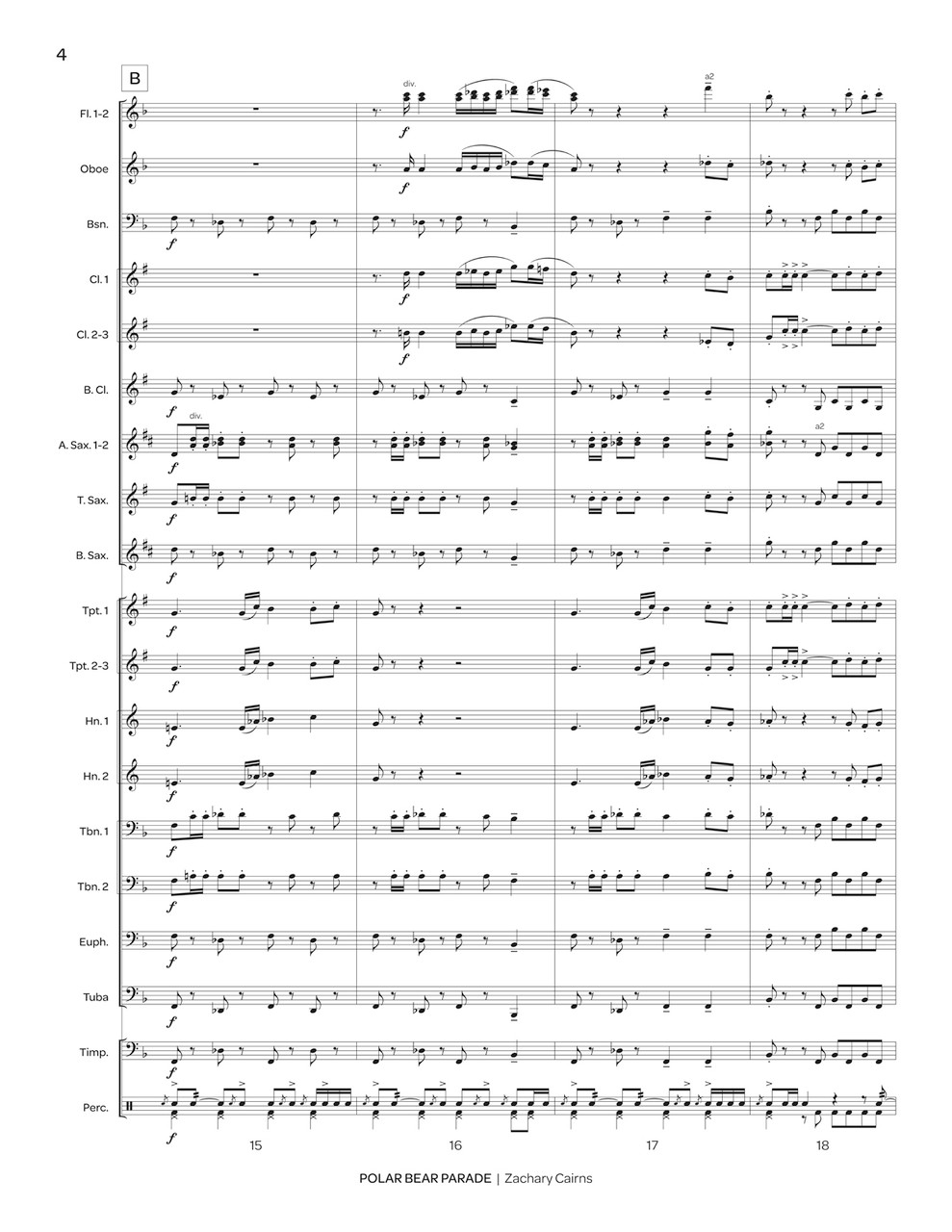
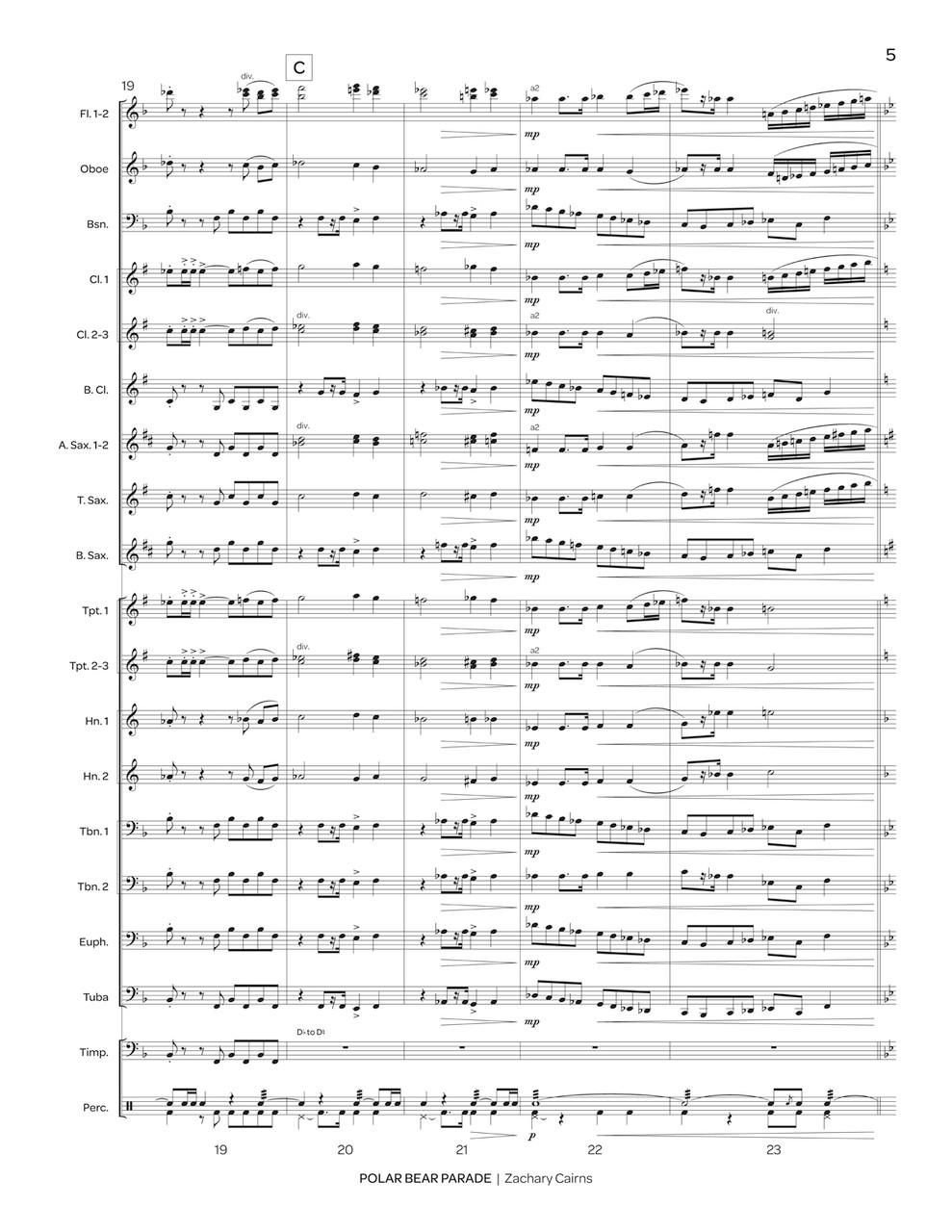

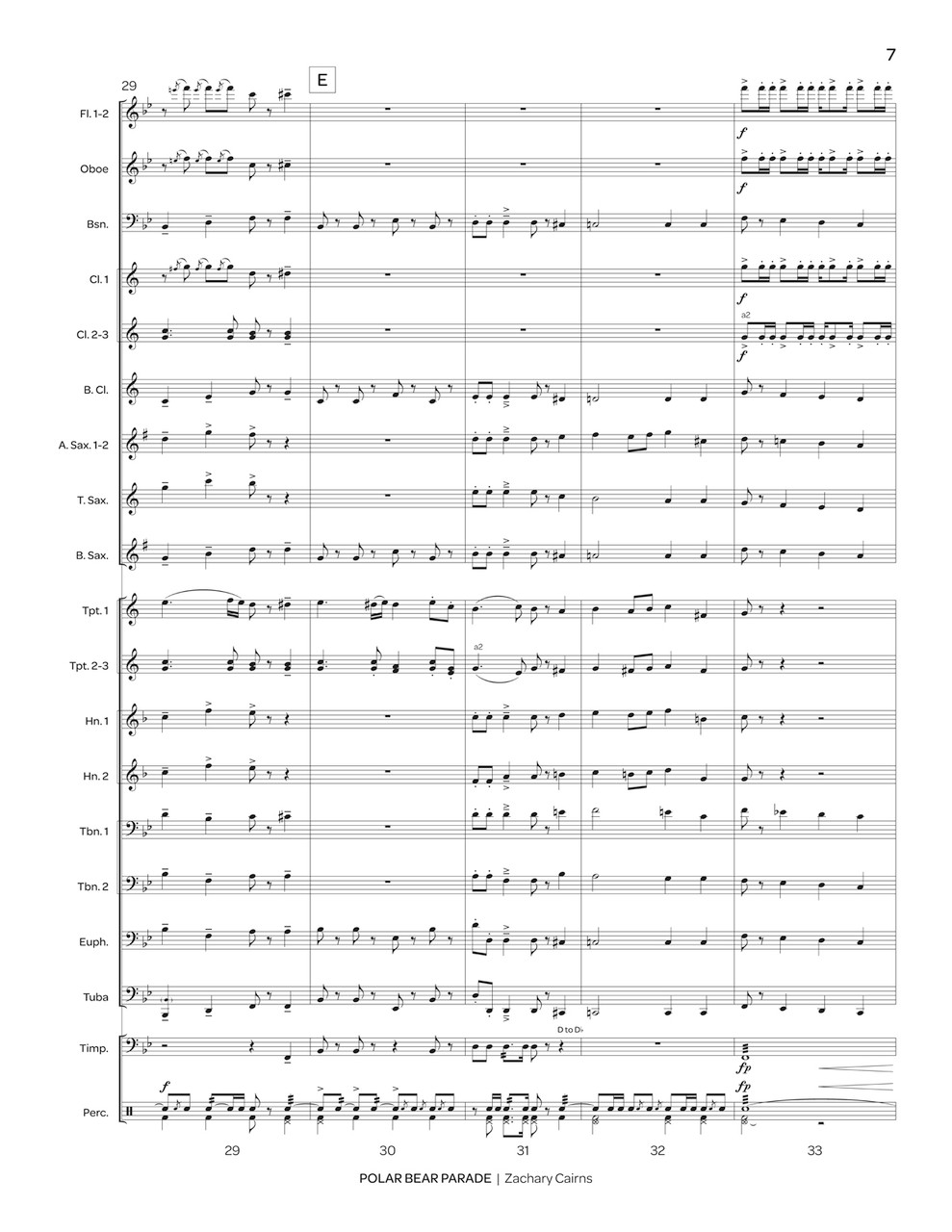

Polar Bear Parade (Band Gr. 4.5)
Genre: Band
Series: Ruby Band Series
# of Players: Standard
Level: 4.5 | Duration: 3:00
Publisher: C. Alan Publications | Copyright: 2024
Price:
$80.00
Item #:
33380
-
Notes & Instrumentation
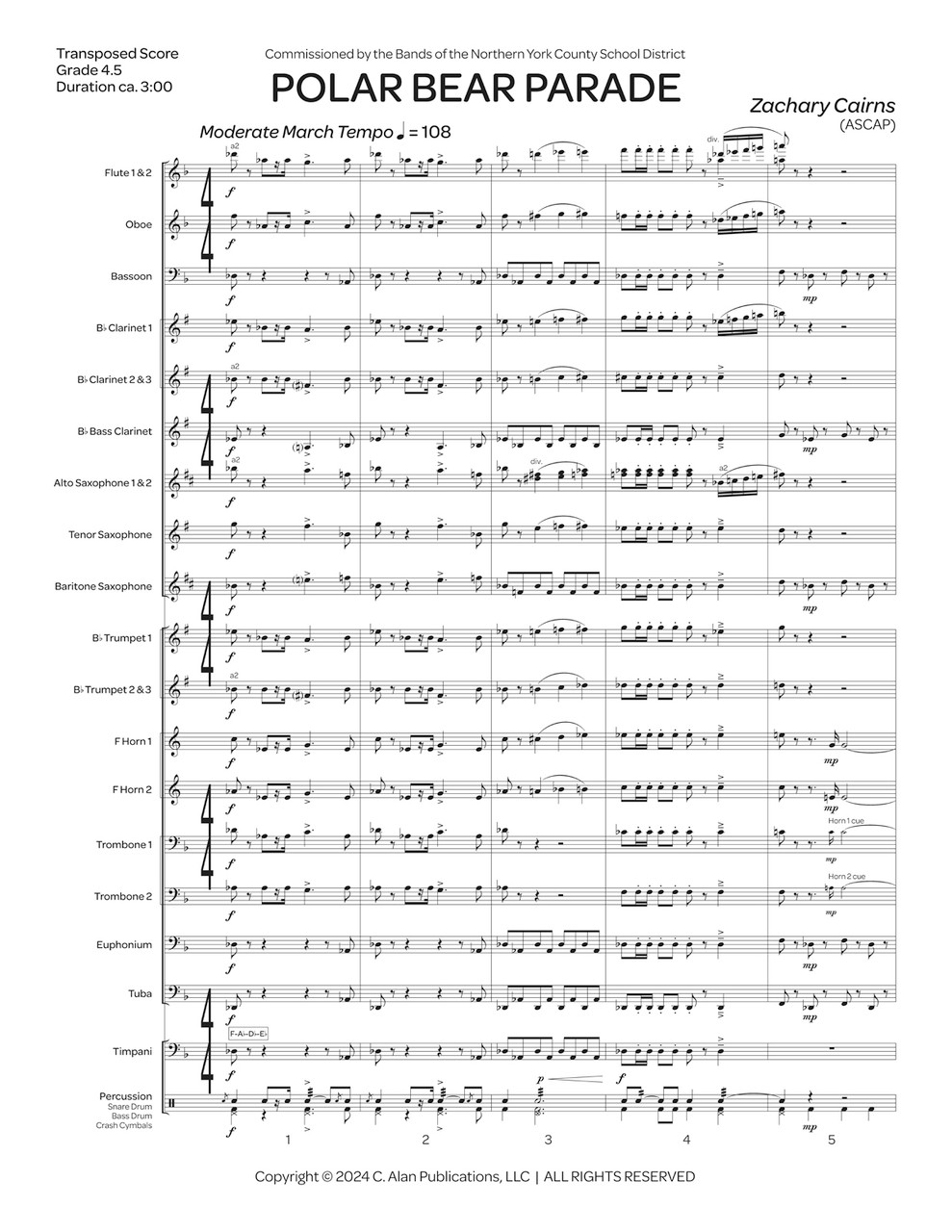
Polar Bear Parade is a concert march that will delight your audience with catchy melodies and a familiar formal structure and challenge your players with unexpected (tonal) chromaticism.
Genre: Band | # of Players: Standard
Series: Ruby Band Series
Level: 4.5 | Duration: 3:00
Instrumentation
Conductor's Score
Flute 1
Flute 2
Oboe
Bassoon
B-flat Clarinet 1
B-flat Clarinet 2
B-flat Clarinet 3
Bass Clarinet
Alto Saxophone 1
Alto Saxophone 2
Tenor Saxophone
Baritone Saxophone
B-flat Trumpet 1
B-flat Trumpet 2
B-flat Trumpet 3
F Horn 1
F Horn 2
Trombone 1
Trombone 2
Euphonium
B-flat Baritone T.C.
Tuba
Timpani (4 drums)
Percussion (3 players): Snare Drum, Bass Drum, Crash Cymbals
Program Notes
Polar Bear Parade was commissioned by the bands of the Northern York County School District (Dillsburg, PA) in the spring of 2023. Funding for the project was due to the generous support of Dillsburg’s Polar Bear Foundation. This was a special commission for me, as I had had a close relationship with the Northern York school district for a long time, as their high school marching band’s long-time music arranger/composer. When the high school’s band director, Andrew Sheffer, and the middle school’s band director, Chad McCartney, approached me about writing a concert march, I jumped at the opportunity.As I started writing, I realized pretty immediately that it was going to be obvious that I’m not John Philip Sousa…and I’m grateful to Andrew and Chad for telling me that I didn’t have to be. I knew from the beginning that I wanted to incorporate the school district’s mascot into the title of the march, but the mental image of a parade of polar bears didn’t evoke any Liberty Bell-type sounds in my ear. So, while Polar Bear Parade follows the general formal structure of a typical Sousa march, the harmonies I used fit much more in line with the chromatically tonal music of the present day. For example, where a typical Sousa march begins with an introductory phrase that begins on tonic but leads quickly to the dominant, my introduction begins emphatically in the “wrong” key. By the time the first theme enters, we have found our way to the home key of F major…but the bass voices play a common “oom-pah” march pattern which alternates between F and Db, instead of the more typical F and C. I found that these kinds of harmonic twists fit much more with my mind’s image of marching polar bears…
–Z.C.
-
Product Reviews