- New!
- Band
- Percussion
- Orchestra
- Brass Band
- Jazz
- Chamber
- Voice
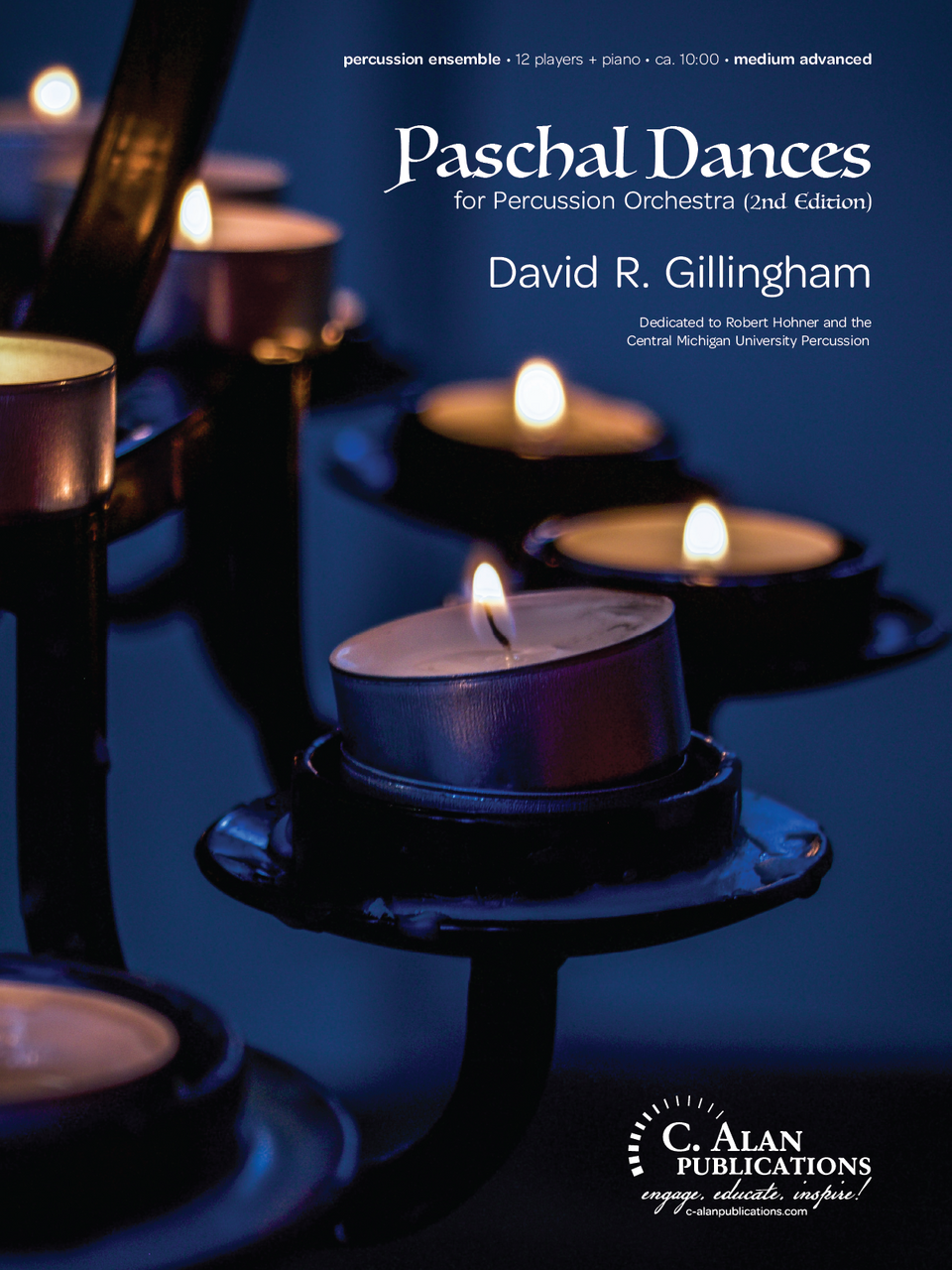





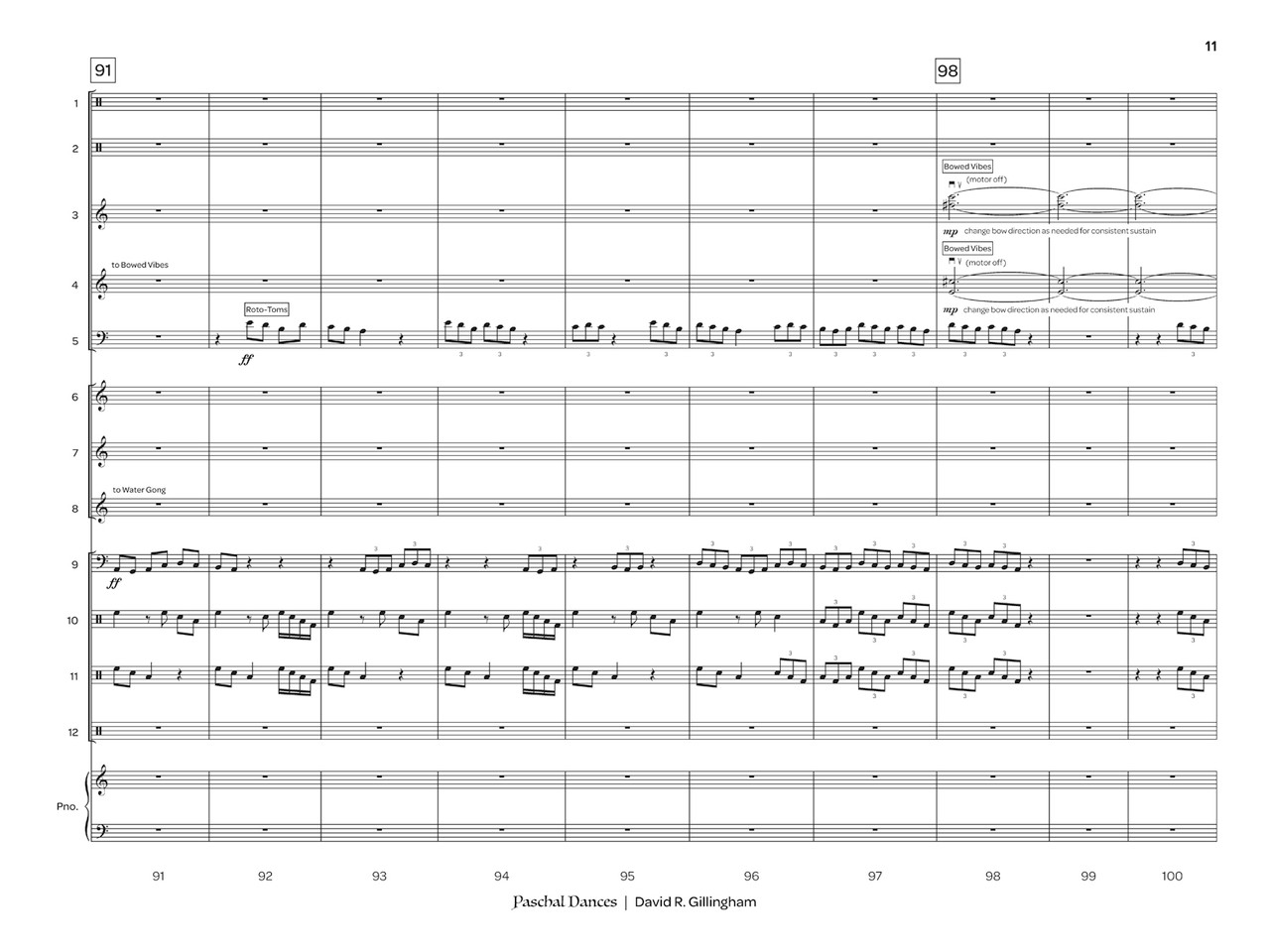
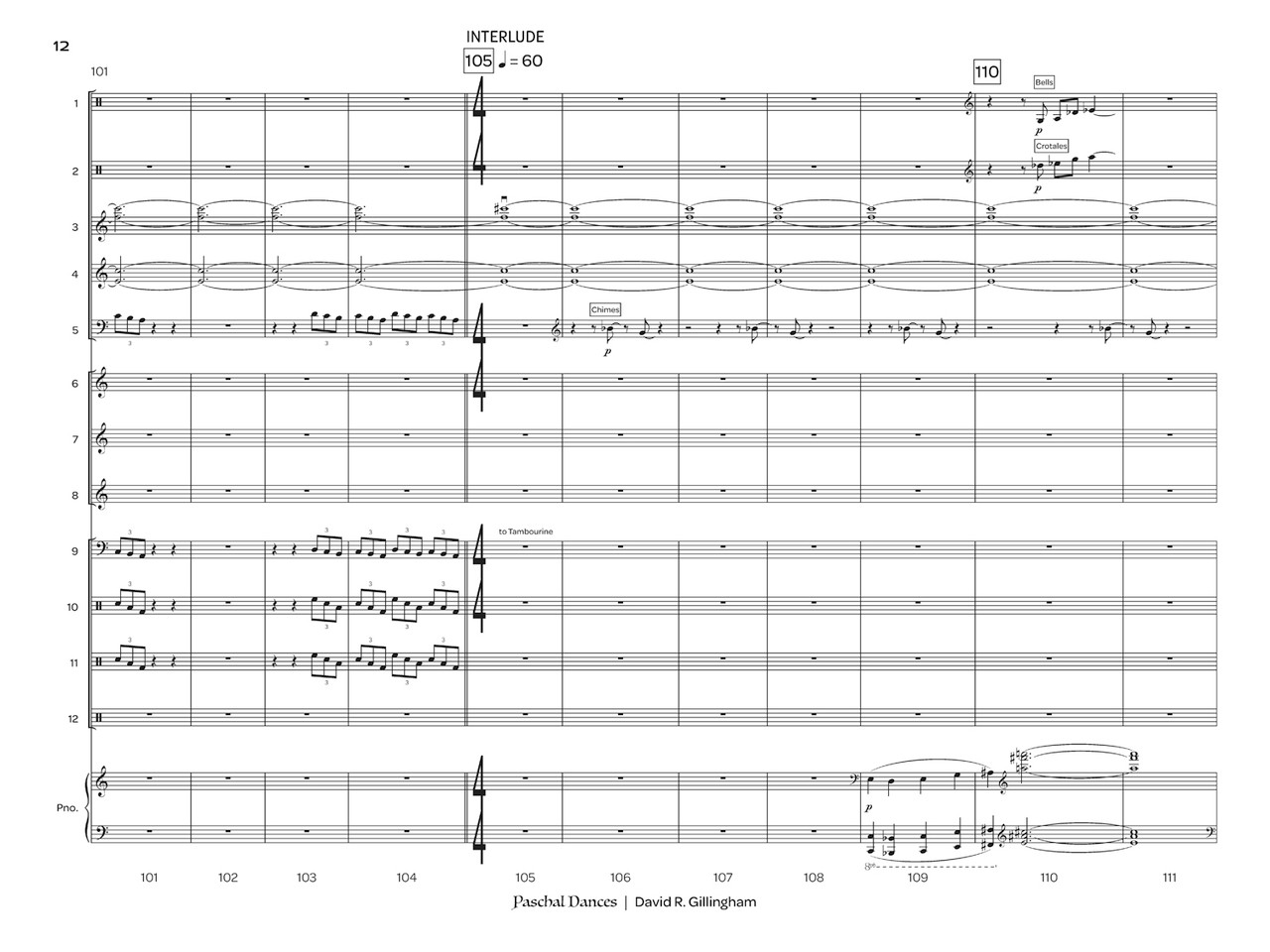
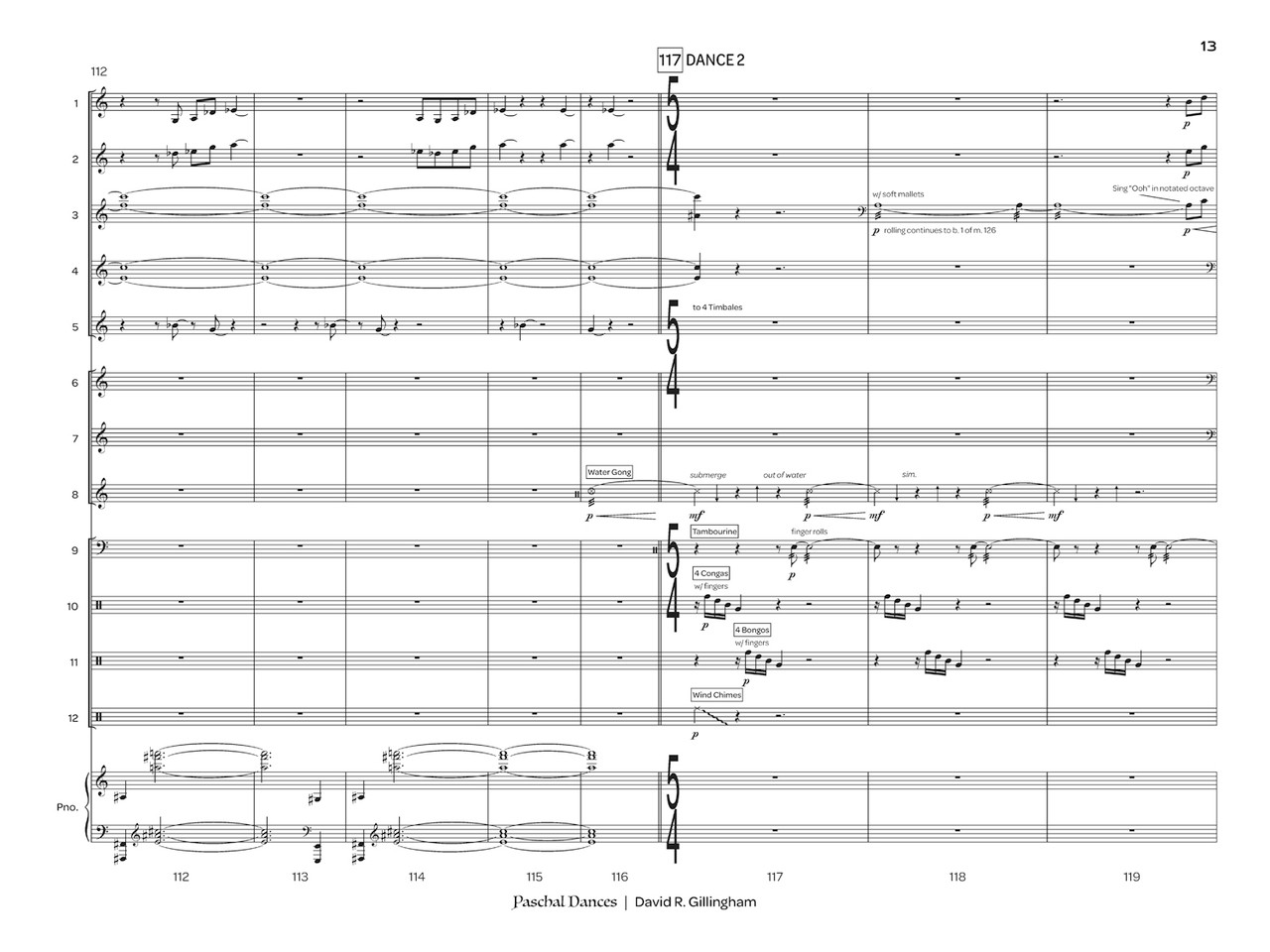

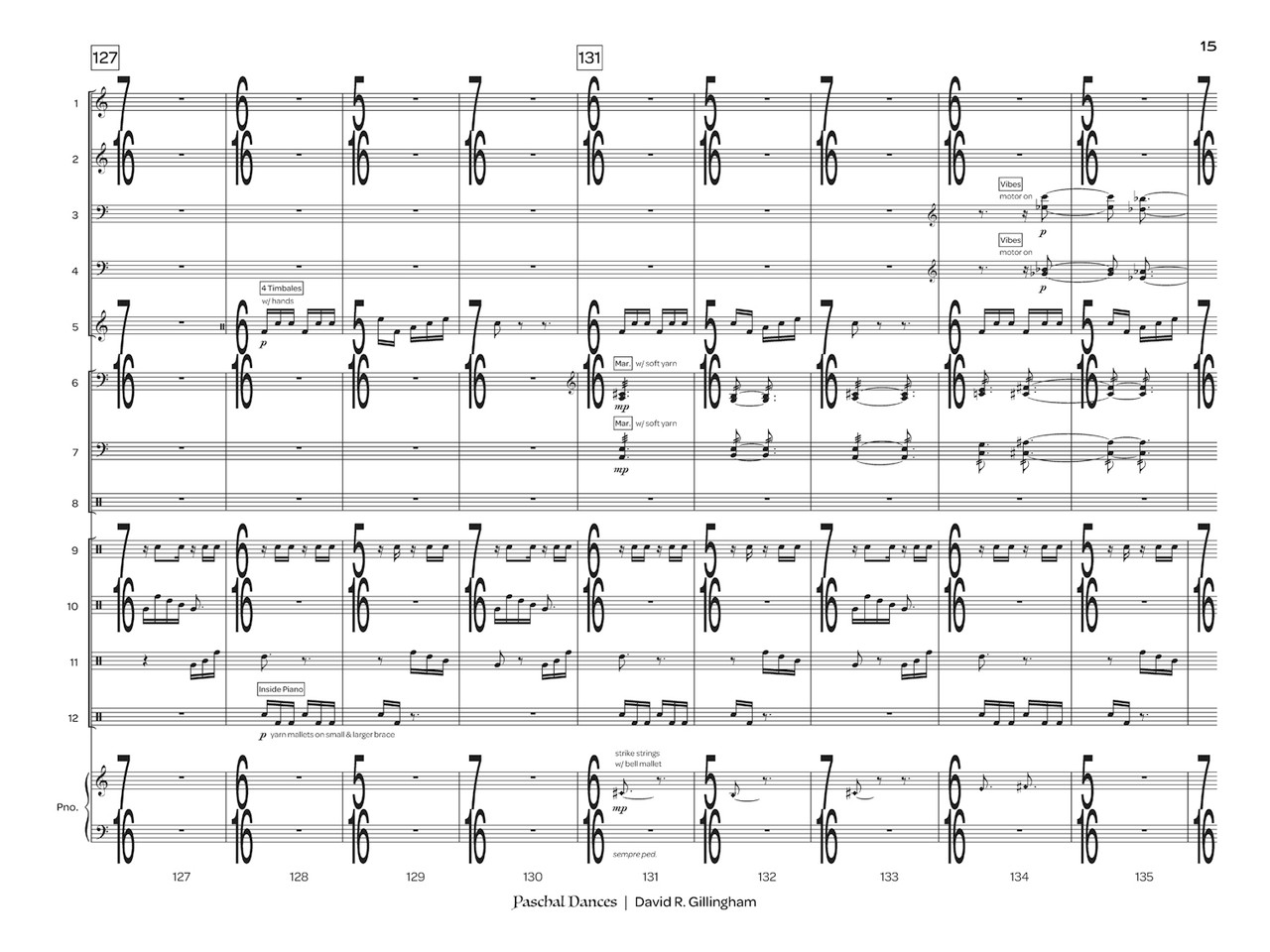
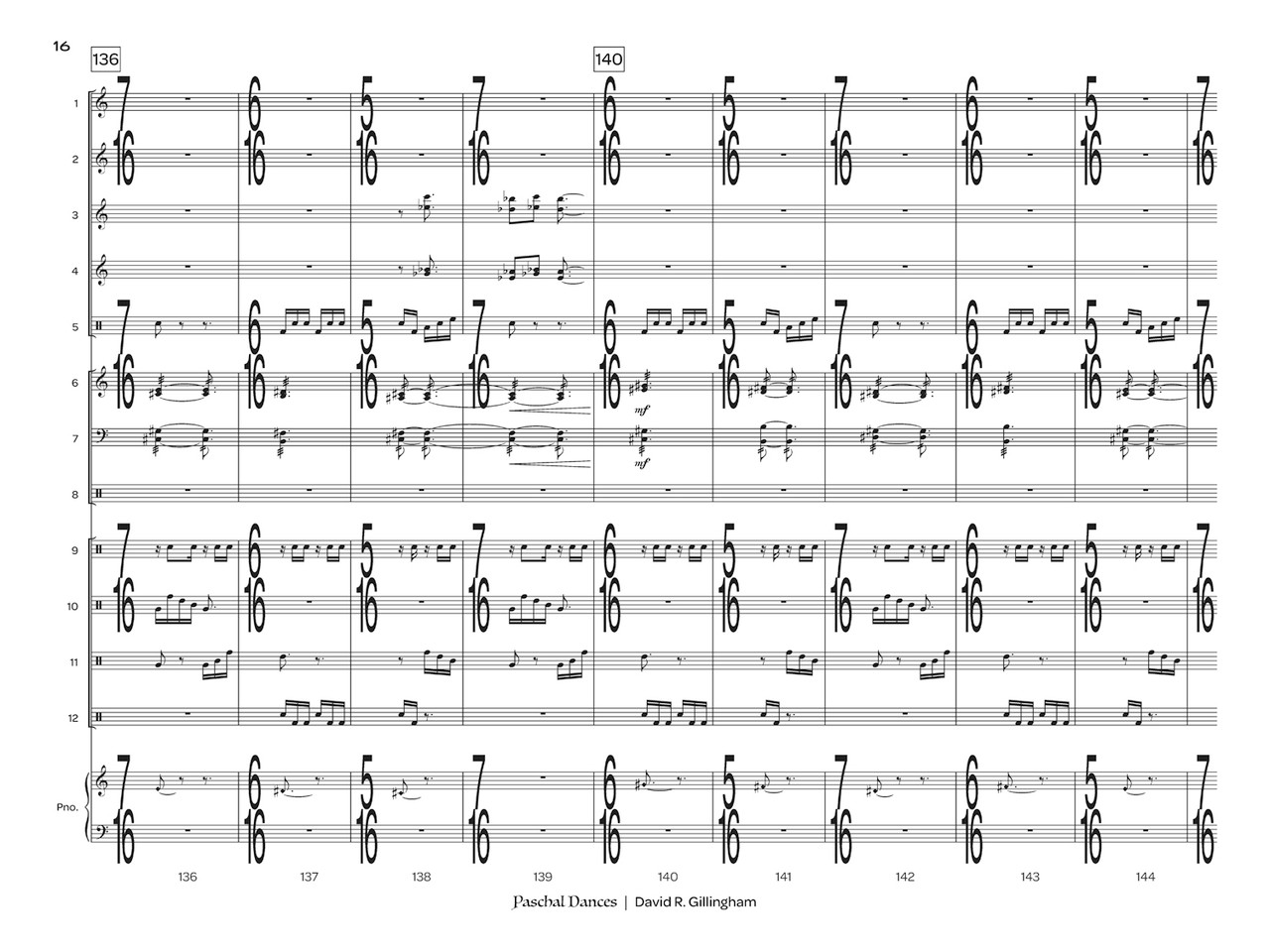
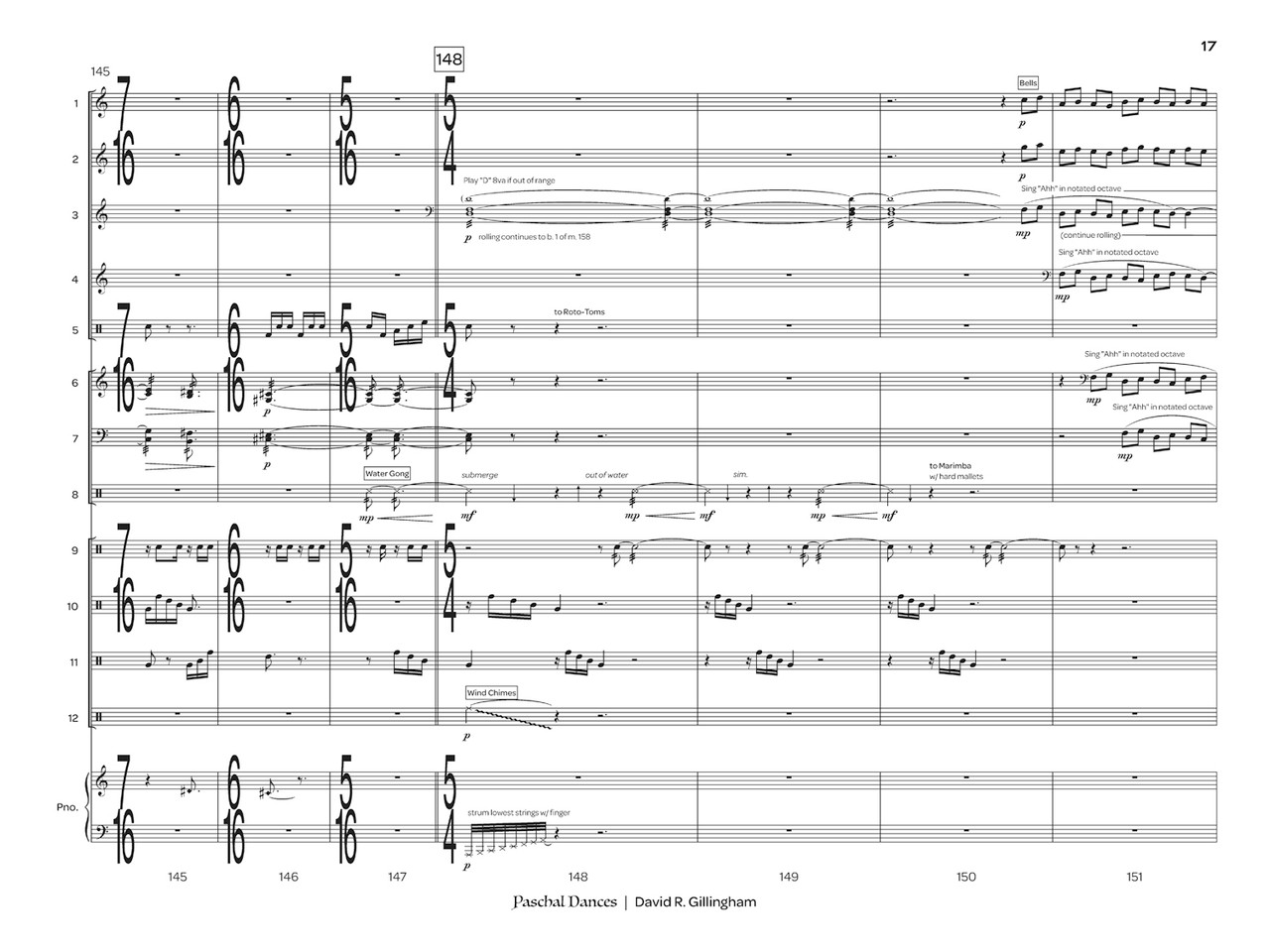

Paschal Dances, 2nd Edition (Perc Ens 12 + Piano)
Genre: Percussion Ensemble
Series: N/A
# of Players: 12 + piano
Level: Medium Advanced | Duration: 10:00
Publisher: C. Alan Publications | Copyright: 1994
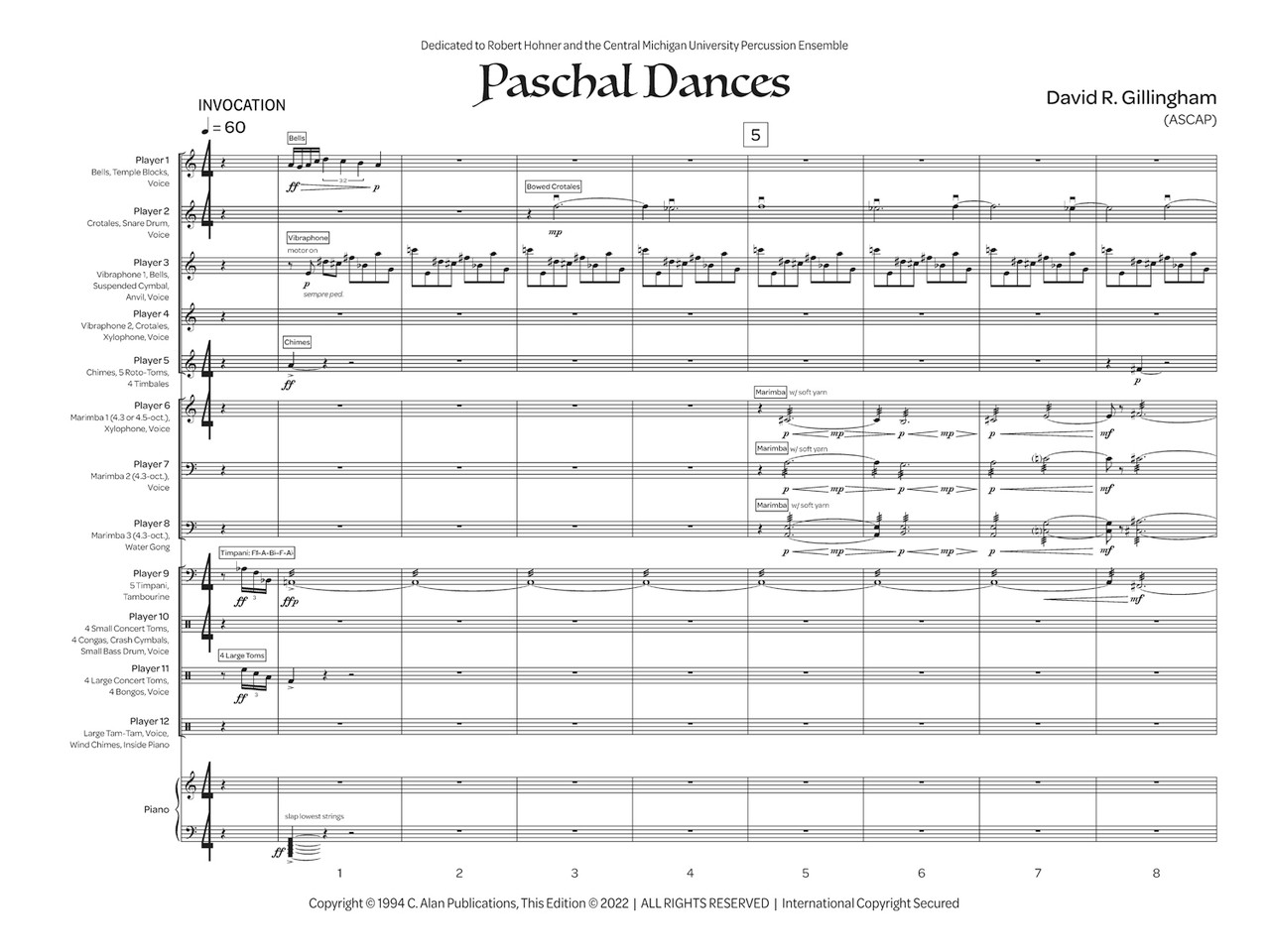
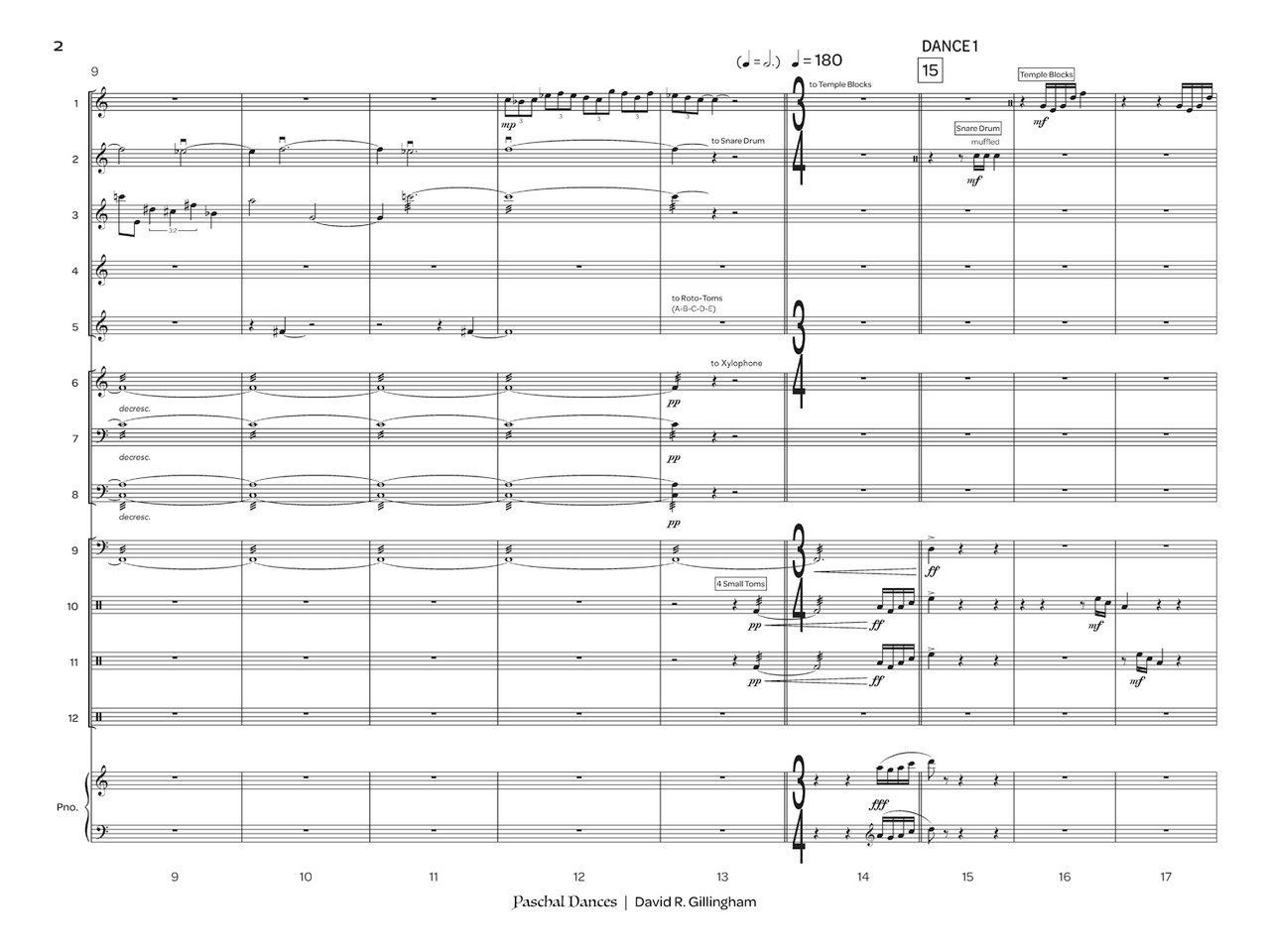
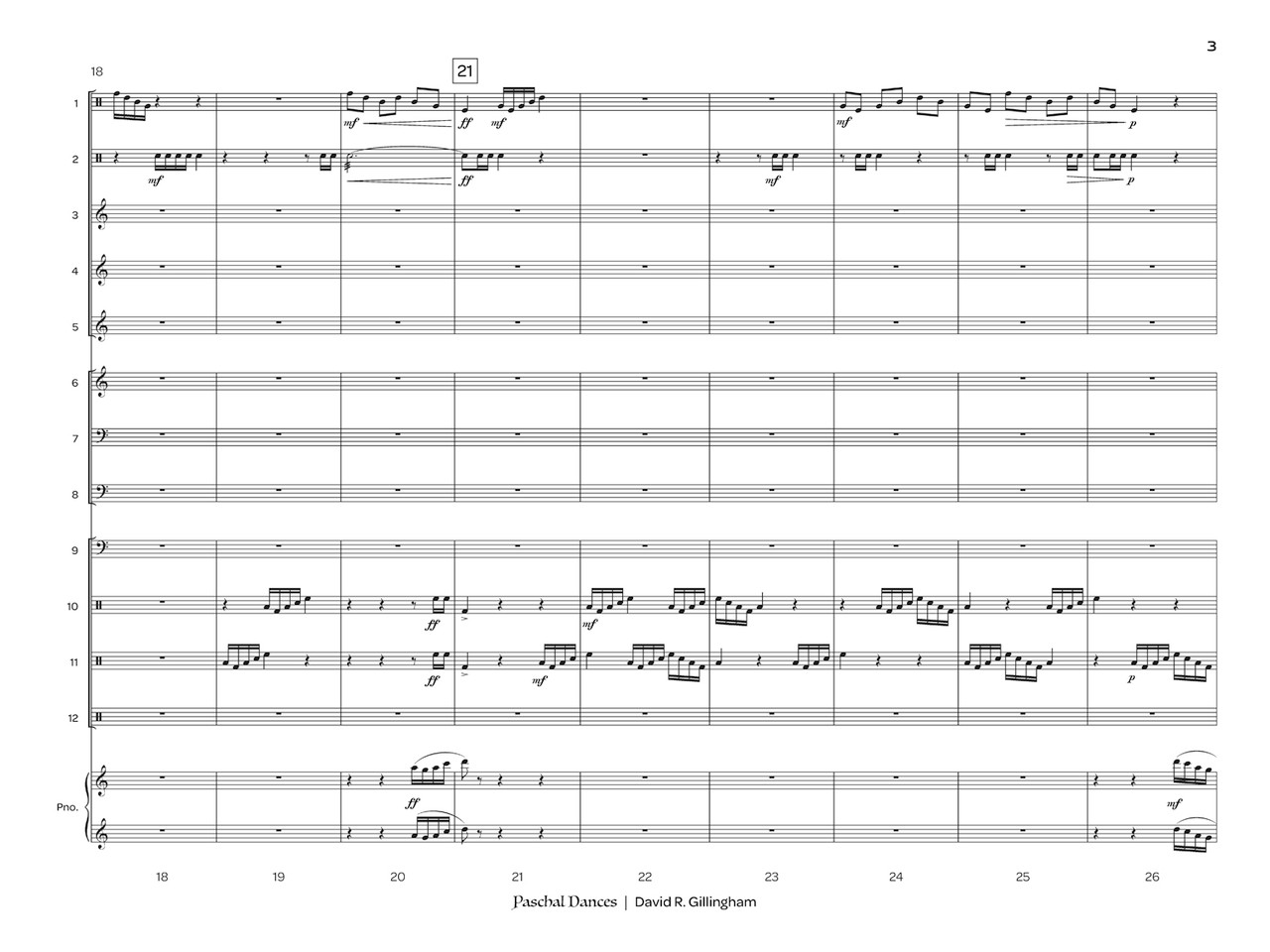
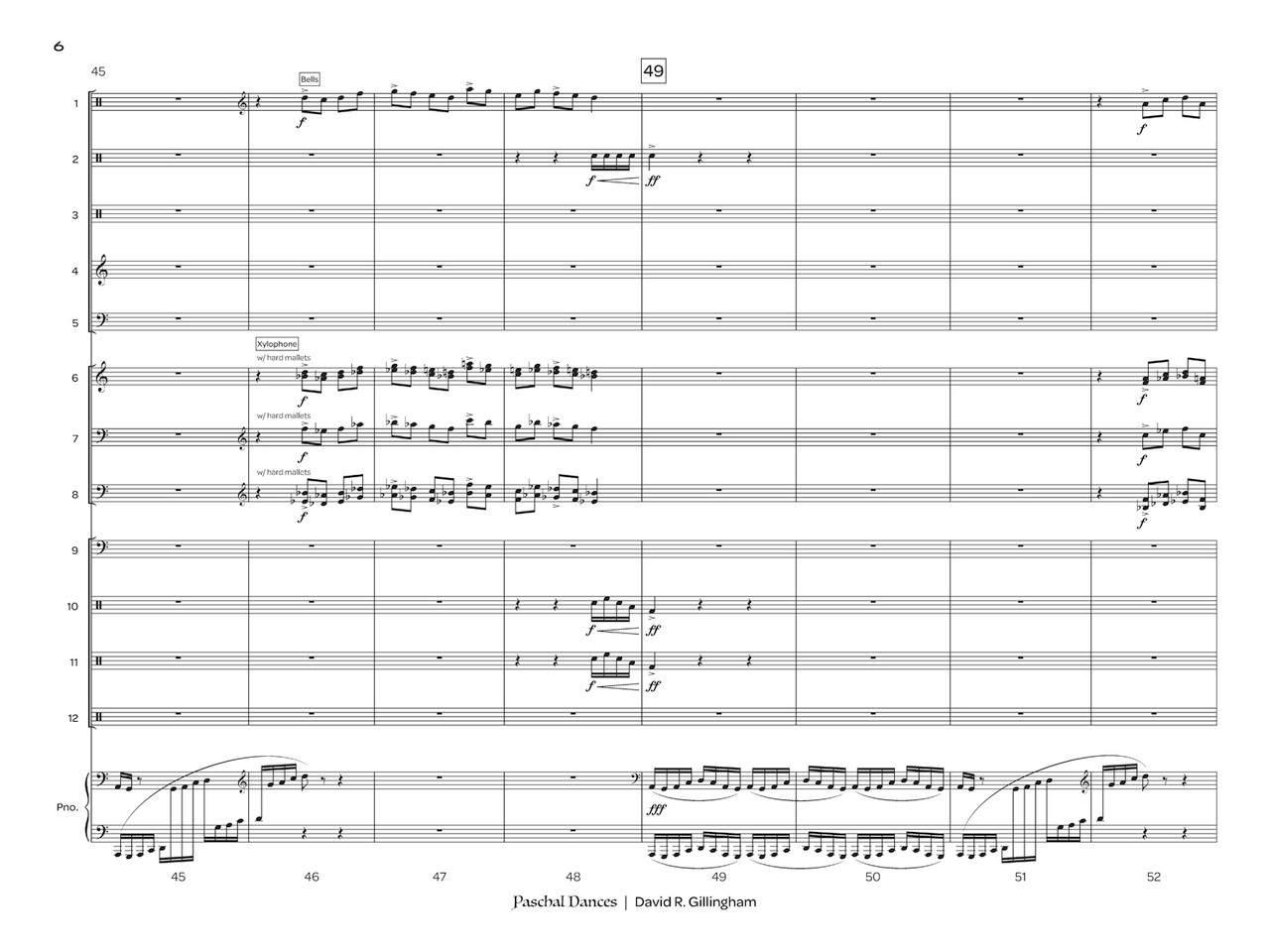
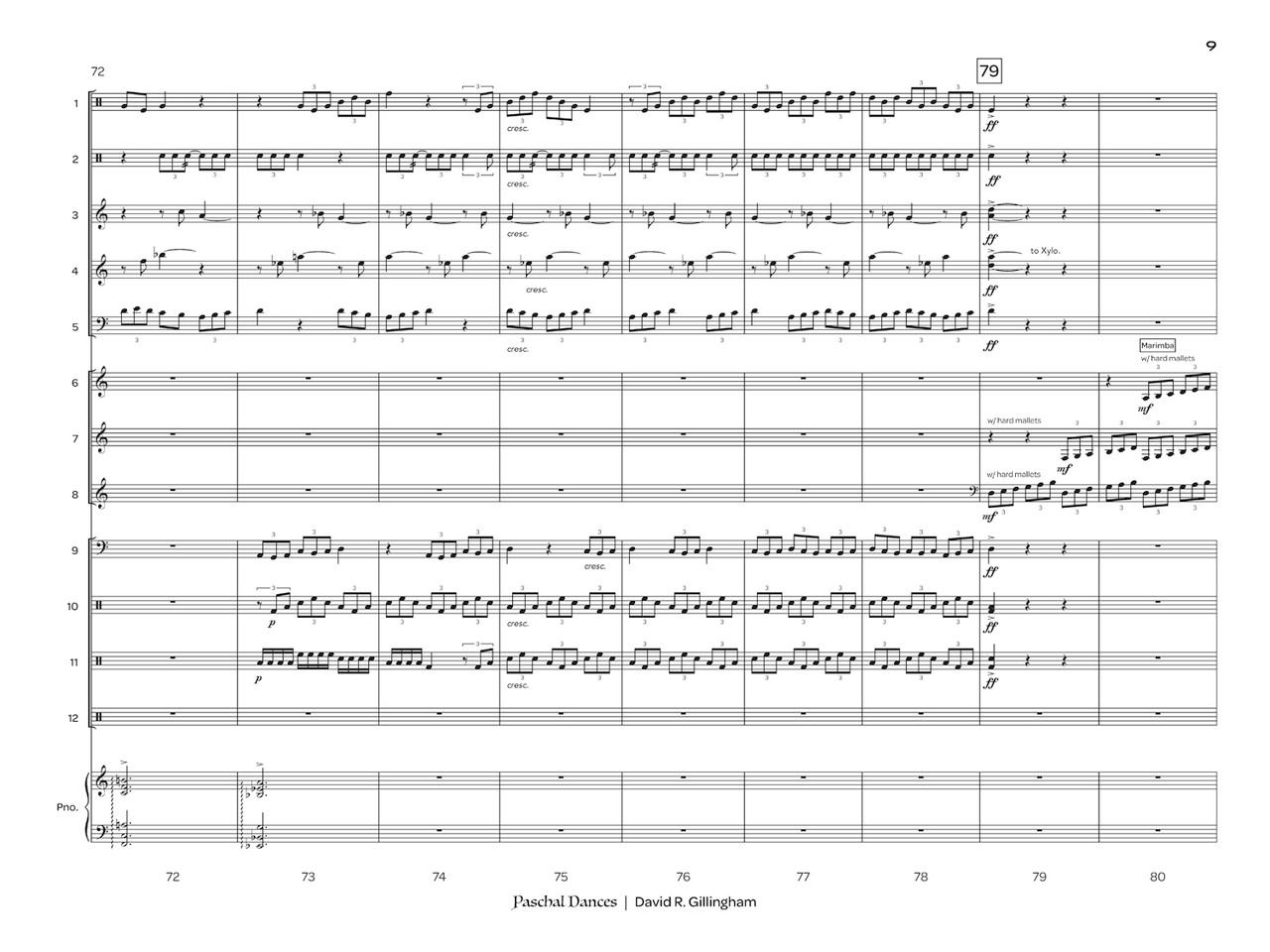
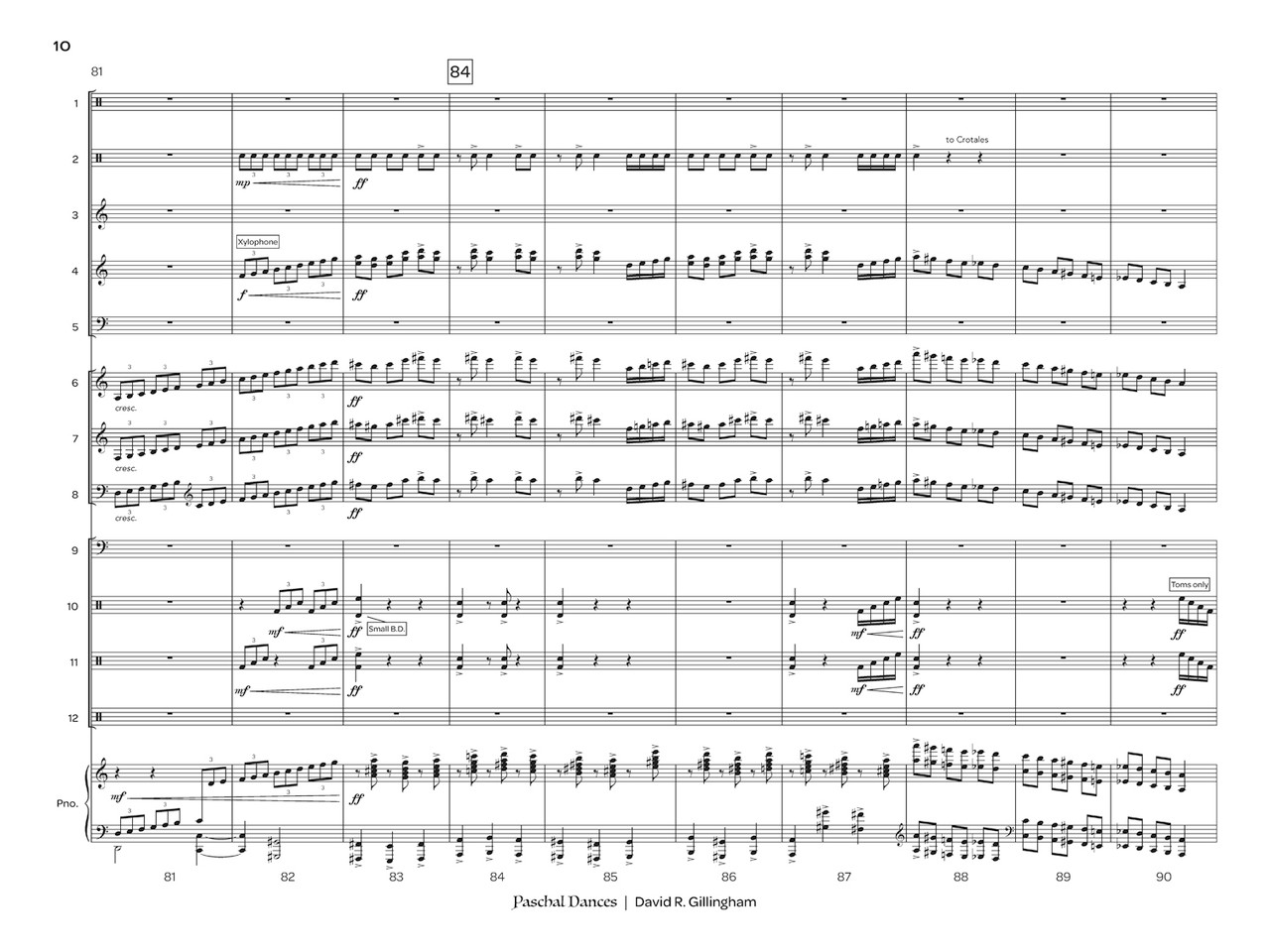
Download mp3 | Click on images to left for score sample

Price:
$60.00
Item #:
01850
-
Notes & Instrumentation
David Gillingham’s first work for percussion ensemble, Paschal Dances is based on the first two lines of the famous Gregorian Easter sequence, “Victim paschali laudes” (Praises to the Paschal Victim). Motives and phrases of the chant are used to unify the work which comprises an Invocation, 4 Dances, 2 Interludes, and a Benediction. It has been completely re-engraved and edited in a beautiful new edition.
Genre: Percussion Ensemble | # of Players: 12 + piano
Series: N/A
Level: Medium Advanced | Duration: 10:00
Instrumentation
Player 1: Bells, Temple Blocks, Voice
Player 2: Crotales (2 octaves), Snare Drum, Voice
Player 3: Vibraphone 1, Bells, Suspended Cymbal, Anvil, Voice
Player 4: Vibraphone 2, Crotales (upper octave), Xylophone, Voice
Player 5: Chimes, 5 Roto-Toms, 4 Timbales
Player 6: Marimba 1 (4.5 or 4.3-octave), Xylophone, Voice
Player 7: Marimba 2 (4.3-octave), Voice
Player 8: Marimba (4.3-octave), Water Gong
Player 9: Timpani (5 drums), Tambourine
Player 10: 4 Small Concert Toms, 4 Congas, Crash Cymbals, Small Bass Drum, Voice
Player 11: 4 Large Concert Toms, 4 Bongos, Voice
Player 12: Large Tam-Tam, Wind Chimes, Inside Piano, Voice
Piano
Program Notes
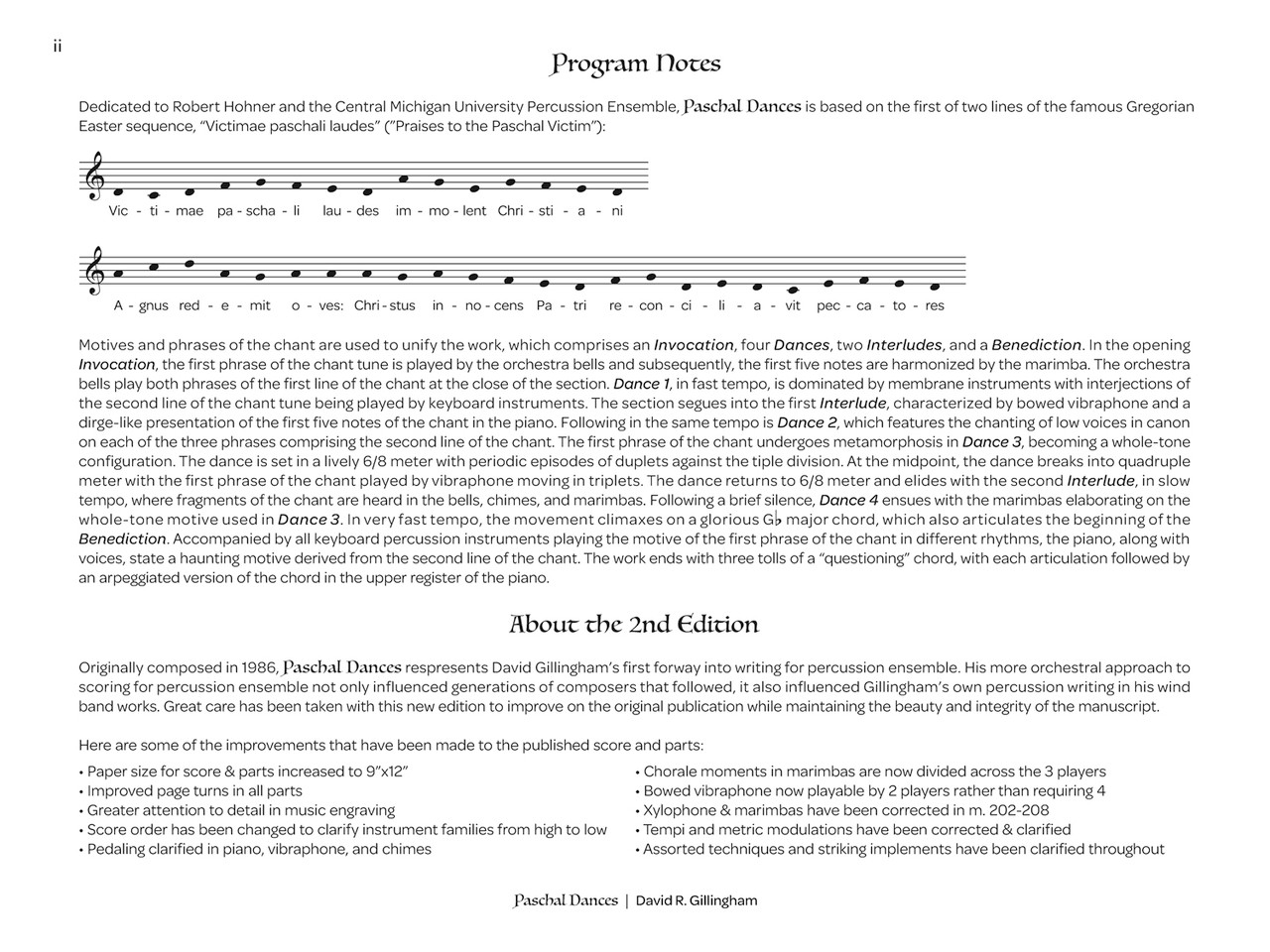
Dedicated to Robert Hohner and the Central Michigan University Percussion Ensemble, Paschal Dances is based on the first two lines of the famous Gregorian Easter sequence, "Victim paschali laudes" (Praises to the Paschal Victim). Motives and phrases of the chant are used to unify the work which comprises an Invocation, 4 Dances, 2 Interludes, and a Benediction.In the opening Invocation, the first phrase of the chant tune is played by the orchestra bells and consequently, the first five notes are harmonized by the marimba. The orchestra bells play both phrases of the first line of the chant at the close of the section. Dance I, in fast tempo, is dominated by membrane instruments with interjections of the second line of the chant tune being played by keyboard instruments. The section segues into the first Interlude, characterized by bowed vibraphone and a dirge-like presentation of the first five notes of the chant in the piano. Following, in the same slow tempo, is Dance II, which features chanting of male voices in canon on each of the three phrases comprising the second line of the chant. The first phrase of the chant undergoes metamorphosis in Dance III, becoming a whole-tone configuration. The dance is set in a lively 6/8 meter with periodic episodes of duplets against the triplet division. At midpoint, the dance breaks into quadruple meter with the first phrase of the chant played by the vibraphone moving in triplets. The dance returns to 6/8 meter and elides with the second Interlude, in slow tempo, where fragments of the chant are heard in the bells, chimes and marimba. Following a brief silence, Dance IV ensues with the marimbas elaborating on the whole-tone motive used in Dance III. In very fast tempo, the movement climaxes on a glorious G-flat major chord, which also articulates the beginning of the Benediction. Accompanied by all mallet instruments playing the motive of the first phrase of the chant in different rhythms, the piano, along with voices, state a haunting motive derived from the second line of the chant. The work ends with three tolls of a "questioning" chord, with each articulation followed by an arpeggiated version of the chord in the upper register of the piano.
University of Oklahoma Percussion Orchestra, directed by Dr. Lance Drege -
Video
-
"Paschal Dances" by David Gillingham
U. North Carolina Greensboro under the direction of Cort McClaren performs "Paschal Dances" by David Gillingham. "Paschal Dances is based on the first two lines of the famous Gregorian Easter sequence,"Victim paschali laudes" (Praises to the Paschal Victim). Motives and phrases of the chant are used to unify the work which comprises an Invocation, 4 Dances, 2 Interludes, and a Benediction." - D. Gillingham. "Paschal Dances" can be purchased online at www.c-alanpublications.com
-
-
Product Reviews