- New!
- Band
- Percussion
- Orchestra
- Brass Band
- Jazz
- Chamber
- Voice
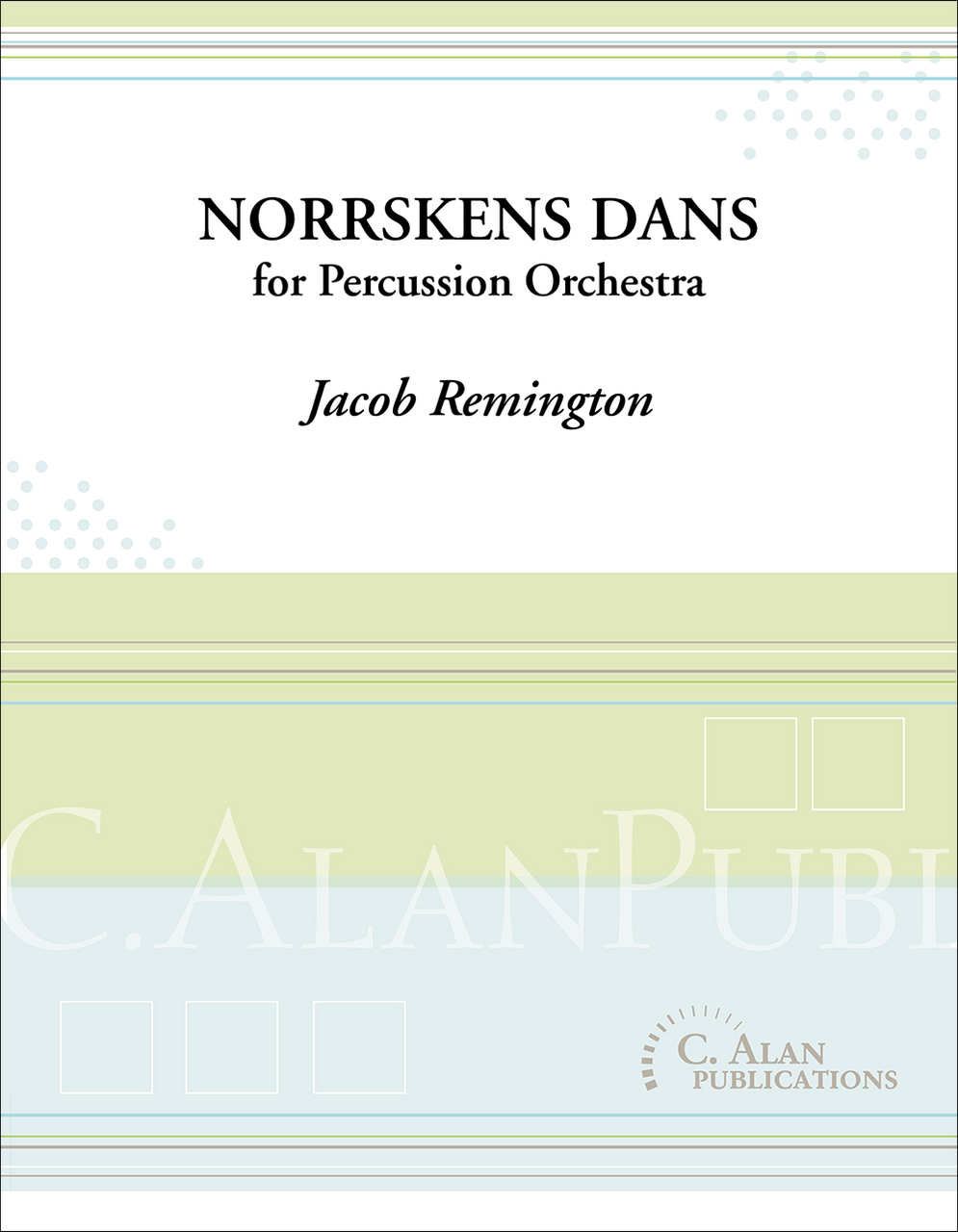
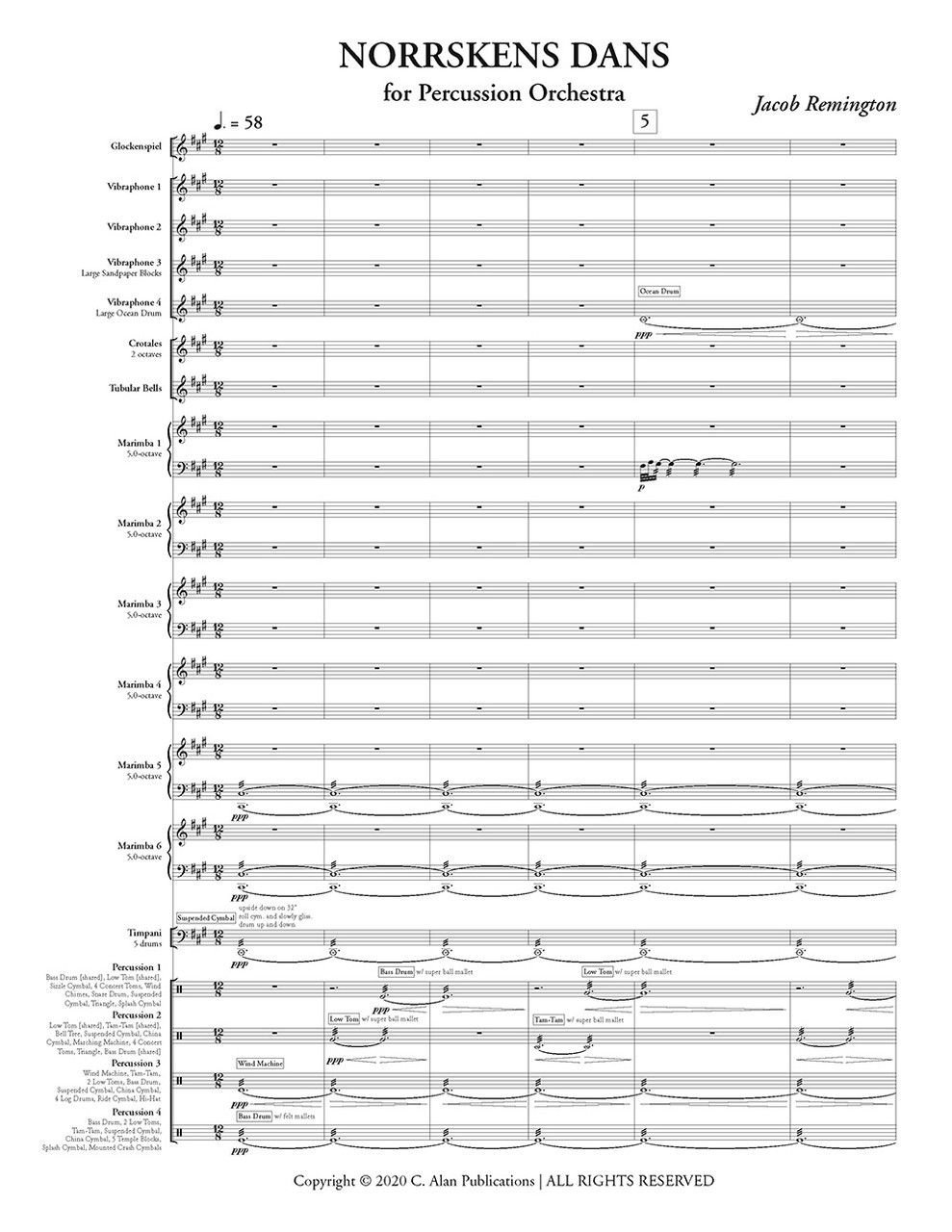
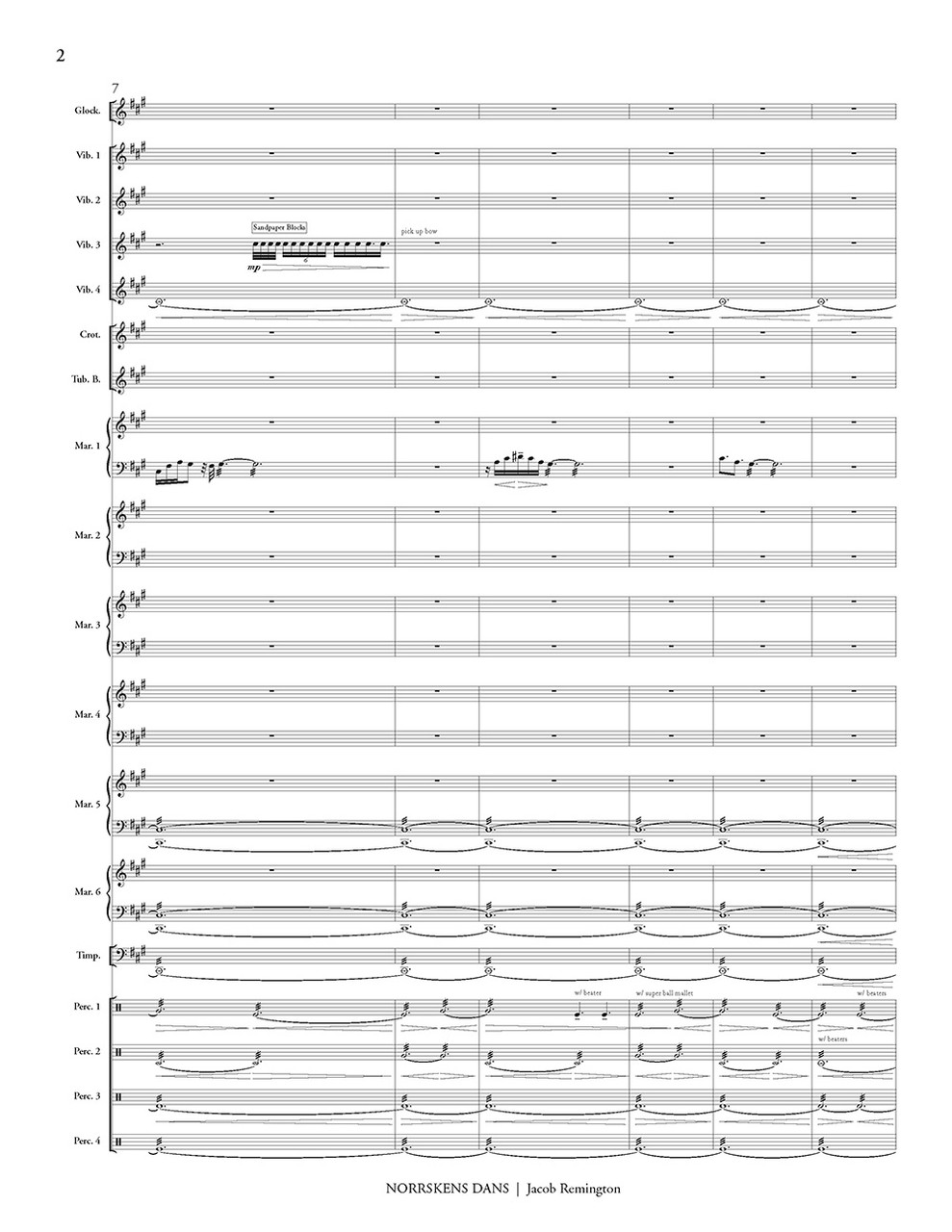
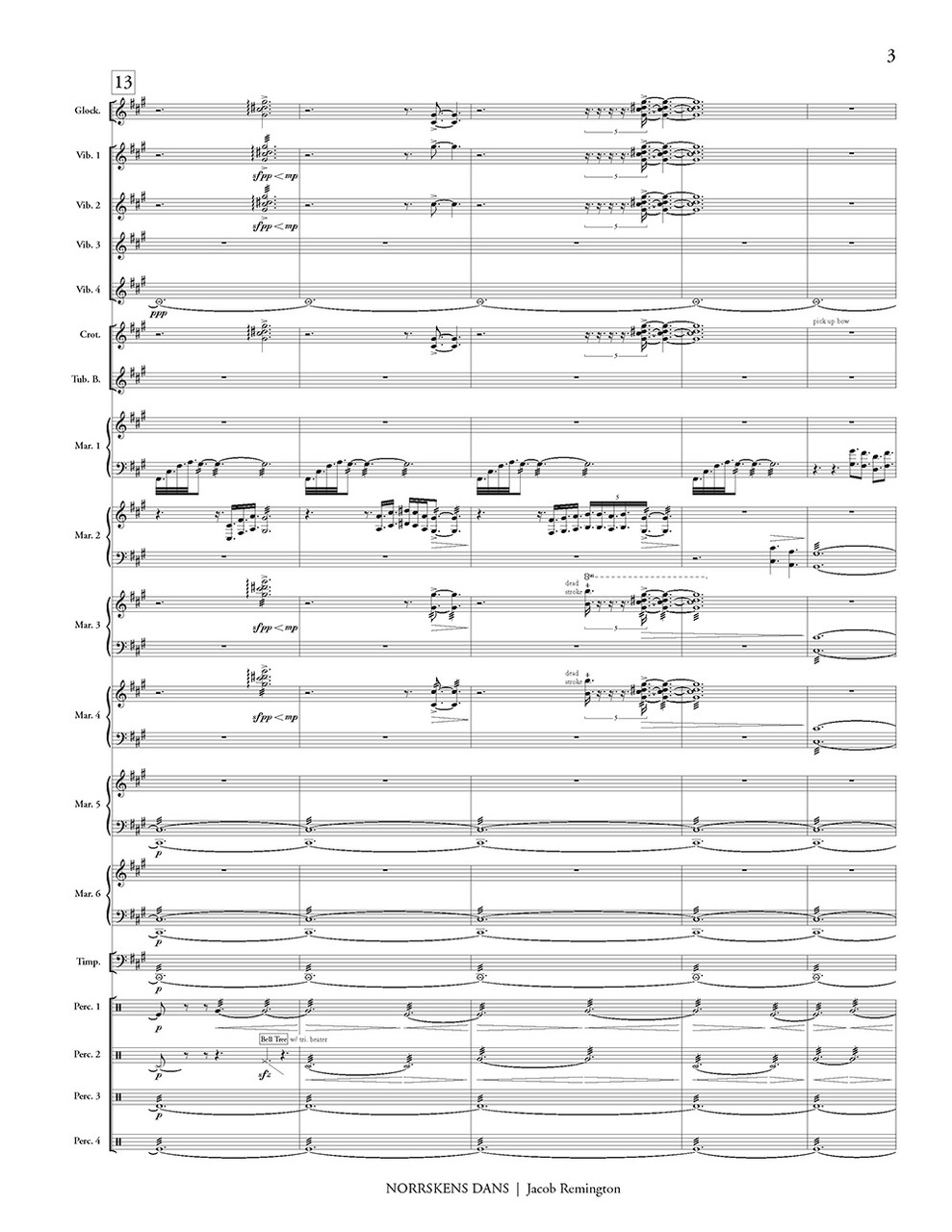
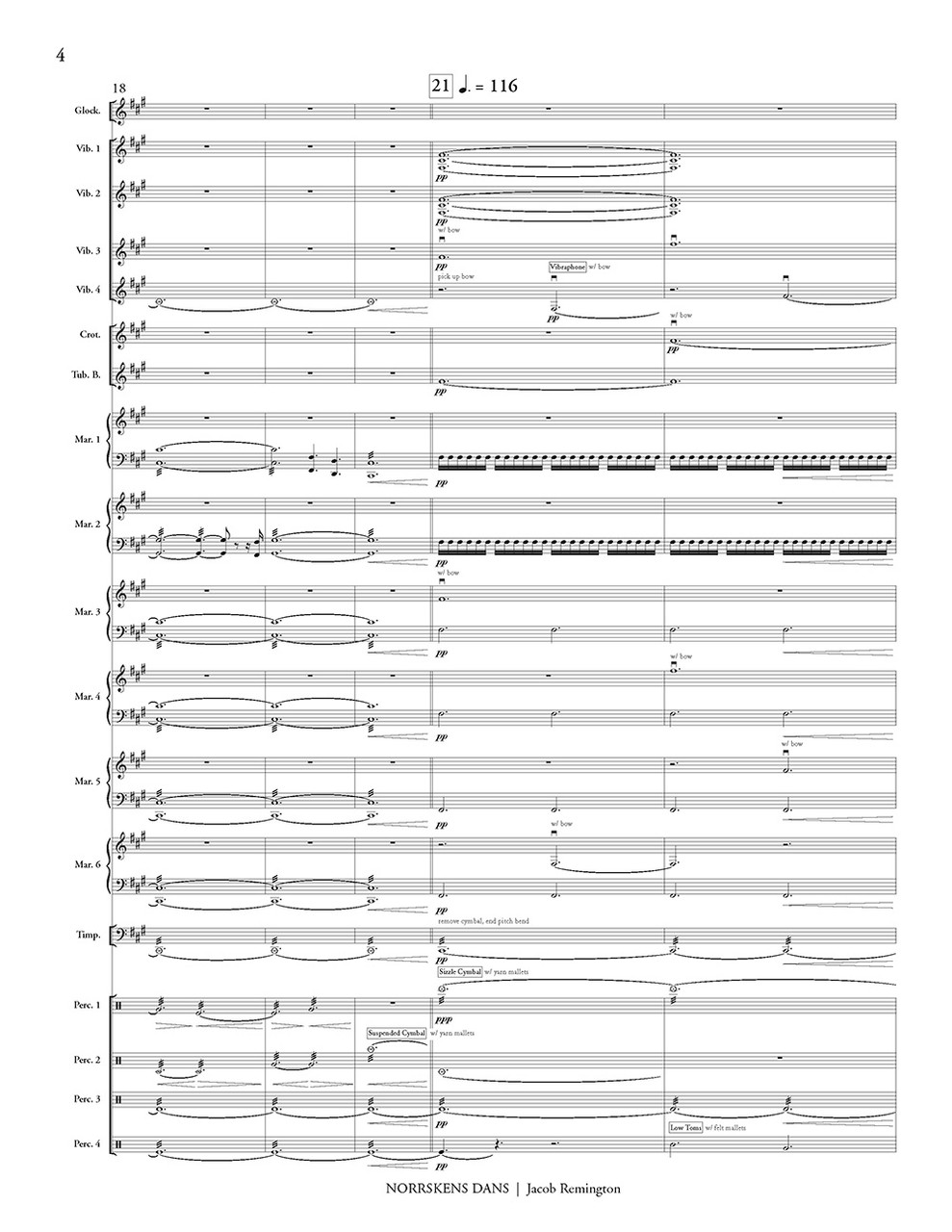
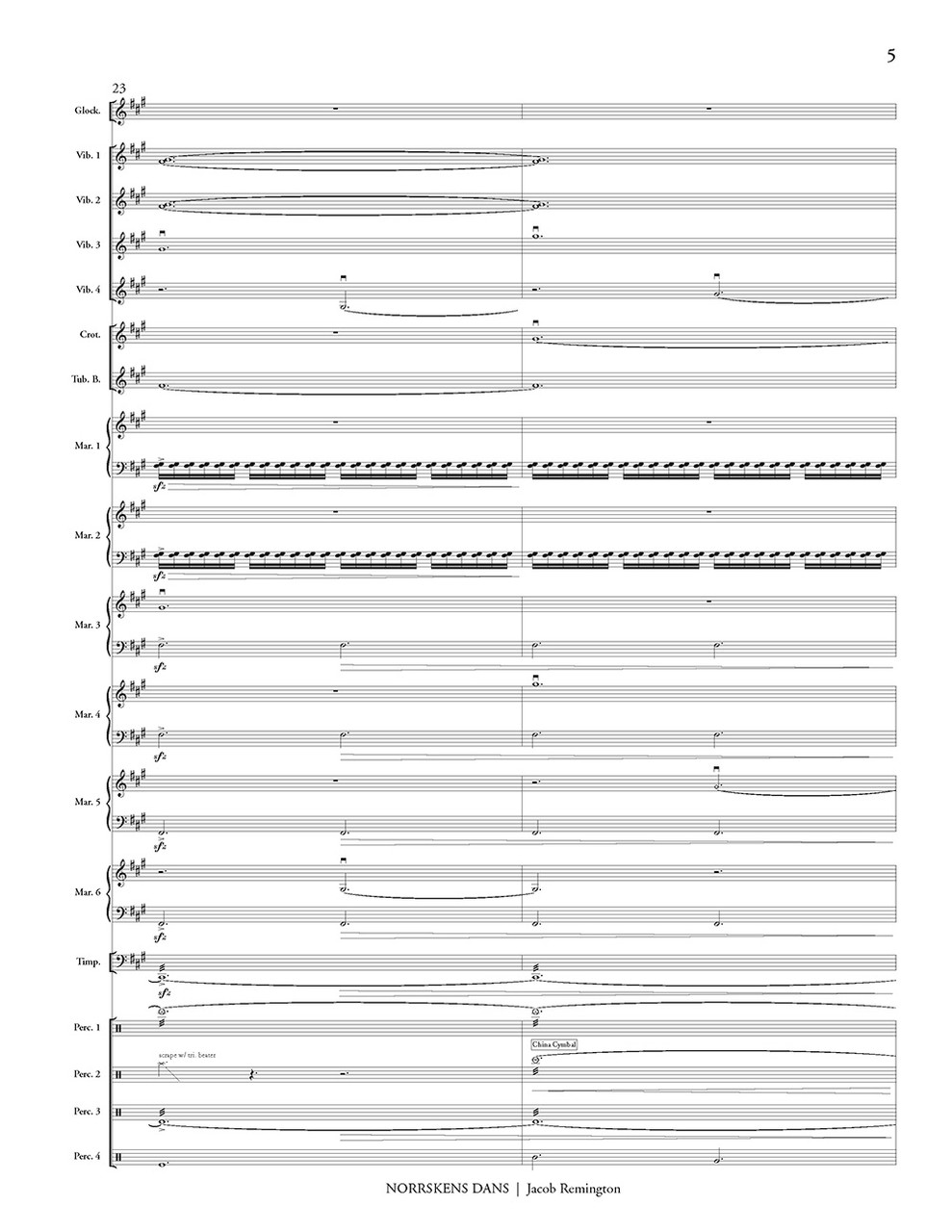
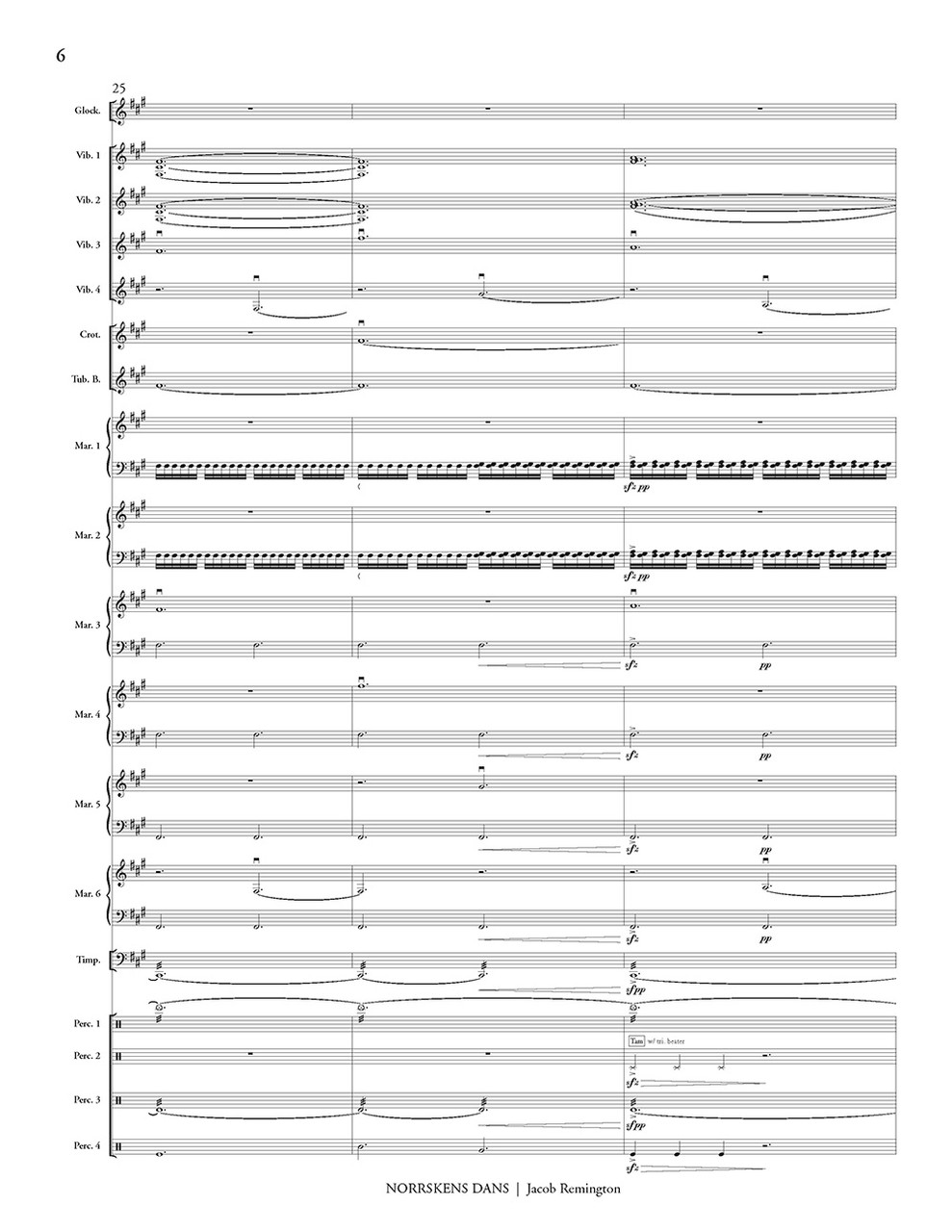
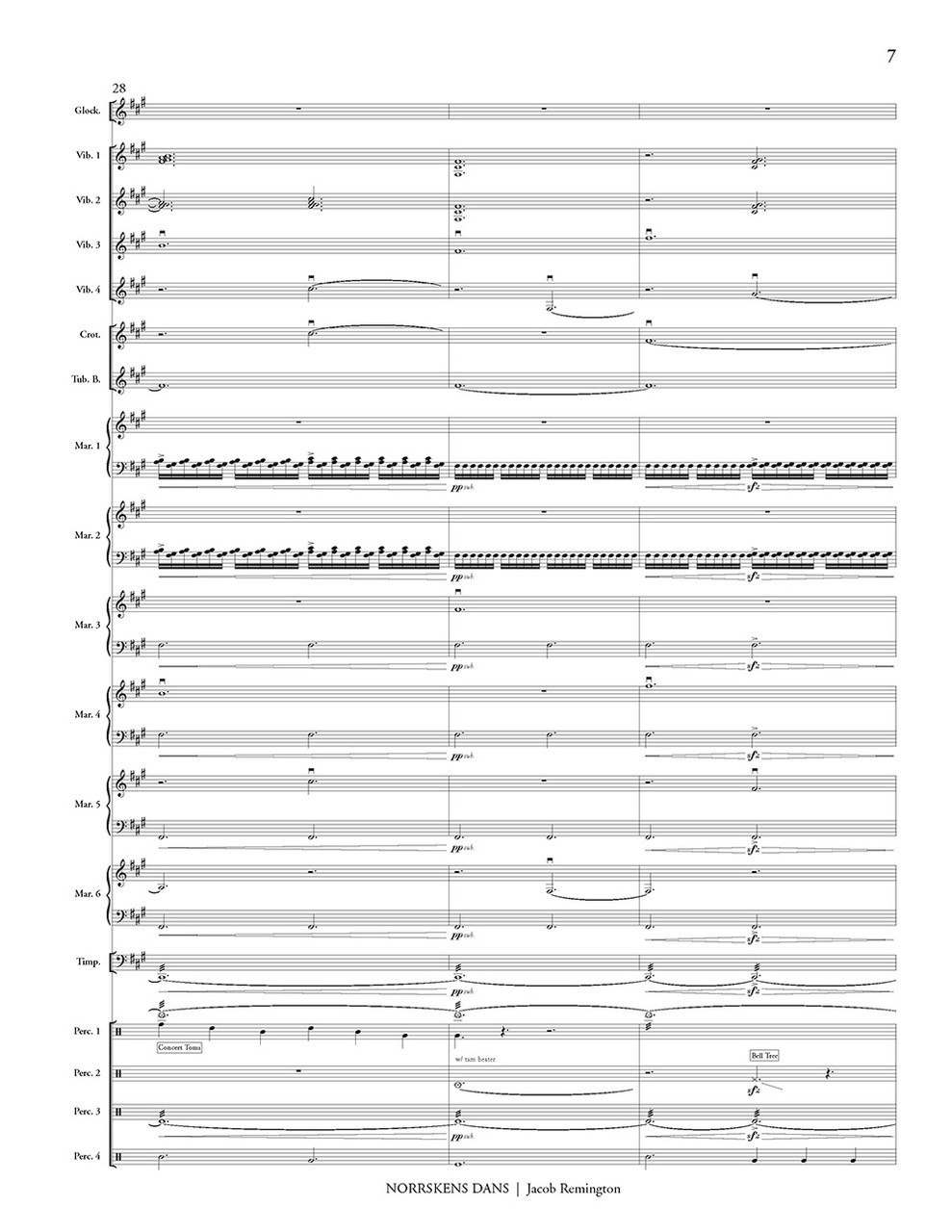
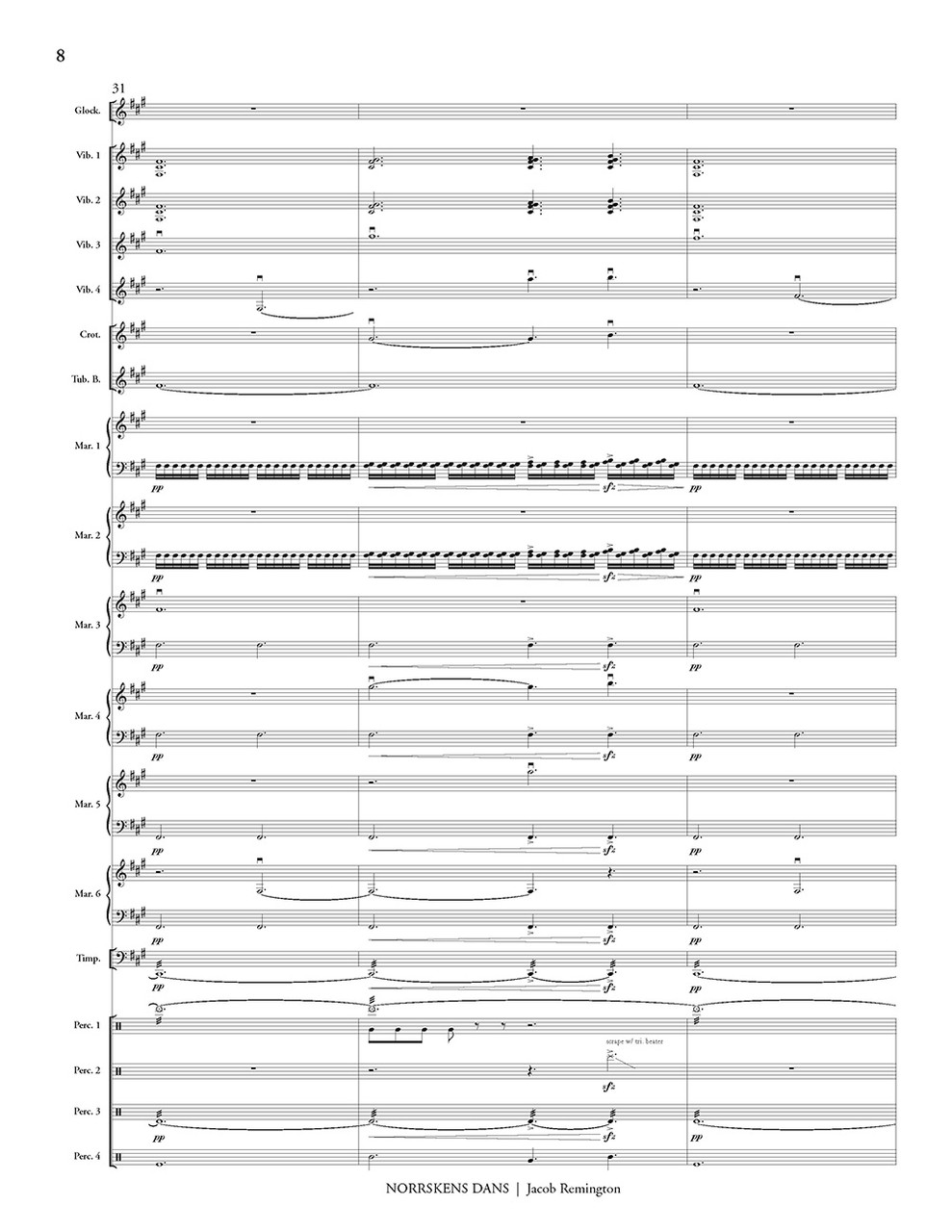
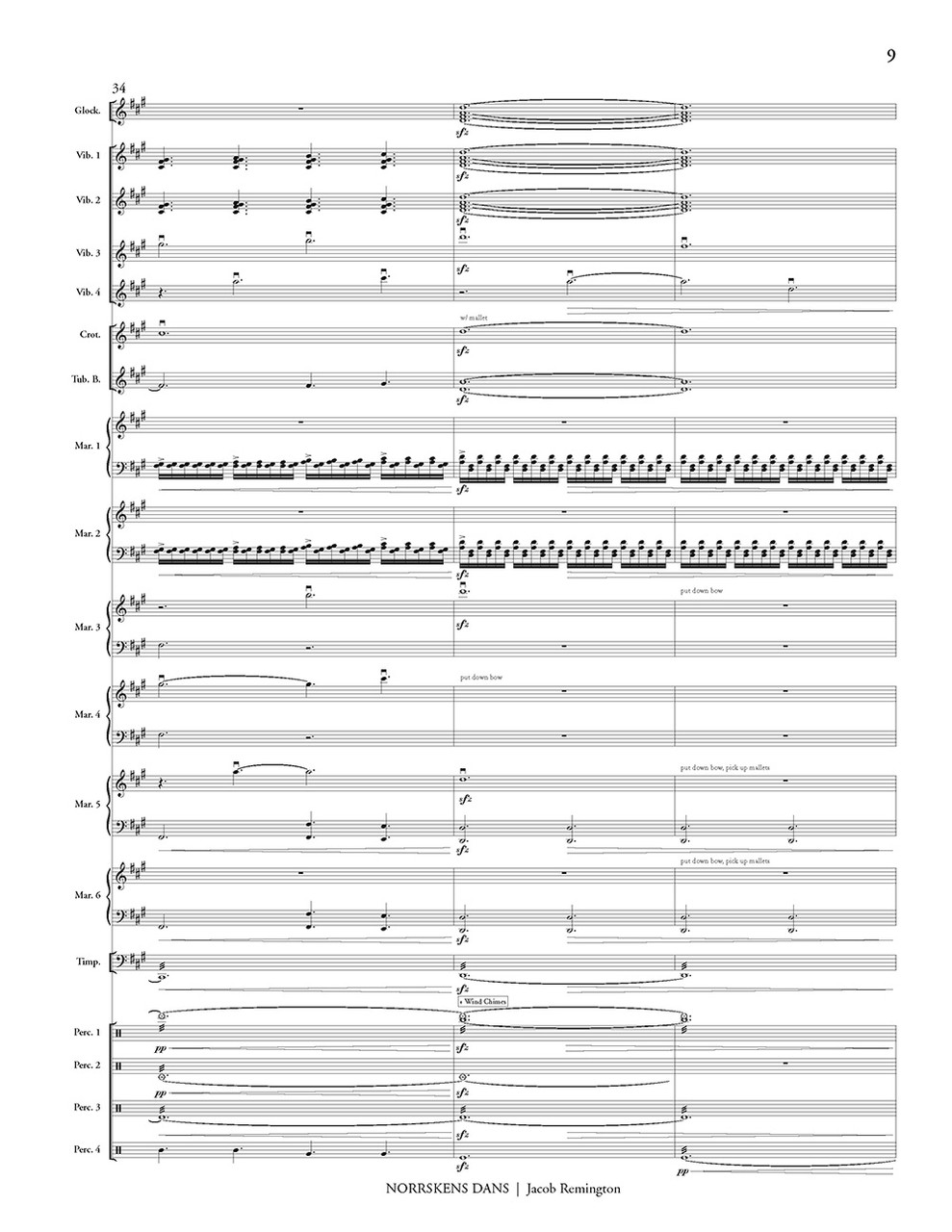
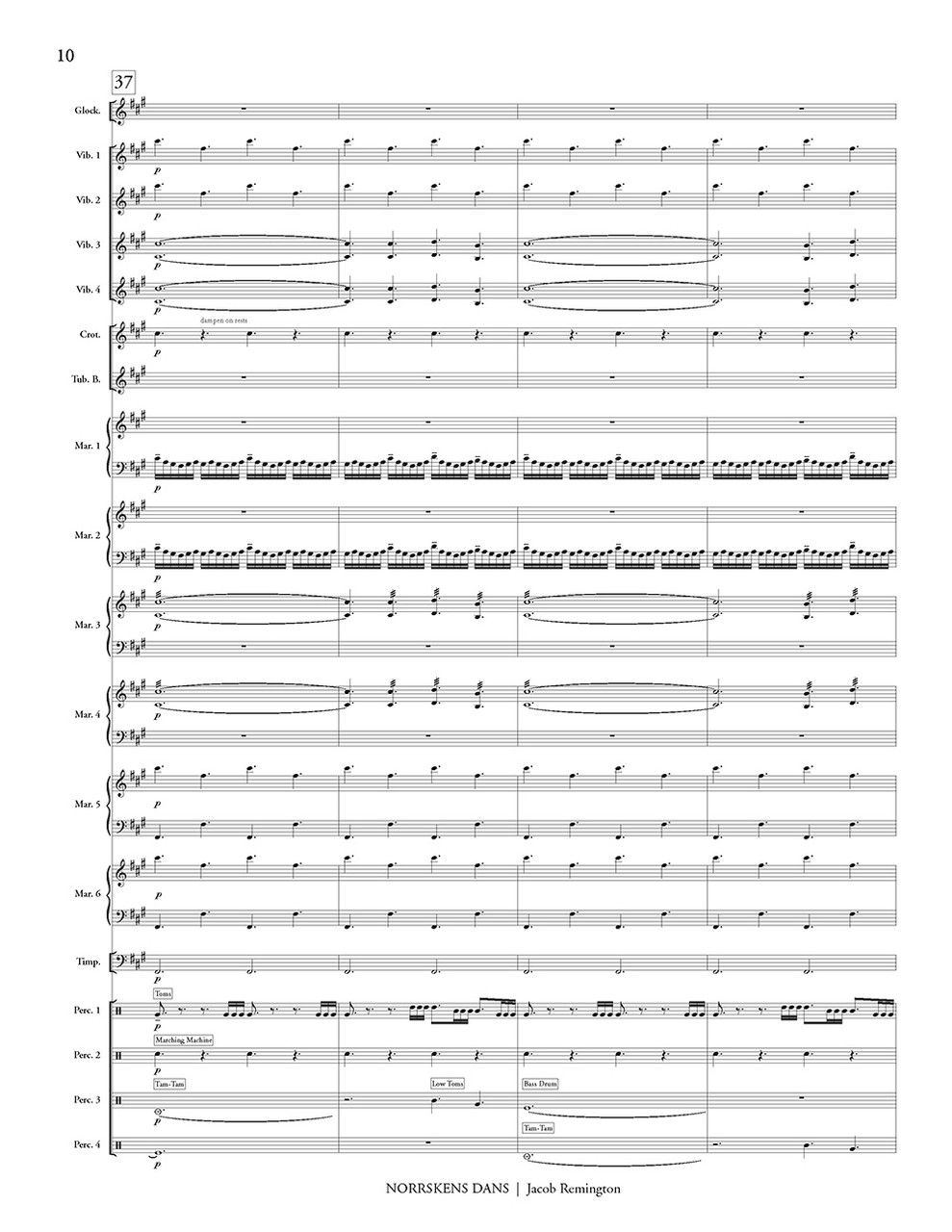

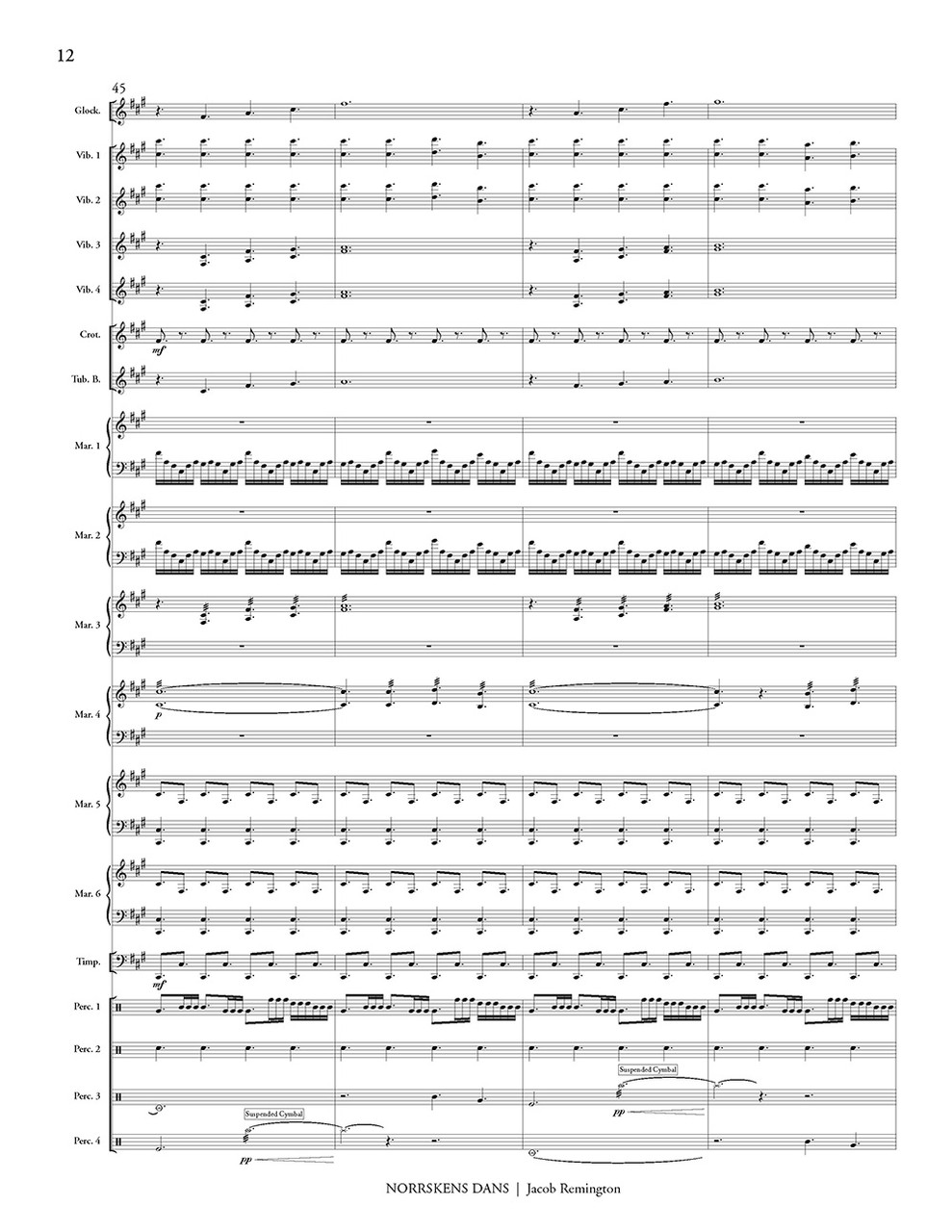
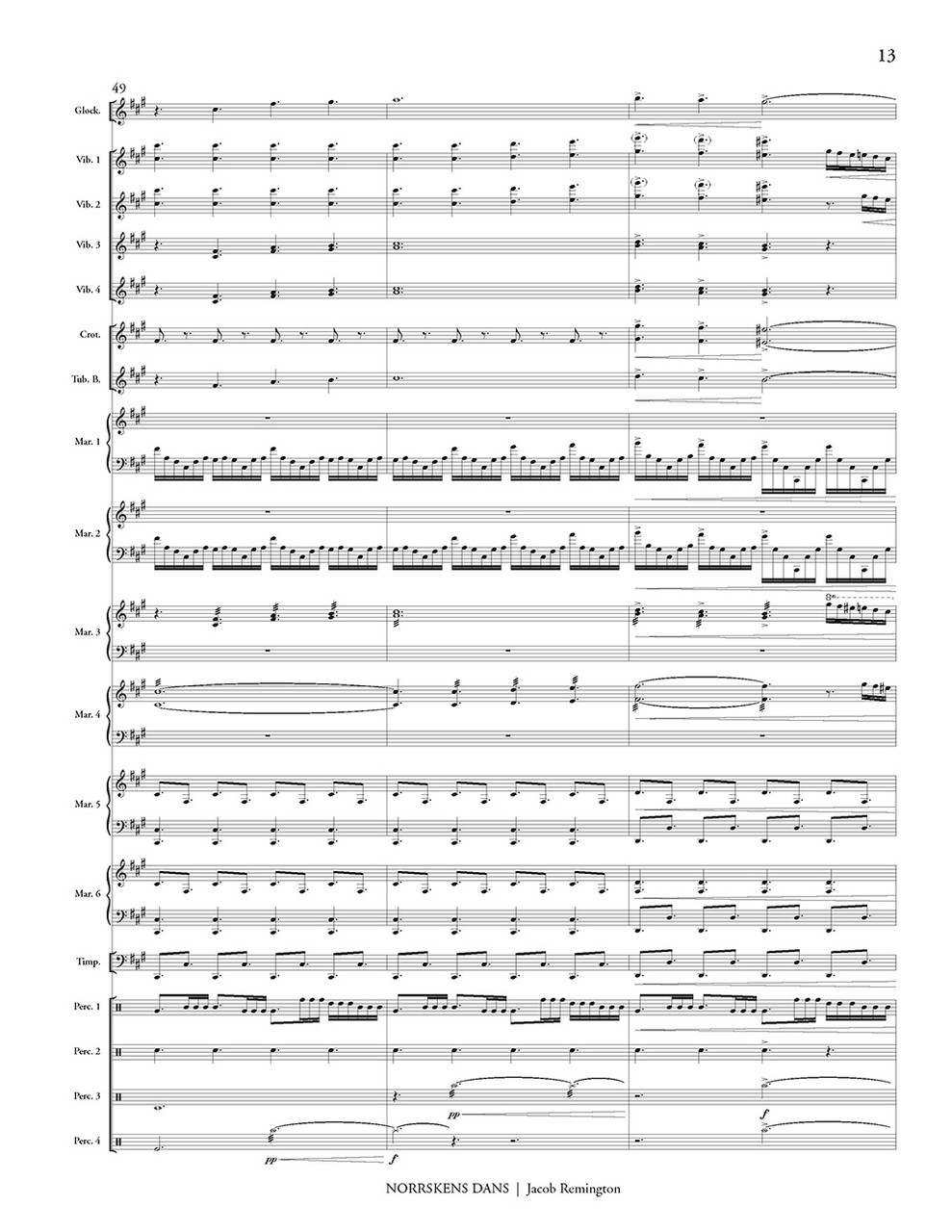
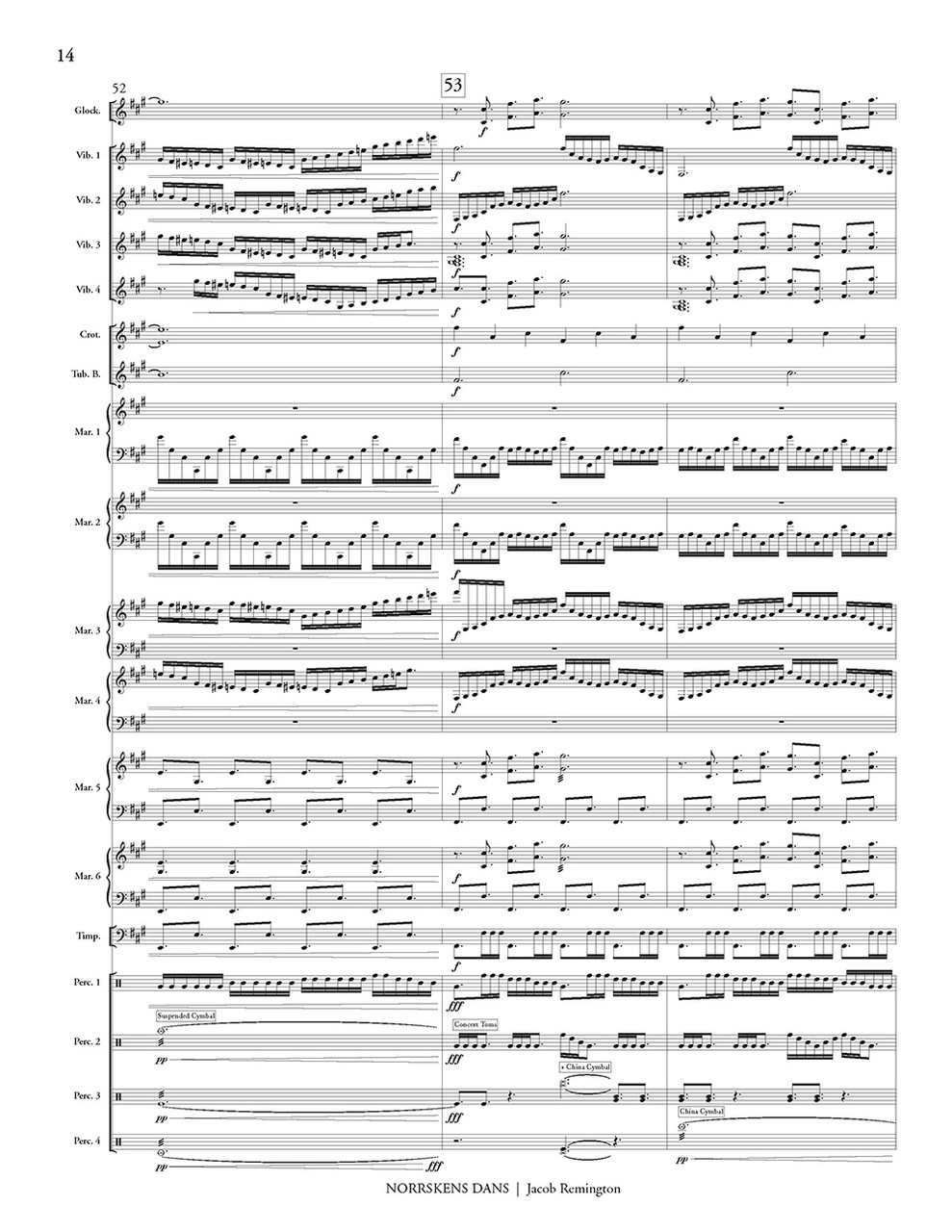
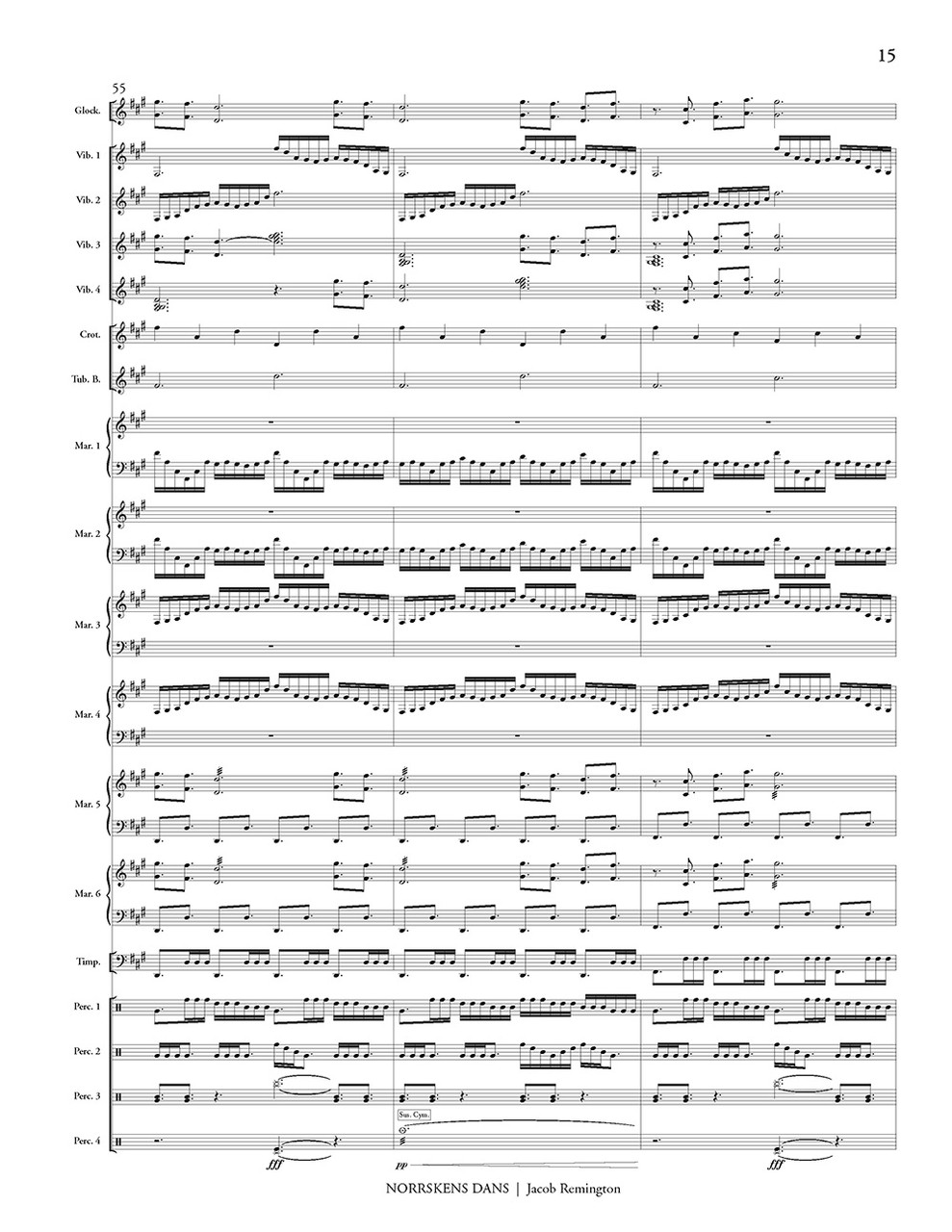
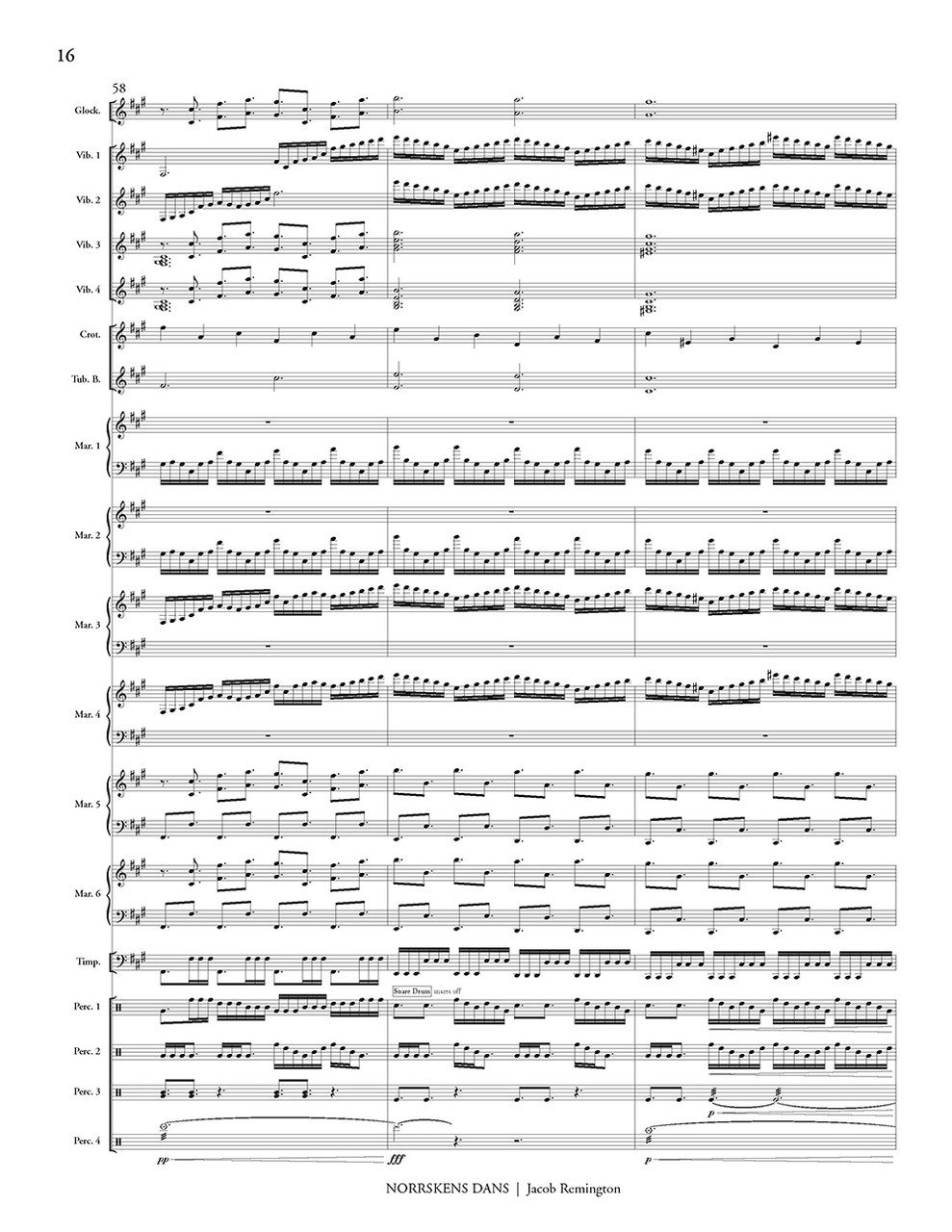
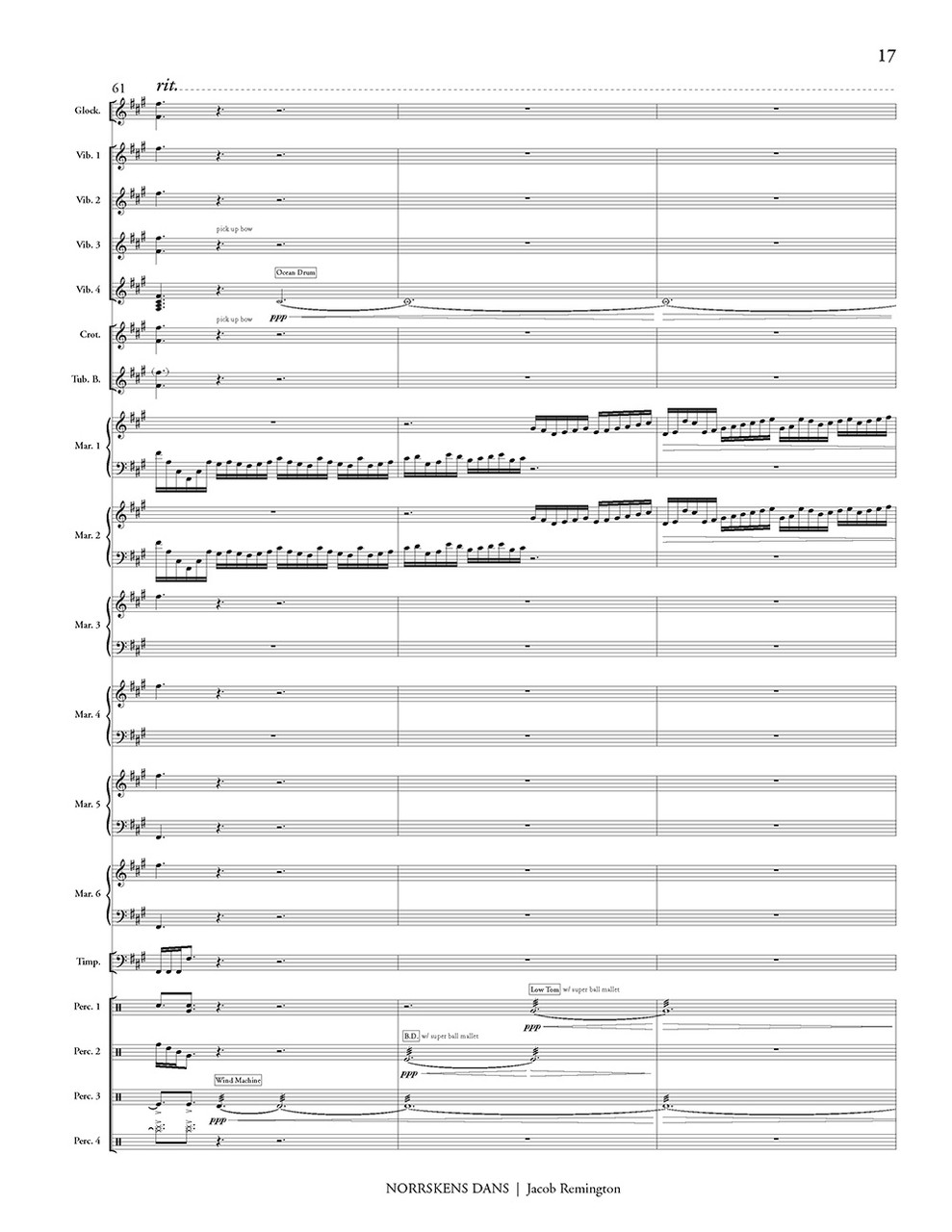

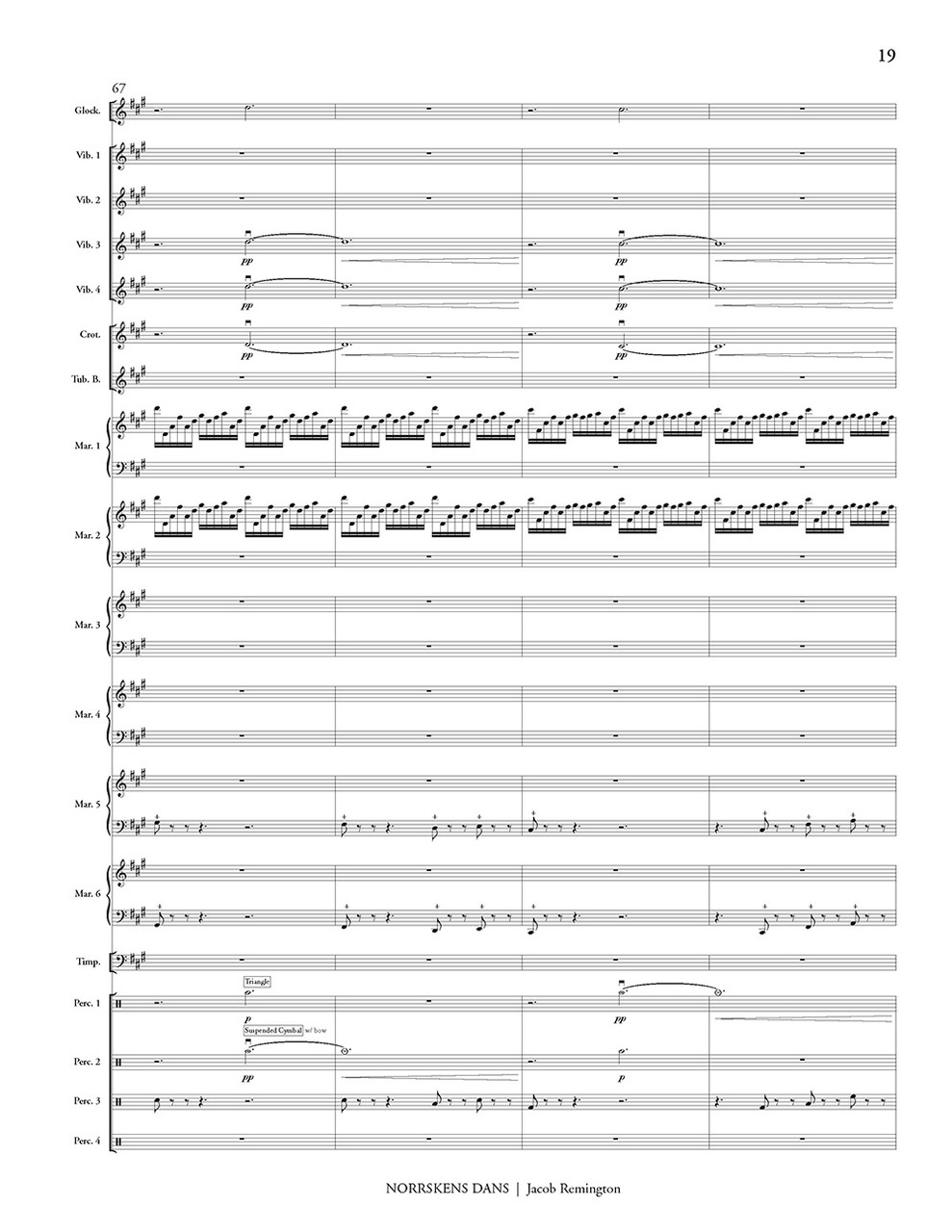
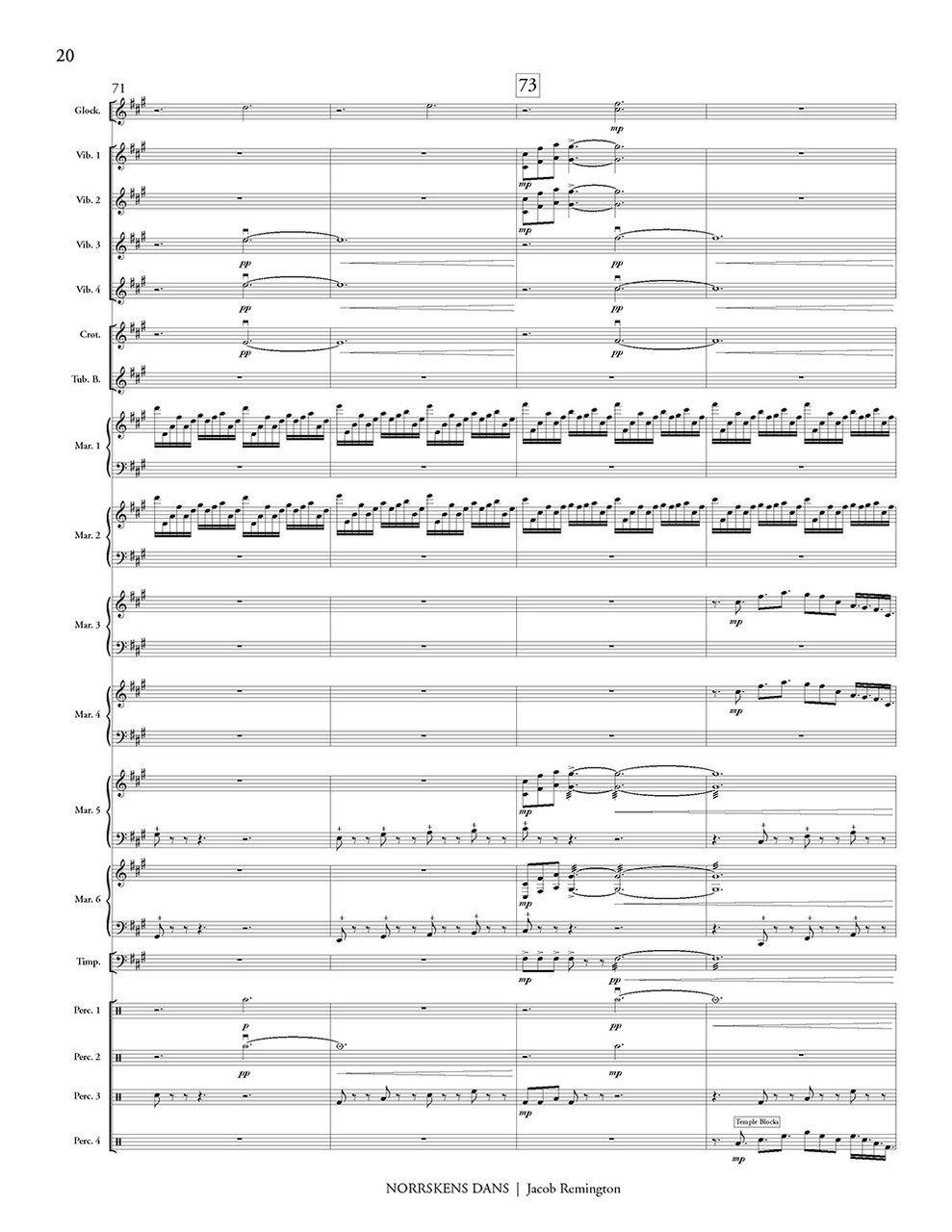
Norrskens Dans (Percussion Ensemble 18)
Genre: Percussion Ensemble
# of Players: 18
Level: Difficult | Duration: 10:15
Publisher: C. Alan Publications | Copyright: 2019
Click on images to left for score sample

Rating:
Price:
$80.00
Item #:
26520
-
Notes & Instrumentation
After a slow & ominous introduction, Jacob Remington's Norrskens Dans establishes itself as tour-de-force work not for the feint of heart. Driven by a large assortment of keyboard instruments and four multiple percussion stations, this piece grabs hold and doesn't let you go until the final note.
Genre: Percussion Ensemble | # of Players: 18
Level: Difficult | Duration: 10:15
Instrumentation
Glockenspiel
Vibraphone 1
Vibraphone 2
Vibraphone 3 (Large Sandpaper Blocks)
Vibraphone 4 (Large Ocean Drum)
Crotales (2 octaves)
Chimes
Marimba 1 (5-octave)
Marimba 2 (5-octave)
Marimba 3 (5-octave)
Marimba 4 (5-octave)
Marimba 5 (5-octave)
Marimba 6 (5-octave)
Timpani (5 drums)
Percussion 1: Bass Drum [shared], Low Tom [shared], Cymbals [sizzle, suspended, splash], 4 Concert Toms, Wind Chimes, Snare Drum, Triangle
Percussion 2: Low Tom [shared], Tam-Tam [shared], Bell Tree, Cymbals [suspended, China], Marching Machine, 4 Concert Toms, Triangle, Bass Drum [shared]
Percussion 3: Wind Machine, Tam-Tam, 2 Low Toms, Bass Drum, Cymbals [suspended, China, ride], Hi-Hat, Log Drum (4)
Percussion 4: Bass Drum, 2 Low Toms, Tam-Tam, Cymbals [suspended, China, splash], Temple Blocks, Mounted Crash Cymbals -
Product Reviews
-
Percussive Notes New Literature Review
“Norrskens Dans” is a boisterous 11-minute work for large percussion ensemble commissioned by Dr. Brian A. West and the Texas Christian University Percussion Orchestra. For the patiently ethereal first minute and a half of the piece, I’ll admit that I felt myself sonically transported to the ice-covered fields of Sweden (perhaps this sensation was somewhat presaged by my experience with the record-breaking Arctic storm that came through Texas in the days leading up to my writing this review). The composer effectively draws upon all manner of serene and eerie color, using ocean drums, suspended cymbals on timpani, Super Balls on bass drums, and bowed vibraphone to create a chilly and moody atmosphere that seems, well, frozen in ice. What I especially appreciate about this quietly intensifying introduction, and the material’s return towards the end of the piece, is the composer’s judicious use of the army of performers (all 18 of them) at his disposal. There is an otherworldly humming effect created by the soft-yet-deliberate playing of so many people at one time, and it’s a rare and special thing to hear.
However, the relative serenity of the opening soon gives way to the more rhythmically active and aggressive material that defines the vast majority of the piece. Gone is the introspective and patiently crafted sonic sculpture, replaced by a charging, Hemi-powered pickup truck with racing stripes. Virtuosity abounds, particularly in the marimba parts, and the composer’s use of polyrhythm and mixed meter mesh with clockwork precision into a growling, growing beast that, once awoken, never ceases in its unyielding, militaristic surge forward until close to the end of the piece, and even then, only momentarily.
I’m no expert on the particulars of Swedish culture, but it seems readily apparent to me that the core musical aesthetic of “Norrskens Dans” is clearly derived from trends in American marching percussion, more so than any kind of Swedish folk dance. If one were looking for music to adapt into an advanced indoor marching percussion performance, “Norrskens Dans” would be an excellent, effective choice that would allow for plenty of creativity in the battery arrangement while providing a path of minimal resistance for the front ensemble. The piece would be a wonderful vehicle with which to show off the keyboard abilities of the front ensemble, while at the same time offering a musical product that is a bit deeper and richer than most indoor drumline audiences might expect.
There are, however, a few notable obstacles that prevent me from rushing to recommend that this work (and others like it) be added to a straightforward concert percussion ensemble program. Chief among those concerns is the orchestration; outside of top-tier drum corps and indoor drumlines, there aren’t many percussion programs that can boast a stable of six concert-worthy 5-octave marimbas along with the rest of the required instrumentation. I think that the composer could make an excellent version of this piece for much smaller forces, which would give a much broader population the chance to perform it. Otherwise, if the artistic reasoning behind requiring this particular warehouse full of gear remains inviolate, works like this will lead to widening, not shrinking, the accessibility gap in the percussion ensemble repertoire.
Brian Graiser
Percussive Notes
Vol. 59, No. 2, April 2021 Brian Graiser on Jun 17th 2022
-