- New!
- Band
- Percussion
- Orchestra
- Brass Band
- Jazz
- Chamber
- Voice
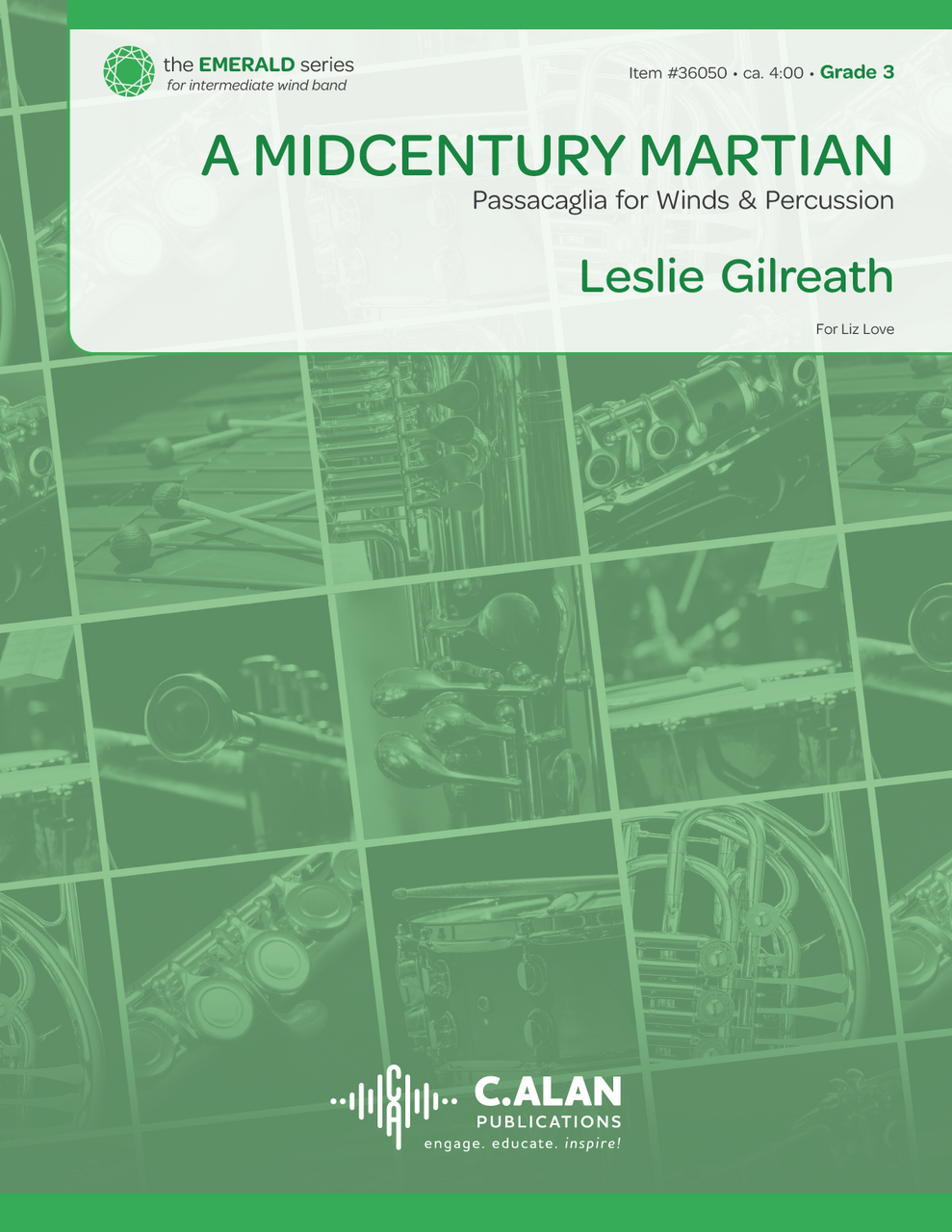




A MidCentury Martian (Band Gr. 3)
Genre: Band
Series: Emerald Band Series
# of Players: Standard
Level: 3 | Duration: 4:00
Publisher: C. Alan Publications | Copyright: 2026
Price:
$70.00
Item #:
36050
-
Notes & Instrumentation
A MidCentury Martian depicts a story of a Martian captured by Russians and held in a vault underneath the home of composer Dimitri Shostakovich. Through the use of a Passagcalia, this piece employs Shostakovich’s own signature D-S-C-H motive in clever and accessible applications for intermediate musicians.
Genre: Band | # of Players: Standard
Series: Emerald Band Series
Level: 3 | Duration: 4:00
Instrumentation
Transposed Score (8.5"x11" stapled booklet)
Flute
Oboe
Bassoon
B-flat Clarinet 1
B-flat Clarinet 2
Bass Clarinet
Alto Saxophone
Tenor Saxophone
Baritone Saxophone
B-flat Trumpet 1
B-flat Trumpet 2
F Horn
Trombone
Euphonium
B-flat Euphonium T.C.
Tuba
Timpani (4 drums)
Percussion 1 [2 players]: Snare Drum, Bass Drum
Percussion 2: Crash Cymbals, Suspended Cymbal
Program Notes
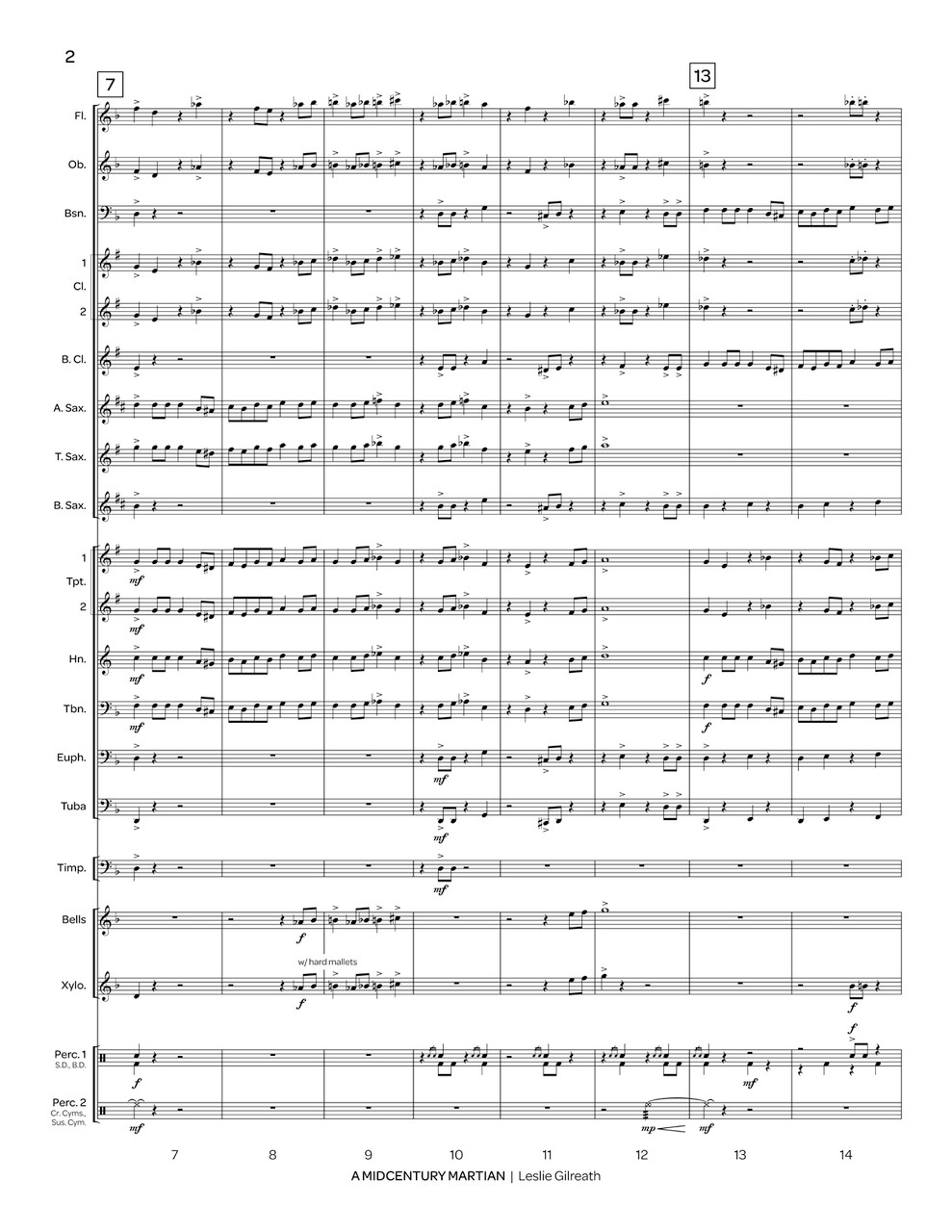
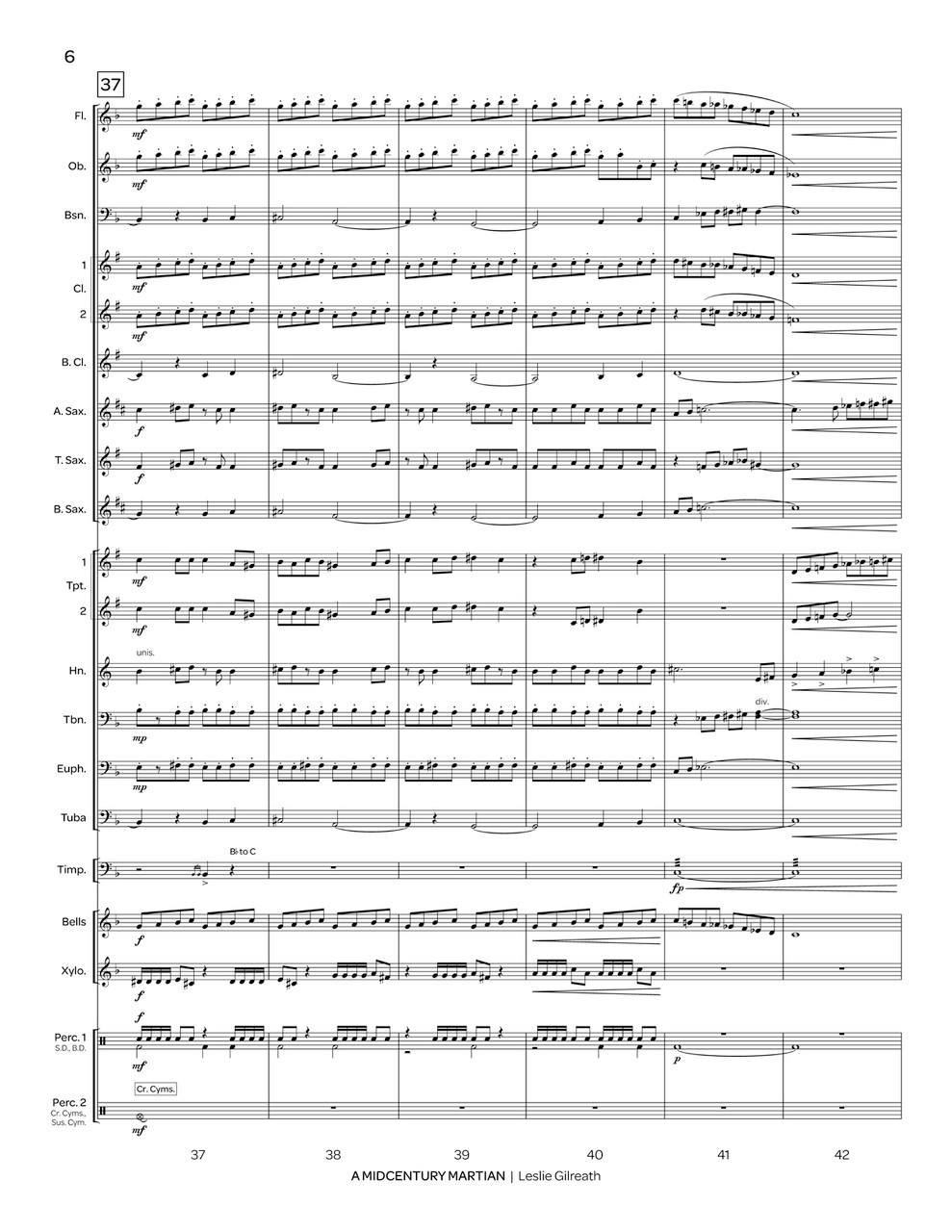
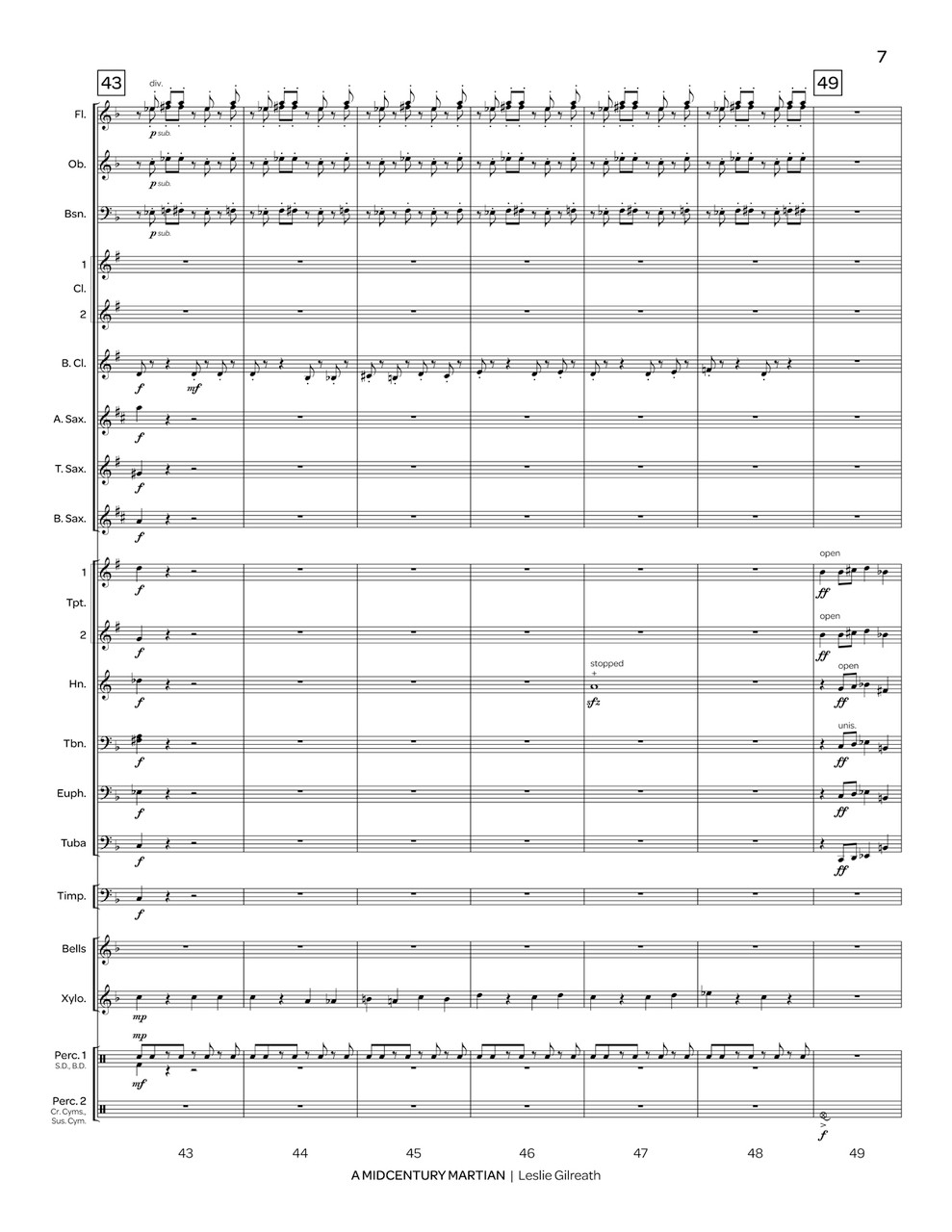
In the mid 1950's, an unsuspecting Martian visitor was captured by the Russians and held in a vault underneath the home of composer Dimitri Shostakovich. This is the story of the new world the Martian encountered daily. As is the nature of a Passacaglia, the theme here is present from the first measure to the last, relenting ONLY in the very last measure to give nod to Shostakovich's signature "initials," though with a slight twist.The main theme of the Passacaglia is first stated in the flutes and clarinets in measure one. This theme plays throughout the piece, sometimes elongated or shortened or segmented, but it is present in every part of the piece, continuously.
Shostakovich spells out his initials in musical notation, using the German transliteration of his name (Schostakowitsch) as well as German notation, where E-flat is called “es” and B-natural is called H. In other words, the sequence D-E-flat-C-B spells “DSCH.” The last measure of this piece pays homage to this initial "signature" in its full form.
-
Product Reviews
![Expedition (to the Superstition Mountains) [Band Gr. 3]](https://cdn10.bigcommerce.com/s-uhegu0/products/5153/images/46940/Expedition__60289.1624893274.200.200.png?c=2)