- New!
- Band
- Percussion
- Orchestra
- Brass Band
- Jazz
- Chamber
- Voice
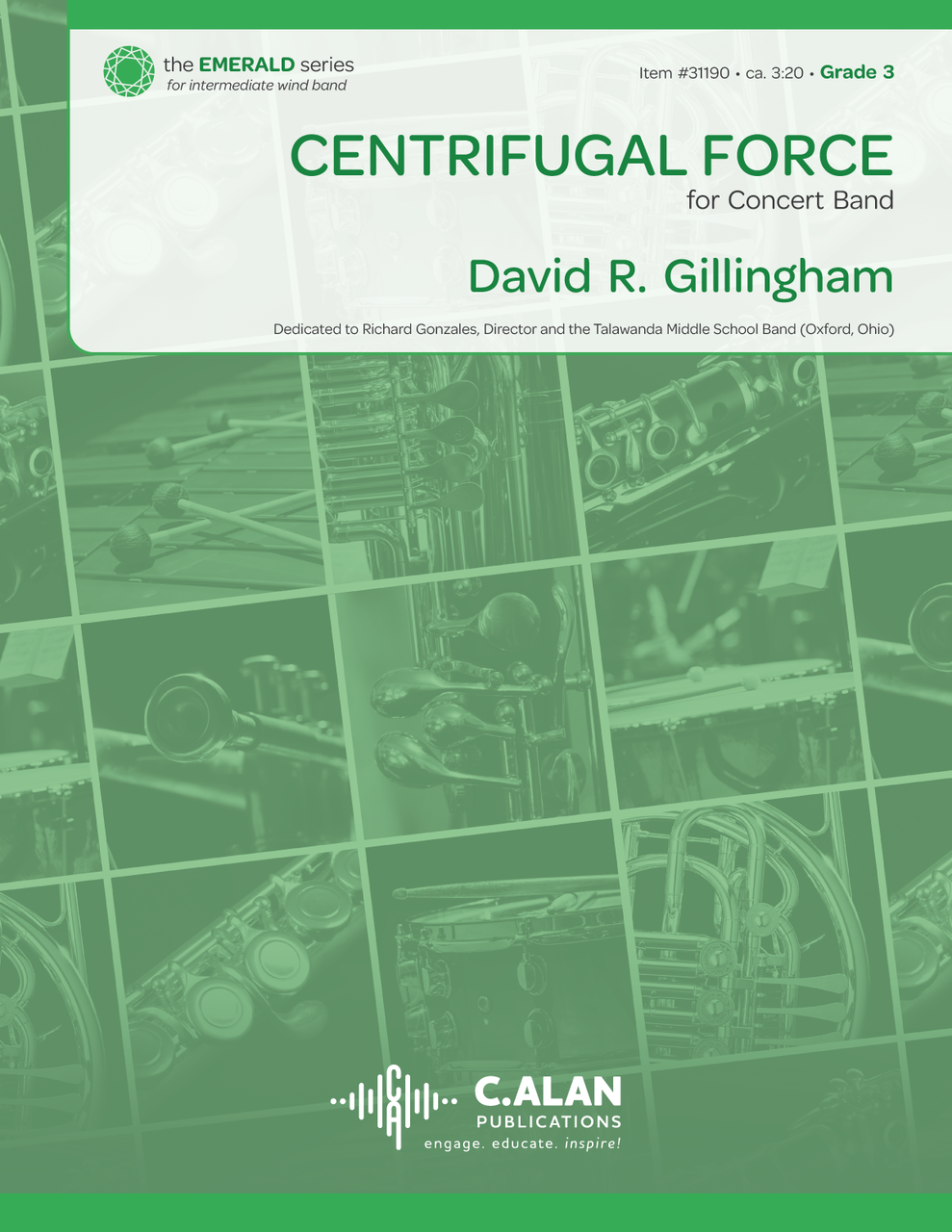




Centrifugal Force (Band Gr. 3)
Genre: Band
Series: Emerald Band Series
# of Players: Standard
Level: 3 | Duration: 3:20
Publisher: C. Alan Publications | Copyright: 2023
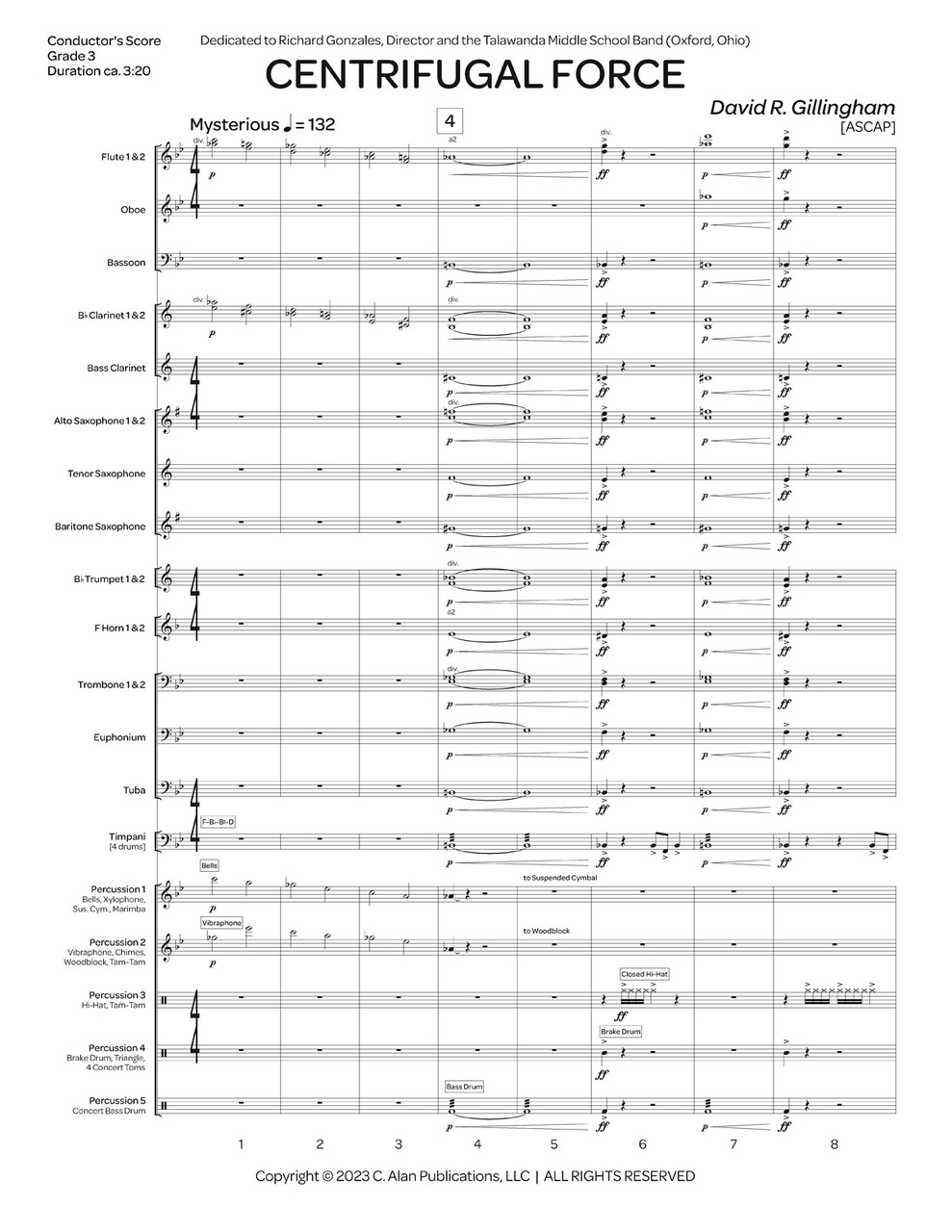
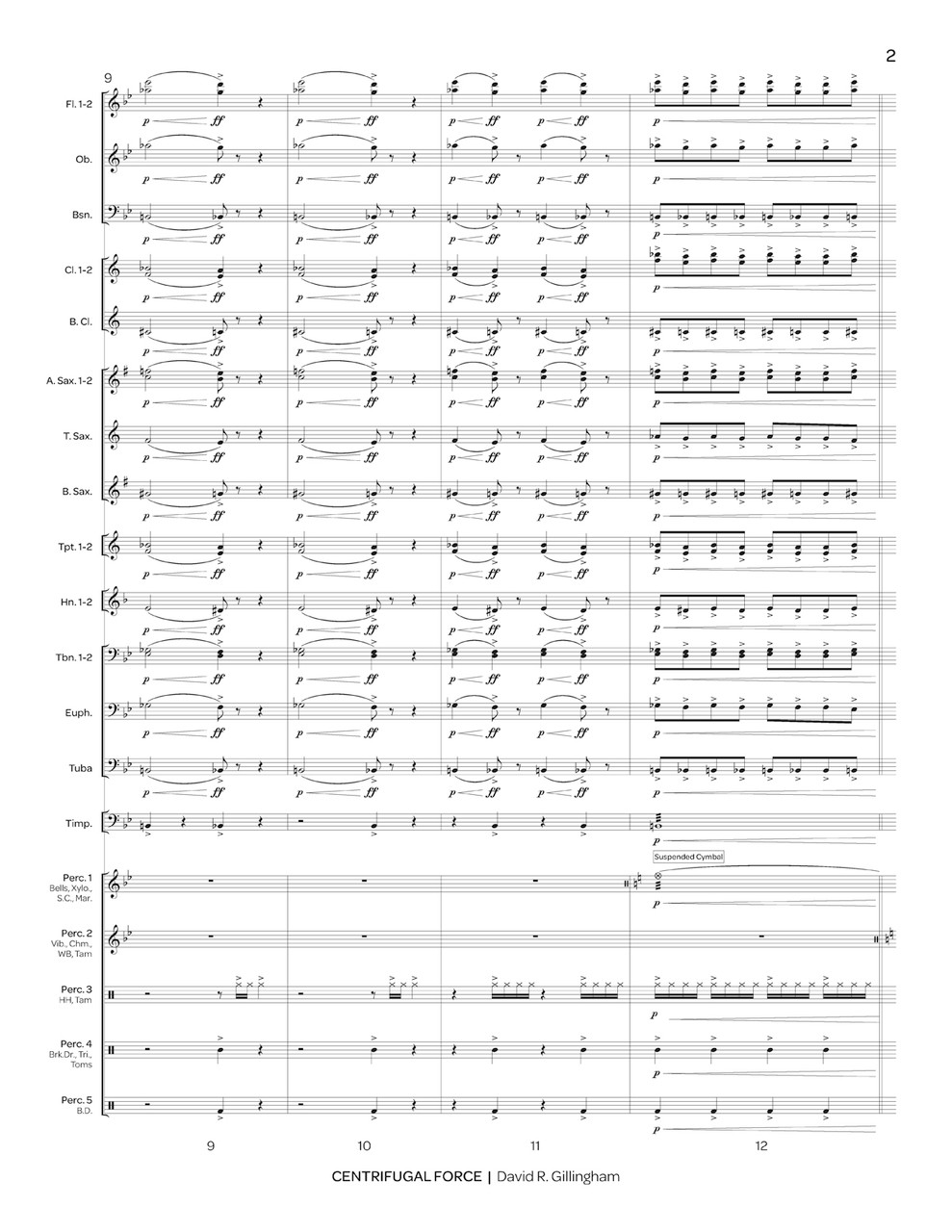
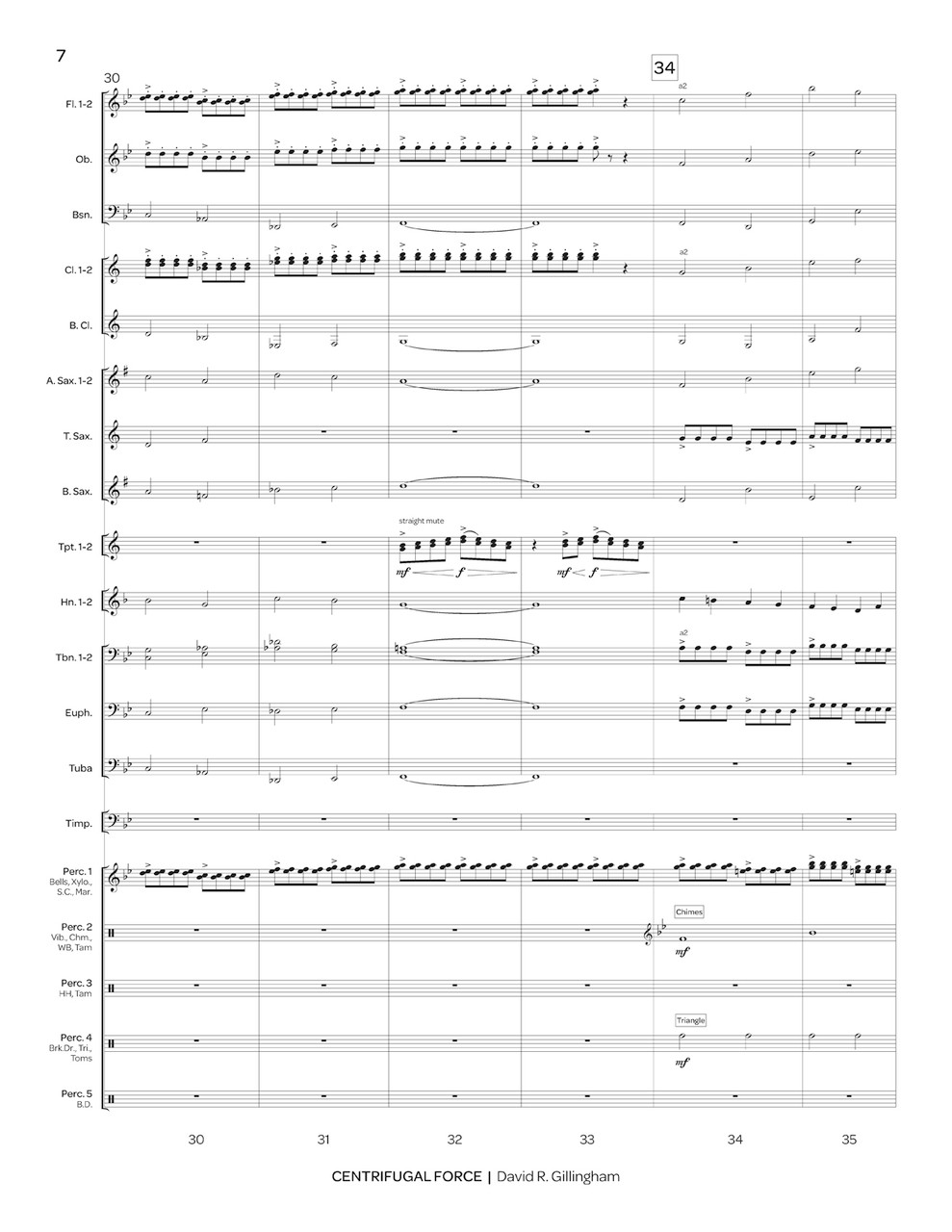
Download mp3 | Click on images to left for score sample
Price:
$70.00
Item #:
31190
-
Notes & Instrumentation
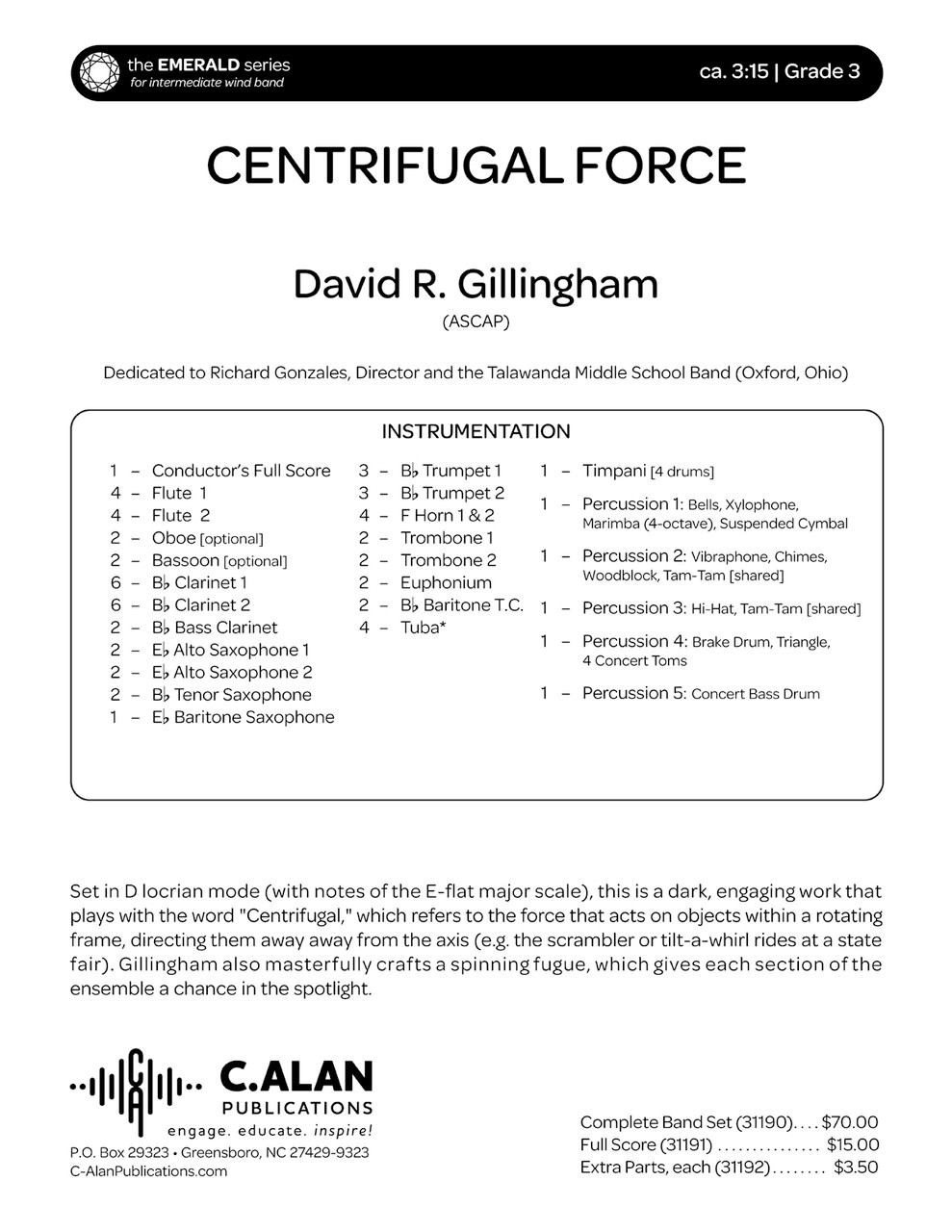
Set in D locrian mode (with notes of the E-flat major scale), this is a dark, engaging work that plays with the word "Centrifugal," which refers to the force that acts on objects within a rotating frame, directing them away away from the axis (e.g. the scrambler or tilt-a-whirl rides at a state fair). Gillingham also masterfully crafts a spinning fugue, which gives each section of the ensemble a chance in the spotlight.
Genre: Band | # of Players: Standard
Series: Emerald Band Series
Level: 3 | Duration: 3:20
Instrumentation
Flute 1
Flute 2
Oboe (optional)
Bassoon (optional)
B-flat Clarinet 1
B-flat Clarinet 2
Bass Clarinet
Alto Saxophone 1
Alto Saxophone 2
Tenor Saxophone
Baritone Saxophone
B-flat Trumpet 1
B-flat Trumpet 2
F Horn 1 & 2
Trombone 1
Trombone 2
Euphonium
Baritone T.C.
Tuba
Timpani (4 drums)
Percussion 1: Bells, Xylophone, 4-octave Marimba, Suspended Cymbal
Percussion 2: Vibraphone, Chimes, Woodblock, Tam-Tam (shared)
Percussion 3: Hi-Hat, Tam-Tam (shared)
Percussion 4: Brake Drum, Triangle, 4 Concert Toms
Percussion 5: Concert Bass Drum
Program Notes
Centrifugal Force is defined as a force that acts on objects within a rotating frame (i.e. centrifuge), directing them away from the axis. I am sure that many of us have experienced this phenomenon at the county fair on such thrill rides as the “scrambler” and the infamous “tilt-a-wheel”. The word “fugal” is derived from “fuge” which means pulling away from the center. “Fugal” is also derived from the musical term “fugue” which is an imitative compositional technique of using a subject or theme in the tonic key followed by an answer or repeat of the theme in the key of the dominant. Centrifugal Force seeks to imply both meanings.Fugal imitation is in play throughout most of the entire piece with the subject in the key of B-flat Major and the answer in F Major. In sonata structure, the piece begins with a mysterious introduction followed by the first theme, a dizzying up and down scale of 6 eighth notes, contrasted by a lyrical second theme in half notes. The first theme is a three-part fugal exposition (subject-answer-subject) and the second theme is a four-part exposition (subject-answer-subject-answer). A development ensues that works both themes in imitation followed by a transition leading to the return of the first theme. The second theme is abbreviated and followed by a return of the mysterious introductory material leading to a coda that brings the piece to an exciting close.
The allusion of the centrifugal force is realized by the rhythm, melody, and harmony. A rhythm of continuous eighth and sixteenth notes throughout a majority of the piece provides the motion of the centrifuge. The first theme is built on a six-note scale using the key signature of E-flat Major (D Locrian mode) and the harmony of B-flat Major—i.e. the melodic elements are pulling away from the tonal center, B-flat.
-
Product Reviews
![Expedition (to the Superstition Mountains) [Band Gr. 3]](https://cdn10.bigcommerce.com/s-uhegu0/products/5153/images/46940/Expedition__60289.1624893274.200.200.png?c=2)