- New!
- Band
- Percussion
- Orchestra
- Brass Band
- Jazz
- Chamber
- Voice
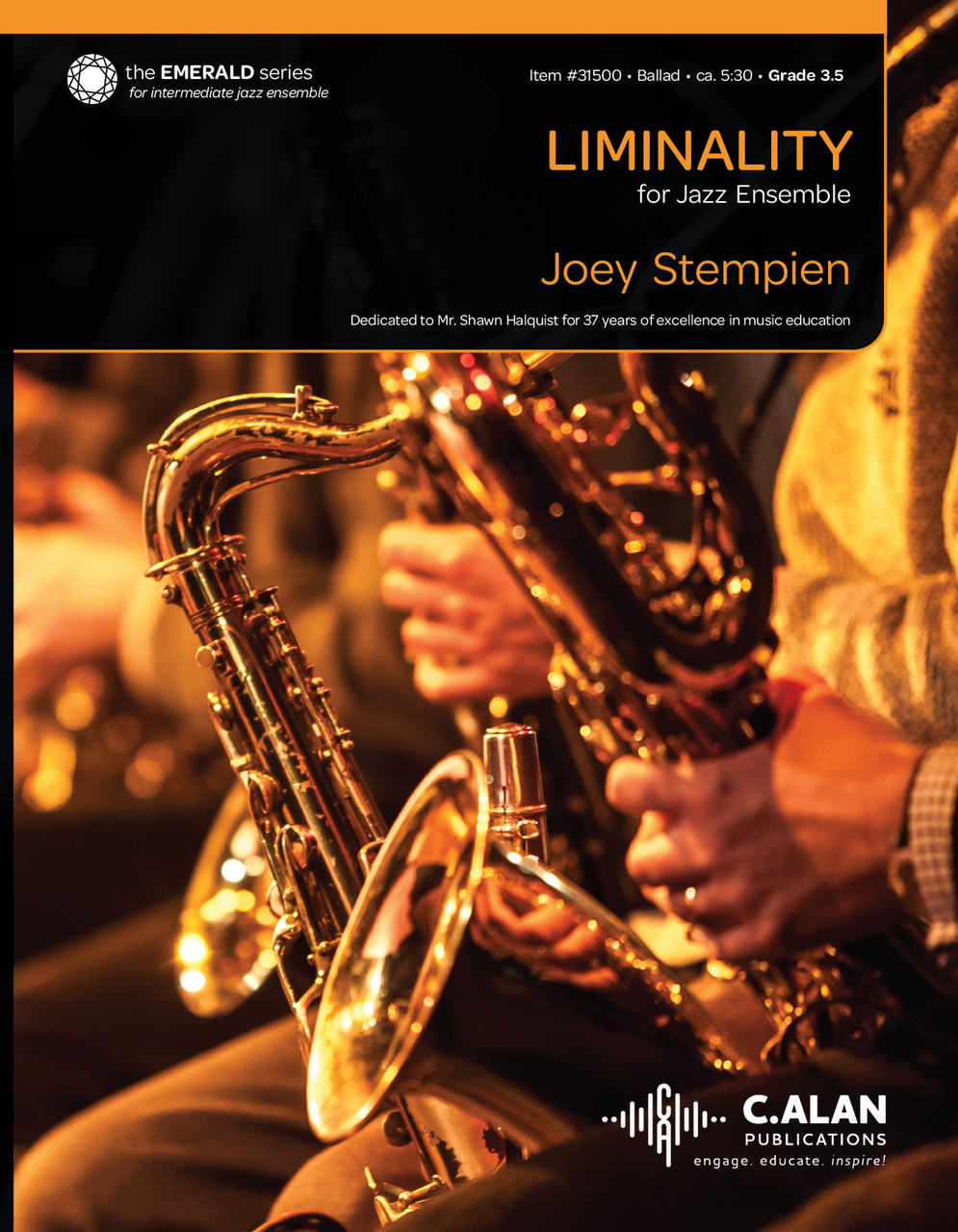
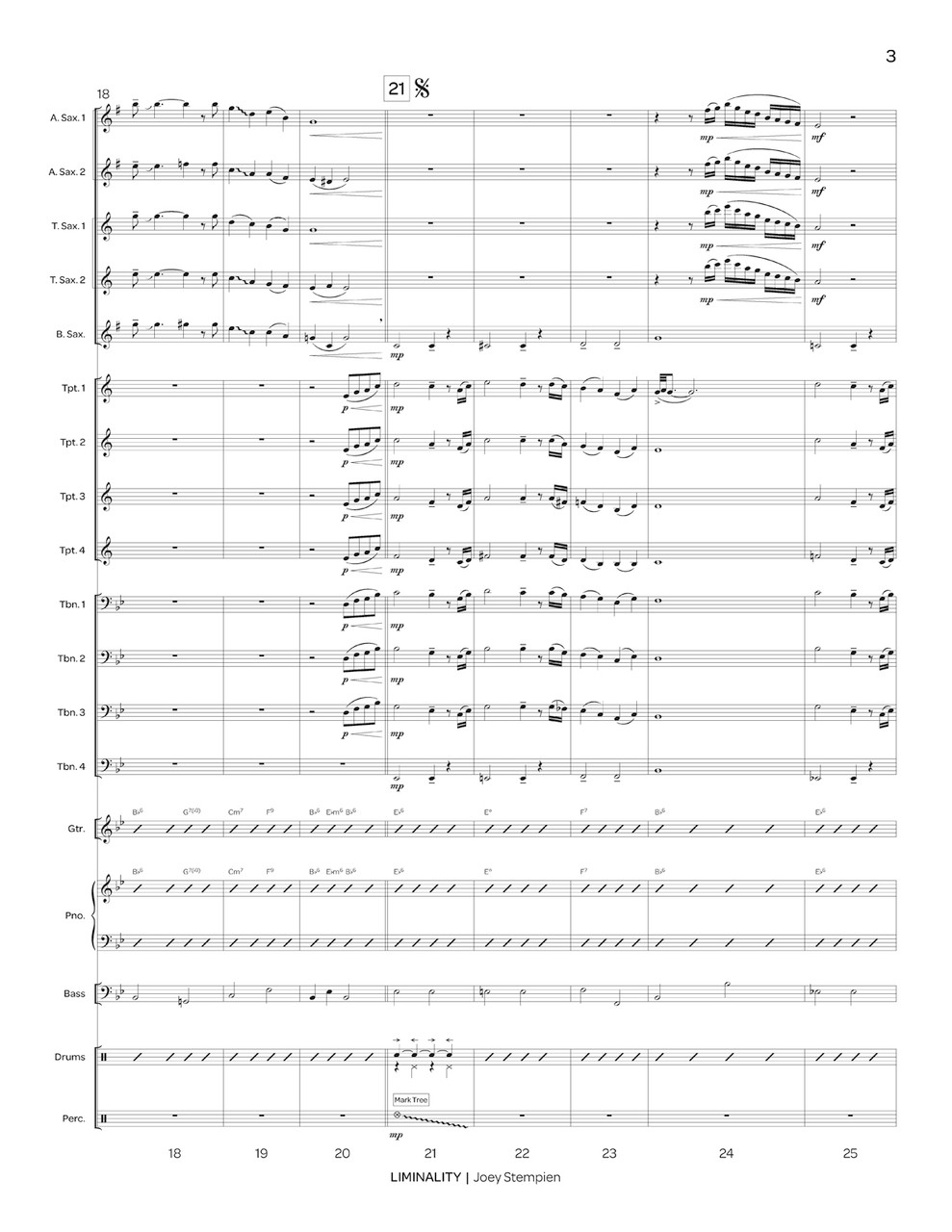
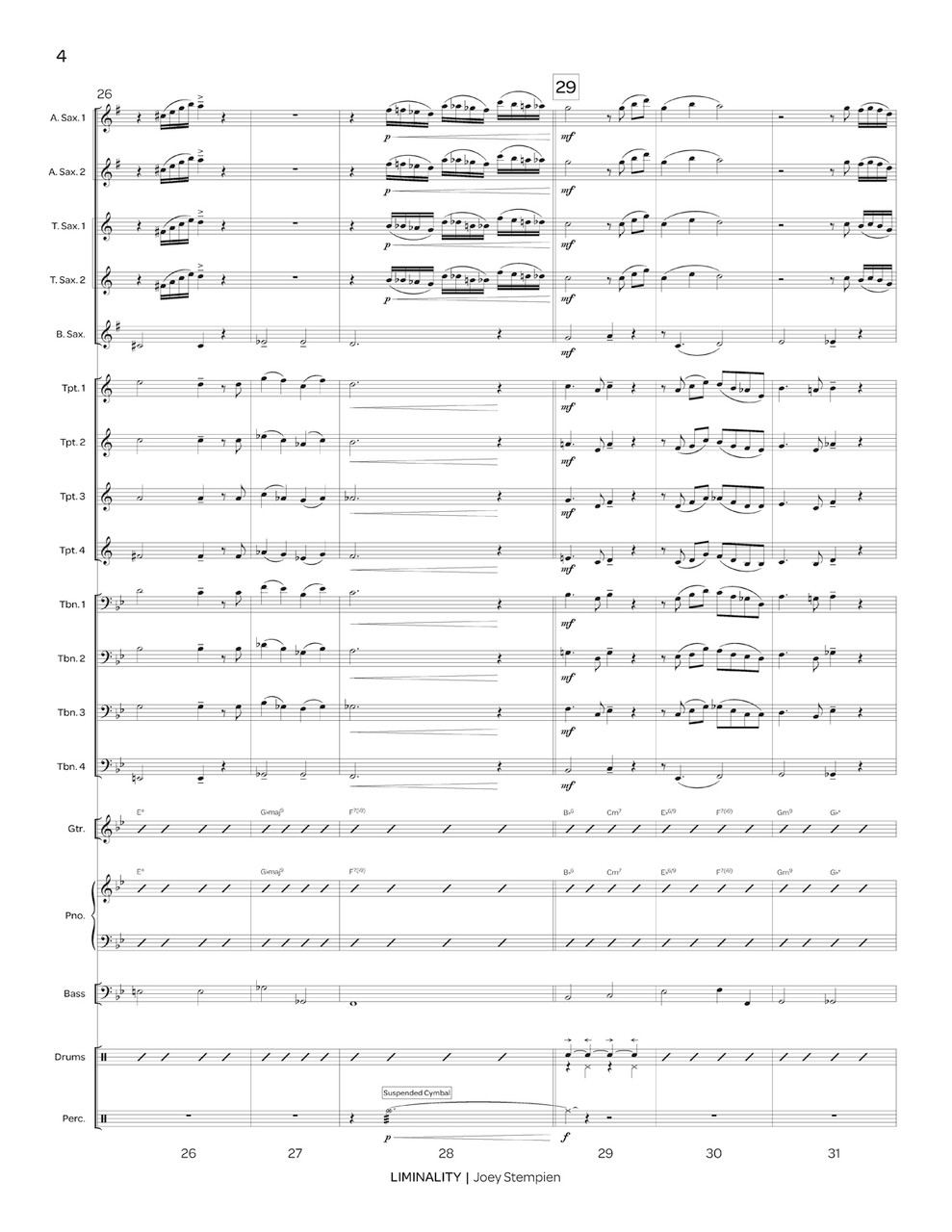
Liminality (Jazz Ens Gr. 3.5)
Genre: Jazz Ensemble
Series: Emerald Jazz Series
# of Players: Standard
Level: 3.5 | Duration: 5:30
Publisher: C. Alan Publications | Copyright: 2023
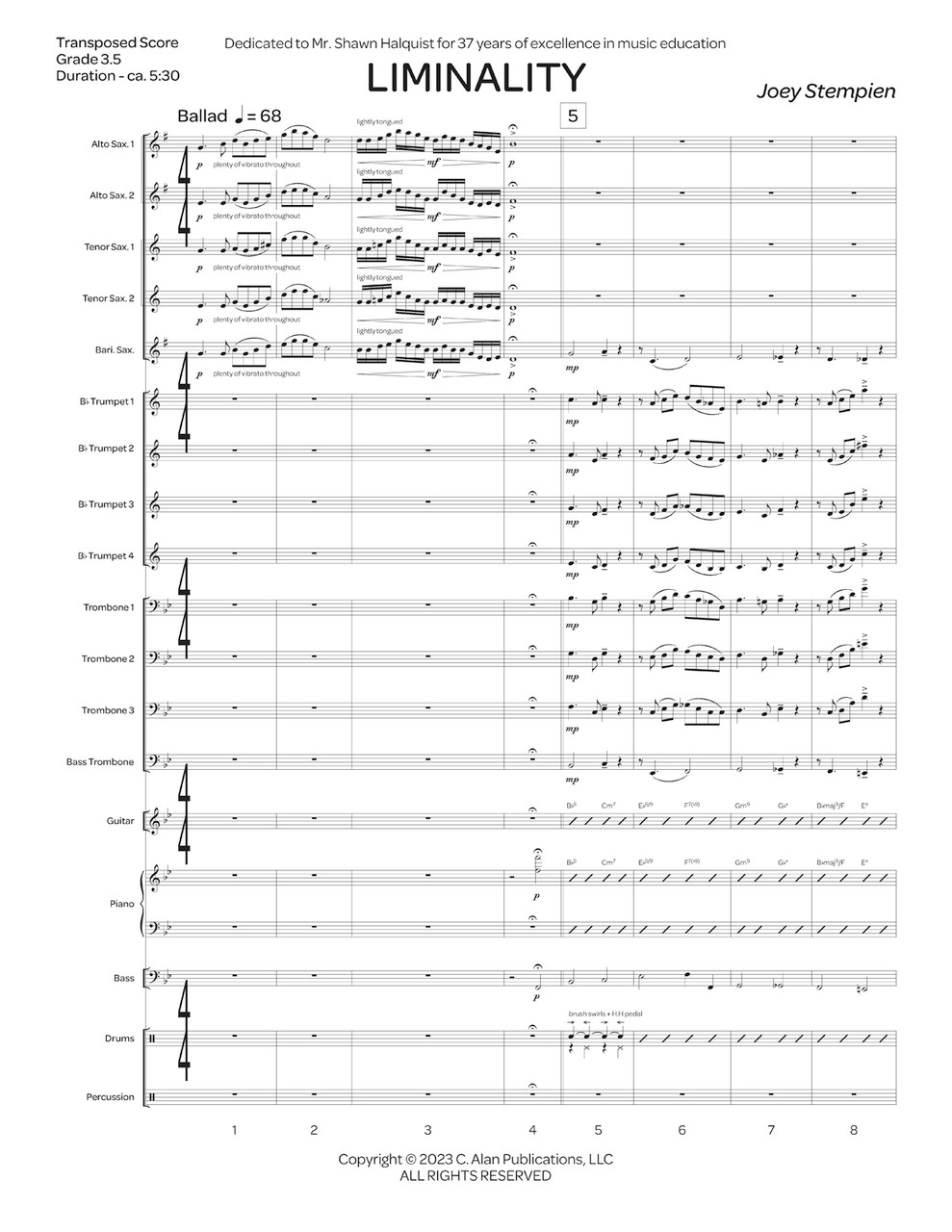
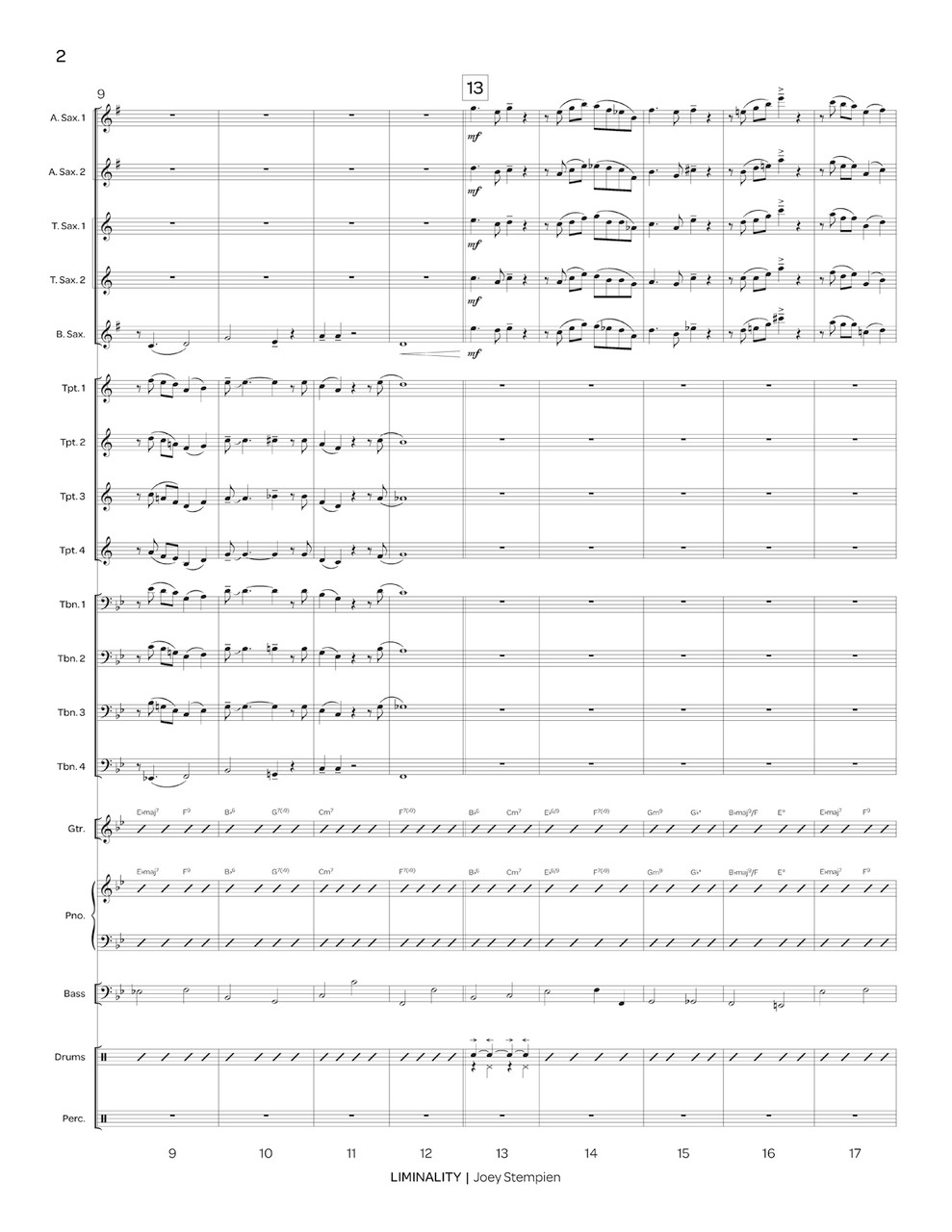
Download mp3 | Click on images to left for score sample
Price:
$48.00
Item #:
31500
-
Notes & Instrumentation
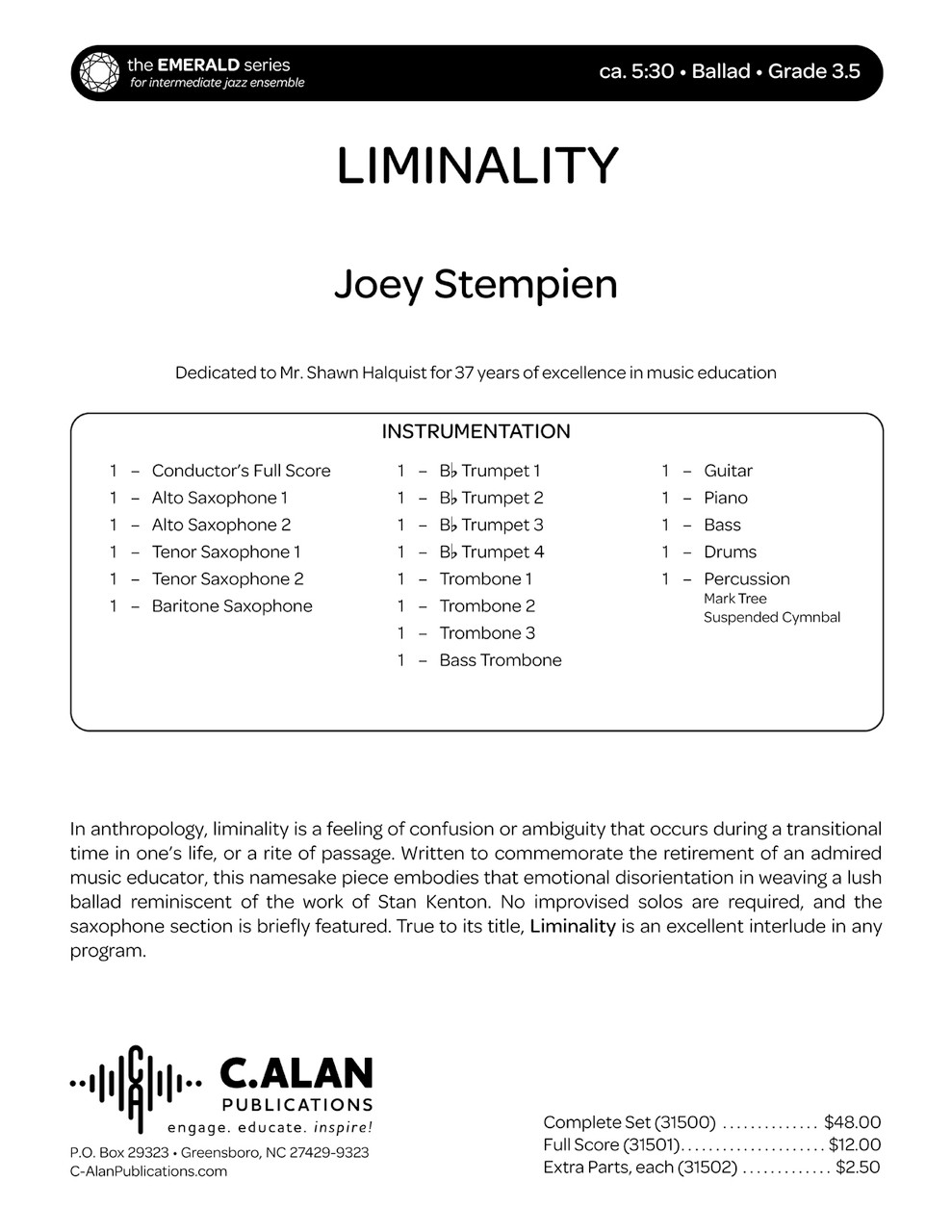
In anthropology, liminality is a feeling of confusion or ambiguity that occurs during a transitional time in one’s life, or a rite of passage. Written to commemorate the retirement of an admired music educator, this namesake piece embodies that emotional disorientation in weaving a lush ballad reminiscent of the work of Stan Kenton. No improvised solos are required, and the saxophone section is briefly featured. True to its title, Liminality is an excellent interlude in any program.
Genre: Jazz Ensemble | # of Players: Standard
Series: Emerald Jazz Series
Level: 3.5 | Duration: 5:30
Instrumentation
Alto Saxophone 1
Alto Saxophone 2
Tenor Saxophone 1
Tenor Saxophone 2
Baritone Saxophone
B-flat Trumpet 1
B-flat Trumpet 2
B-flat Trumpet 3
B-flat Trumpet 4
Trombone 1
Trombone 2
Trombone 3
Bass Trombone
Guitar
Piano
Bass
Drums
Percussion (Mark Tree, Suspended Cymbal)
Program Notes
In anthropology, liminality is a feeling of confusion or ambiguity that occurs during a transitional time in one’s life, or a rite of passage. This concept was first introduced to me through a series of online videos documenting “liminal spaces,” such as waiting rooms and abandoned malls. These videos were often set to "Everywhere at the End of Time" by Leyland Kirby, which uses degrading loops of ballroom music to portray the progression of dementia in a six-hour album.To me, this music accurately captured the melancholia of transformative life periods—especially significant at the time because I was graduating high school and my high school band director, Mr. Shawn Halquist, was retiring the same spring. I spent a great deal of time studying The Ballad Style of Stan Kenton to accurately emulate the ballroom samples Kirby used to evoke the nostalgic feeling of passing time.
From the very first note of the piece, the saxophone section should play with exaggerated, but tasteful, vibrato to reproduce the medium of 1950s ballad recordings (again, The Ballad Style of Stan Kenton is a good reference).
When the brass enters with the melody at m. 5, each player should listen to their fellow band members in order to produce one lush, common sound. The more the brass section can blend, the more authentic the performance will be. This also applies to the saxophones at m. 13.
When the saxophones add counterpoint above the brass beginning at m. 24, they should not overpower the story that is already being told, but instead fill the gaps in a graceful manner. Work with the ensemble to balance the contribution of each section.
The rhythm section is the bedrock of a faithful ballad. The pianist should play lightly, with a Basie-like interpretation during the solo interlude. The drummer’s brush pattern should be sensitive enough to drive the piece forward without being texturally dominant. The guitarist can either strum pulses in the style of Freddie Green or ad lib fingerstyle.
Writing this piece has reminded me to constantly strive to live in the present, because life can slip through your fingers quickly if you are not careful. Cherish those around you every day and impart this advice on your audience through your performance of Liminality.
-
Product Reviews