- New!
- Band
- Percussion
- Orchestra
- Brass Band
- Jazz
- Chamber
- Voice
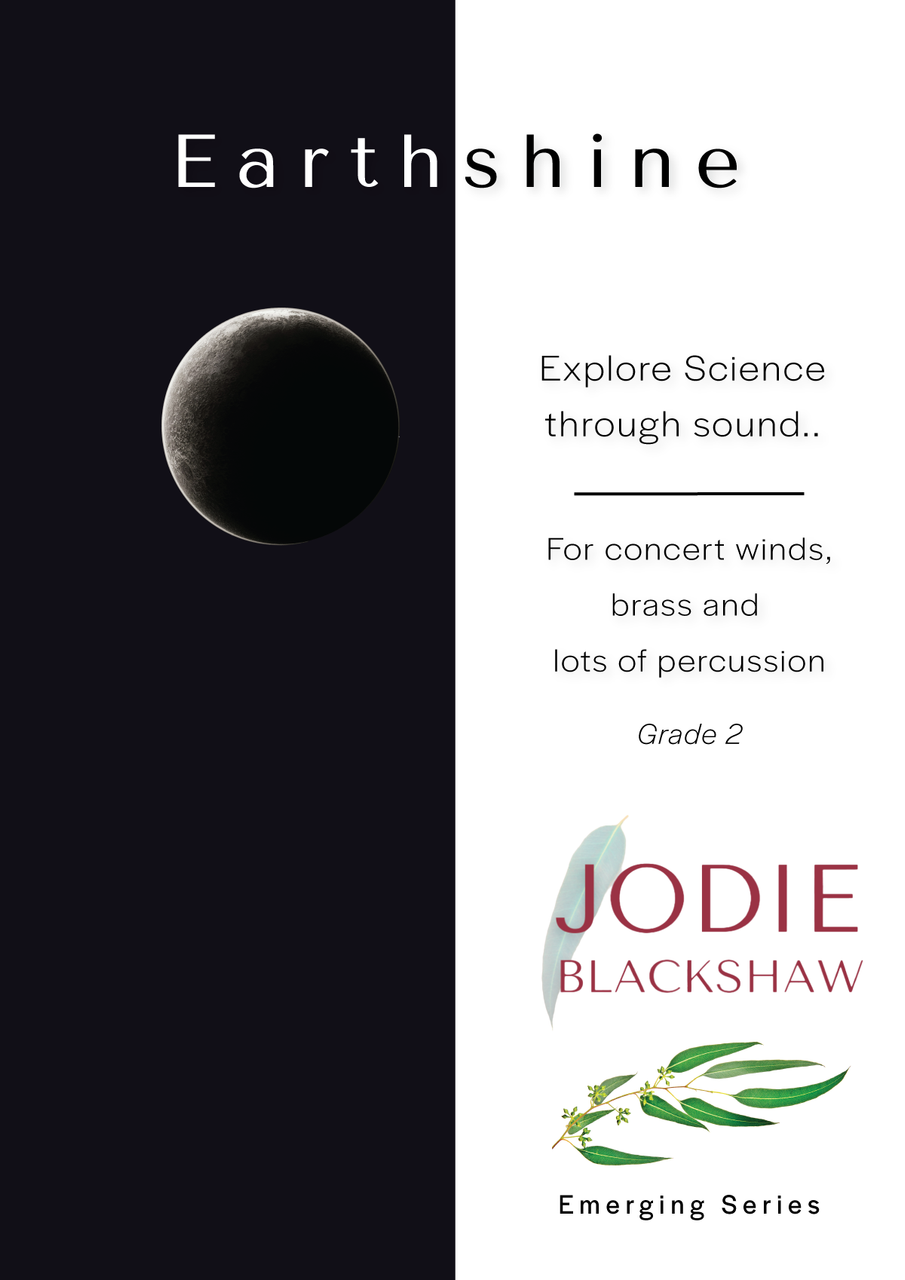
Earthshine (Band Gr. 2)
Genre: Band
Series: Emerging
# of Players: Standard
Level: 2 | Duration: 4:30
Publisher: Jodie Blackshaw Music | Copyright: 2015 
Price:
$65.00
Item #:
JB014
-
Notes & Instrumentation
NASA sounds from space, solo for any instrument, timpani feature, layered, independent writing and percussion parts to suit a large army of percussion - what does this piece not offer your and your students?
Genre: Band | # of Players: Standard
Series: Emerging
Level: 2 | Duration: 4:30
Instrumentation
Flute
Oboe
Clarinet in B-flat
Alto Saxophone in E-flat
Tenor Saxophone in B-flat
Trumpet in B-flat
Horn in F
Bassoon
Euphonium/Baritone T.C.
Euphonium/Baritone B.C.
Trombone
Bass Clarinet in B-flat
Baritone Saxophone in E-flat
Tuba
Timpani
Mallet Percussion 1: Marimba/Bass Orff Xylophone, Glockenspiel
Mallet Percussion 2: Xylophone
Auxiliary Percussion 1: Sturdy Plastic Cup, Floor Tom
Auxiliary Percussion 2: Gong, Rainstick, Vibraslap, Bass Drum, Suspended Cymbal
Auxiliary Percussion 3: Large Conga, Ride Cymbal, Claves
Program Notes
Night time on the moon is quite different to that on Earth. When the Sun sets on the Moon it doesn’t become completely dark. Why? Because the Earth is providing a light fifty times brighter than a full moon. This ‘glowing’ Earth is created by light from the Sun, reflecting off the Earth’s surface. This is what we call Earthshine. It is during the moon cycles known as waxing and waning crescents that we can see this glow on the moon’s surface. You may have seen it yourself – a bright crescent moon in the arms of the full Moon’s shadow. In this piece, the concept of reflection is explored in several ways, drawing parallels between reflected light and echoed melodic material. The first half of the piece also sounds a little unsure of itself. This tentative writing invites the audience and players alike to consider what people must of thought about Earthshine before Leonardo Da Vinci explained the phenomena around 1510. A Timpani solo in the middle of the work allows both performer and audience to imagine the desolate landscape of the moon at midnight, bathed in the Earth’s radiant glow. The final section of the piece hastens in tempo and develops a fullness of sound; drawing from the confidence we now have with regard to space travel and NASA’s planned return to the moon by 2018. It is anticipated that Astronauts will live at the South Pole of the Moon for some weeks. They will experience ‘night’ on the moon and be the first ever human beings to experience Earthshine. This work was commissioned by a consortium led by the Australian Band and Orchestra Directors Association Qld. -
Product Reviews