- New!
- Band
- Percussion
- Orchestra
- Brass Band
- Jazz
- Chamber
- Voice
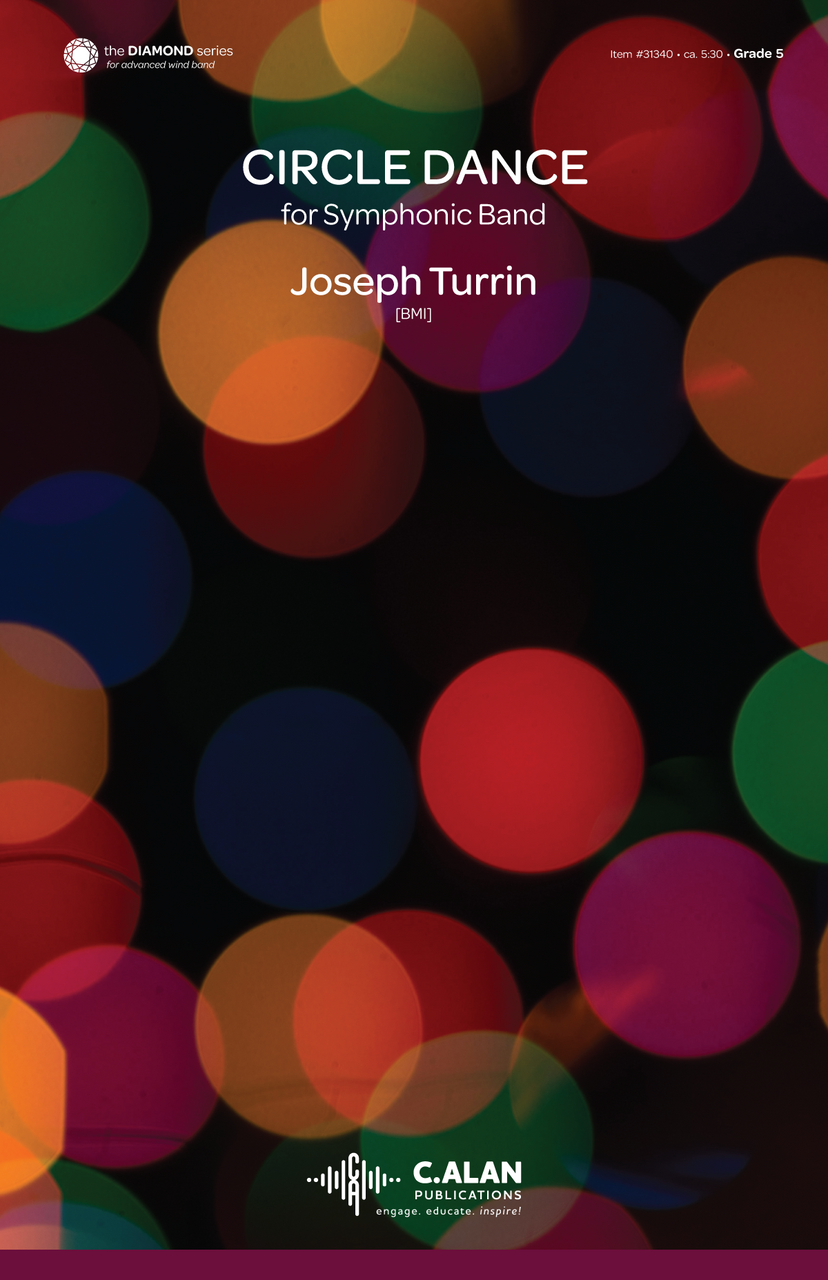


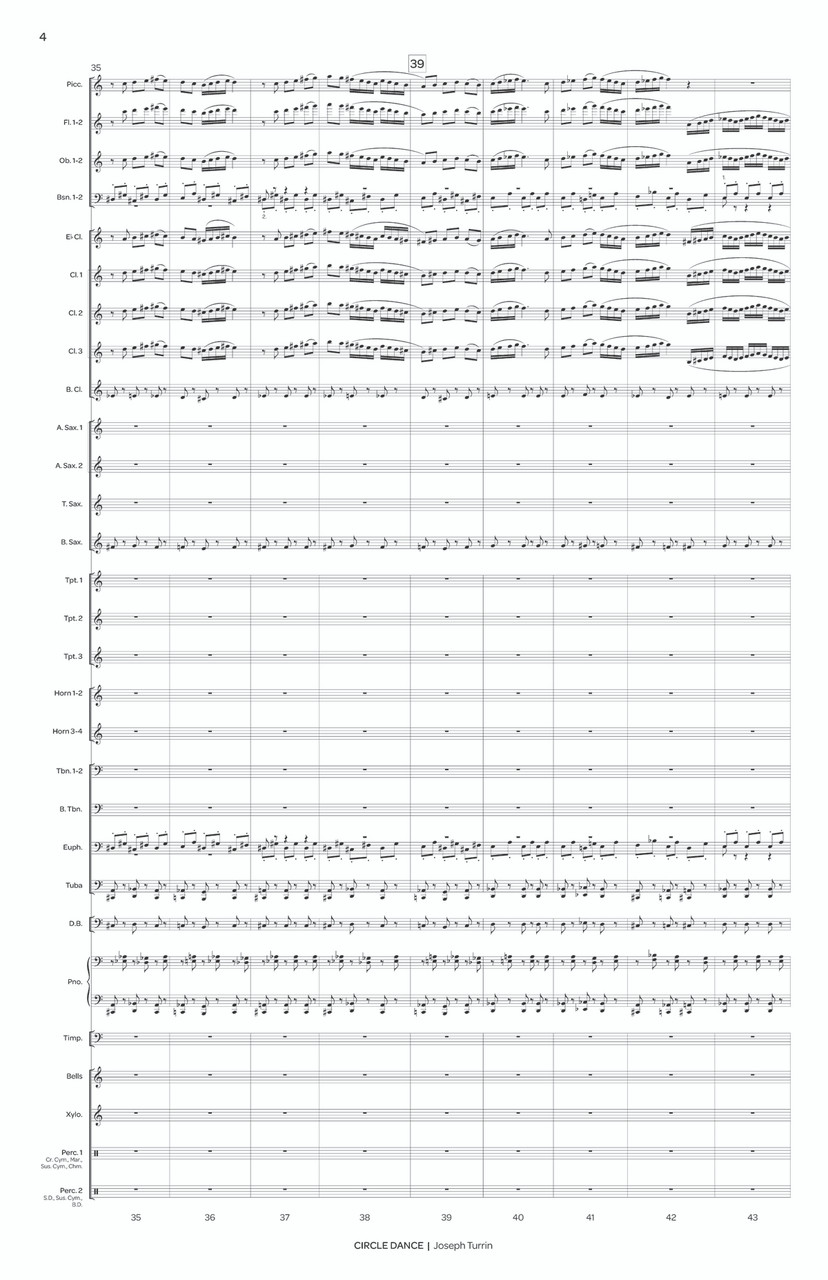
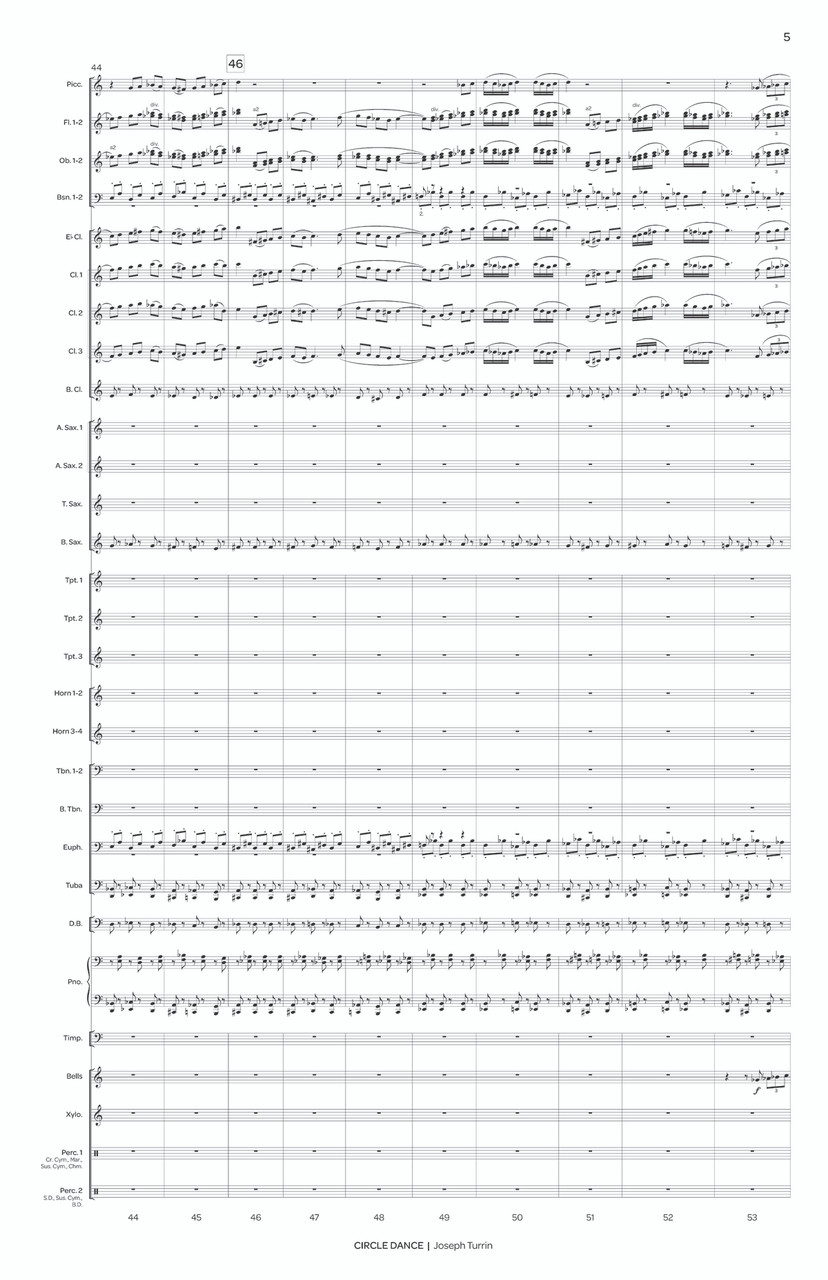

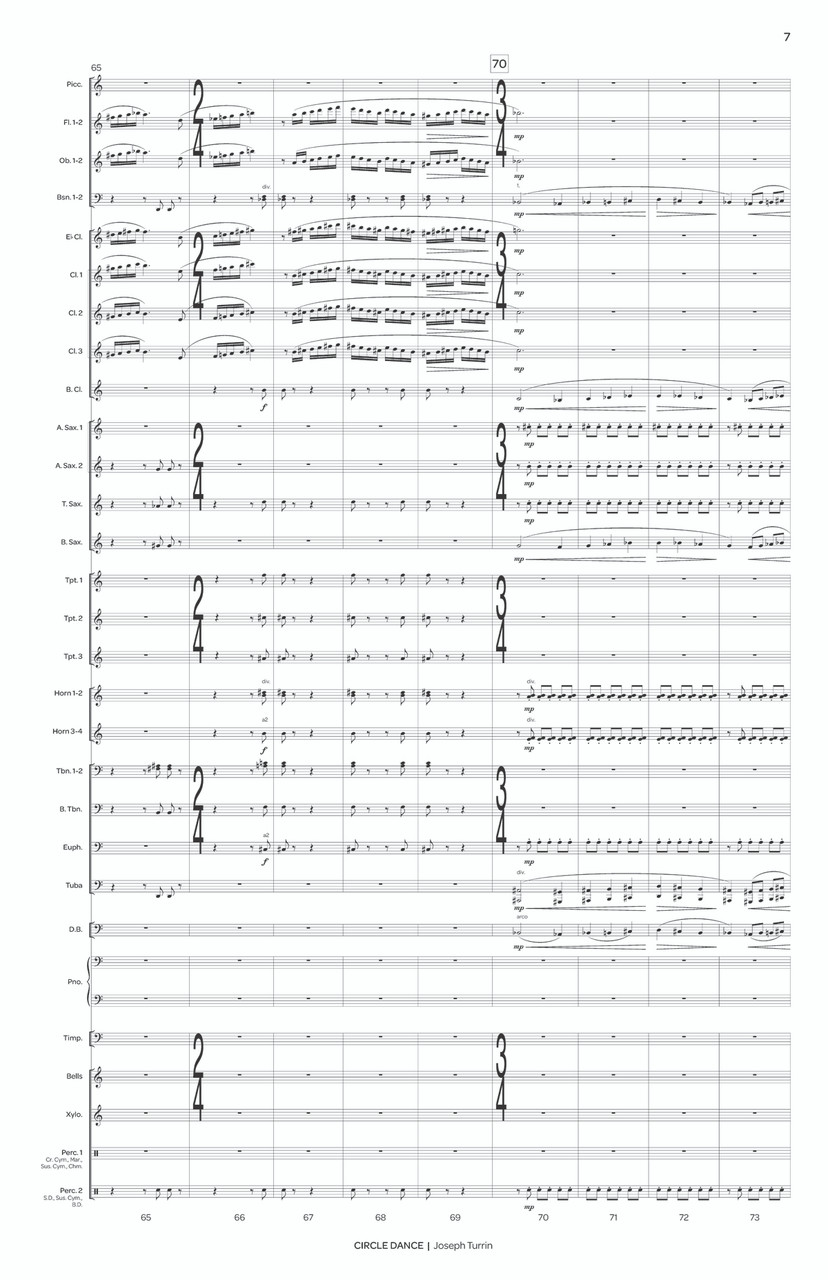

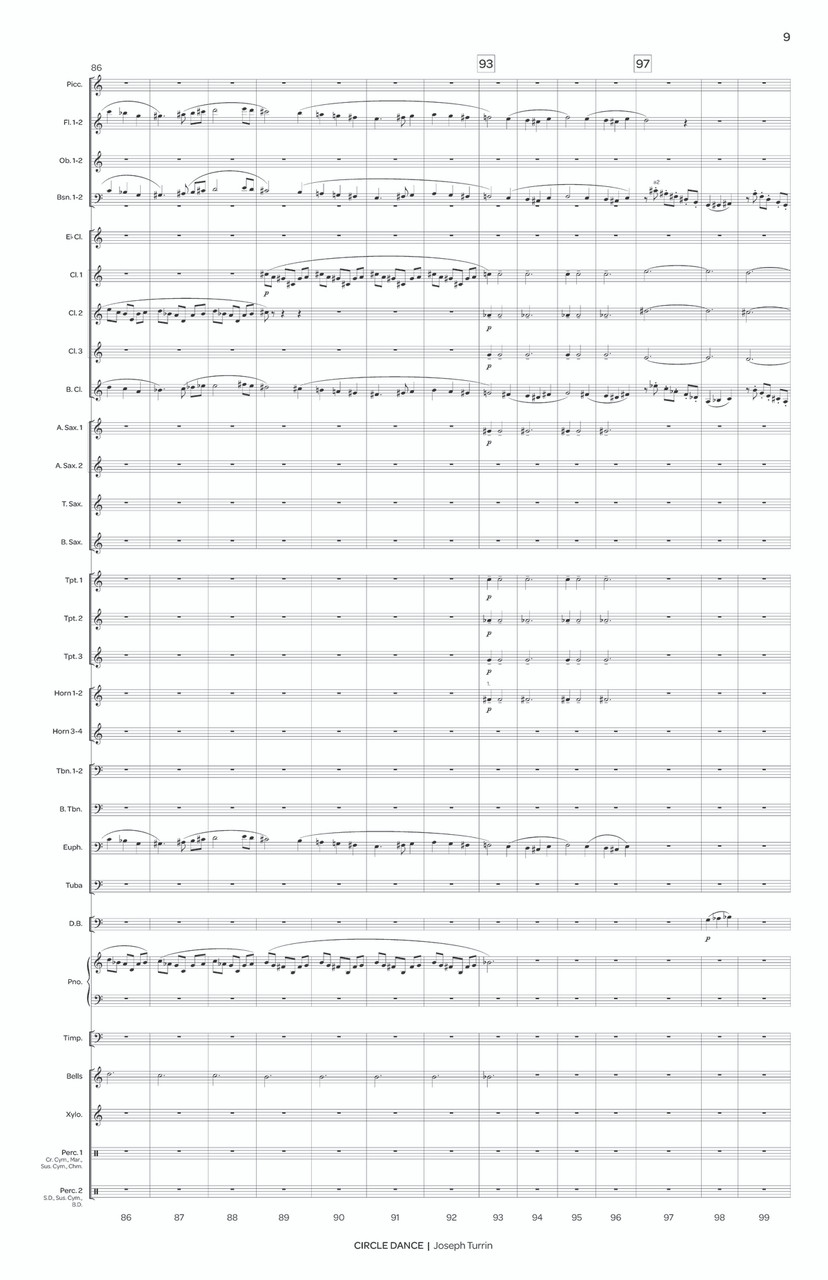

Circle Dance (Band Gr. 5)
Genre: Band
Series: Diamond Band Series
# of Players: Standard
Level: 5 | Duration: 5:25
Publisher: C. Alan Publications | Copyright: 2023
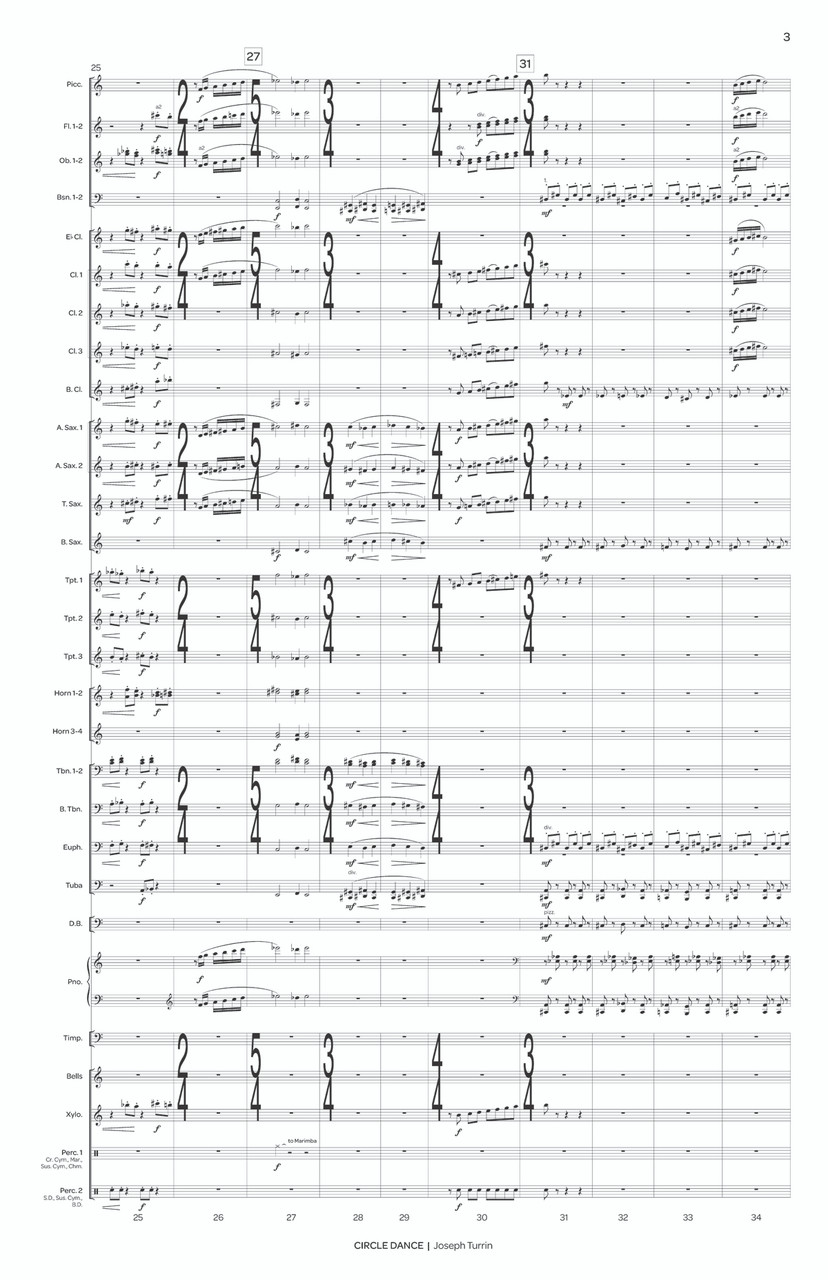
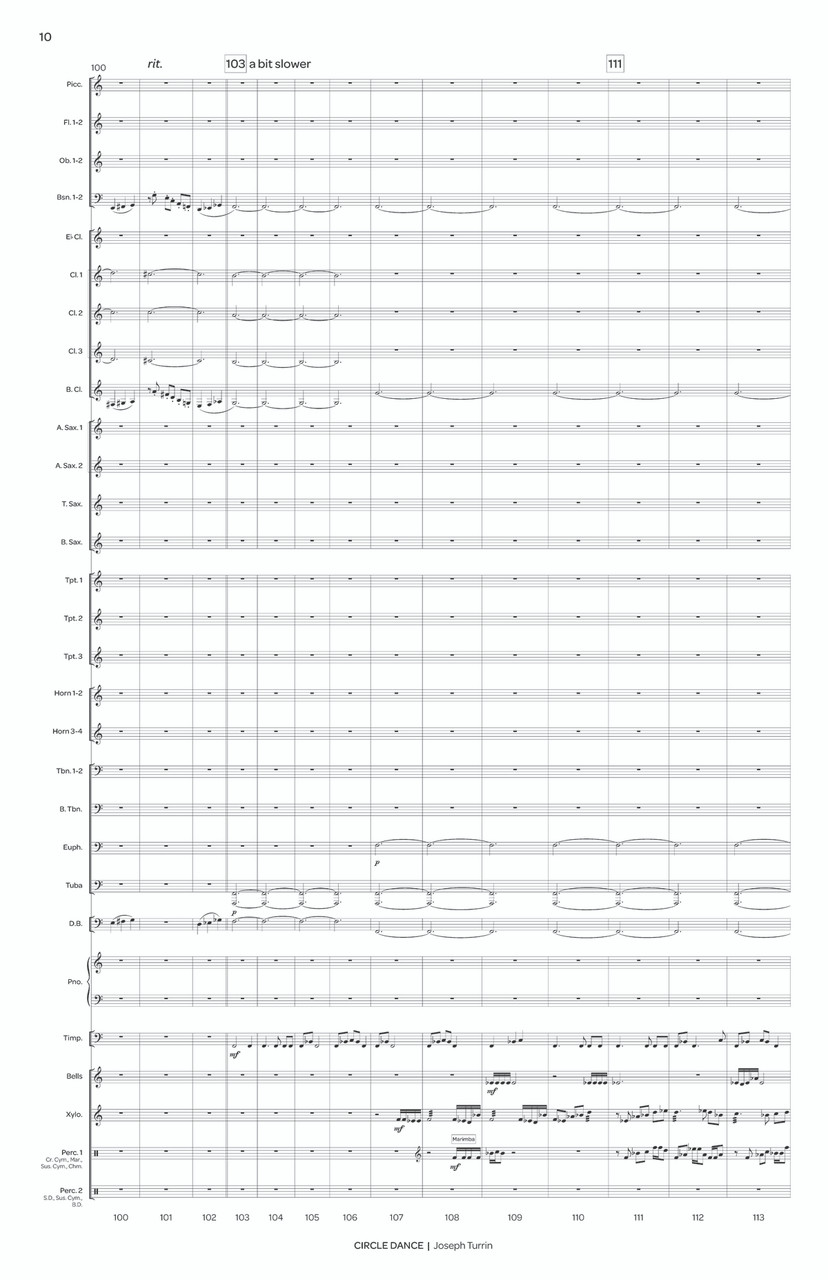
Click on images to left for score sample
Price:
$130.00
Item #:
31340
-
Notes & Instrumentation
Dancing in a circle is an ancient tradition common to many cultures for marking special occasions, rituals, strengthening community, and encouraging togetherness. Circle Dance employs the idea of fifths and their musical relationships in combination with melodic and harmonic workings of this composition to bring a rousing energy to your concert program.
Genre: Band | # of Players: Standard
Series: Diamond Band Series
Level: 5 | Duration: 5:25
Instrumentation
Piccolo
Flute 1
Flute 2
Oboe 1
Oboe 2
Bassoon 1
Bassoon 2
E-flat Clarinet
B-flat Clarinet 1
B-flat Clarinet 2
B-flat Clarinet 3
B-flat Bass Clarinet
E-flat Alto Saxophone 1
E-flat Alto Saxophone 2
B-flat Tenor Saxophone
E-flat Baritone Saxophone
B-flat Trumpet 1
B-flat Trumpet 2
B-flat Trumpet 3
F Horn 1
F Horn 2
F Horn 3
F Horn 4
Trombone 1
Trombone 2
Bass Trombone
Euphonium 1
Euphonium 2
B-flat Baritone T.C. 1
B-flat Baritone T.C. 2
Tuba
Double Bass
Piano
Timpani [3 drums]
Bells
Xylophone, Triangle
Percussion 1: Crash Cymbals, Marimba [4.3-octave], Suspended Cymbal, Chimes
Percussion2: Snare Drum, Suspended Cymbal, Bass Drum
Program Notes
The original inspiration for Circle Dance, or chain dance, is a style of dance done in a circle or semicircle to musical accompaniment. Circle dancing is probably the oldest known dance formation and was part of community life from when people first started to dance. Dancing in a circle is an ancient tradition common to many cultures for marking special occasions, rituals, strengthening community and encouraging togetherness. The dance can also be enjoyed as an uplifting group experience or as part of meditation. Circle dances can be choreographed to many different styles of music and rhythms.On another level, the musical material is centrally built on the interval of the 5th. The interval of the 5th, being the most fundamental interval, along with the octave, in all of western music theory. These two intervals are considered to be the foundation of all tonal harmony going back to the Greek scholar, Pythagoras.
In music theory, there is a geometrical representation called the circle of fifths, which utilizes all 12 tones of the musical scale in an orderly pattern, each note related to the next by an interval of a 5th. I thought this idea of fifths and their musical relationships might be an interesting concept, as for the melodic and harmonic workings of this composition.
–J.T.
-
Product Reviews