- New!
- Band
- Percussion
- Orchestra
- Brass Band
- Jazz
- Chamber
- Voice
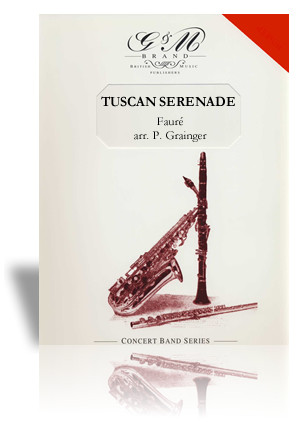
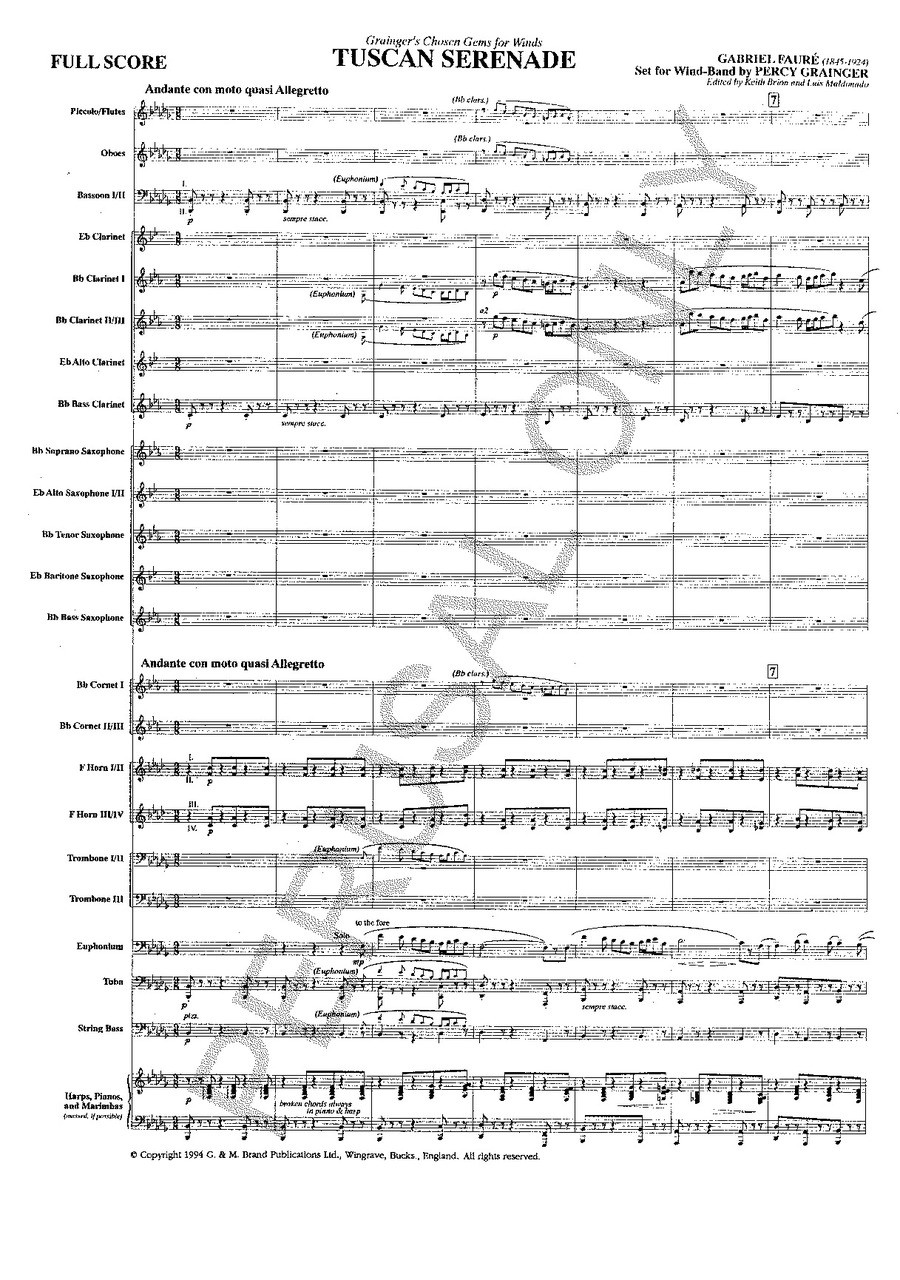


Tuscan Serenade (Fauré)
Genre: Solo Euphonium with Band
# of Players: Standard + 1
Level: 4 | Duration: 3:30
Publisher: G & M Brand | Copyright: 1994
Download mp3 | Click on images to left for score sample
Price:
$85.00
Item #:
R10155
-
Notes & Instrumentation
Hauntingly beautiful, Grainger captures the essence of Fauré's Tuscan Serenade. A lovely euphonium solo sings the melody before the full ensemble expresses the mood of Tuscany and the poem that the Fauré song is based upon.
Genre: Solo Euphonium with Band | # of Players: Standard + 1
Level: 4 | Duration: 3:30
Instrumentation
Piccolo
Flutes
Oboes
Bassoon 1/2
Eb Clarinet (optional)
Bb Clarinet 1
Bb Clarinet 2
Bb Clarinet 3
Eb Alto Clarinet (optional)
Bb Bass Clarinet
Bb Soprano Saxophone (optional)
Alto Saxophone 1/2
Tenor Saxophone
Baritone Saxophone
Bass Saxophone (optional)
Bb Cornet 1
Bb Cornet 2
Bb Cornet 3
Horn in F 1/2
Horn in F 3/4
Trombone 1
Trombone 2
Trombone 3
Euphonium
(Baritone T.C.)
Tuba
String Bass (optional)
Harp/Piano/Marimba
Program Notes
Gabriel Fauré (1845-1924) reveals himself most fully in his songs, which number nearly 100. They include "Après une Revé" (1865) and "Clair de Lune" (1887).Tuscan Serenade, like "Après une Revé," is a setting of an Italian poem, translated into French by Romain Bussine, himself a singer. It was published in 1879 and Fauré set it at some point during the preceding ten years. (Scholars differ as to the exact date).
English Text (adaptation of anonymous Italian text):
O you who are soothed by a delightful dream,
Sleeping calmly in your lonely bed,
Awake and look at your serenader,
The slave of your eyes, in the moolight night!
Awake, my soul, my thought,
Hear my voice carried on the breeze,
Hear my voice singing!
Hear my voice weeping in the dew!
Below your window my voice dies away in vain,
And every night I repeat the tale of my suffering,
With no other shelter than the starry vault.
The wind cuts my voice and the night is frigid.
My song ends on a final strain,
My lips tremble as the murmur "I love you!"
I can sing no more!
Ah! condescend to show yourself! Condescend to appear!
If I were sure that you refuse to appear
I would go away and forget you,
I would ask slumber
To lull me until the redness of morning,
To lull me until I no longer loved you!The poem is in 3 sections, but Fauré sets the first two parts in strophic form, echoing the melody in the piano accompaniment. The last 4 lines, however, contain new material: something of a departure from a structural point of view.
Grainger heightens the contrast between the verses: he scores the first as a Euphonium solo, but scores the second for Band; the Euphonium takes the accompaniment, returning to the fore for the last, crucial, four lines. His instrumental colour concept is as strong as ever in this score: who else but Grainger would have asked for "Harps, Pianos, Marimbas" playing "massed if possible," thus capturing the mood of Tuscany as well as the content?
-
Product Reviews