- New!
- Band
- Percussion
- Orchestra
- Brass Band
- Jazz
- Chamber
- Voice
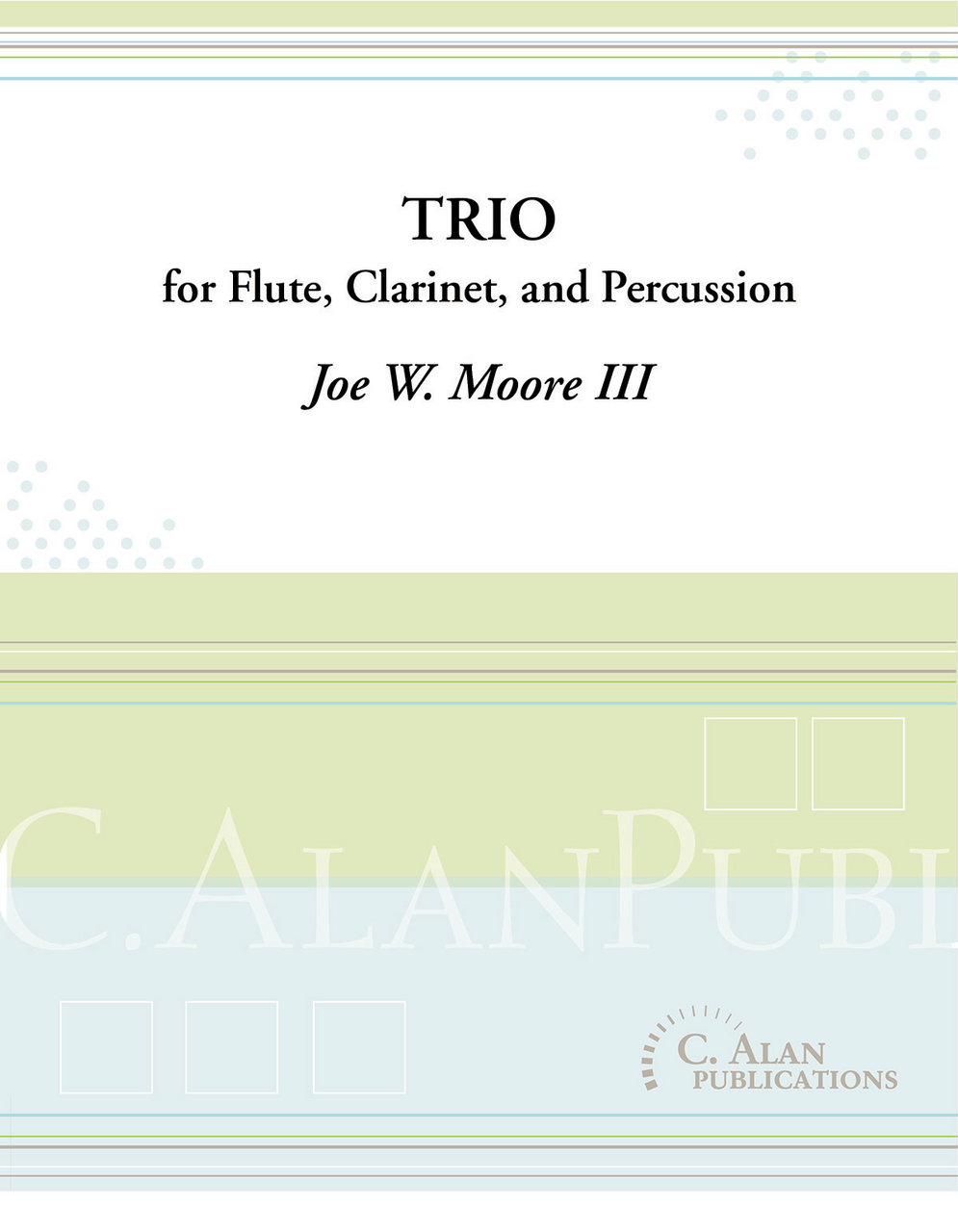
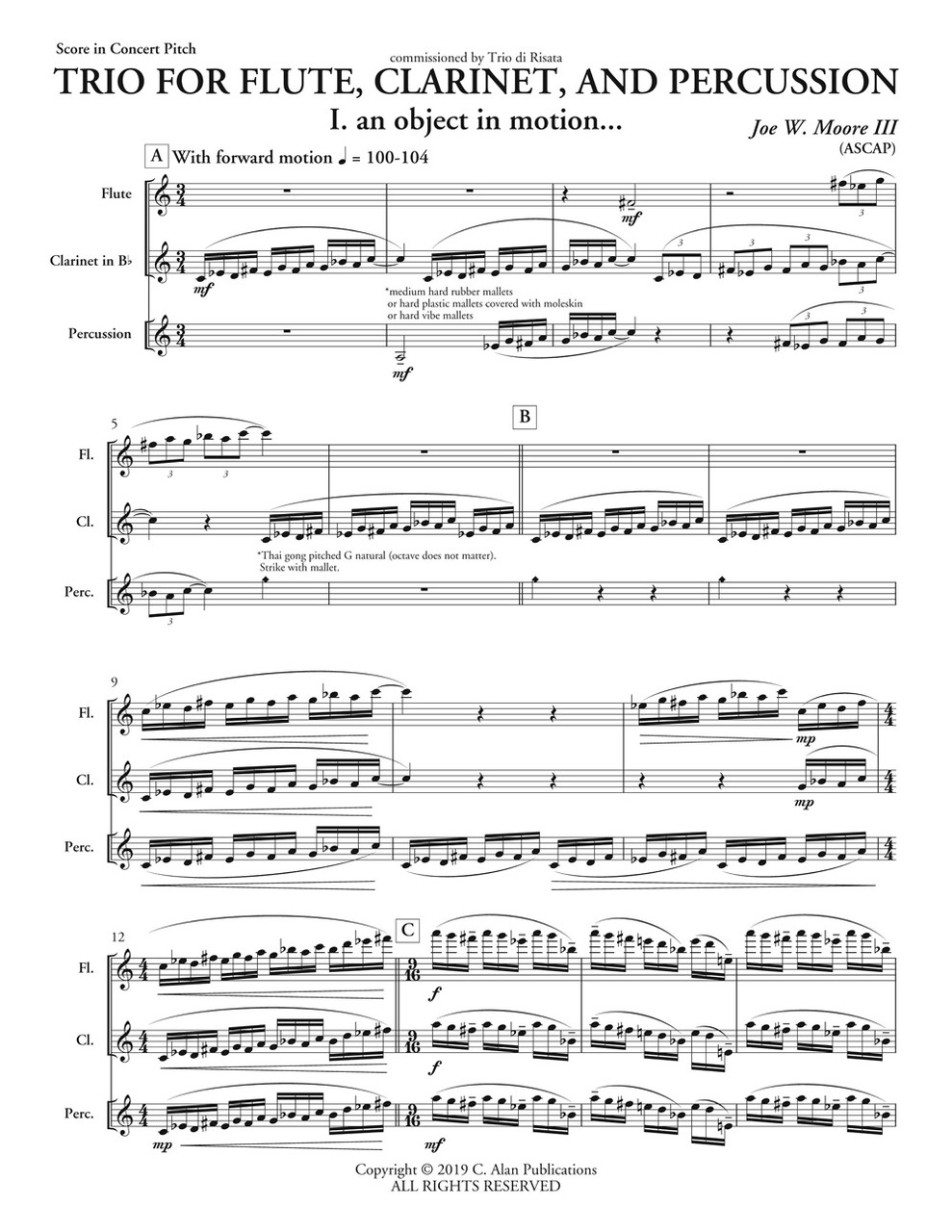
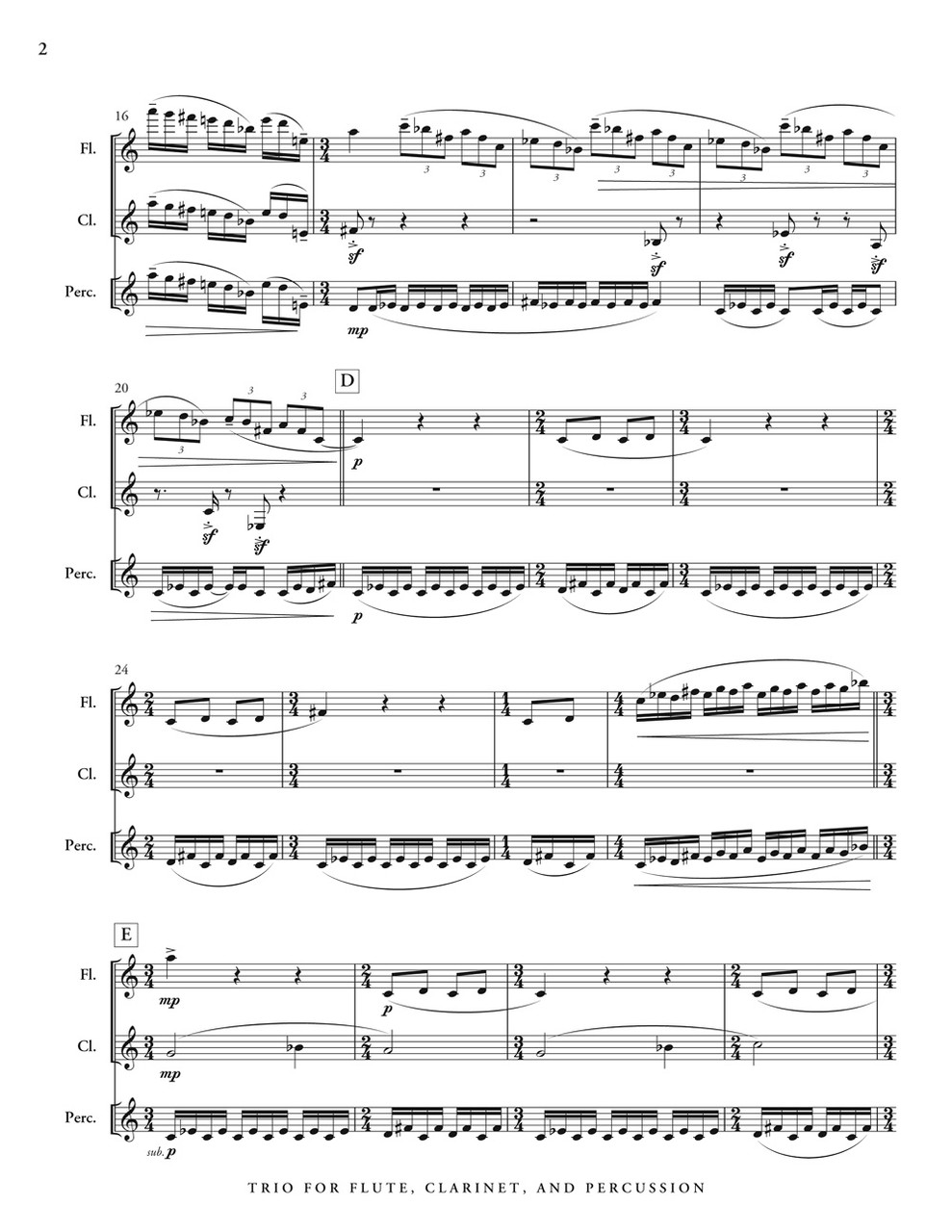
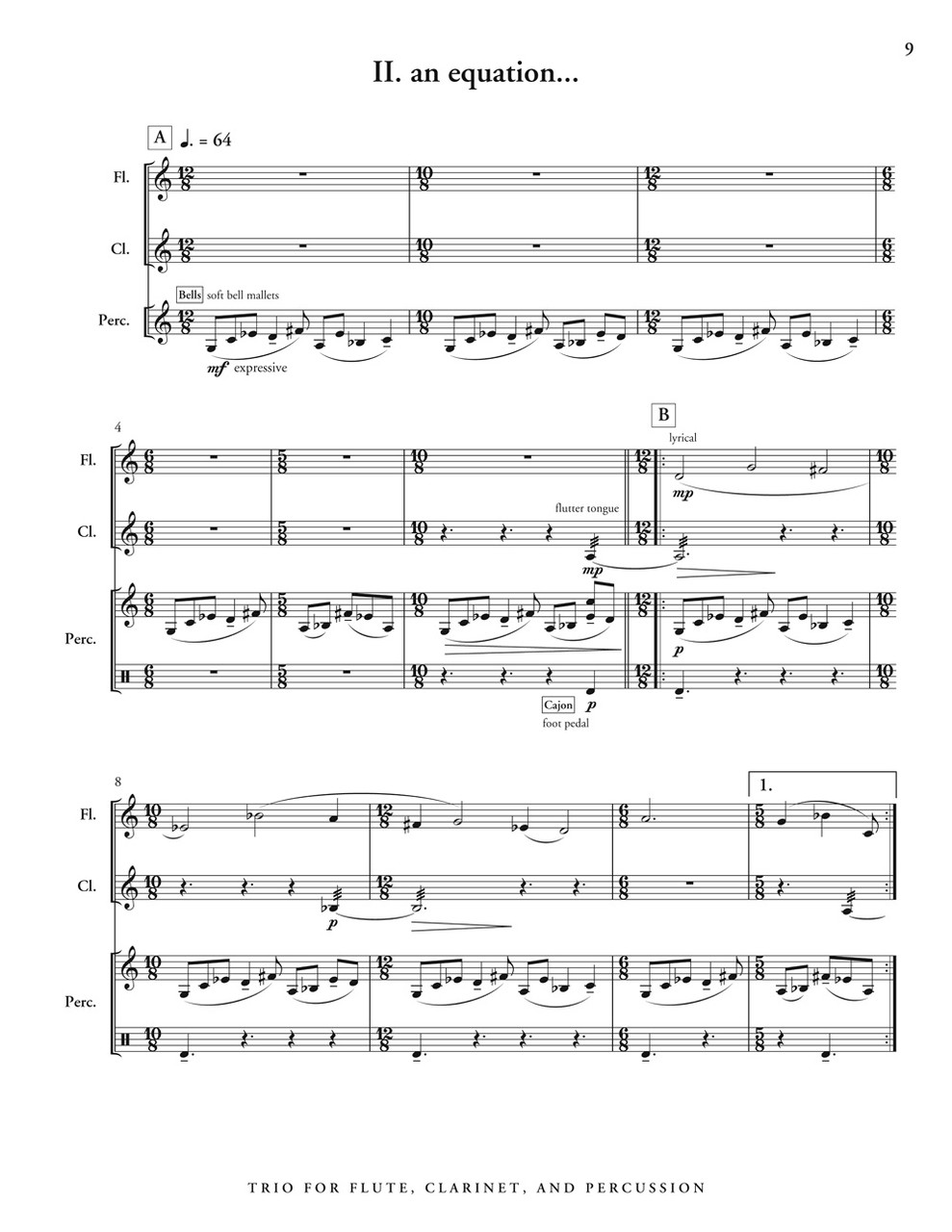
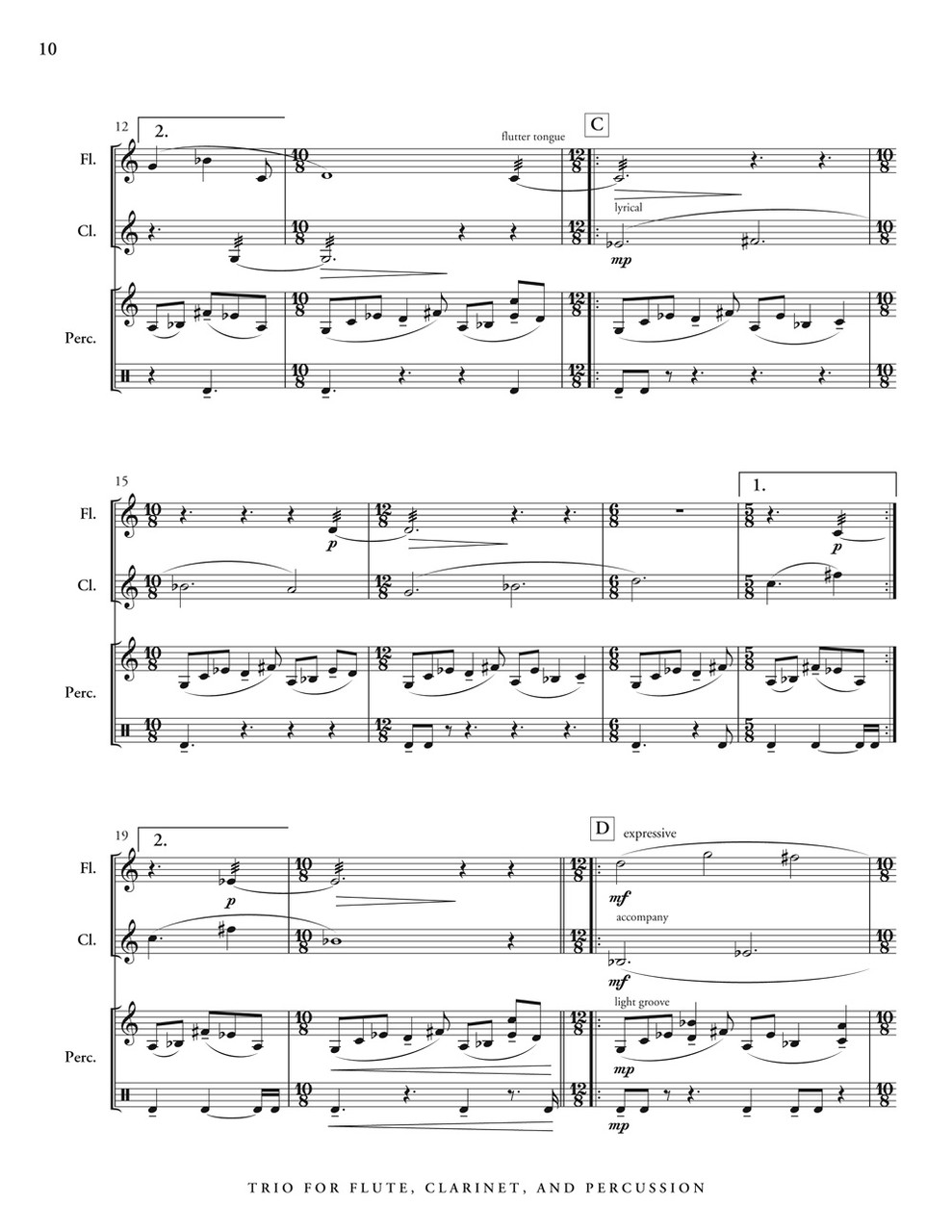
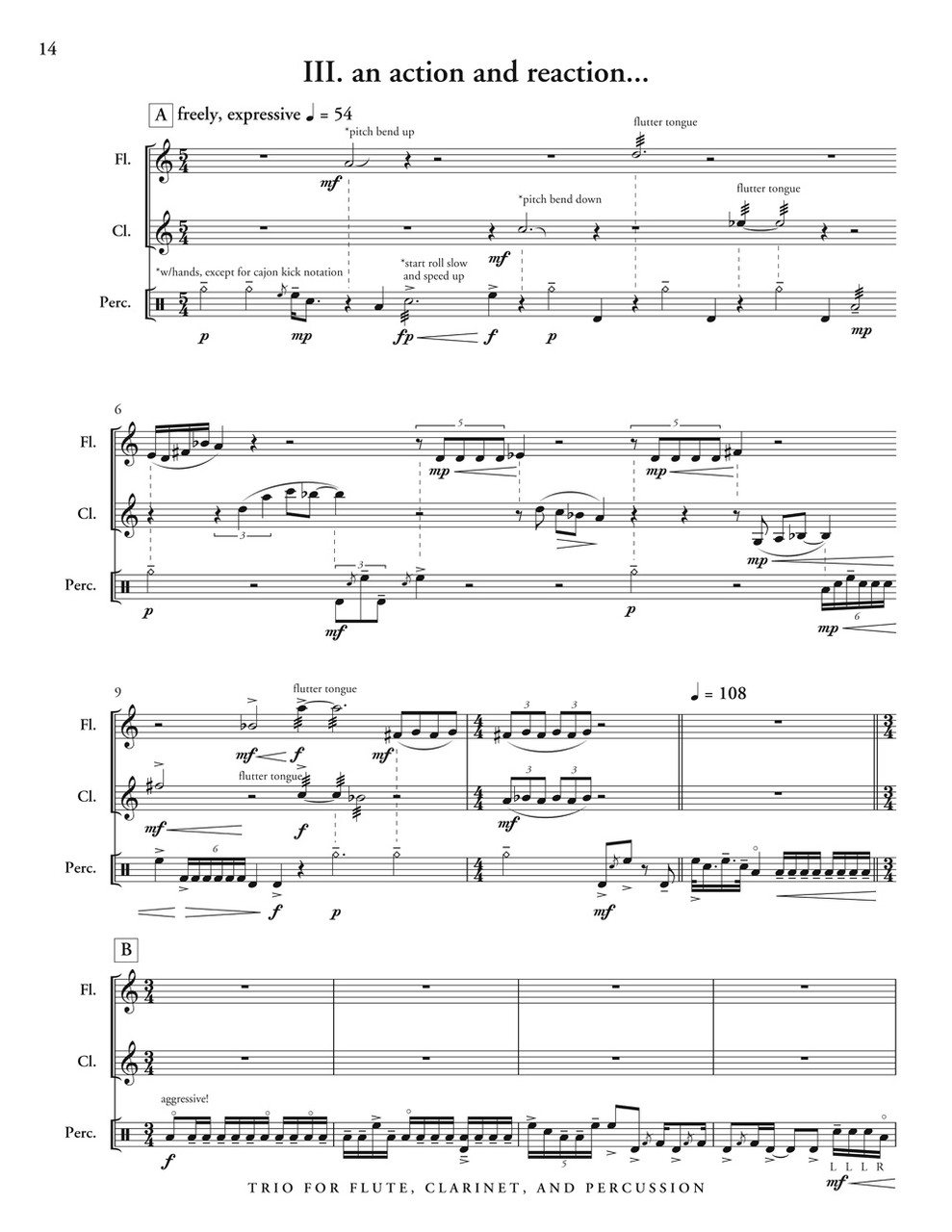
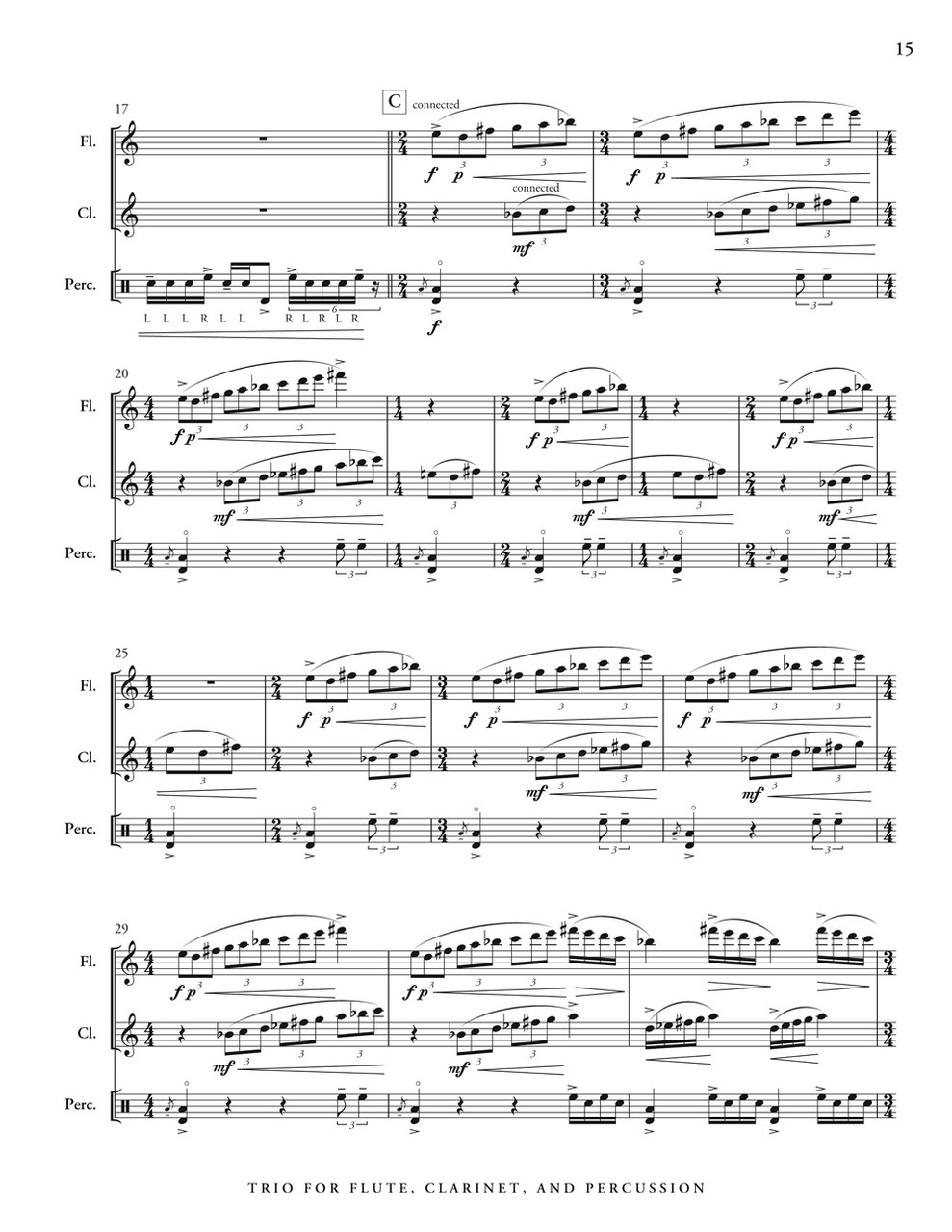
Trio for Flute, Clarinet, and Percussion
Genre: Trio for Flute, Clarinet & Percussion
# of Players: 3
Level: Medium Difficult | Duration: 10:00
Publisher: C. Alan Publications | Copyright: 2019
Download mp3 | Click on images to left for score sample

Rating:
Price:
$28.00
Item #:
25880
-
Notes & Instrumentation
Trio for Flute, Clarinet, and Percussion is a three movement work in which each movement represents one of Sir Isaac Newton's three laws of motion. The melodic content in the piece is centered around a mixture of G harmonic minor and G dorian mode.
Genre: Trio for Flute, Clarinet & Percussion | # of Players: 3
Level: Medium Difficult | Duration: 10:00
Instrumentation
Flute
Clarinet
Percussion [Bells, Cajon, Djembe, Bongos, Thai Gong (pitched “G”)]
Program Notes
Trio for Flute, Clarinet, and Percussion is a three movement work in which each movement represents one of Sir Isaac Newton's three laws of motion. The movements are individually titled; I. an object in motion..."will remain in motion unless it is acted upon by an external force," II. an equation..."The force acting on an object is equal to the mass of that object times its acceleration (F = ma), III. an action and reaction..."For every action, there is an equal and opposite reaction." The melodic content in the piece is centered around a mixture of G harmonic minor and G dorian mode. -
Product Reviews
-
Percussive Notes New Literature Review
Commissioned by Trio di Risata, this multi-movement work is scored for flute, clarinet, and one percussionist. The first movement, “an object in motion…,” largely relies on overlapping material between the flute, clarinet, and glockenspiel. Rising figures drive the progression of the work, along with punctuations and fragmented conversations among the performers. All three parts are very equal in this work, and the blend is achieved partly due to the mallet selection for glockenspiel (hard rubber or hard vibraphone mallets).
The second movement, “an equation…,” utilizes a shifting glockenspiel ostinato combined with cajon (played with a pedal) in the percussion part while the winds float serenely above. The cajon and djembe material becomes more active before disintegrating and fading away. Of the three movements, this seems the most technically challenging for the percussionist. The double duty of highly active hand drum and foot pedal work with simultaneous glockenspiel material requires coordination and confidence.
The final movement, “an action and reaction,” eschews the glockenspiel for a pure multi-percussion setup, completing a timbral transition from the first to last movement — from pervasive glockenspiel with some non-pitched contributions to all non-pitched percussion instruments. Material from the first movement returns, rounding out the work.
Jamie Wind Whitmarsh
PERCUSSIVE NOTES
VO. 59, NO. 2, APRIL 2021 Jamie Wind Whitmarsh on Jun 29th 2022
-