- New!
- Band
- Percussion
- Orchestra
- Brass Band
- Jazz
- Chamber
- Voice
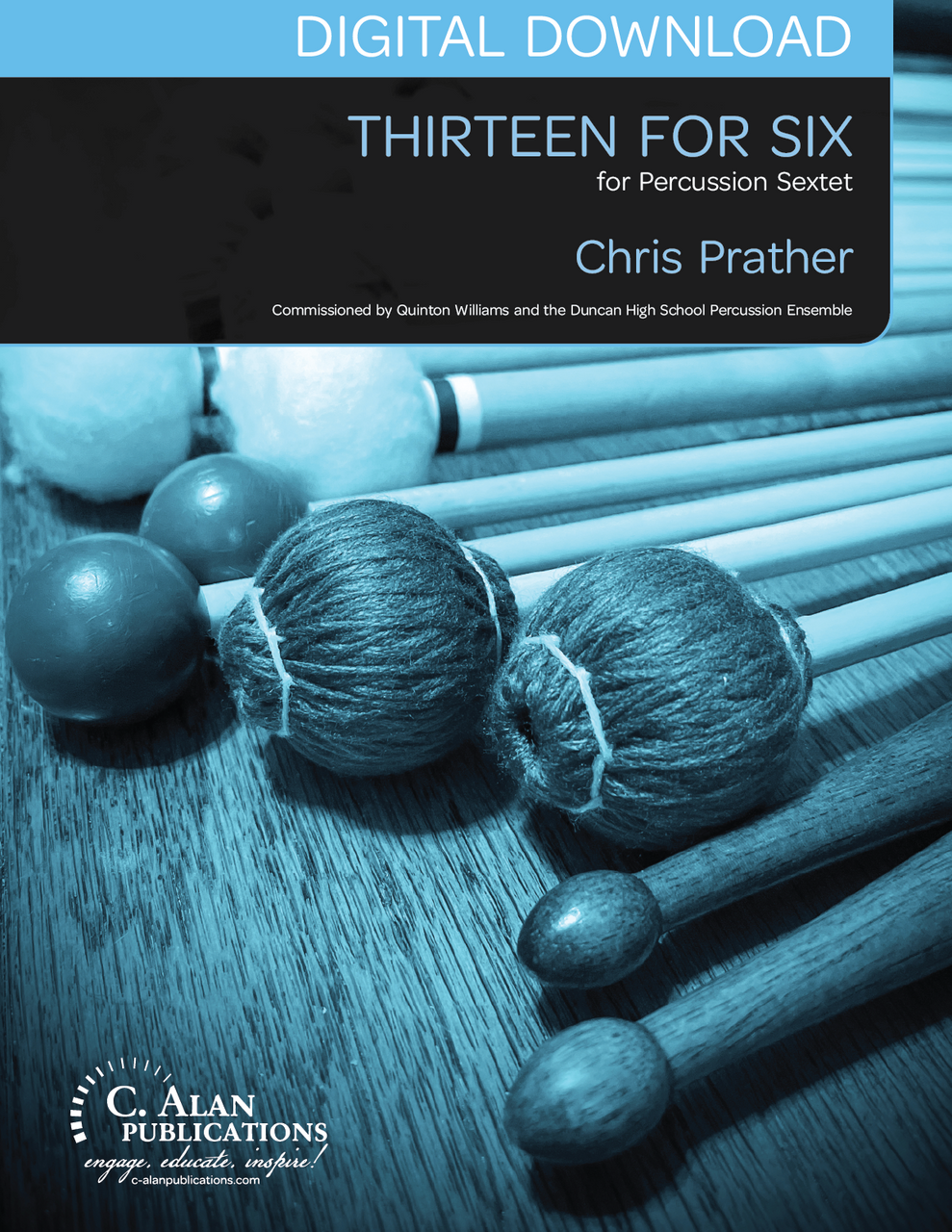




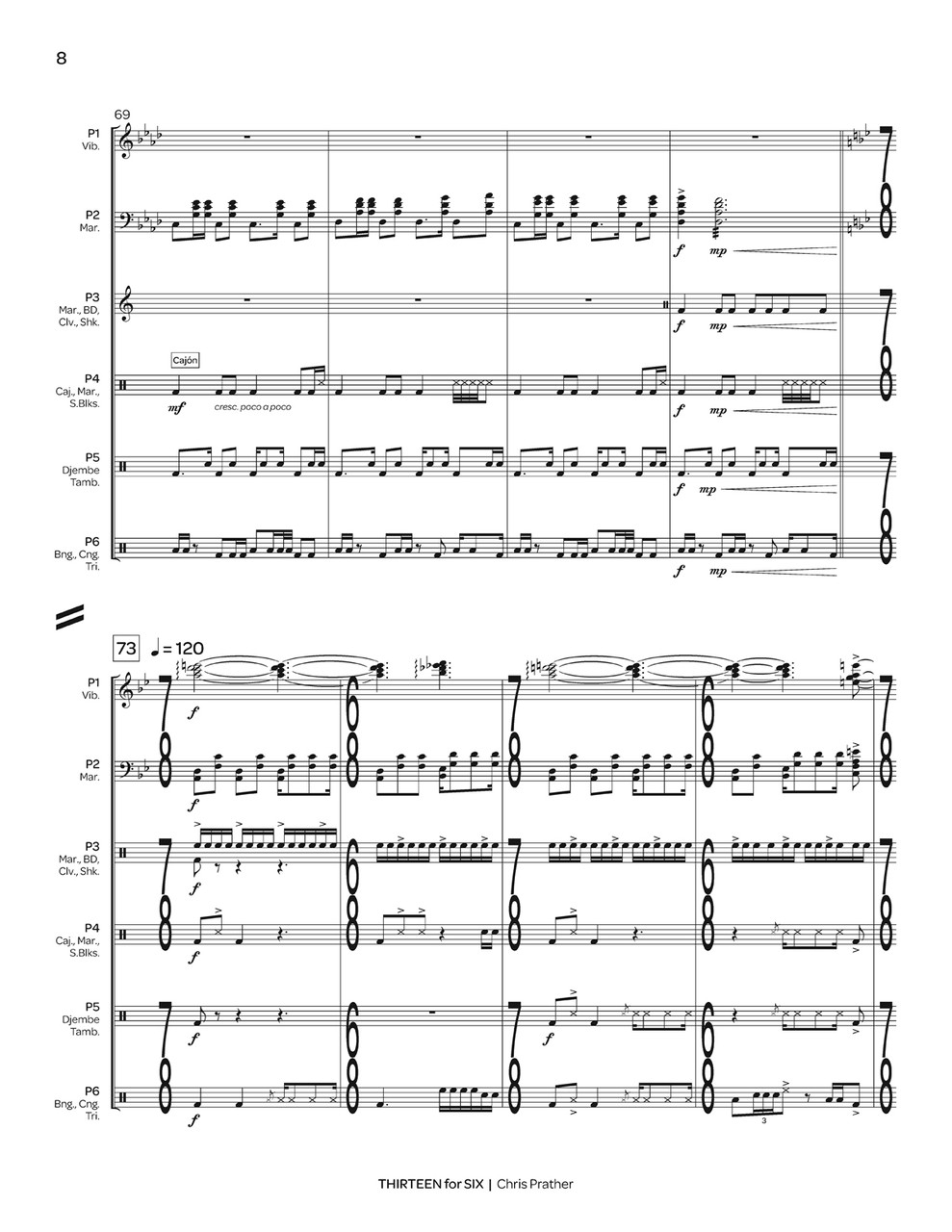
Thirteen for Six - Chris Prather [DIGITAL]
Genre: Percussion Ensemble
Series: N/A
# of Players: 6
Level: Medium Advanced | Duration: 7:30
Publisher: C. Alan Publications | Copyright: 2022
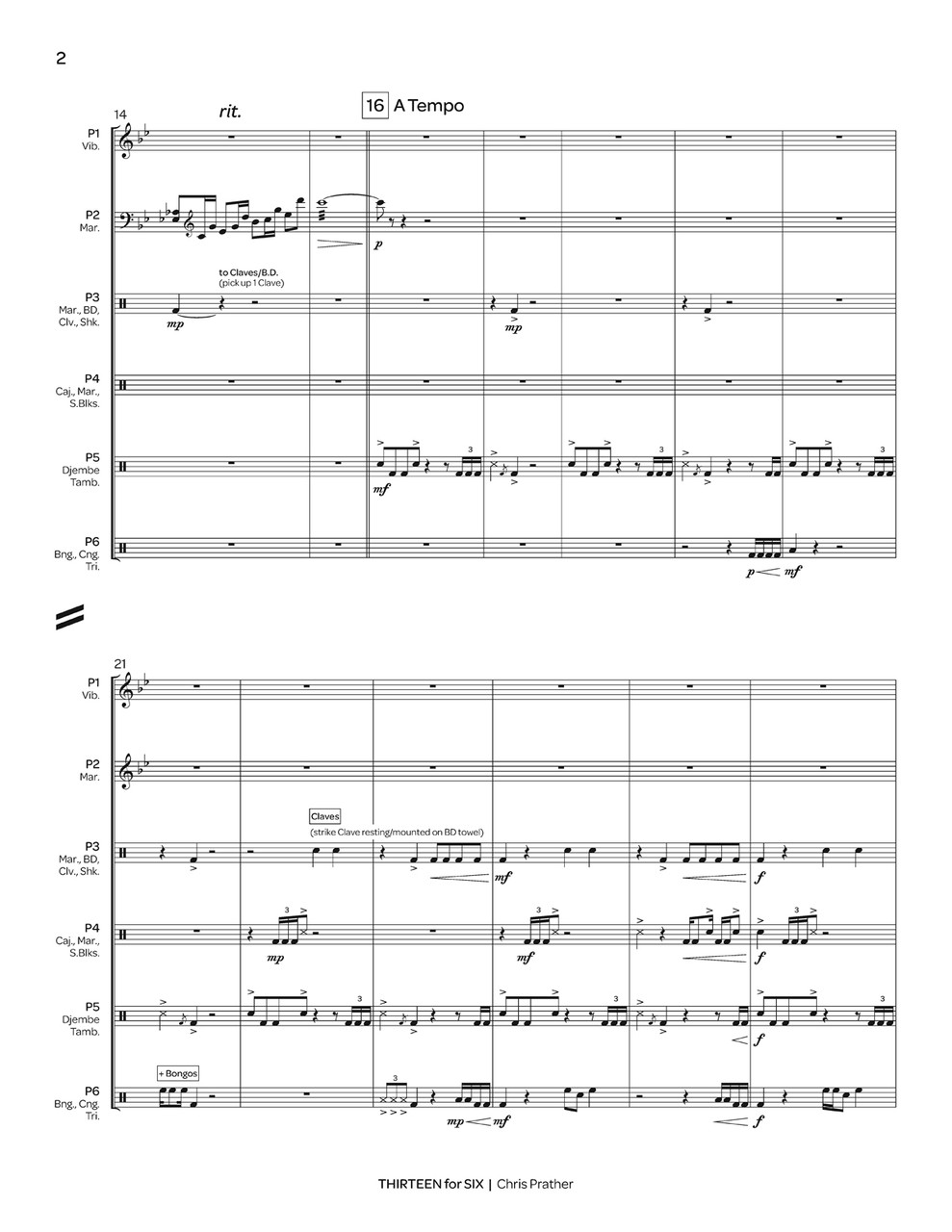
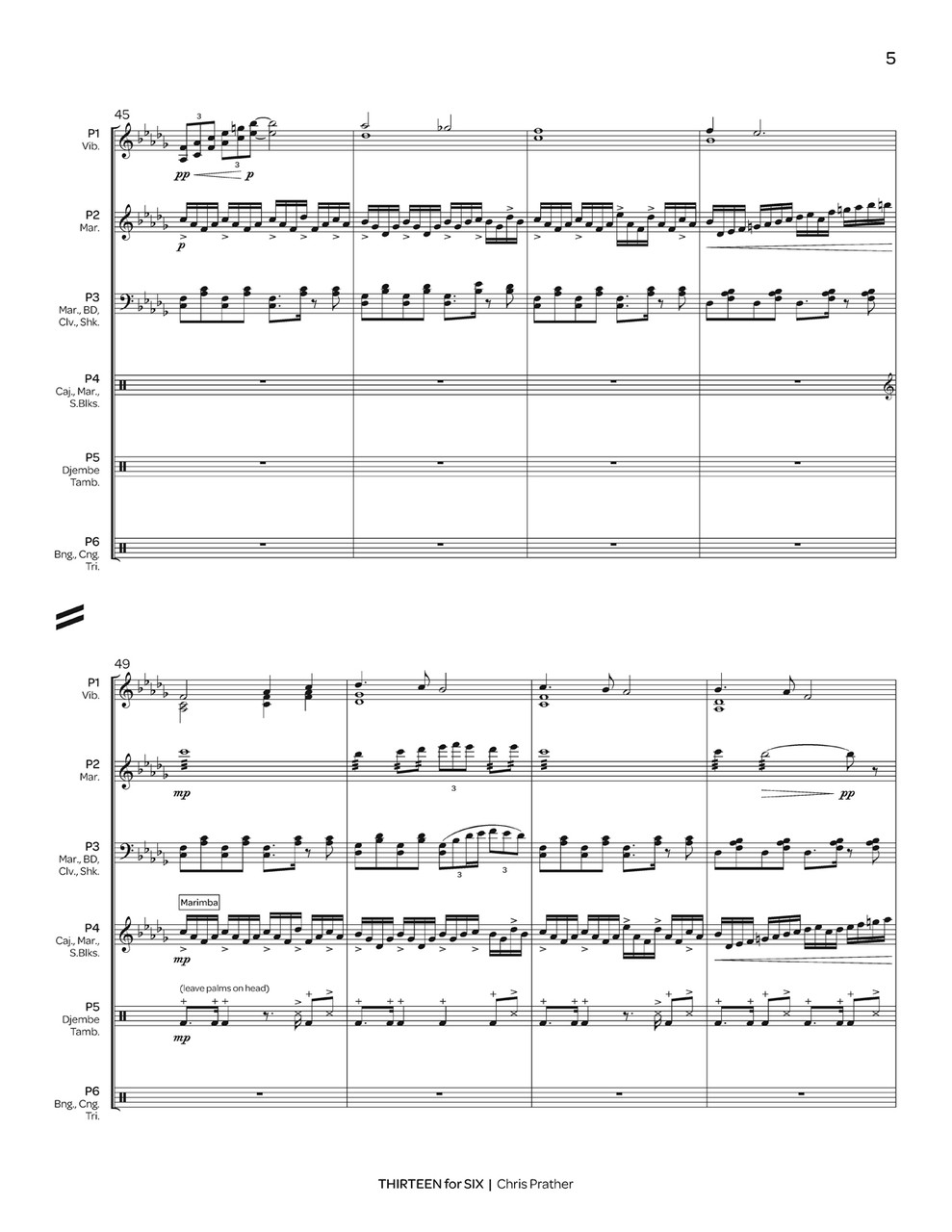
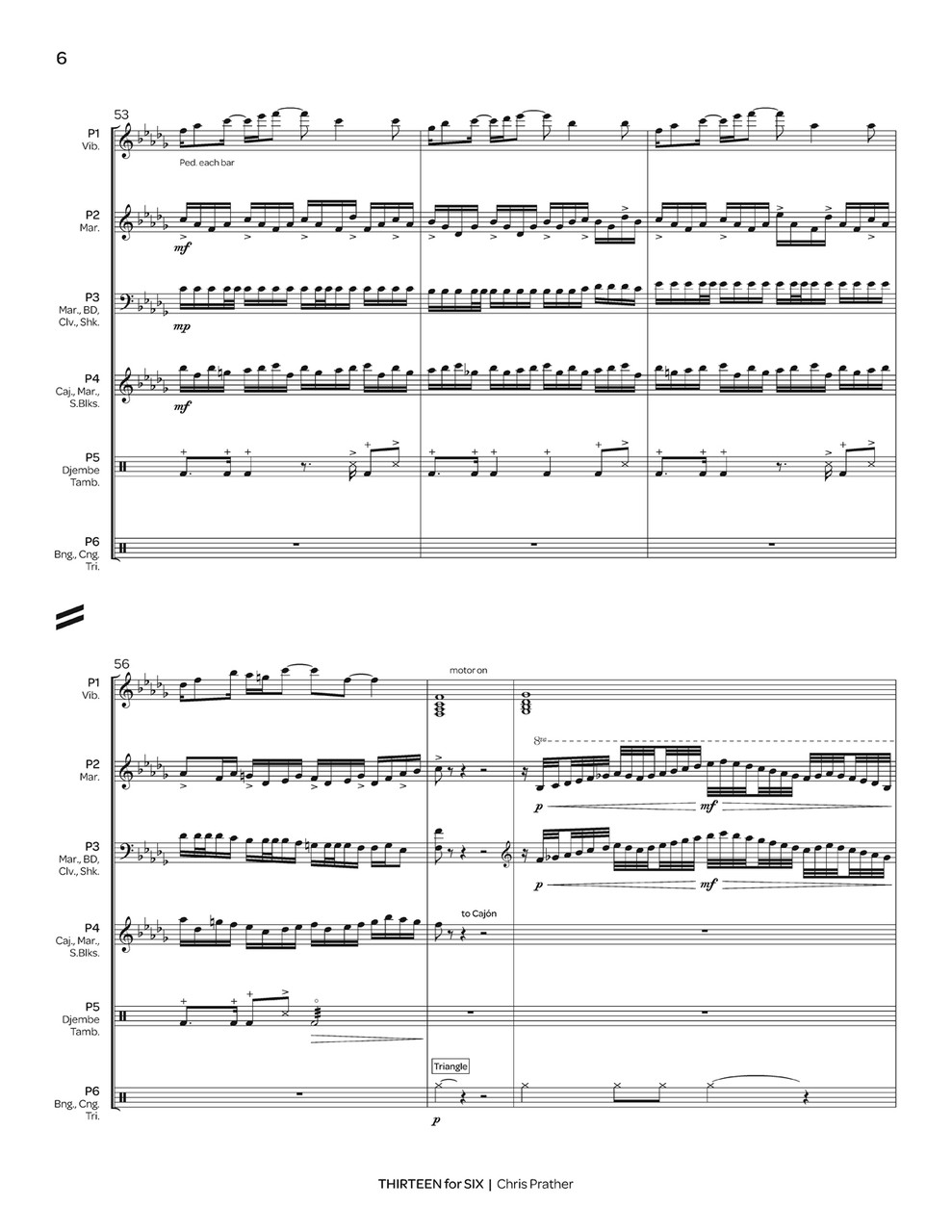
Download mp3 | Click on images to left for score sample

Price:
$36.00
Item #:
30480D
-
Notes & Instrumentation
Prather’s superstition for the number thirteen found its way into a percussion sextet that is groovy, lyrical, and allows the freedom for players to express themselves through improvisation! The backbone of this 7-part Rondo is a reprise that consists of an alternating 7/8 and 6/8 pattern, forming a 13/8 phrase that just WON’T leave the listener alone.
Genre: Percussion Ensemble | # of Players: 6
Series: N/A
Level: Medium Advanced | Duration: 7:30
Instrumentation
Player 1: Vibraphone
Player 2: Marimba (4.3-octave) [shared w/ P4]
Player 3: Bass Drum, Claves, Shaker, Marimba (4.3-octave)
Player 4: Cajón, Marimba (4.3-octave) [shared w/ P2], Sandpaper Blocks
Player 5: Djembe, Tambourine
Player 6: Bongos, Congas (2), Triangle
Program Notes
The number thirteen seems to be an omen for me. I frequently run into that number in a variety of different scenarios: streets I drive down during an important time in my life, pdf file sizes for compositions of mine, dates for music related events, or the timestamps of emails or messages! Whatever the situation happens to be, I usually take note and try to decipher the meaning of thirteen’s latest appearance.When I began composing this piece for Quinton Williams and his ensemble, I knew that I wanted to embrace the number “13.” I chose to use the 7-part Rondo form (ABACABA) because the refrain of a rondo continuously appears throughout the piece much like the number 13 does in my day-to-day interactions with the world. I built the refrain on an alternating 7/8 and 6/8 pattern to create a phrase that is essentially 13/8. The “B” section of this form is also 13 measures long.
Overall, my aim was to make the number 13 the backbone of the composition. While nearing the end of composing this piece I felt like there was something missing. So I began improvising and developed a waltz idea I really liked. I decided to open the piece with one phrase of the waltz to foreshadow its appearance and interruption of the rondo form that occurs later in the piece during the second and final appearance of the B section. To tie this new element into the piece as a whole I took the harmony from the waltz material and integrated it into the final reprise of the piece.
Thirteen for Six was commissioned by Quinton Williams and the Duncan High School Percussion Ensemble.
– C.P.
-
Product Reviews