- New!
- Band
- Percussion
- Orchestra
- Brass Band
- Jazz
- Chamber
- Voice
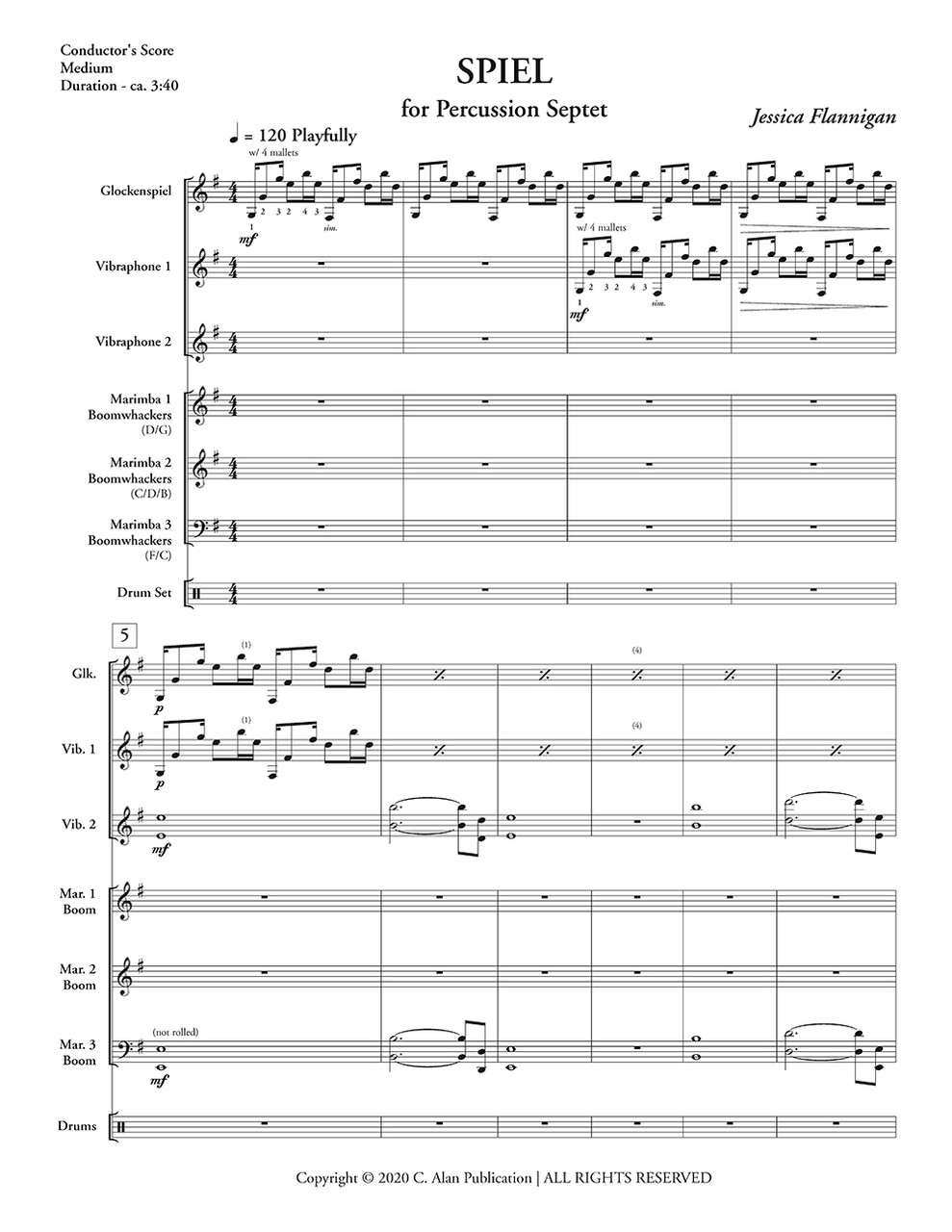
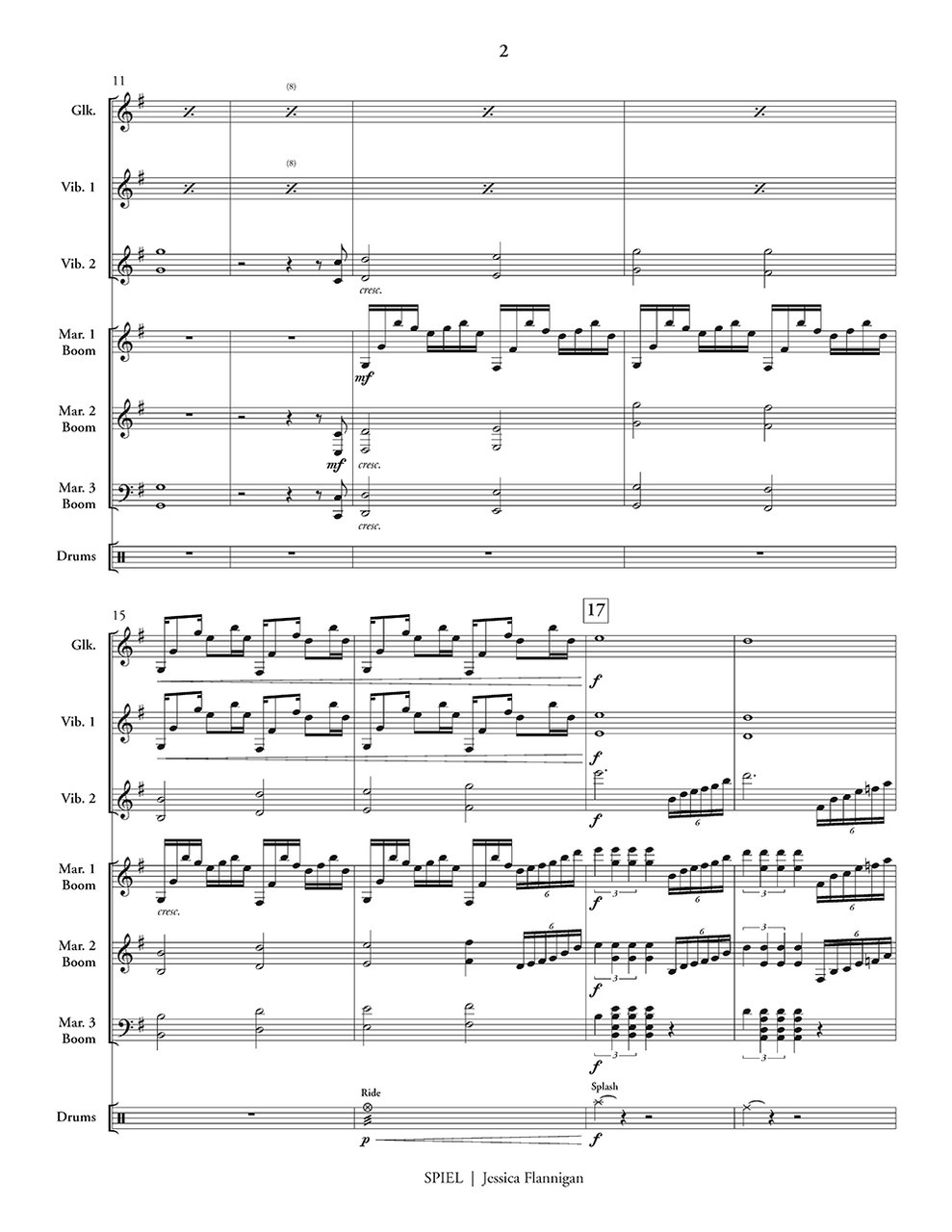
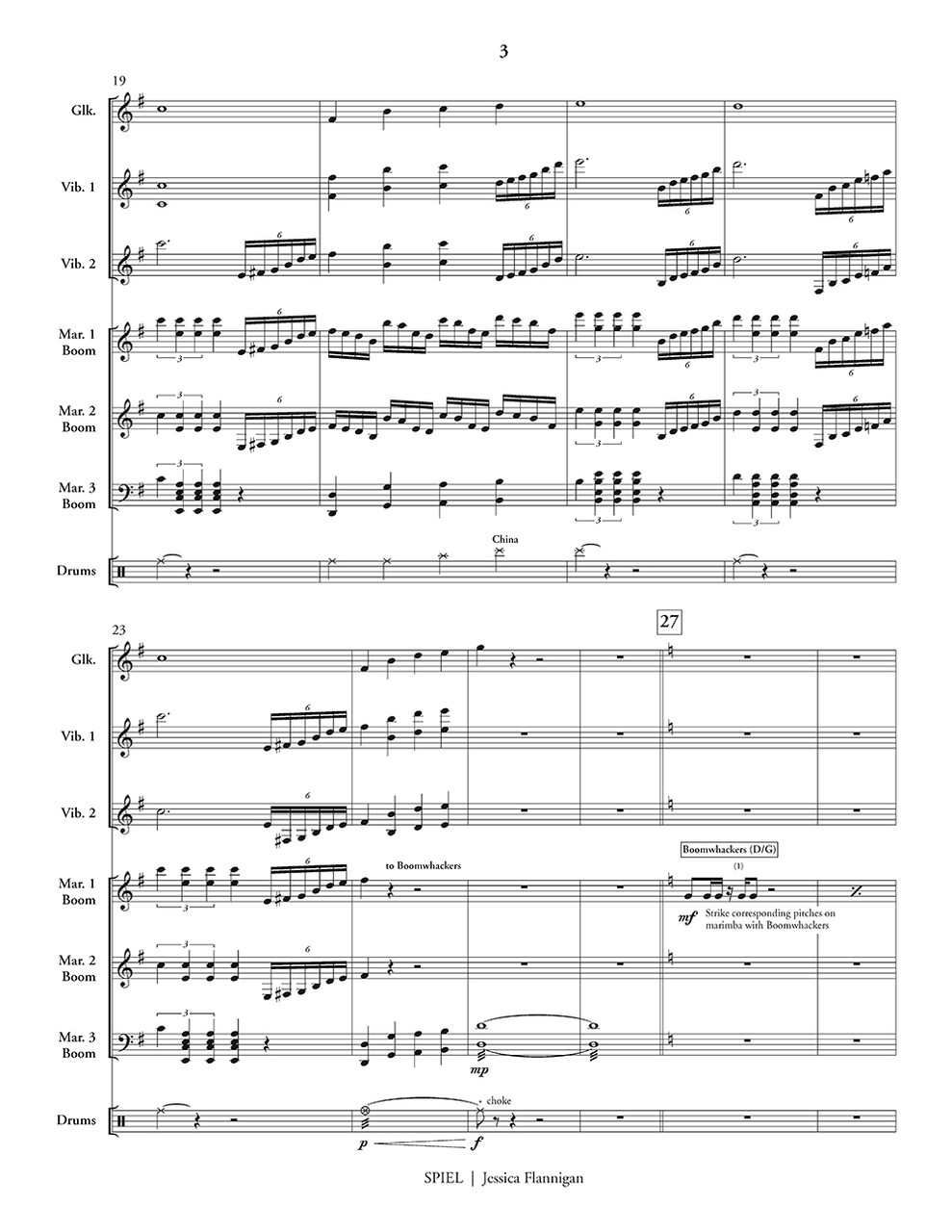
Spiel (Perc Ens 7)
Genre: Percussion Ensemble
# of Players: 7
Level: Medium | Duration: 3:40
Publisher: C. Alan Publications | Copyright: 2020
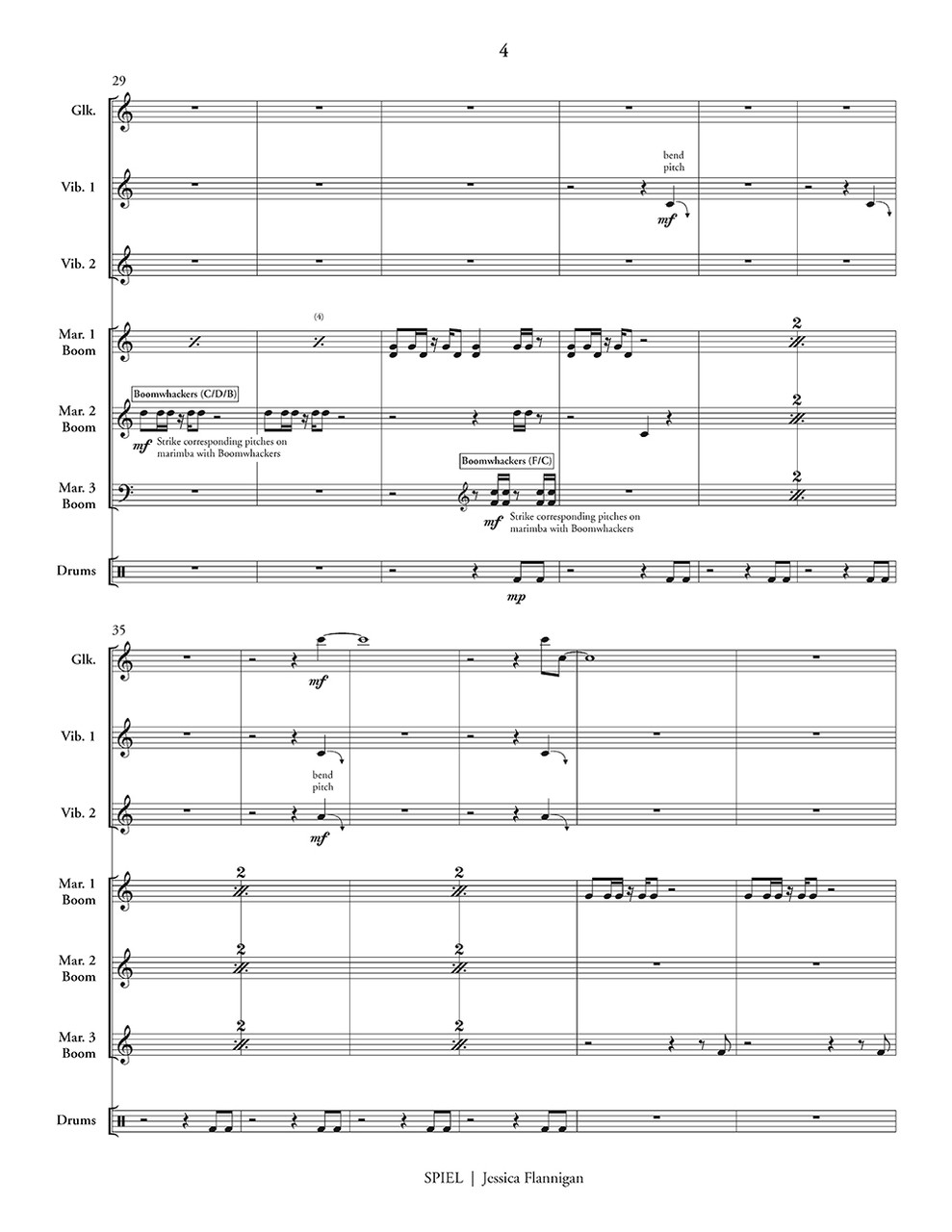
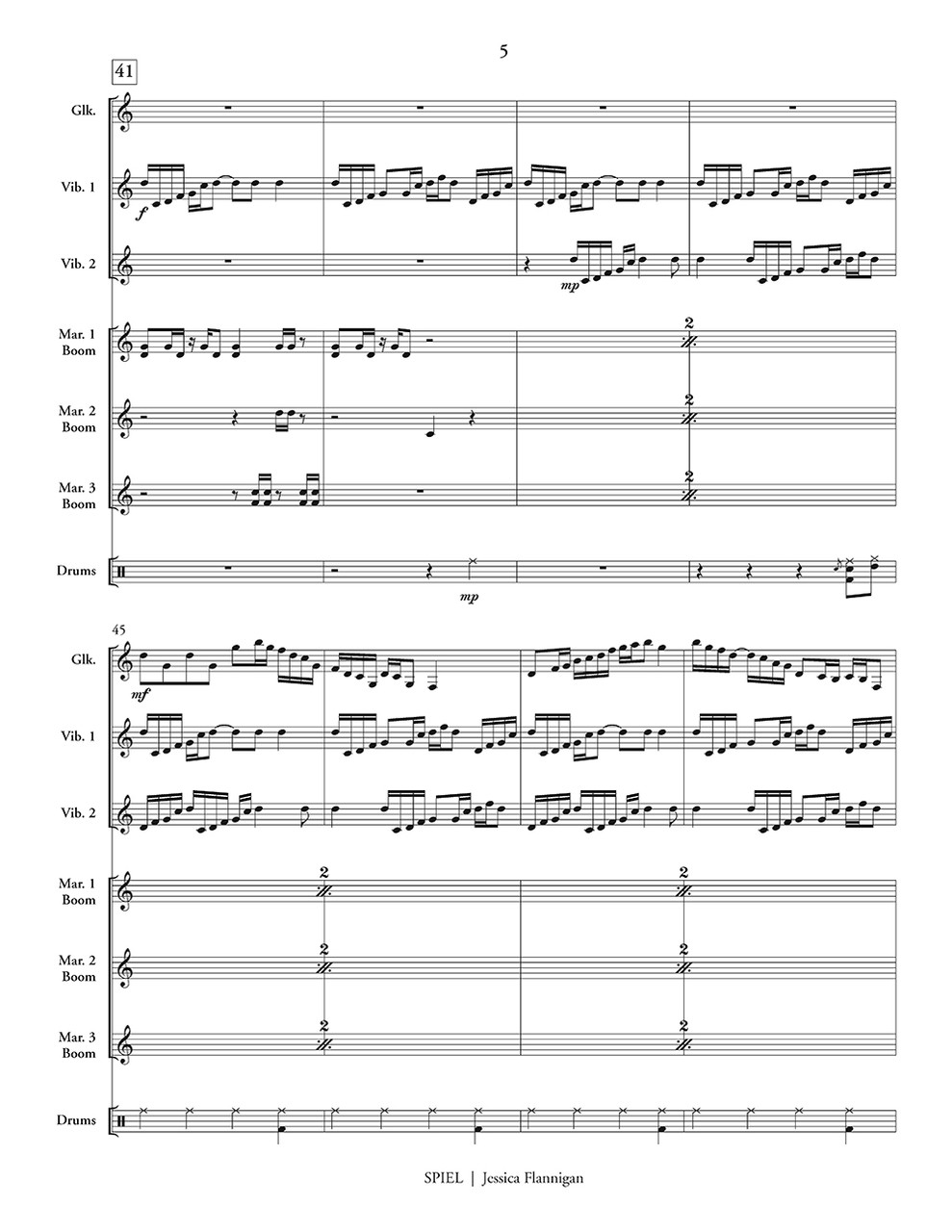
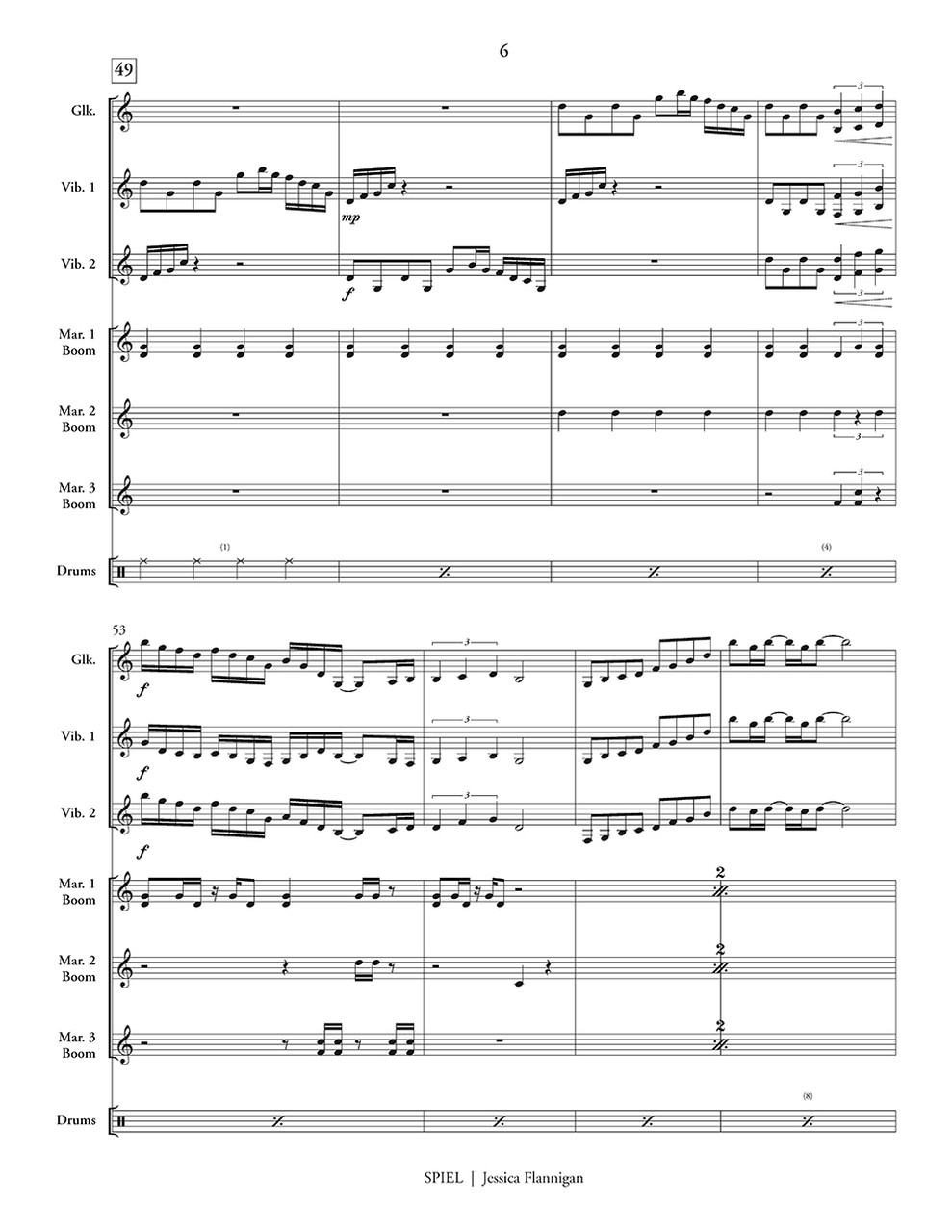
Download mp3 | Click on images to left for score sample

Rating:
Price:
$32.00
Item #:
27000
-
Notes & Instrumentation
Spiel features the prominent voice of the glockenspiel throughout, and embraces the use of Boomwhackers as part of the percussion ensemble. Intended as a fun and playful piece for the performers, your audience is sure to feel the excitement of the work as well!
Genre: Percussion Ensemble | # of Players: 7
Level: Medium | Duration: 3:40
Instrumentation
Glockenspiel
Vibraphone 1
Vibraphone 2
Marimba 1 (4-octave) & Boomwhackers (D4/G4)
Marimba 2 (4-octave) & Boomwhackers (C4/B4/D5)
Marimba 3 (5-octave) & Boomwhackers (F4/C5)
Drum Set
Program Notes
Literally translating to “play” in German, Spiel is titled to highlight both the fun and playful nature of the piece, as well as the prominent voicing of glockenspiel throughout. Using Boomwhackers, the performers add a unique timbre and actual color to the ensemble while continuing to be challenged musically. The composition is derived from the underlying accompaniment to a percussion feature I wrote for my students’ marching band show a few years back. The original melody has been removed, and the idea expanded.
– J.F. -
Product Reviews
-
Percussive Notes New Literature Review
Translated in German as “play,” “Spiel” is a fun and challenging work for an intermediate percussion ensemble. It is unique in that it prominently features Boomwhackers in a non-novelty context. The piece opens with a syncopated ostinato figure in the mallets that moves into a unison passage reminiscent of indoor drumline music with its fast runs and ensemble “hits.” Following this is a section of interlocking patterns played on the marimba bars with Boomwhackers. This becomes the backdrop for glockenspiel and vibraphone runs and melodic material. Composer Jessica Flannigan calls for vibraphone pitch bends here as well — a cool effect! The final section is in a rock style with a heavy backbeat on the drum set, again having the flavor of an indoor drumline show. The opening syncopated ostinato returns during this section as well, leading to the big unison finish.
All of the mallet parts in “Spiel,” including the glockenspiel, call for four mallets at some point. The drum set part is fully notated, but I imagine it could be open to embellishment/interpretation at times, although this is not specified in the score or part. I recommend “Spiel” for a high school or young college percussion ensemble looking for challenges in four-mallet technique, groove, and counting.
Joseph Van Hassel
Percussive Notes
Vol. 59, No. 6, December 2021 Joseph Van Hassel on Jul 5th 2022
-