- New!
- Band
- Percussion
- Orchestra
- Brass Band
- Jazz
- Chamber
- Voice
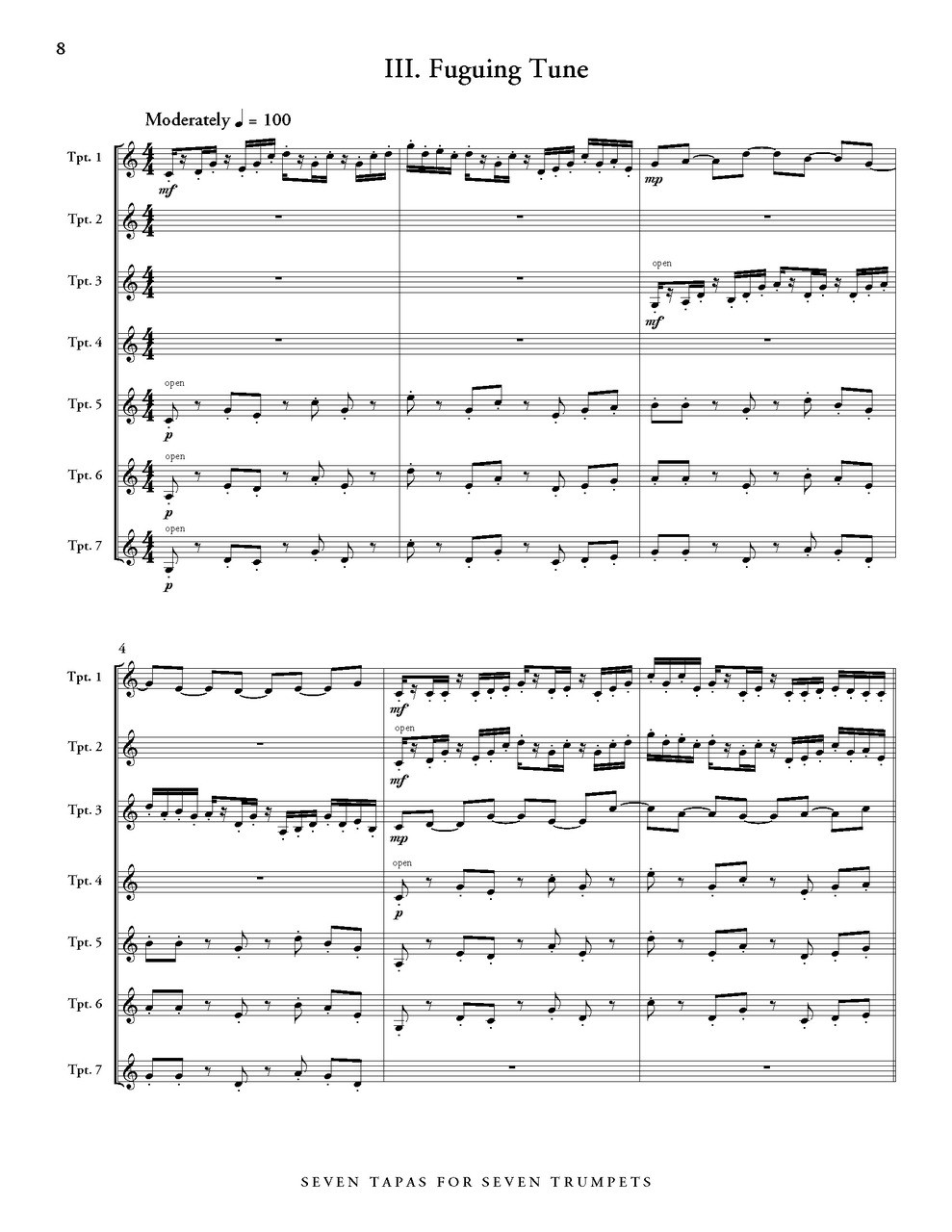
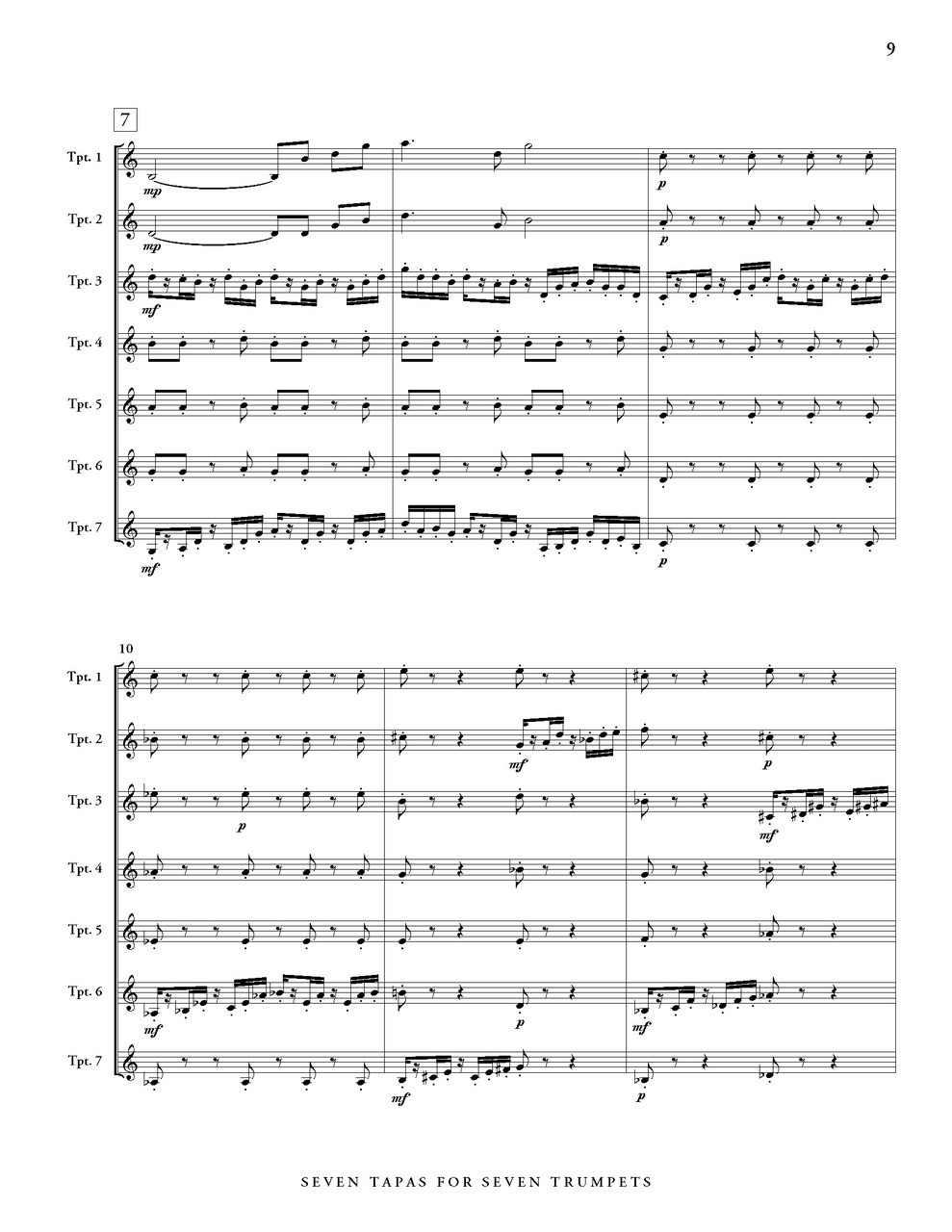
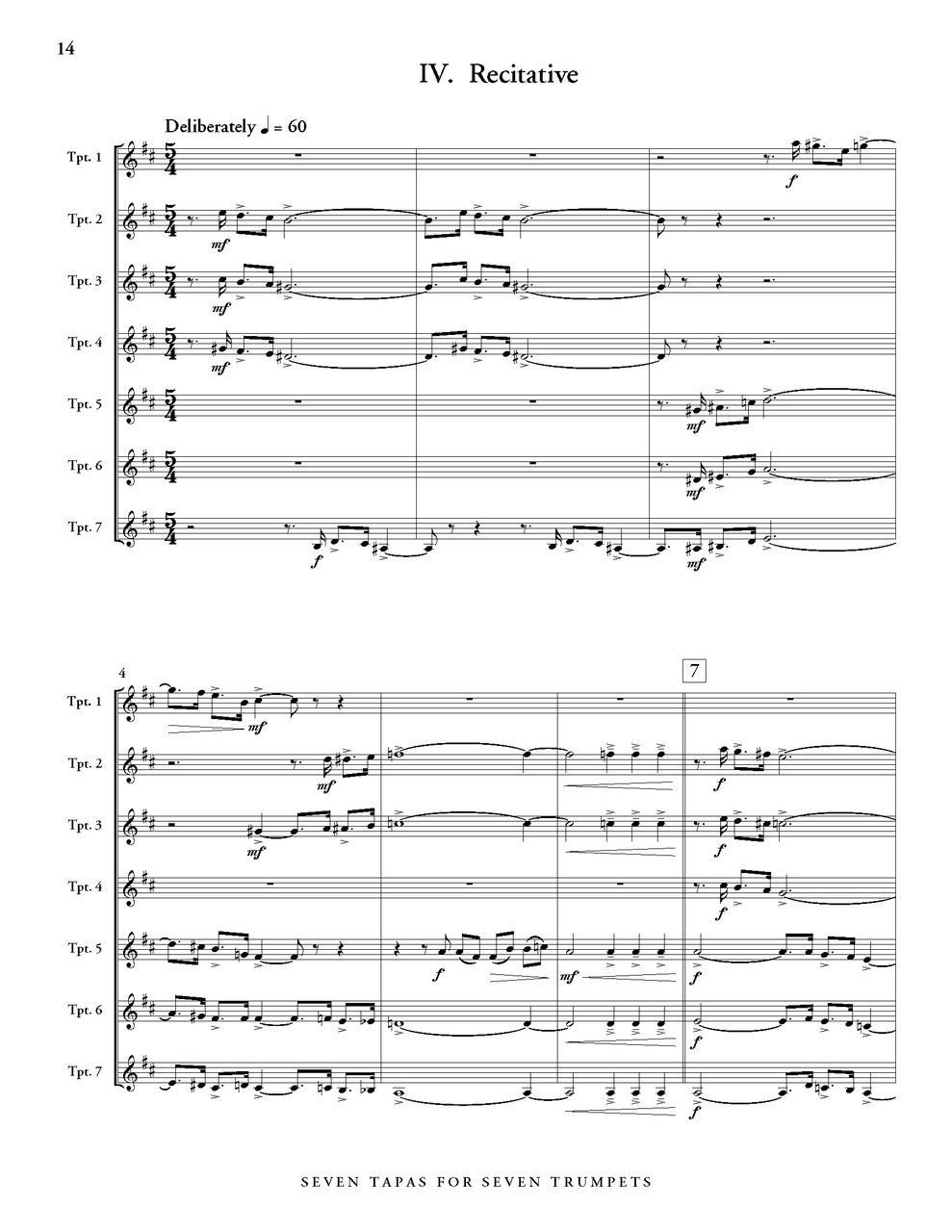
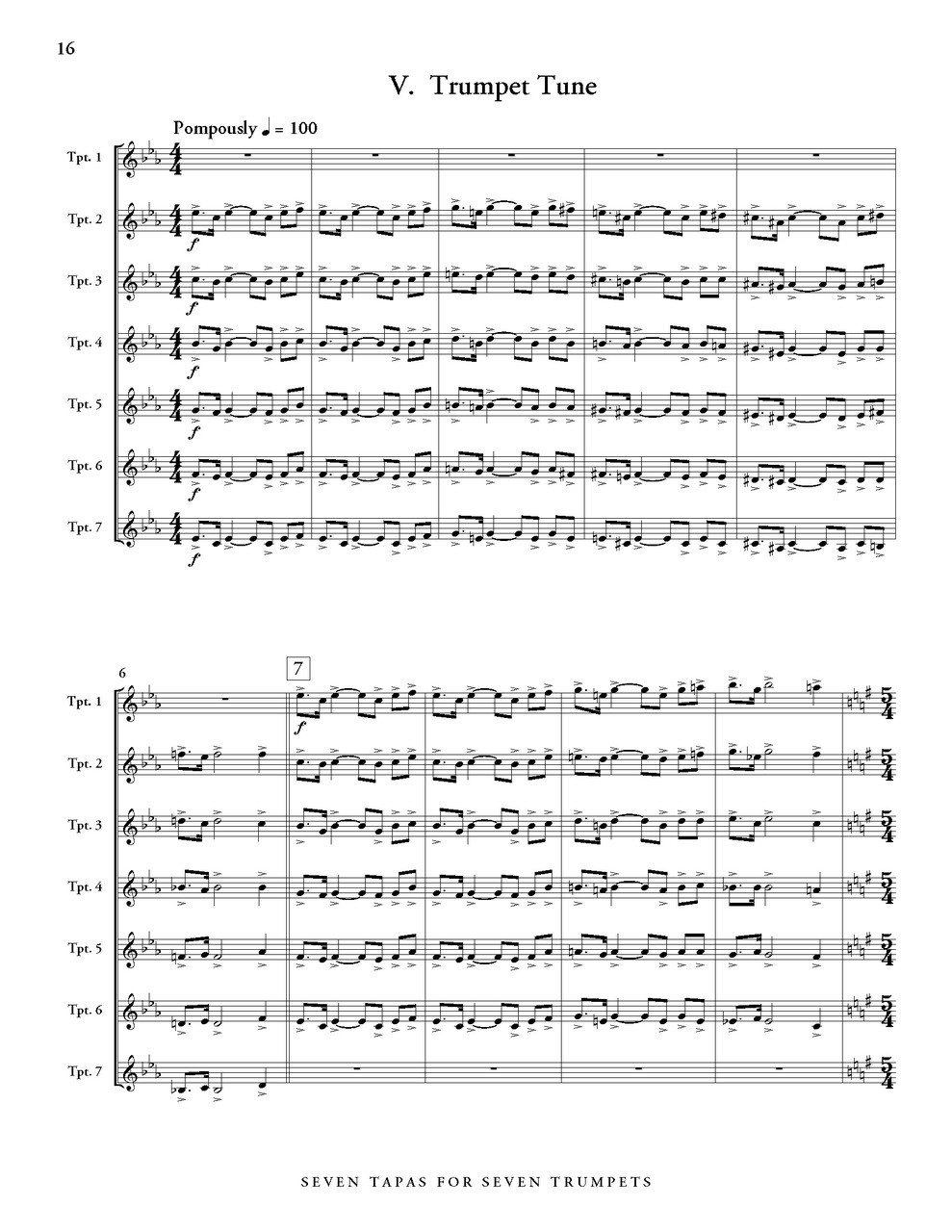

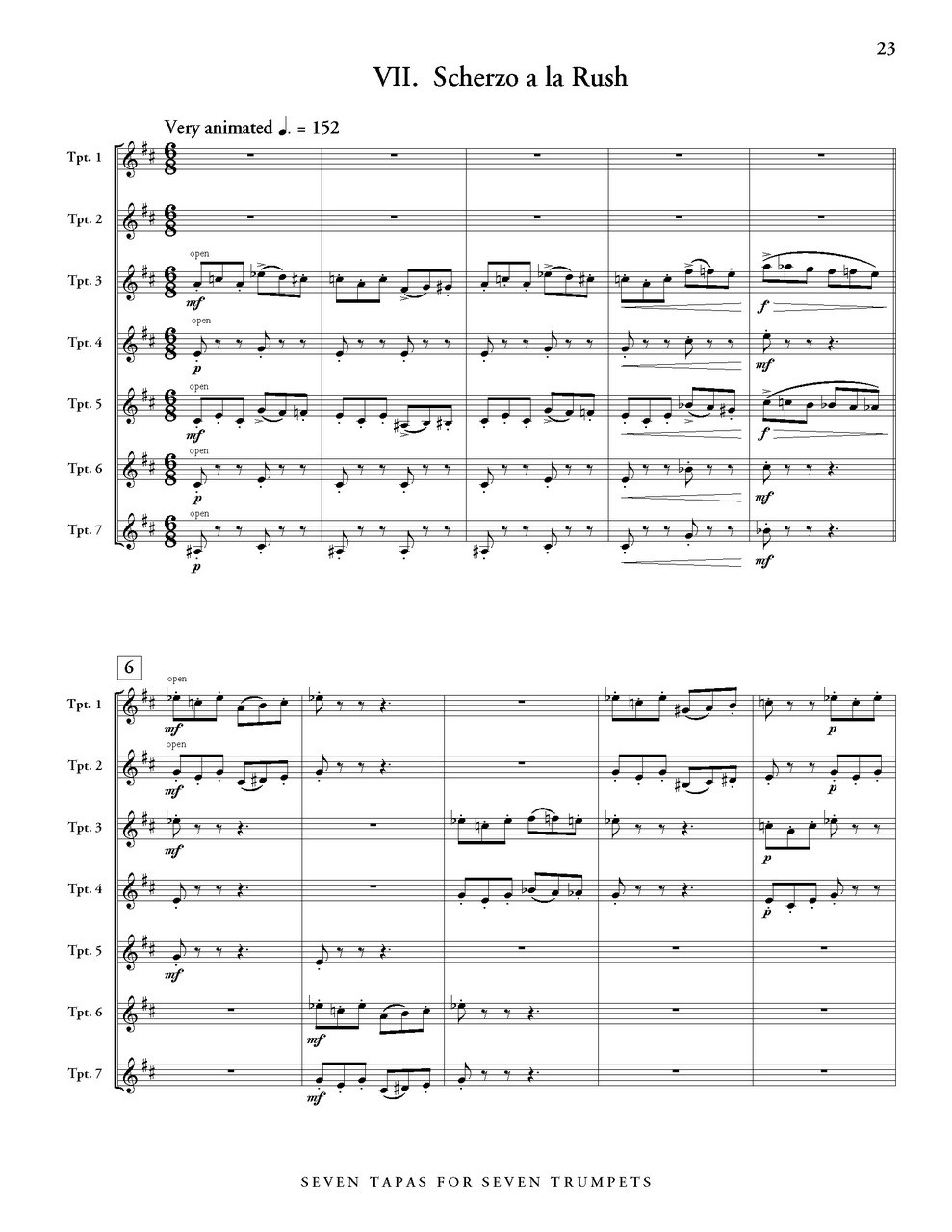
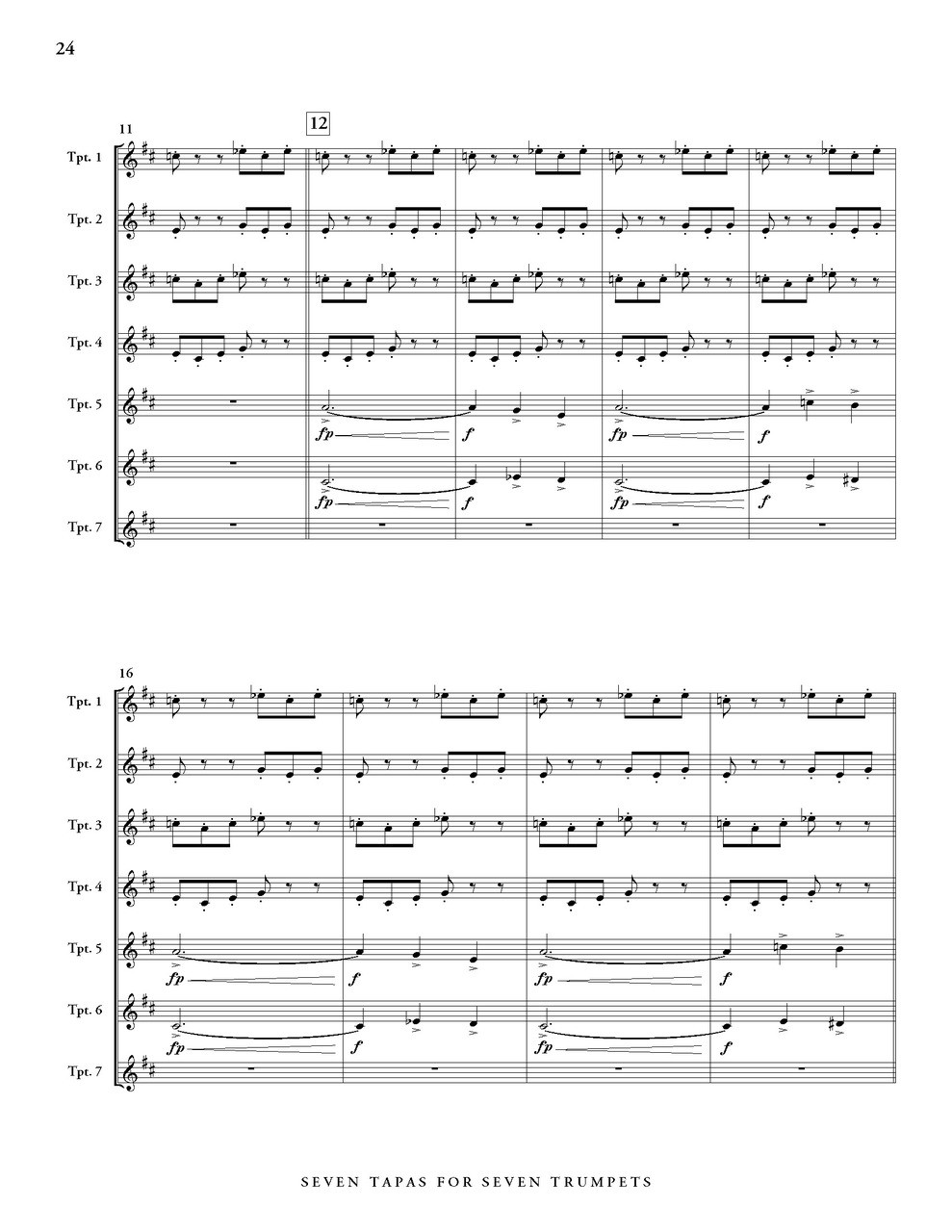
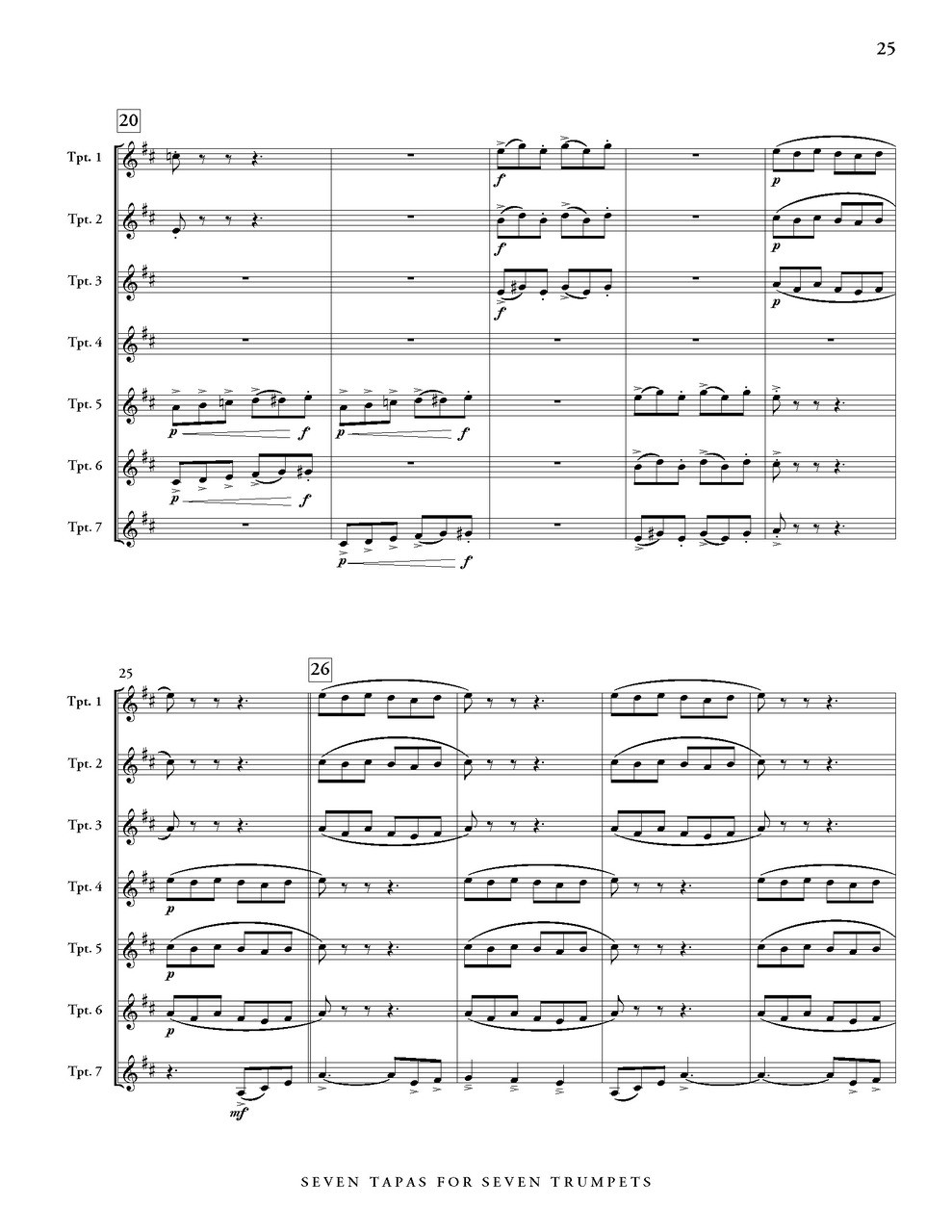
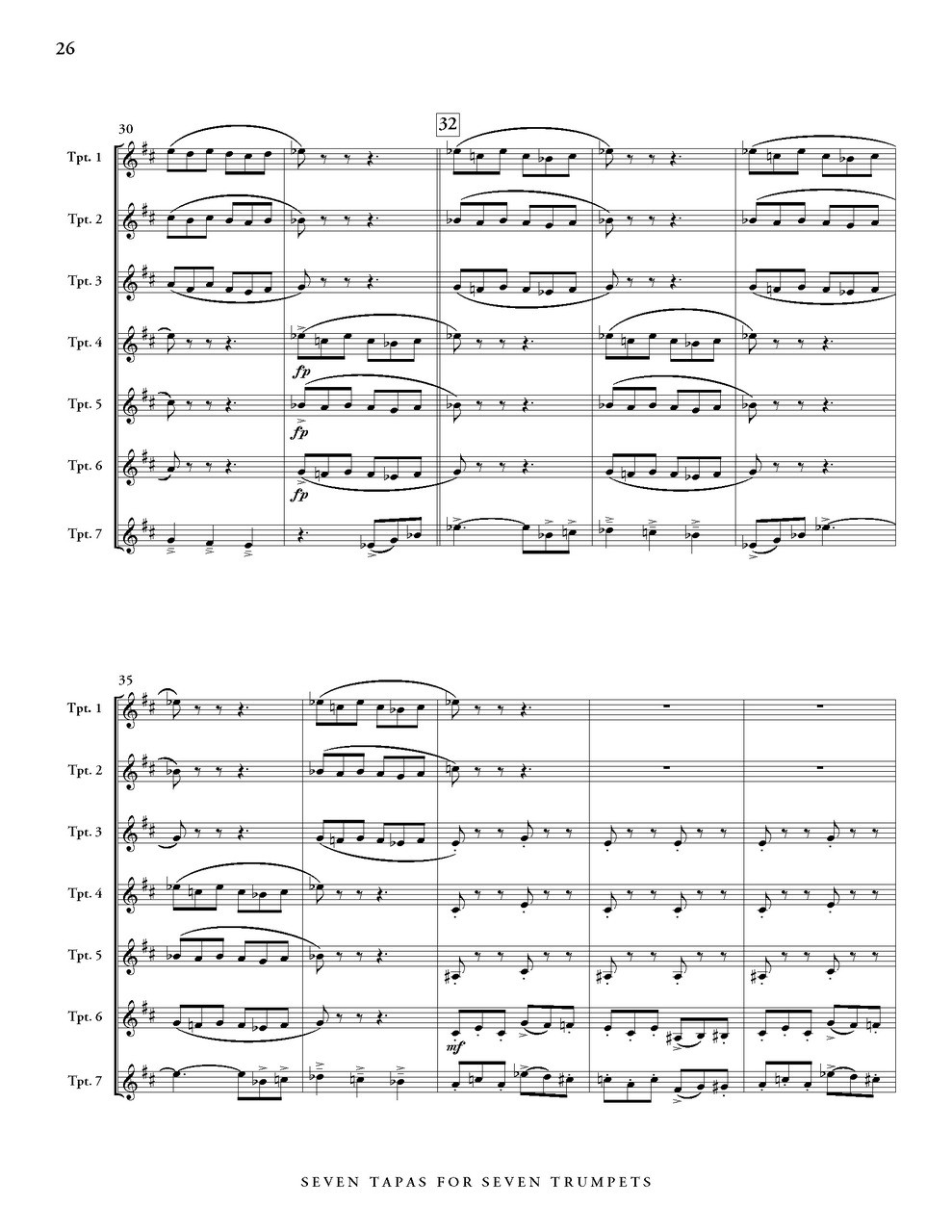
Seven Tapas for Seven Trumpets
Genre: Brass Ensemble
# of Players: 7
Level: Medium Difficult | Duration: 13:00
Publisher: C. Alan Publication | Copyright: 2016
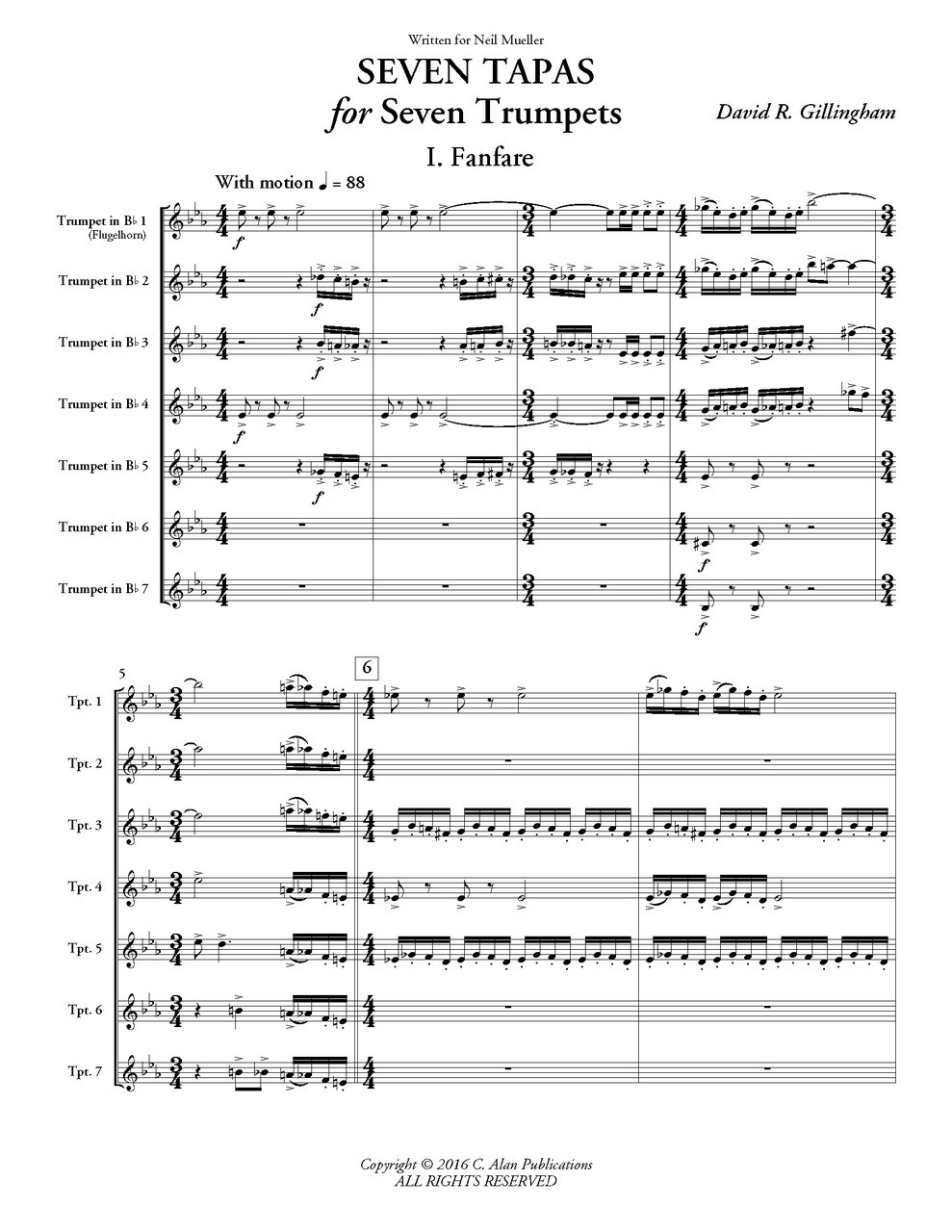
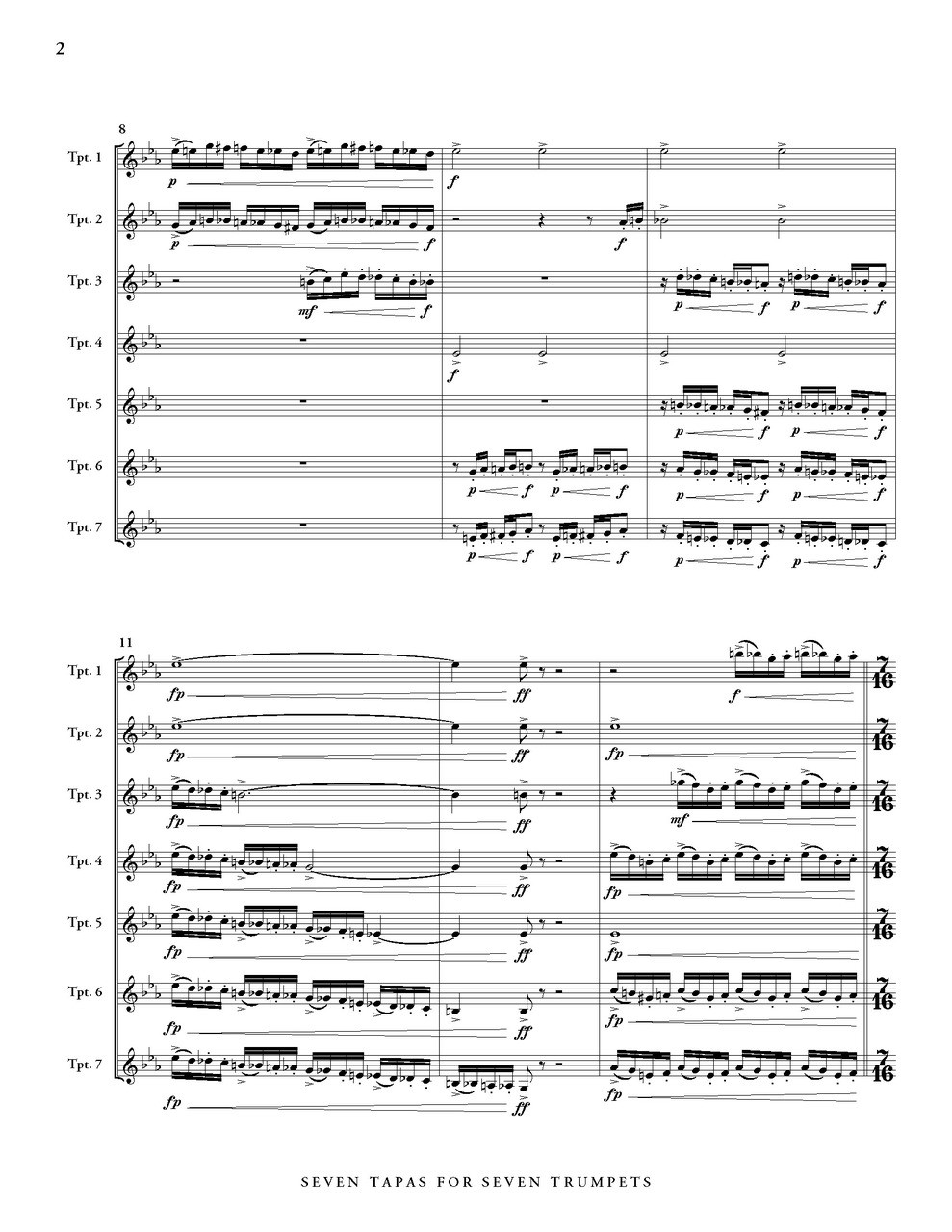
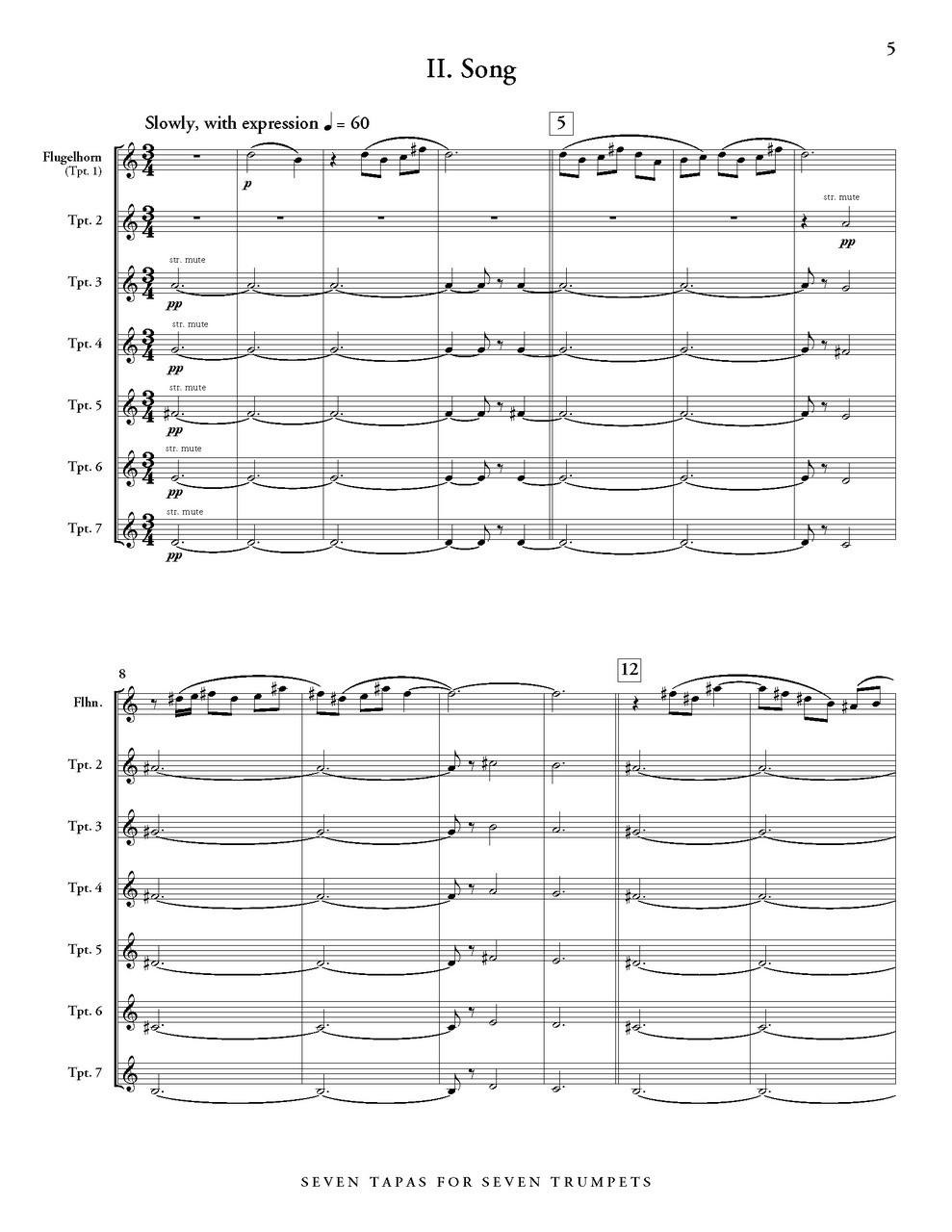
Download mp3 | Click on images to left for score sample

Price:
$40.00
Item #:
22200
-
Notes & Instrumentation
As the title implies, Seven Tapas for Seven Trumpets is comprised of seven short movements of varying character exploiting the range and timbre of a trumpet ensemble – Fanfare, Song, Fuguing Tune, Recitative, Trumpet Tune, Aria, and .
Genre: Brass Ensemble | # of Players: 7
Level: Medium Difficult | Duration: 13:00
Instrumentation
Trumpet 1 in B-flat/Flugelhorn
Trumpet 2 in B-flat
Trumpet 3 in B-flat
Trumpet 4 in B-flat
Trumpet 5 in B-flat
Trumpet 6 in B-flat
Trumpet 7 in B-flat
Program Notes
Seven Tapas for Seven Trumpets was written for Neil Mueller, Professor of Trumpet at Central Michigan University. As the title implies, the piece is comprised of seven short movements of varying character exploiting the range and timbre of a trumpet ensemble. Fanfare utilizes stereotypical rhythmical and melodic gestures indicative of the fanfare set in a somewhat more modern harmonic palette. The warm, yet somber timbre of the flugelhorn is featured in the second movement, Song, accompanied by long sustained pan-diatonic sonorities of muted trumpets. The mood completely changes in Fuguing Tune with an athletic and upbeat subject in B-flat major and shifting tonality in the episodes. Recitative provides a sort of interlude between movement III and V with its dramatic lines and open harmonies. Following this the Trumpet Tune, like the Fanfare, exploits the stereotypical melodic and rhythmic material of the style of Purcell and Clarke against a more modern harmonic vocabulary. Movement VI, Aria, seeks to fulfill the lyrical and artistic demands of the virtuosic arias that permeate the operatic repertoire. The final movement, Scherzo a la Rush, is somewhat “tongue and cheek” in that it is a perpetual “rush” to get from the beginning to the end. Set in the typical scherzo form, the movement features a lively and athletic scherzo theme contrasted by a more lyrical trio all set within an interesting and fresh harmonic backdrop -
Product Reviews