- New!
- Band
- Percussion
- Orchestra
- Brass Band
- Jazz
- Chamber
- Voice
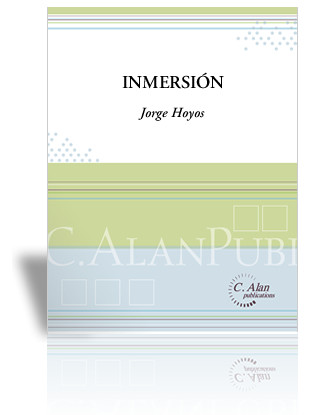
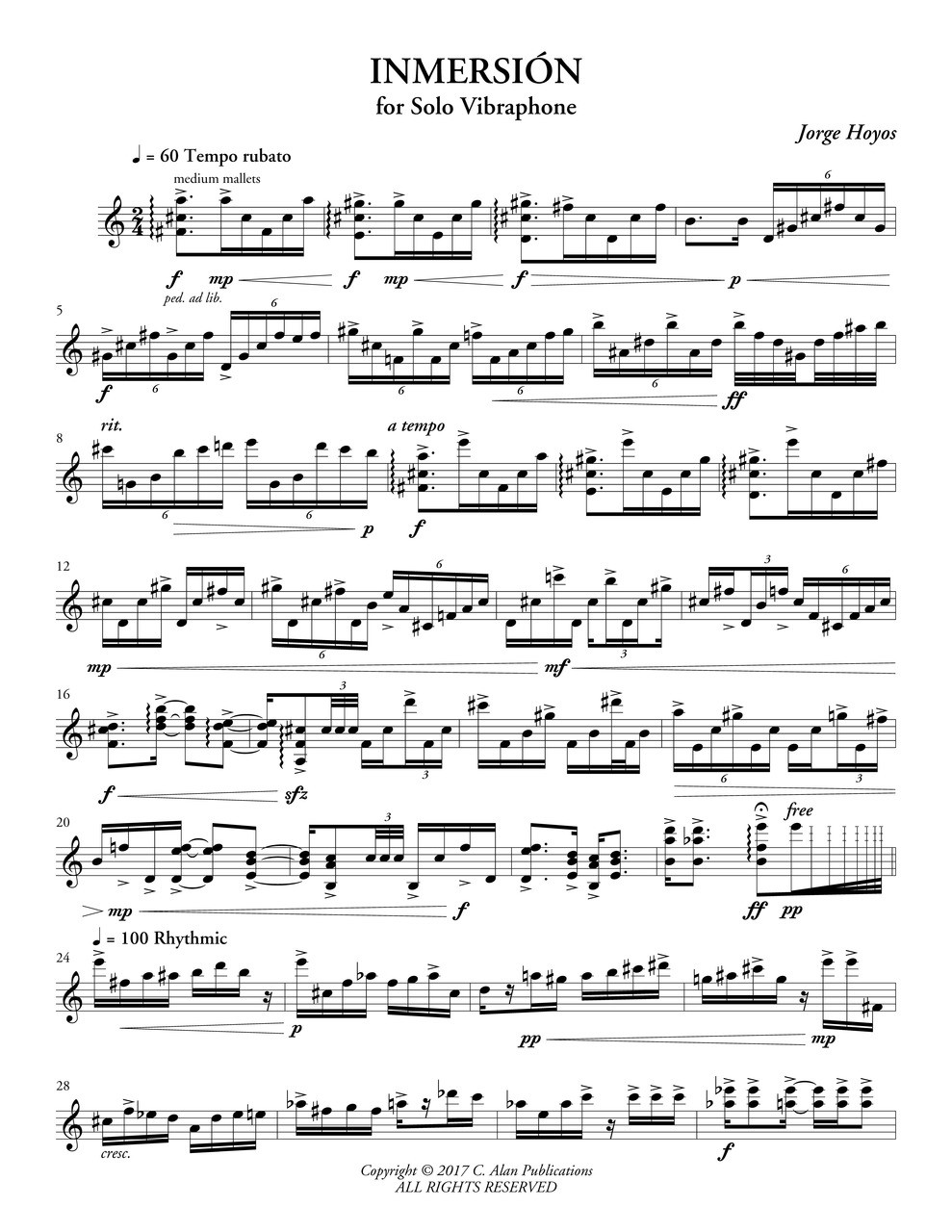

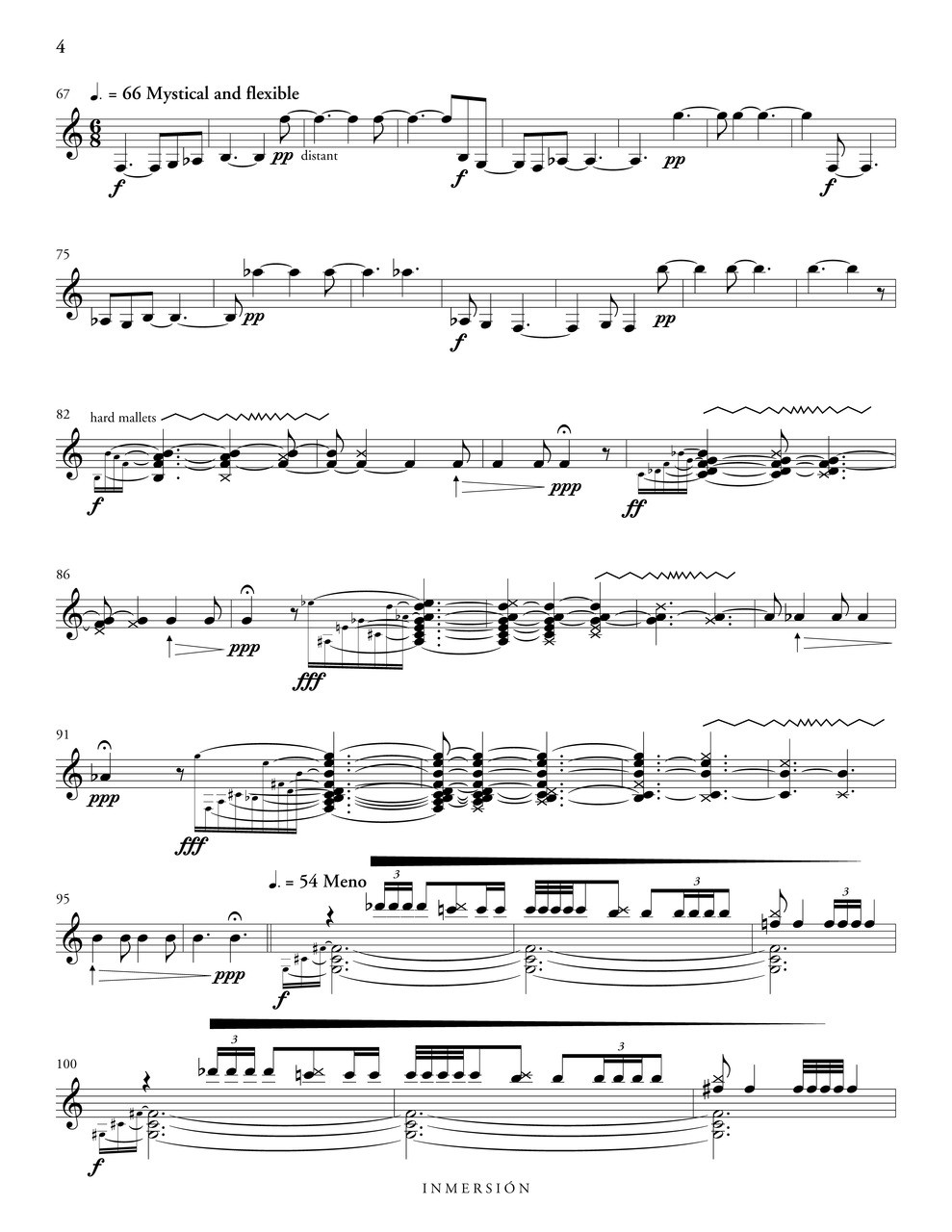
Inmersión (Solo Vibraphone)
Genre: Vibraphone (4-mallet)
# of Players: 1
Level: Medium Difficult | Duration: 4:45
Publisher: C. Alan Publications | Copyright: 2017
Download mp3 | Click on images to left for score sample

Rating:
Price:
$15.00
Item #:
24080
-
Notes & Instrumentation
From its opening chords, Inmersión submerges the audience into the sonic world of the vibraphone. It is precisely the aim of the work to take advantage of the deep and beautiful sound of this instrument. From cascading scales to sustained clusters, Inmersión gives the impression of being in a peculiar environment, perhaps underwater, and with every following moment a new nuance of this unexplored realm is unveiled.
Genre: Vibraphone (4-mallet) | # of Players: 1
Level: Medium Difficult | Duration: 4:45
Instrumentation
Vibraphone (3-octave)
Program Notes
From its opening chords, Inmersión submerges the audience into the sonic world of the vibraphone. It is precisely the aim of the work to take advantage of the deep and beautiful sound of this instrument. From cascading scales to sustained clusters, Inmersión gives the impression of being in a peculiar environment, perhaps underwater, and with every following moment a new nuance of this unexplored realm is unveiled. The piece was commissioned and premiered by percussionist Carlos Areiza in 2015. -
Video
-
(((INMERSION)))Jorge Hernan Hoyos
Pieza comisionada por el percusionista Carlos Areiza al compositor Jorge Hernan Hoyos (((2015)))
-
-
Product Reviews
-
Percussive Notes New Literature Review
Jorge Hoyos is a Colombian composer, classical guitarist, and music theory professor. This exploration of the sonic possibilities of the vibraphone is a technically-challenging and beautifully composed addition to the repertoire...The score also includes information about the composer and performance notes explaining various notational markings for specific techniques. These include “x’s” for mallet dampening, a squiggly line for altering motor speed, a tapered bar for decreasing attack to match sound decay, and an upward arrow for balancing attack with the decay.
The piece begins quasi rubato with melodic figures and arpeggiations rapidly ranging over two octaves. The complex rhythmic figures give this section a somewhat frenetic feel. The next section is characterized by groovy, rhythmic combinations of chords and melodic runs. It has somewhat of an improvised solo quality. The middle section is where experimentation with the motor and use of mallet dampening and decay take place. It is marked “mystical and flexible.” The piece closes with an eerie, yet groovy, section in compound meter combining rhythmic figures with the still-running motor.
I would recommend this piece to an advanced undergraduate student, graduate student, or professional looking for a vibraphone solo that is not one of the more-played pieces in the repertoire.
Justin Bunting
PERCUSSIVE NOTES
VOL. 57, NO. 3, July 2019 Justin Bunting on Jul 11th 2022
-