
- New!
- Band
- Percussion
- Orchestra
- Brass Band
- Jazz
- Chamber
- Voice
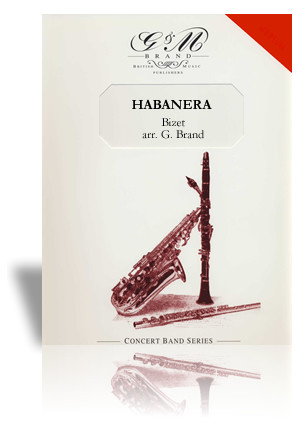
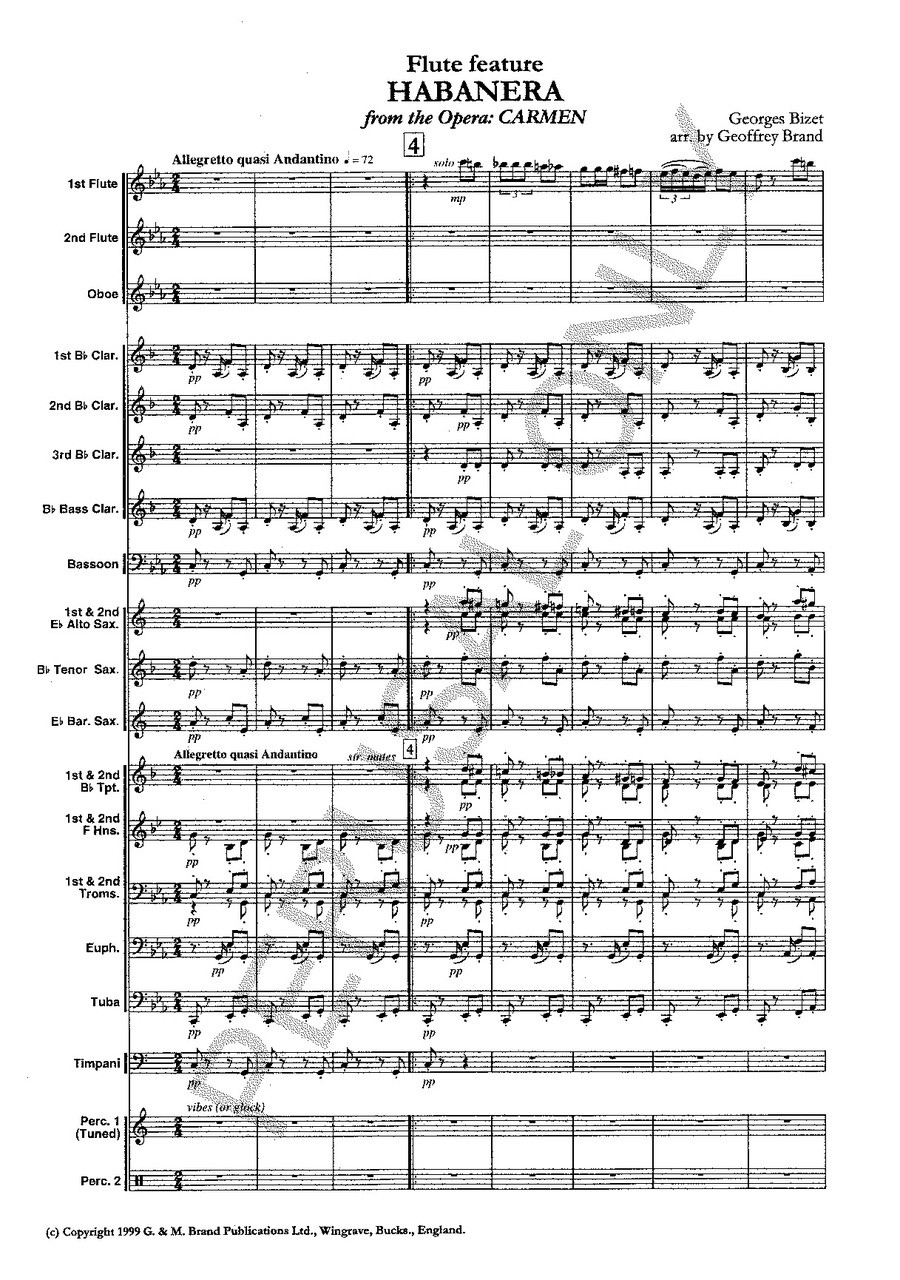
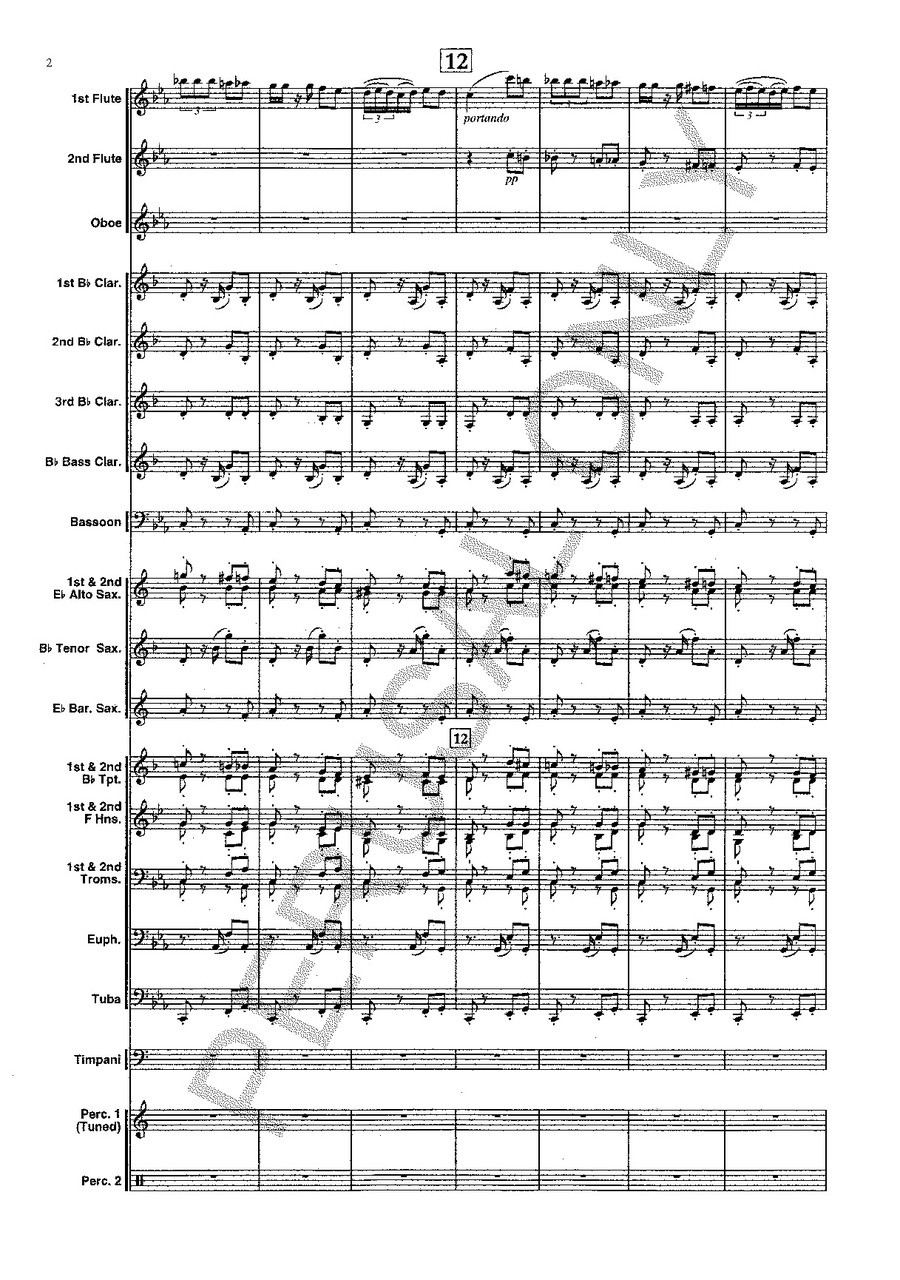

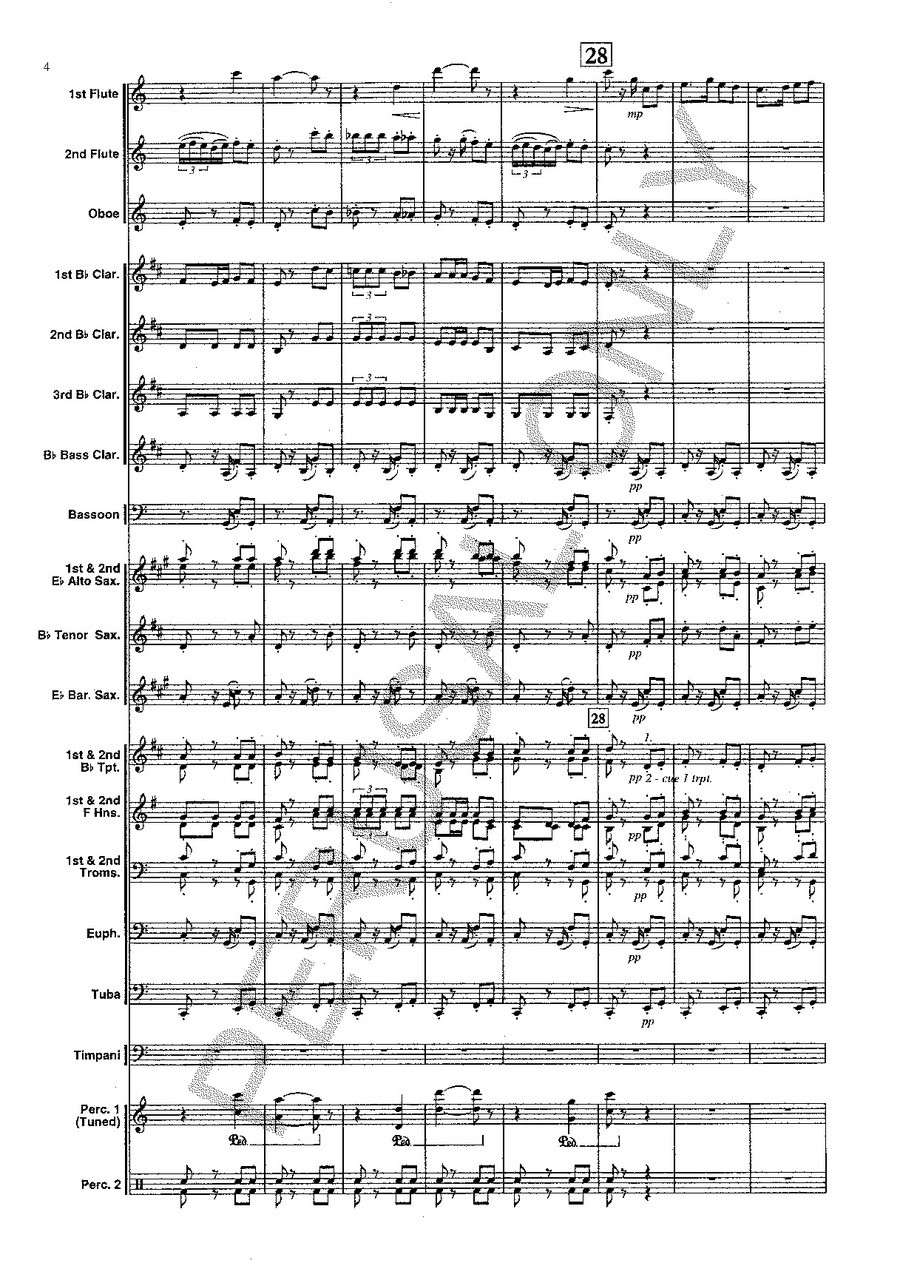
Habanera (Bizet)
Genre: Solo Flute with Band
# of Players: Standard + 1
Level: 3 | Duration: 4:15
Publisher: G & M Brand | Copyright: 1999
Download mp3 | Click on images to left for score sample
Price:
$50.00
Item #:
R10206
-
Notes & Instrumentation
One of the most popular themes in the history of opera, Bizet's Habanera from 'Carmen' captures the spirit of Seville, Spain. This version (without words) offers the featured flutist, with the support of the whole ensemble, the opportunity to portray the character and personality of a remarkable operatic heroine.
Genre: Solo Flute with Band | # of Players: Standard + 1
Level: 3 | Duration: 4:15
Instrumentation
Flute 1 (featured soloist)
Flute 2
Oboe
Bb Clarinet 1
Bb Clarinet 2
Bb Clarinet 3
Bb Bass Clarinet
Bassoon
Alto Saxophone 1/2
Tenor Saxophone
Baritone Saxophone
Bb Trumpet 1/2
Horn in F 1/2
Trombone 1/2
Euphonium
Baritone T.C.
Tuba
Timpani
Percussion 1 (vibraphone or glockenspiel)
Percussion 2 (triangle, tambourine)
Program Notes
Bizet's opera 'Carmen," based on a novel by the French writer Mérimée, is nowadays recognized as one of the finest musico/dramatic examples of all time. Yet its launching at the Opéra-Comique in Paris in 1875 released the harshest condemnations, many declaring that the story was too shocking to be staged.Carmen, the heroine of the opera, is a Gypsy; over the years she has been dubbed alluring, seductive, unscrupulous, possessed of courage, love of freedom, endless fascination. Plenty there to set the pulses of a composer of dramatic intent racing!
The opera is set in Seville; the Habanera, a dance akin to a tango, is thought to have been introduced into Spain from Africa via Cuba. Though Bizet never visited Spain it seems he heard what he took to be a folk song and wrote Habanera on what he remembered. When it was pointed out that the song he had heard was by the Spanish/American composer Sebastien Yrader he wrote in the vocal score of the Habanera - "Imitation from a Spanish song."
Habanera is Carmen's first song in the opera; she works in a cigarette making factory and surrounded by her friends at the factory sings of love and passion. Bizet himself suggested to his librettists the words for Carmen's song; he knew the music he wanted and the words were to be fitted to the music, not the other way around. Together they make a masterly character portrayal in which style and presentation are of the essence. The notes are but the means.
This version – without words – offers the featured flautist, with the support of the whole ensemble, the opportunity to portray the character and personality of a remarkable operatic heroine.
-
Product Reviews

![Carmen Suite (Bizet) - Ritsuko Nasu [DIGITAL]](https://cdn10.bigcommerce.com/s-uhegu0/products/3768/images/27449/22960D__80501.1587746412.200.200.png?c=2)