- New!
- Band
- Percussion
- Orchestra
- Brass Band
- Jazz
- Chamber
- Voice
Glass Cathedral - David R. Gillingham [DIGITAL]
Genre: Percussion Ensemble
# of Players: 4
Level: Medium Difficult | Duration: 5:30
Publisher: C. Alan Publications | Copyright: 2018
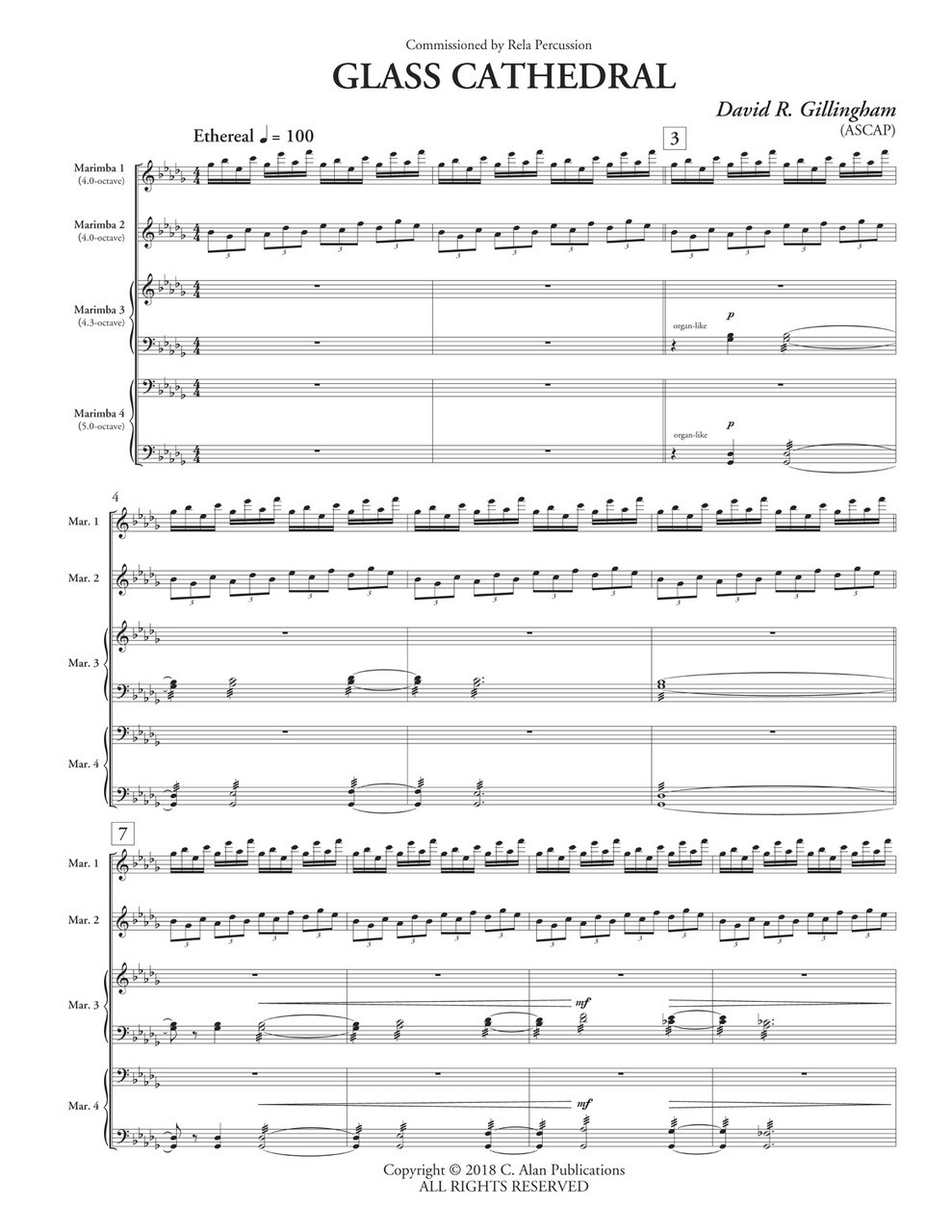
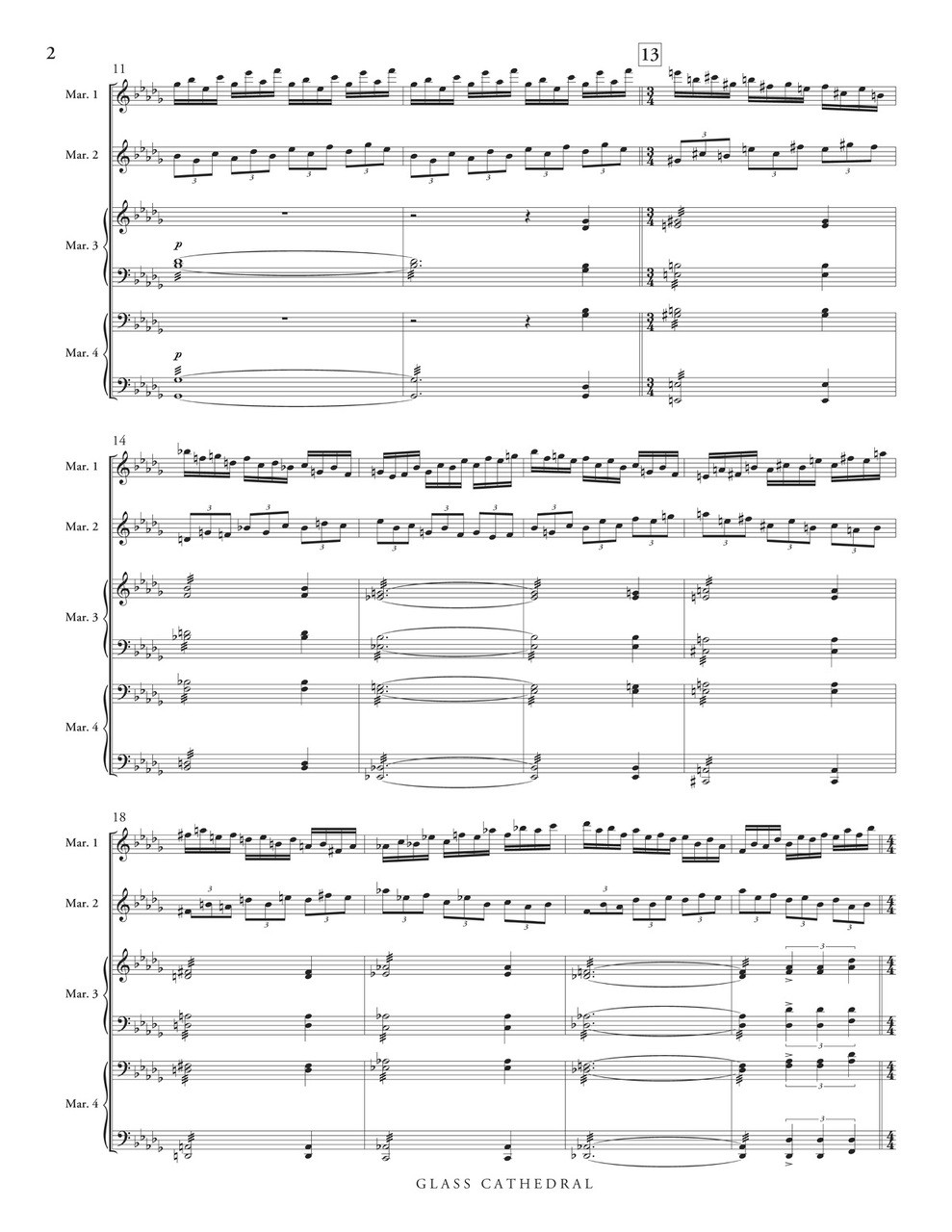
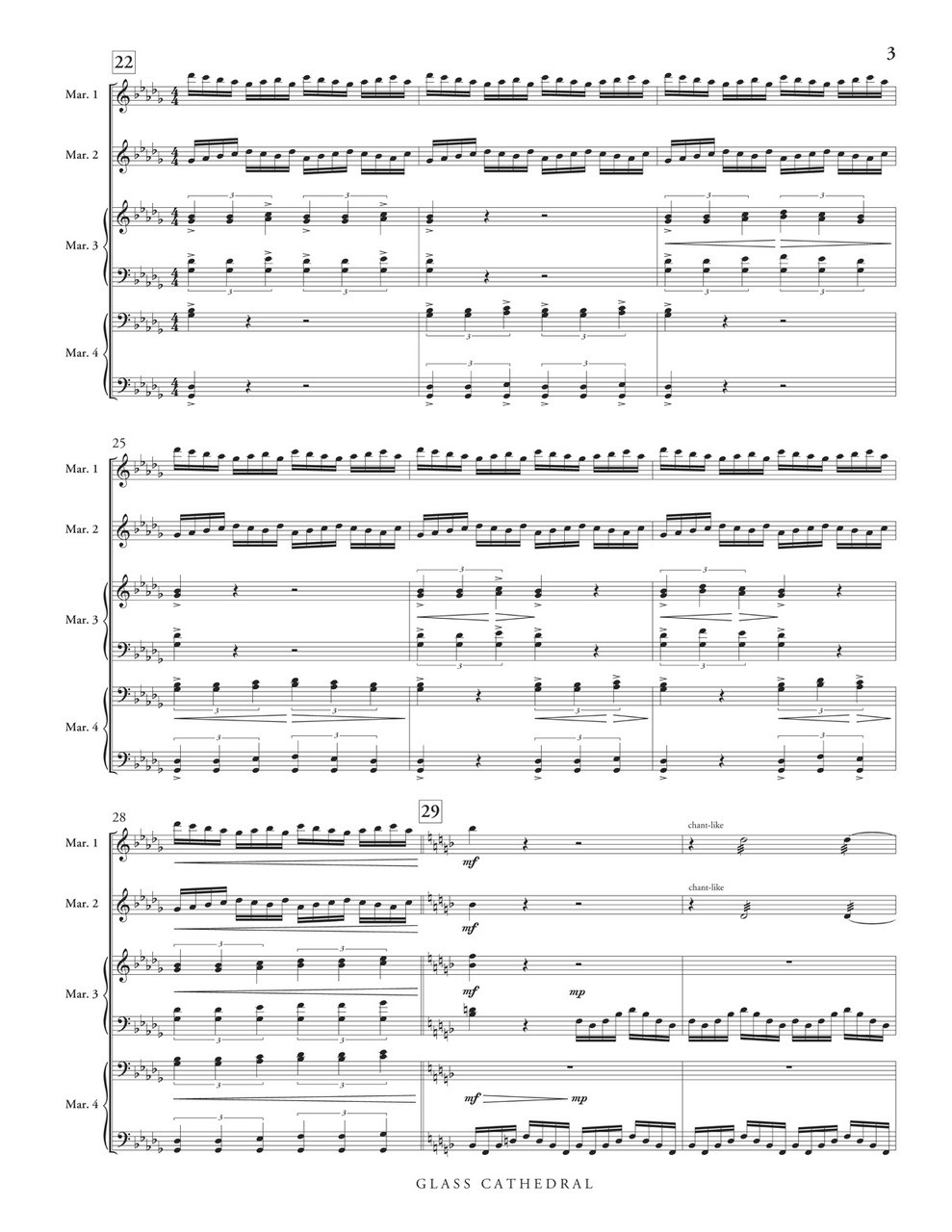
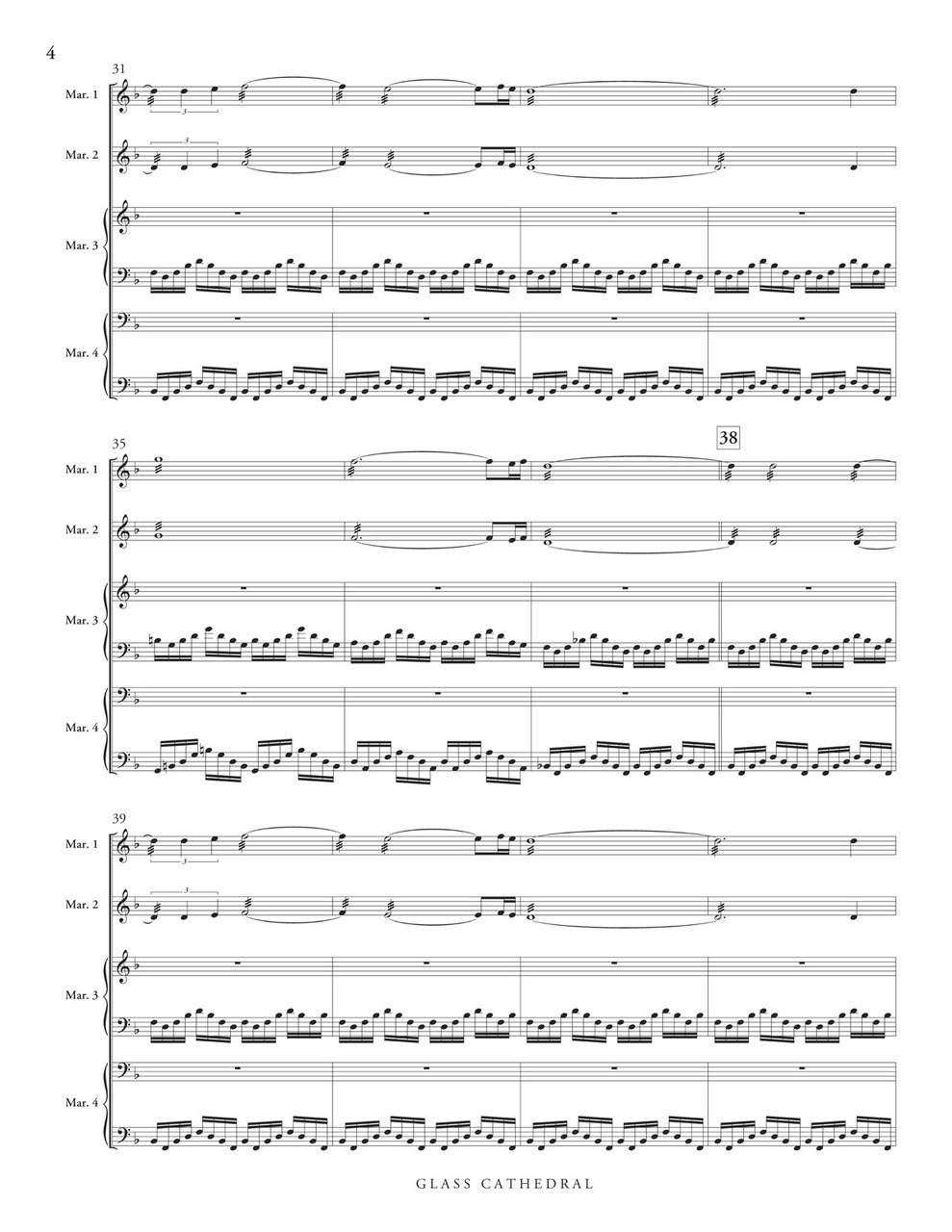
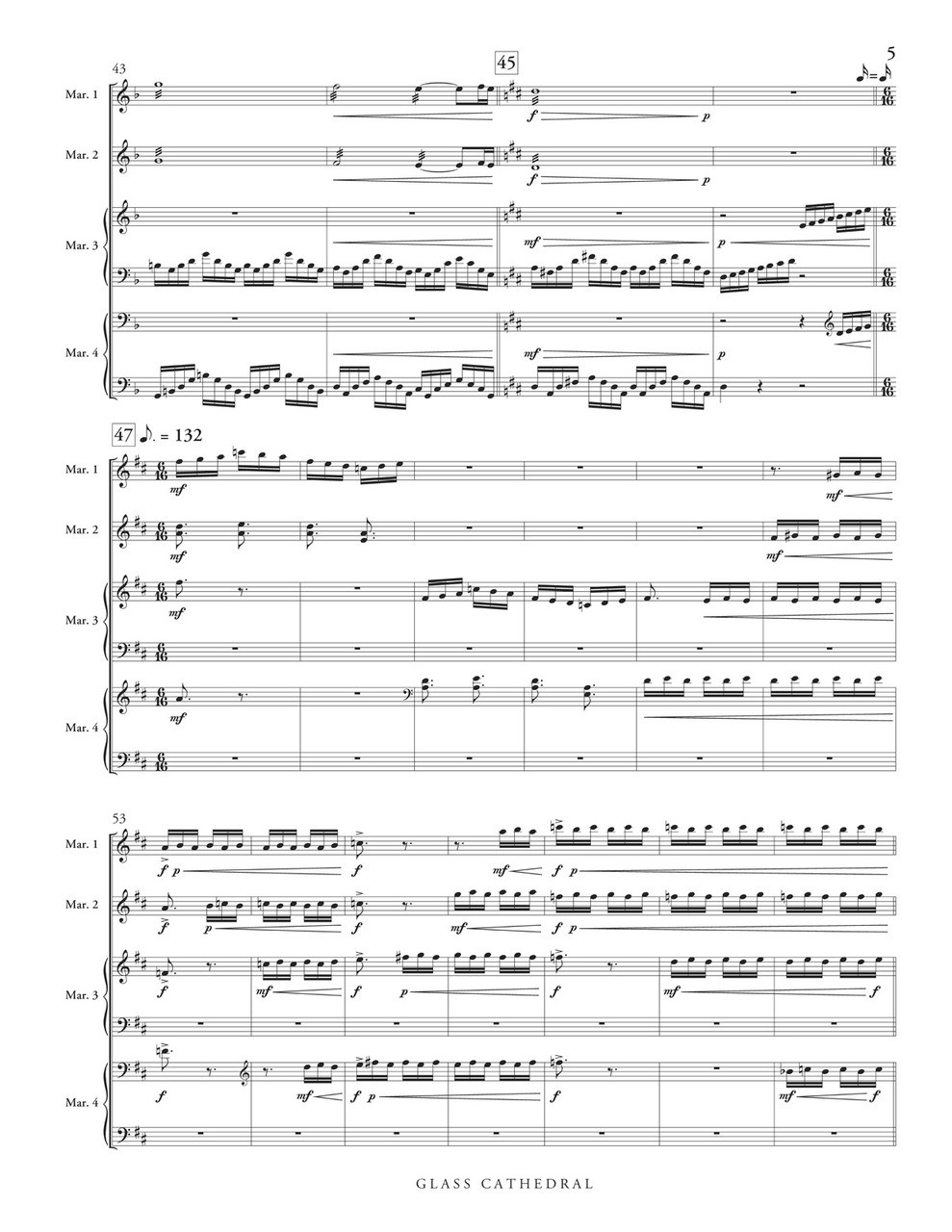
Download mp3 | Click on images to left for score sample

Rating:
Price:
$28.00
Item #:
24580D
-
Notes & Instrumentation
Glass Cathedral was commissioned by Rela Percussion with the intention of being performed on four glass marimbas. After hearing recordings of this particular instrument as well as videos and pictures, I thought immediately of the famous “Crystal Cathedral” in Garden Grove, California. The structure is made of steel with over 12,000 panes of glass and houses one of the largest pipe organs in the world and has been a perfect venue for large choirs and orchestras. Hence, Glass Cathedral seeks to reflect such a magnificent structure and performance venue by using “glittering” passages of the glass marimbas against slow and sustained organ and chant-like lines.
Genre: Percussion Ensemble | # of Players: 4
Level: Medium Difficult | Duration: 5:30
Instrumentation
Marimba 1 (4-octave)
Marimba 2 (4-octave)
Marimba 3 (4.3-octave)
Marimba 4 (5-octave)
Program Notes
Glass Cathedral was commissioned by Rela Percussion with the intention of being performed on four glass marimbas. After hearing recordings of this particular instrument as well as videos and pictures, I thought immediately of the famous “Crystal Cathedral” in Garden Grove, California. The structure is made of steel with over 12,000 panes of glass and houses one of the largest pipe organs in the world and has been a perfect venue for large choirs and orchestras. Hence, Glass Cathedral seeks to reflect such a magnificent structure and performance venue by using “glittering” passages of the glass marimbas against slow and sustained organ and chant-like lines.The work starts in G-flat Lydian mode with sixteenths against triplet eighths in the upper two marimbas and continues, almost in perpetual motion, throughout the entire piece, usually in the upper voices. Against this sonic landscape the first organ-like theme is heard in the lower two marimbas. Following, the lower marimbas work the theme antiphonally against continuous sixteenths in the upper instruments. This modulates to B-flat Lydian and the upper instruments present the theme in octaves (chant-like) accompanied by sweeping arpeggiated chords in the lower instruments. A transitional/developmental section follows in D Mixolydian mode in six-sixteen meter and modulates to F major. The lower instruments now present a second theme, hymn-like in nature, alluding to a choir and organ. The upper instruments accompany in sextuplets. This segues to A major where the lower and upper instruments play the second theme aniphonally and lead to a return of the first theme in the lowest marimba against a ostinato of sextuplets in the upper voices. Following, the upper two marimbas return to the original “glittering” pattern (sixteenths against triplet eighths) and the lower two marimbas play an organ-like passage that tonicizes C major, E-flat minor, F-sharp minor, F major and return to A major where the entire ensemble, in “tour-de-force” fashion, plays the second theme and modulates back to the coda in G-flat major. The coda consists of a pedal G-flat major chord sustained by the highest marimba against descending sixteenths (glitter) in the lower instruments, leading to a quiet and peaceful ending.
-
Product Reviews
-
Percussive Notes New Literature Review
David Gillingham is known for writing music that makes the marimba sound like a full choir or an organ. He presents another example of this in “Glass Cathedral.” For much of the work, the bottom marimba voices are given the main voices while the upper ranges accompany with sixteenth-note ostinati. This is how the piece begins: the upper two marimbas present a sixteenth-over-triplet ostinato that the composer describes as “glittering,” while the bottom voices play full organ-like sonorities in Lydian mode. From here, the work makes its way through several different keys and church modes, such as Mixolydian and Ionian. The composer also employs metric modulation to help with the transitions from one section to the other. The quartet plays in 4/4, 6/16, 12/8, then finishes the work in 4/4, keeping the sixteenth note both consistent and constant through the use of the accompanying ostinati for each section.
The performers utilize four mallets throughout the piece, regularly switching between double-vertical strokes, full-chord rolls, and independent motions to accomplish the sixteenth-note runs in all of the parts. This requires a great degree of dexterity for accuracy and for dynamics, as hitting the correct notes in a piece like this means little if they do not balance correctly with the rest of the ensemble. This is a beautifully composed work that is meant for studied keyboard percussionists due to the dexterity necessary and the musical maturity to blend together appropriately. It is also recommended that this be played in large cathedrals with great acoustics, so that the voices of the marimbas can be heard for several minutes after the performance is complete, but that is merely a suggestion.
Kyle Cherwinski
Percussive Notes
Vol. 57, No. 4, September 2019 Kyle Cherwinski on Jul 15th 2022
-