- New!
- Band
- Percussion
- Orchestra
- Brass Band
- Jazz
- Chamber
- Voice
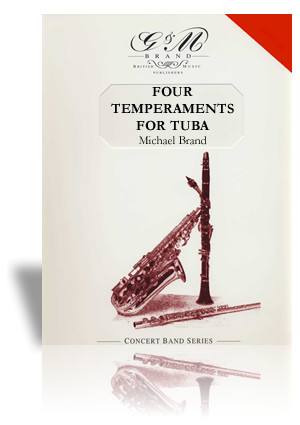

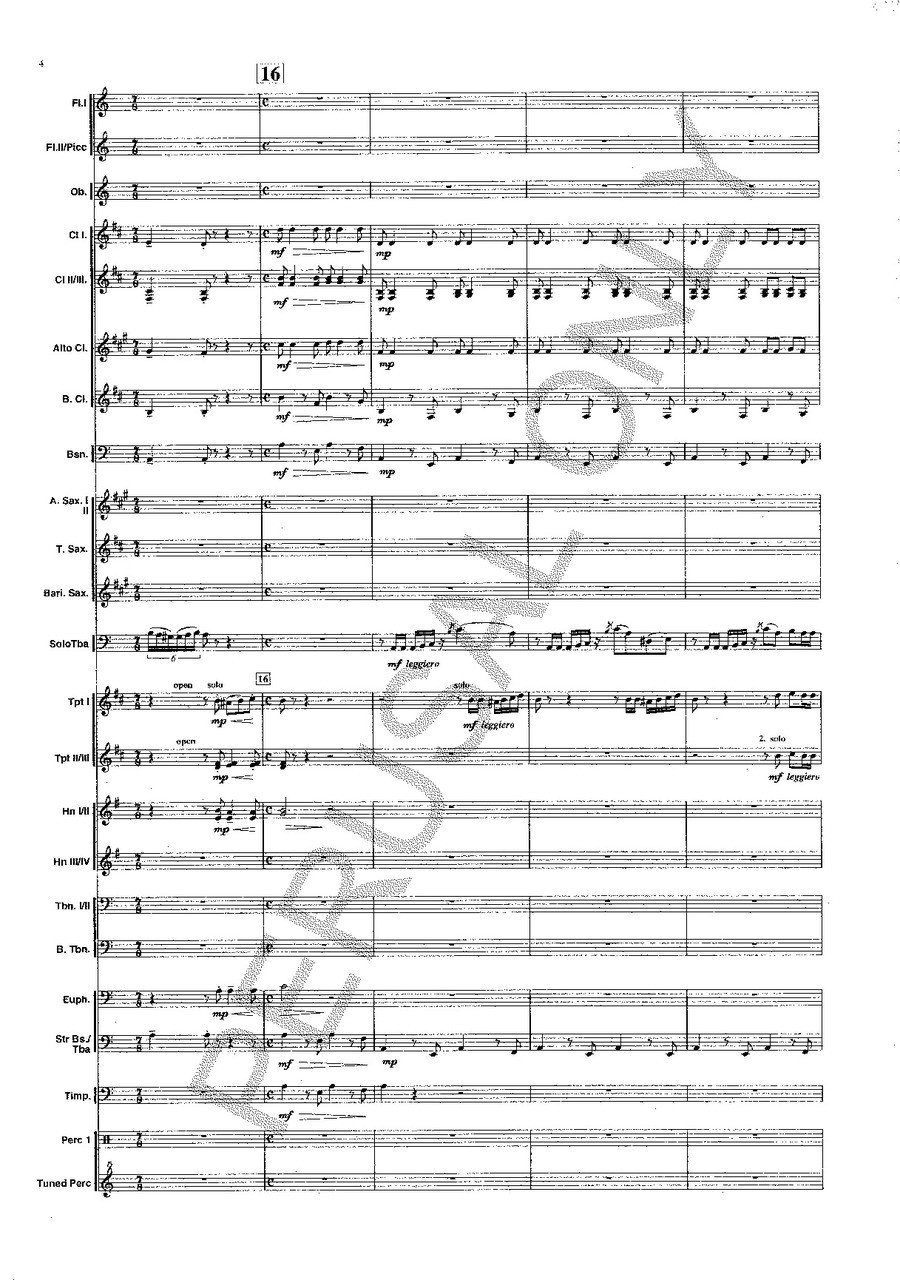
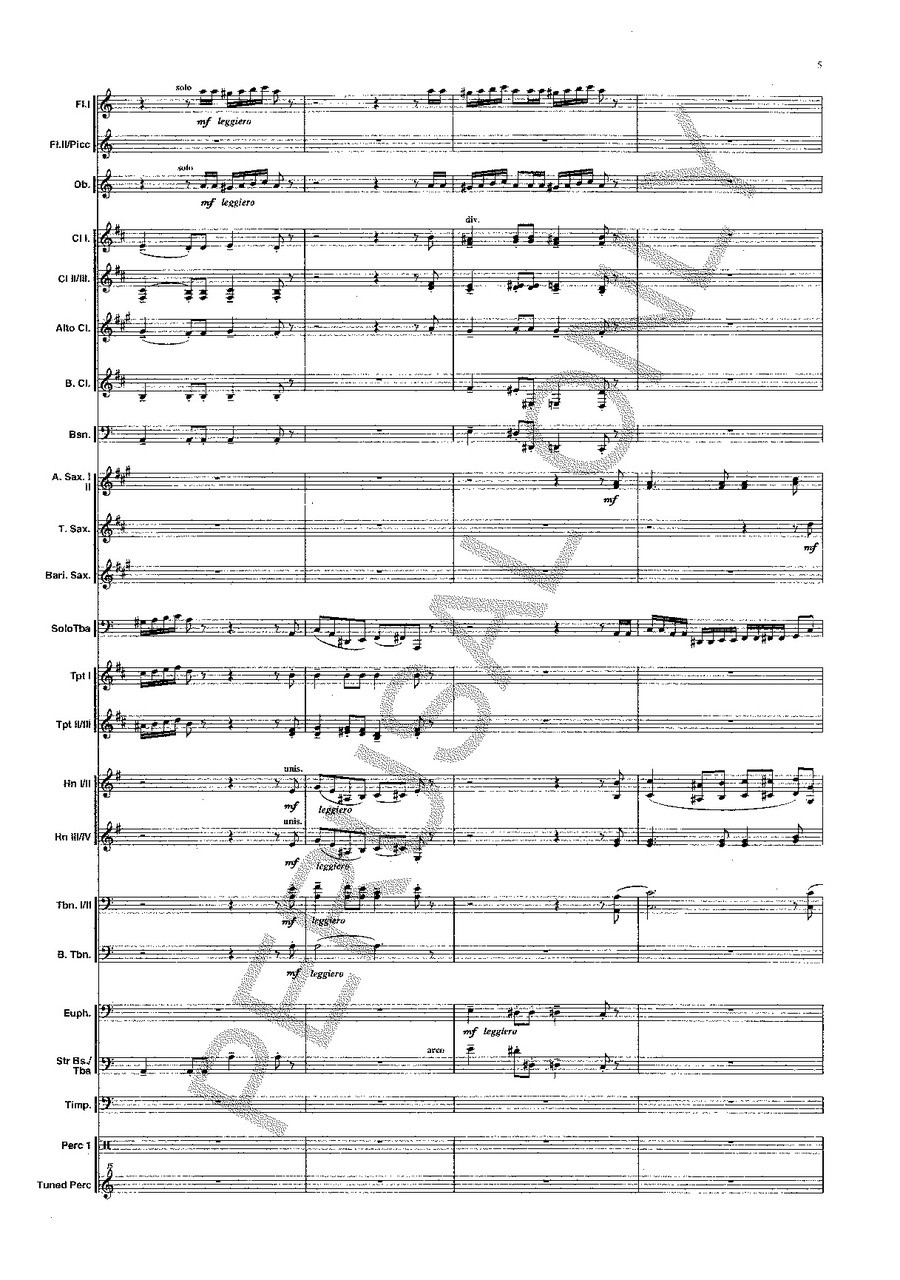
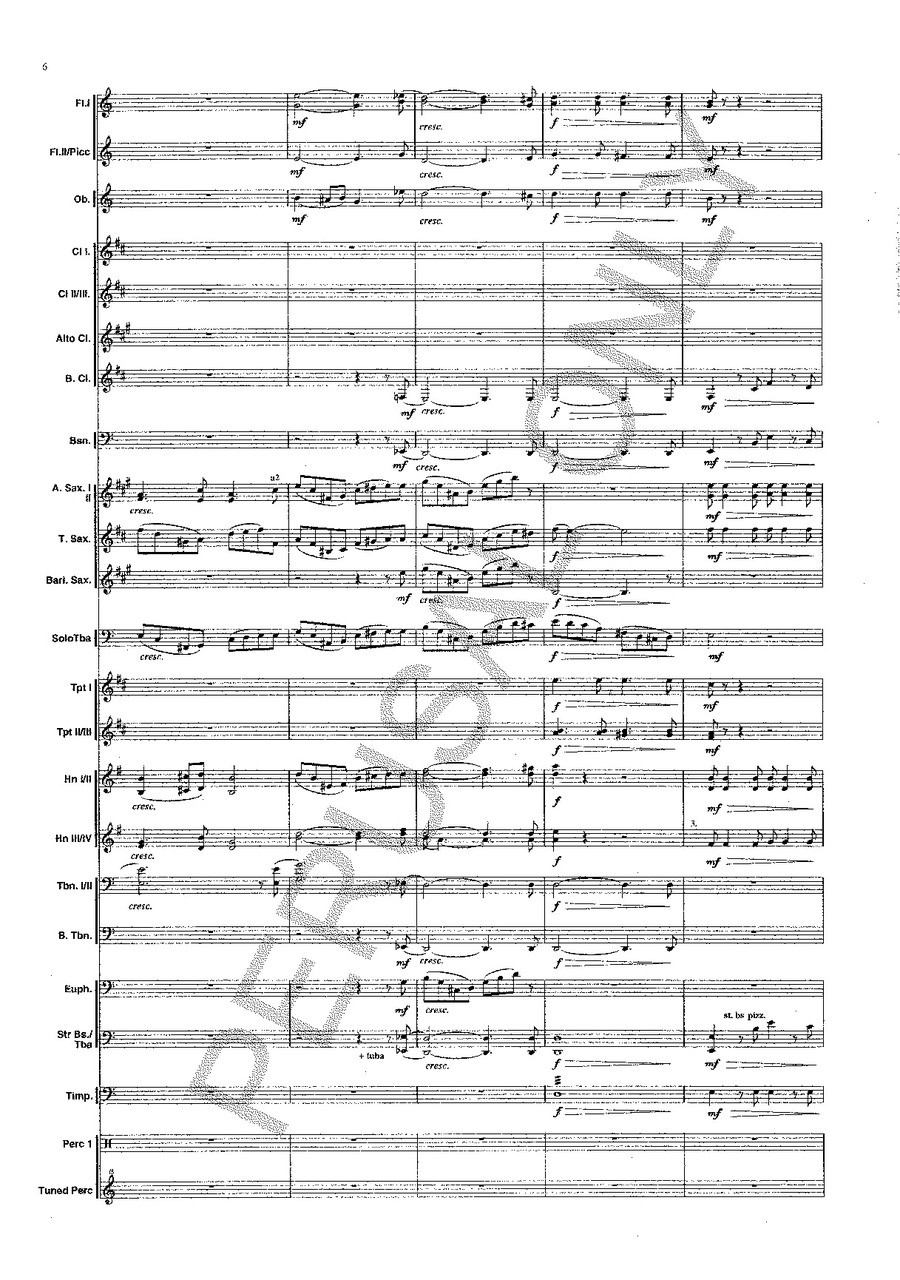
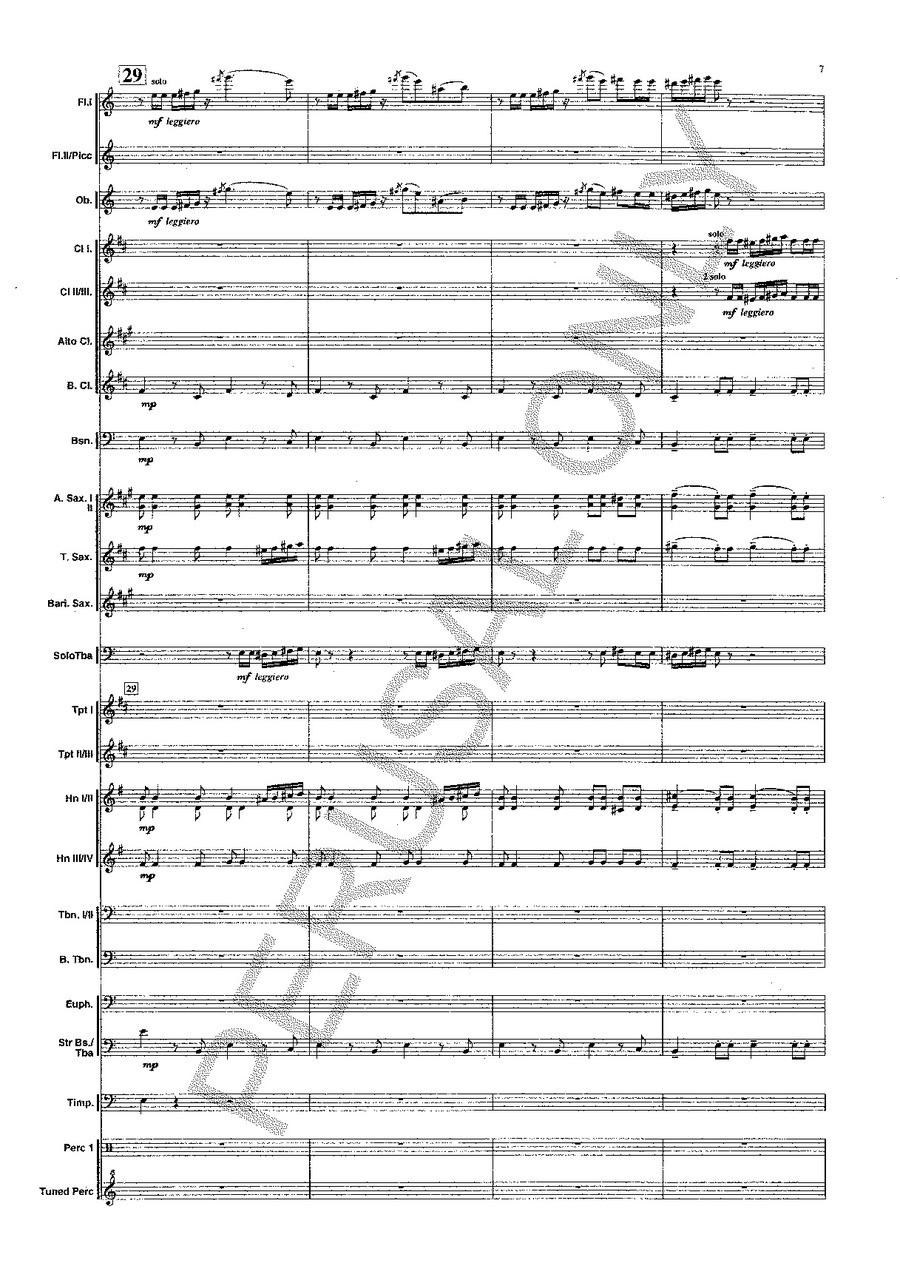
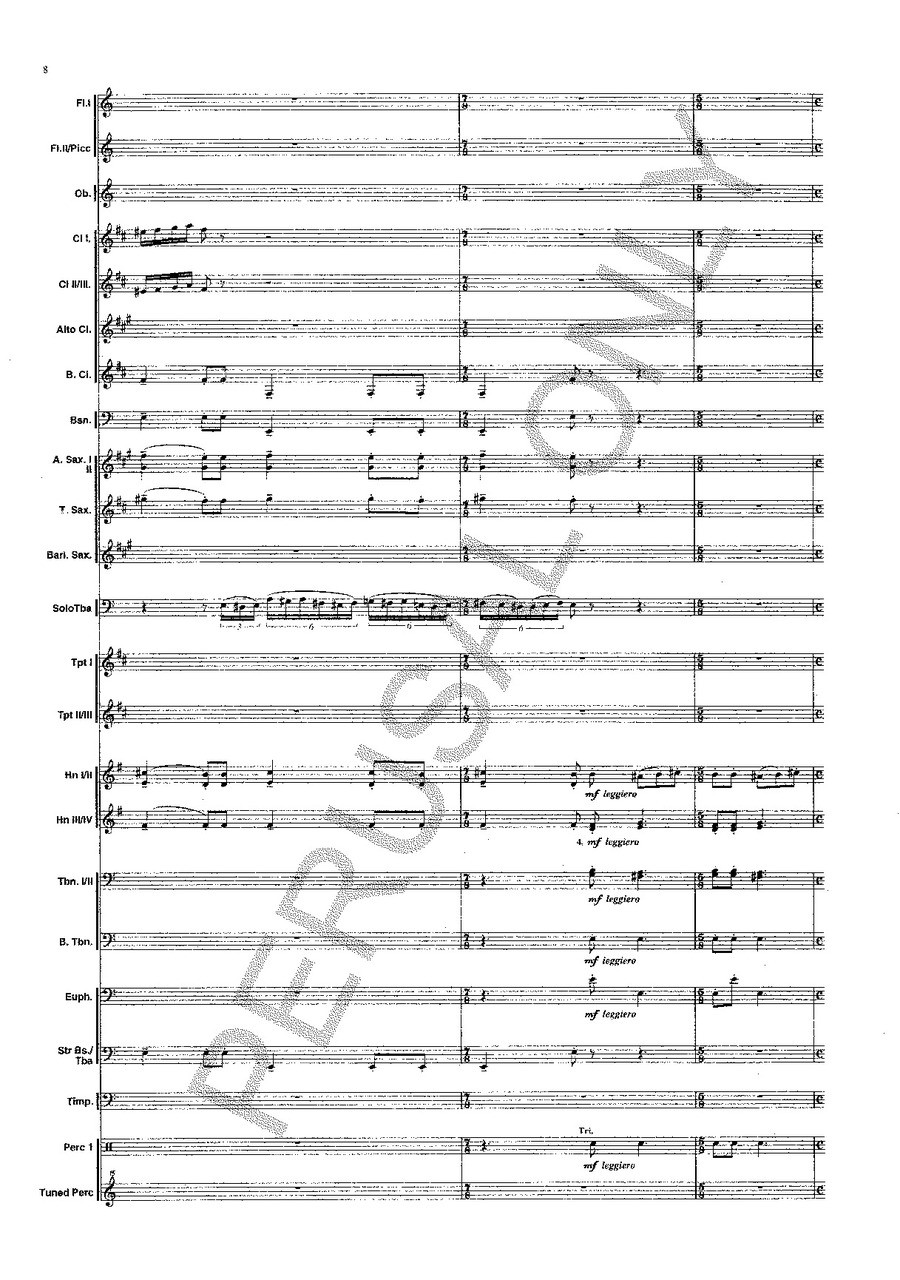
Four Temperaments for Tuba
Genre: Solo Tuba with Band
# of Players: Standard + 1
Level: 4.5 (band) / 6 (solo) | Duration: 10:30
Publisher: G & M Brand | Copyright: 1999
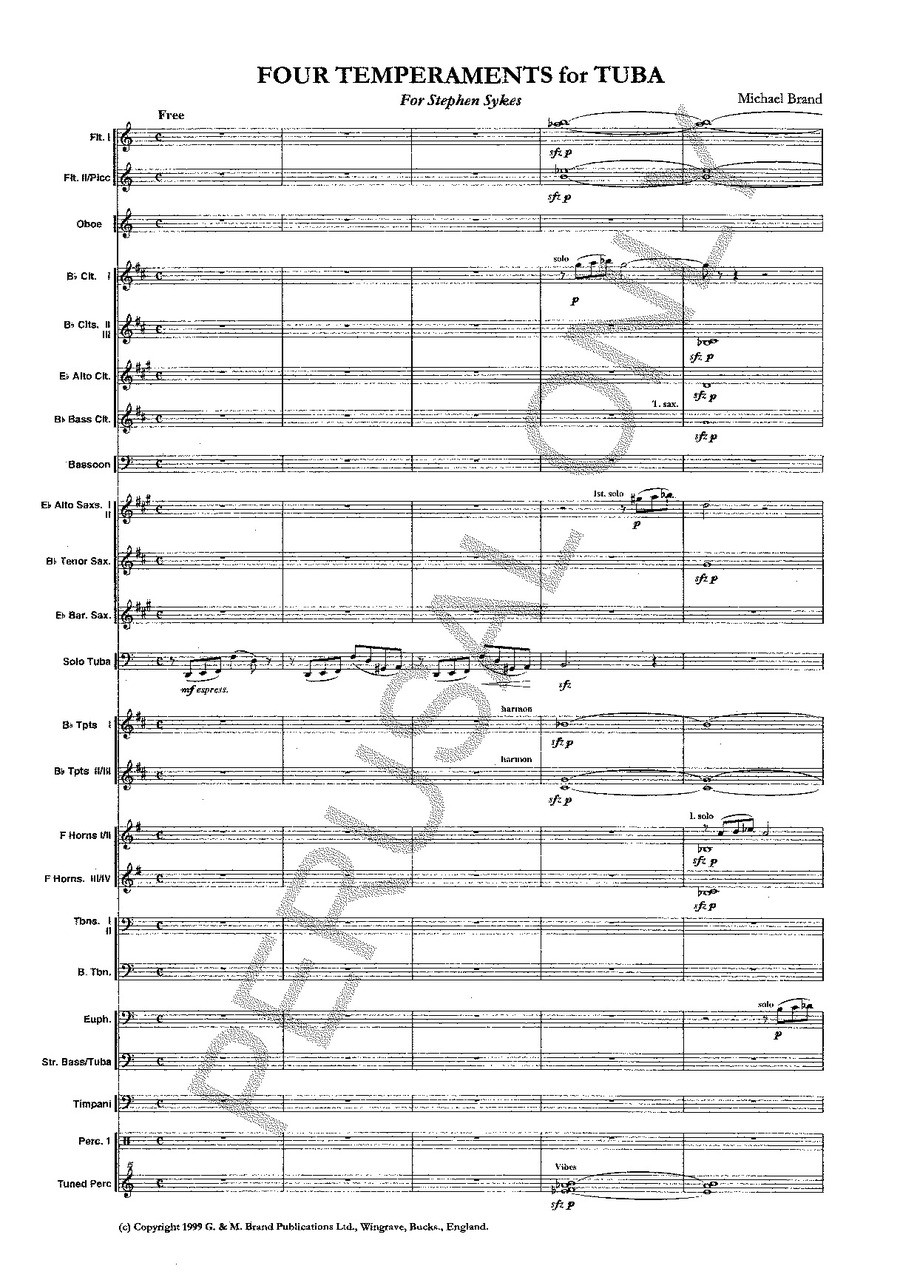
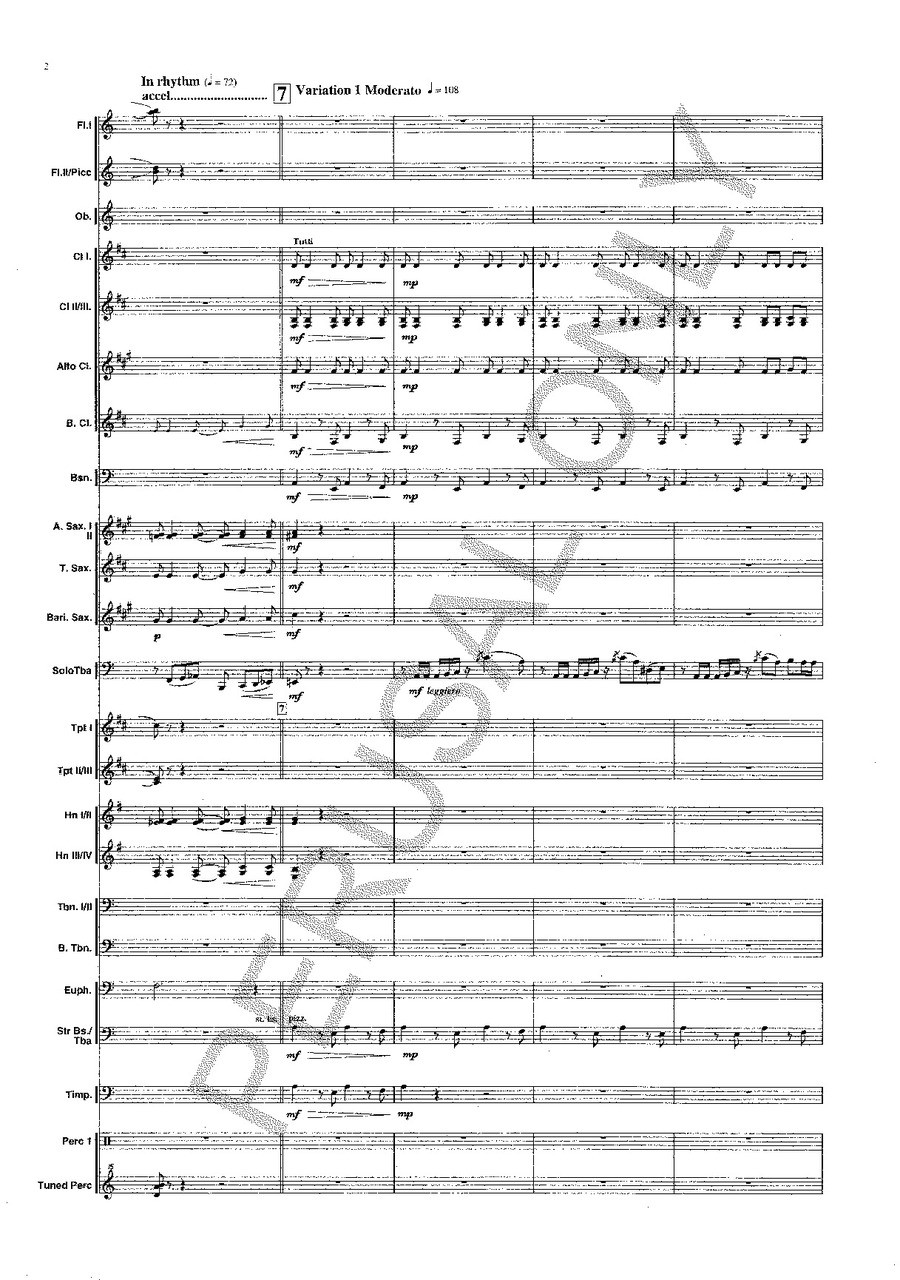
Download mp3 | Click on images to left for score sample
Price:
$130.00
Item #:
R10216
-
Notes & Instrumentation
Written to be playable by a professional soloist and a decent high school level ensemble, Four Temperaments is a theme of variations for tuba and band that takes the listener on a journey through four extremely contrasting styles (or Temperaments) – neo-classical, swing, chorale and scherzo – with plenty of opportunity for the soloist to shine and show off his or her double-tonguing chops.
Genre: Solo Tuba with Band | # of Players: Standard + 1
Level: 4.5 (band) / 6 (solo) | Duration: 10:30
Instrumentation
Flute 1
Flute 2/Piccolo
Oboe
Bb Clarinet 1
Bb Clarinet 2
Bb Clarinet 3
Eb Alto Clarinet
Bb Bass Clarinet
Bassoon
Alto Saxophone 1/2
Tenor Saxophone
Baritone Saxophone
Solo Tuba
Bb Trumpet 1
Bb Trumpet 2
Bb Trumpet 3
Horn in F 1/2
Horn in F 3/4
Trombone 1/2
Bass Trombone
Euphonium
Baritone T.C.
Tuba
String Bass
Timpani
Percussion 1 (triangle, tambourine, drum set, whip)
Percussion 2 (vibraphone, xylophone)
Program Notes
I wrote this piece at the request of the British tuba virtuoso Stephen Sykes to help fill a gap in the repertoire. We agreed that whilst there should be display elements within the piece, it should be accessible to good tuba players and tuneful at the same time.The first few bars contain the theme of the whole piece which is developed as four variations. The first variation (or Temperament) is neo-classical: conventionally written and structured. The swing variation (No. 2) is backed by a big band line-up plus horns and gives that soloist some opportunity to be flexible. Some improvisation could replace the written lines. Variation 3 is scored mostly for woodwinds (apart from a trombone chorale) and is contemplative. It could stand alone. The last variation is a scherzo, which leads to a coda (so that the soloist can show off some double-tonguing!).
The cadenza was composed by Stephen Sykes and played by him with the composer's approval. However, soloists should feel free to compose their own cadenza if they wish, but ending with bars 162 and 163 either as written or down an octave.
-
Product Reviews