- New!
- Band
- Percussion
- Orchestra
- Brass Band
- Jazz
- Chamber
- Voice
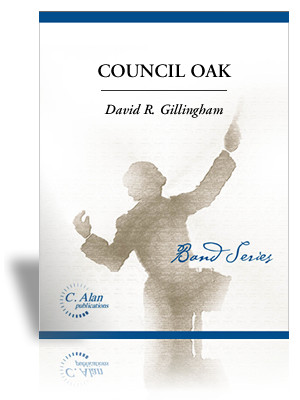
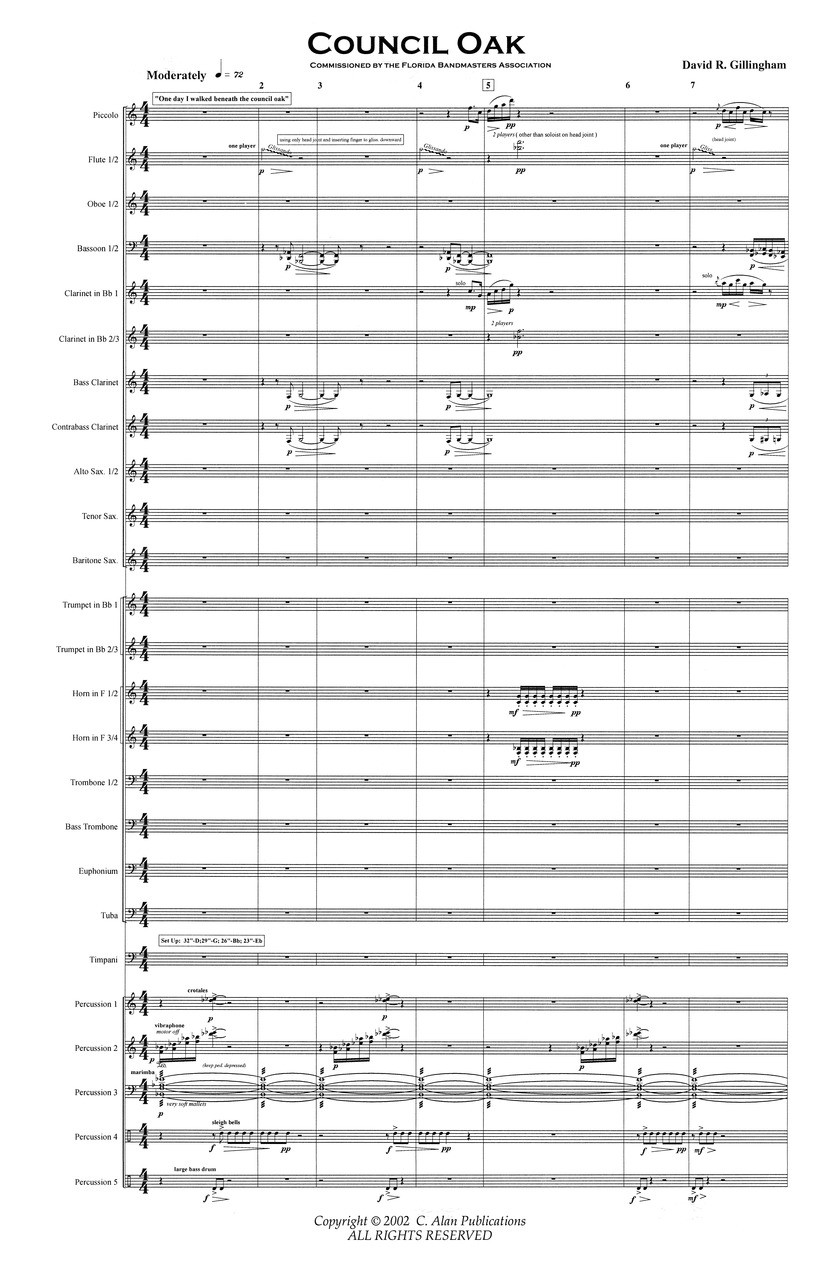


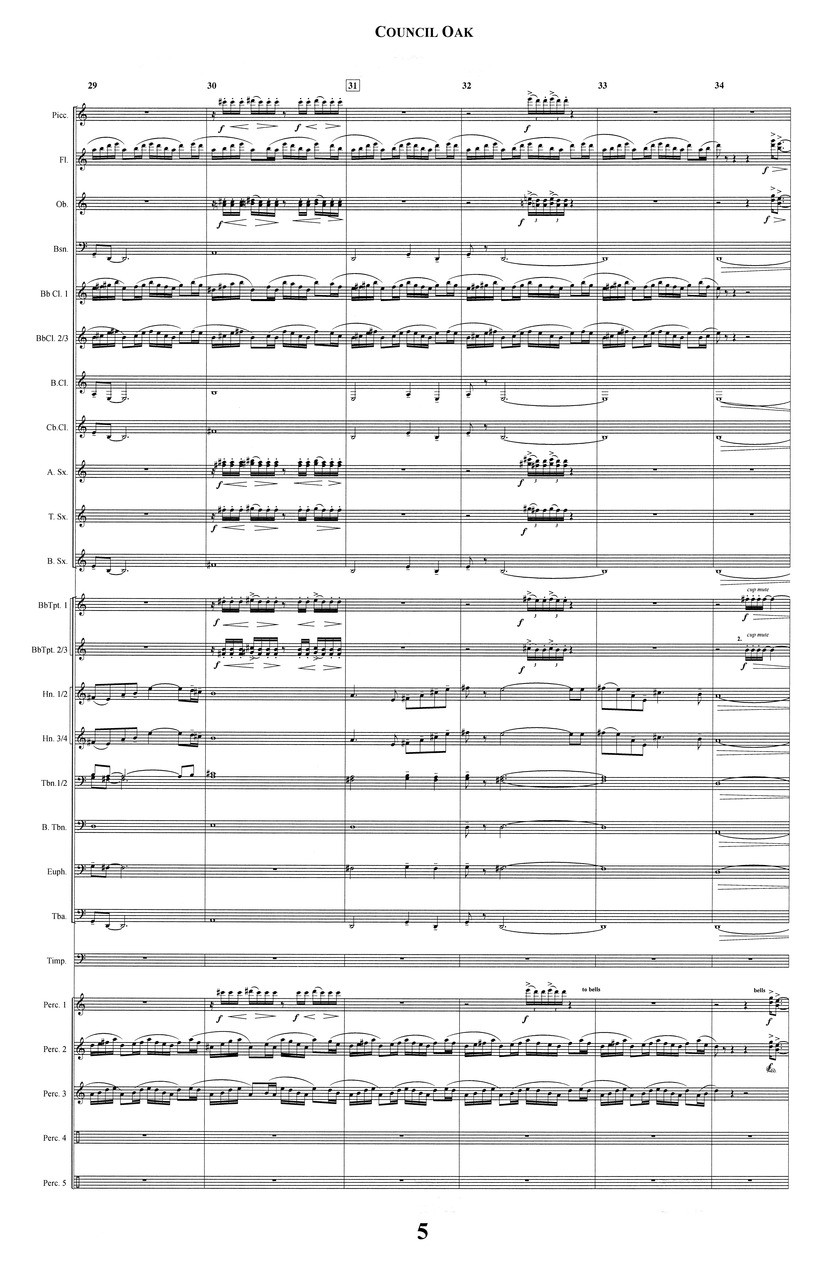

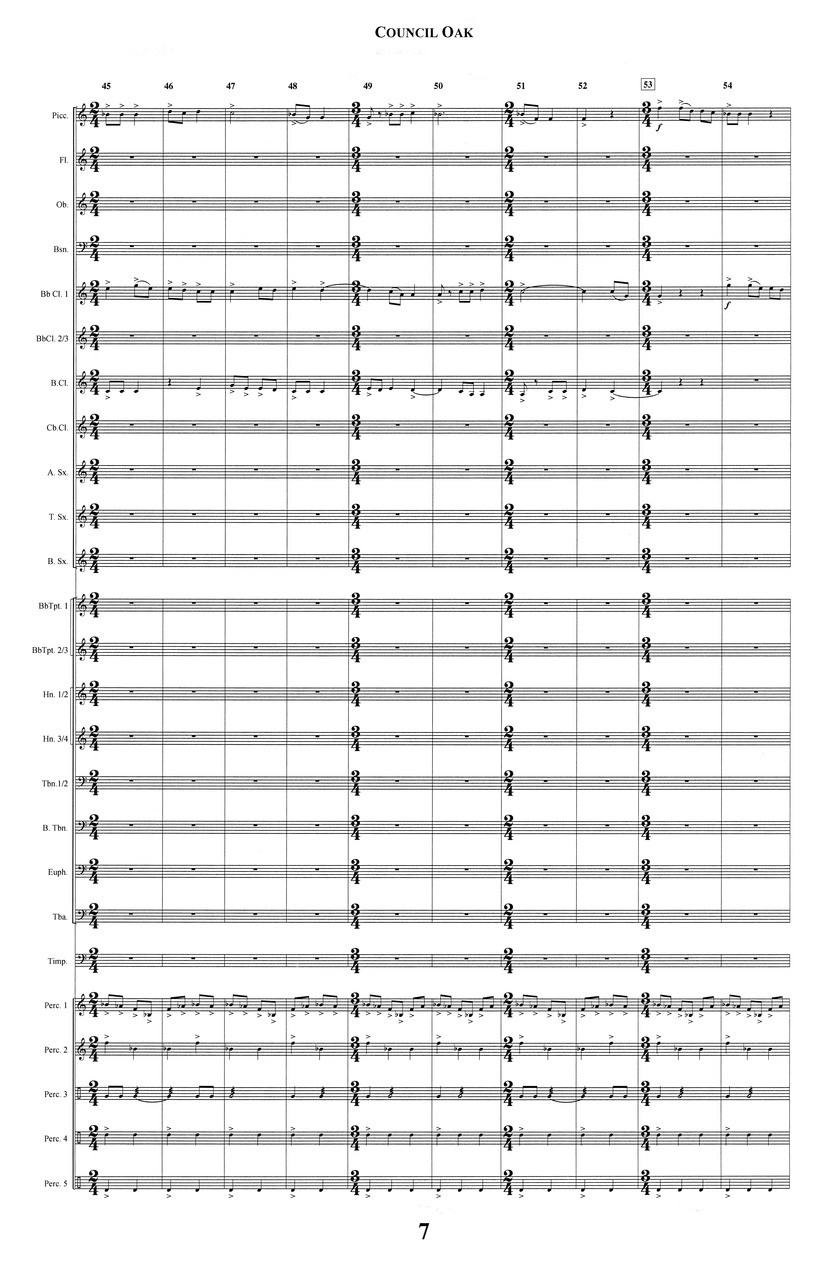
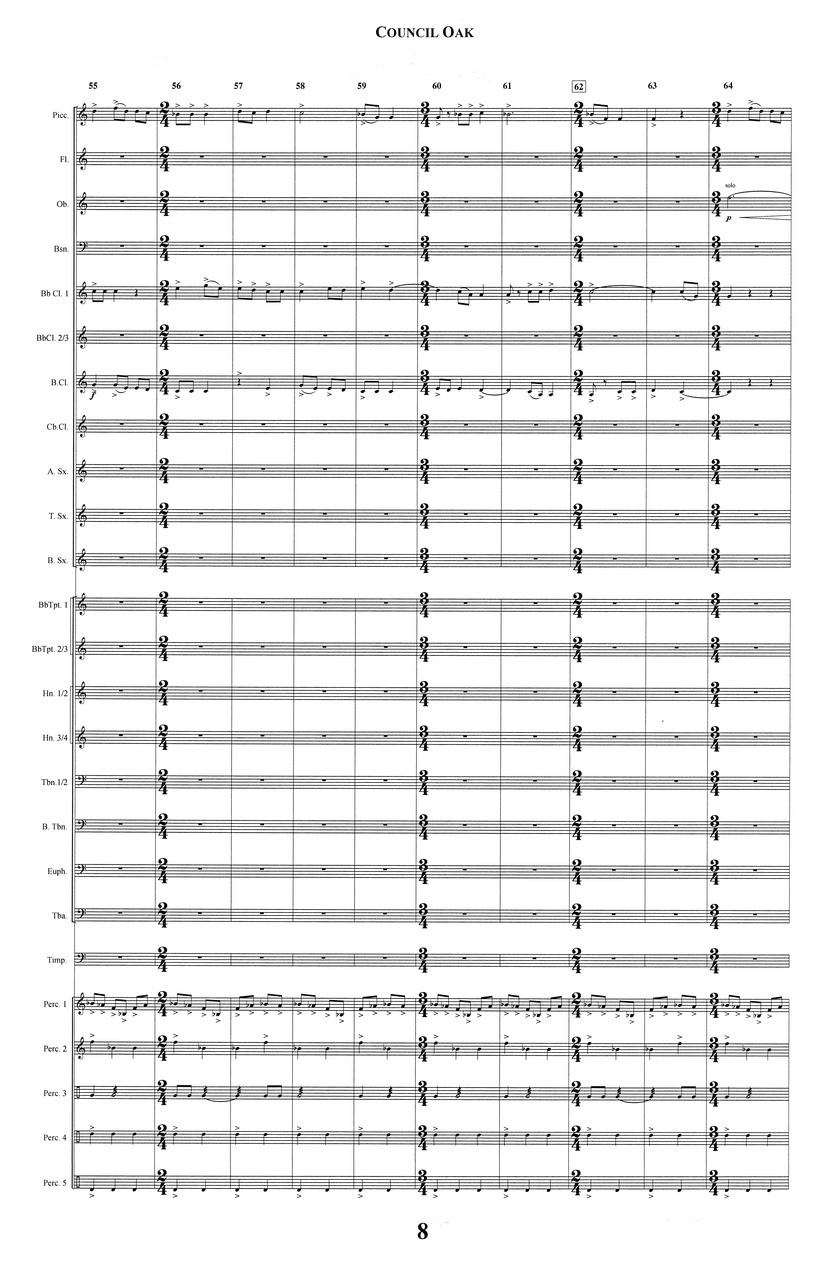
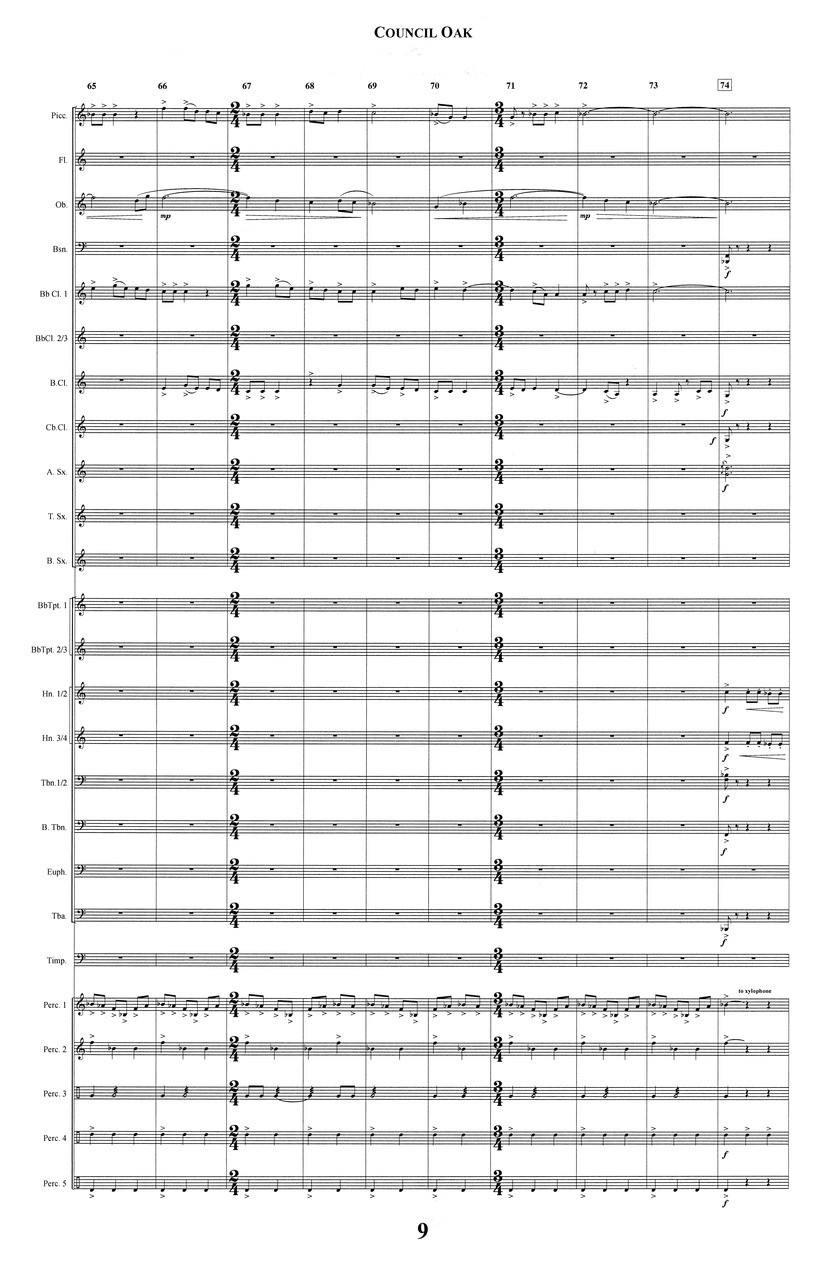
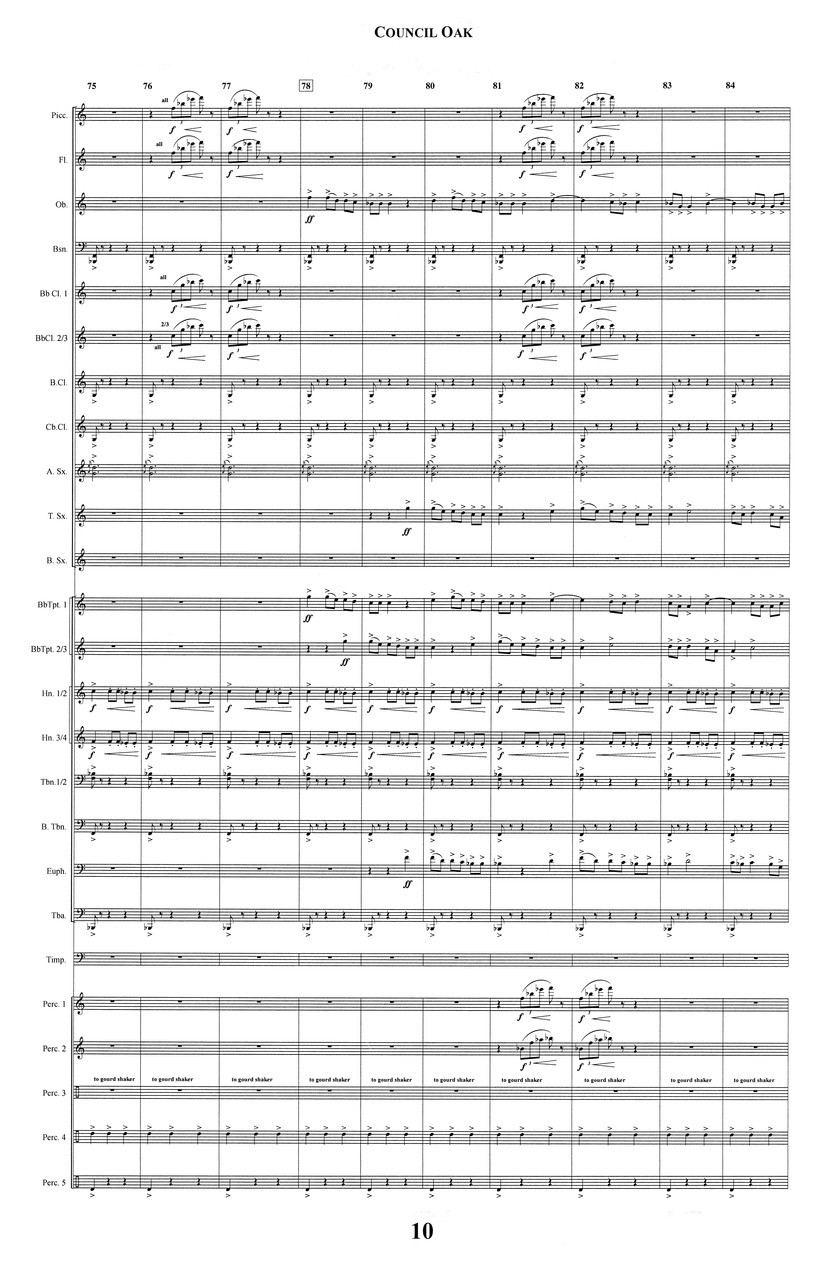
Council Oak
Genre: Band
# of Players: Standard
Level: 5 | Duration: 9:20
Publisher: C. Alan Publications | Copyright: 2002
Download mp3 | Click on images to left for score sample
Price:
$130.00
Item #:
05770
-
Notes & Instrumentation
This is absolutely magnificent! With material taken from original Seminole Indian tunes, Council Oak brings to bear the full potential of the modern concert band to create an exceptionally vivid, vibrant musical portrait of the Seminole culture. This is concert band writing at its best!
Genre: Band | # of Players: Standard
Level: 5 | Duration: 9:20
Instrumentation
Piccolo
Flute 1/2
Oboe 1/2
Bassoon 1/2
Bb Clarinet 1
Bb Clarinet 2/3
Bass Clarinet
Eb Contrabass Clarinet
Alto Saxophone 1/2
Tenor Saxophone
Baritone Saxophone
Bb Trumpet 1
Bb Trumpet 2/3
Horn 1/2
Horn 3/4
Trombone 1/2
Bass Trombone
Euphonium
Baritone T.C.
Tuba
Timpani (4 drums)
Percussion 1 (crotales, xylophone, bells, snare drum)
Percussion 2 (vibraphone, crash cymbals, hi-hat, 4 tom-toms [shared])
Percussion 3 (marimba, gourd shaker, tambourine, suspended cymbal, tam-tam)
Percussion 4 (sleigh bells, 4 tom-toms [shared], gourd shaker, chimes)
Percussion 5 (bass drum, 2 brake drums, wind chimes, triangle)
Program Notes
On the Seminole Hollywood Reservation in Florida, on the corner of U.S. 441 and Stirling Road, stands the "Council Oak" tree. During the long history of the struggle of the Seminole tribe in Florida, this oak tree was of special significance. When the Seminole tribe was faced with termination by the United States government, leaders of the tribe began meeting regularly underneath this great oak tree which helped to breathe new life back into the Seminole tribe. In 1957, the U.S. Congress officially recognized the Seminole Tribe of Florida.Council Oak was inspired by the significance of this tree and by the poetry of Moses Jumper Jr., who wrote a poem by the same name which chronicles the history of the Seminoles as told by the oak tree. The thematic material is taken from four songs of the Seminoles as officially recorded by Frances Dunsmore in his book, Seminole Music and archived in the Bureau of American Ethnology of the Smithsonian Institution. Additionally, I have composed a new theme, which I call the "Song of the Council Oak" which is indicative of Seminole and Native American melodic/rhythmic style.
- David R. Gillingham
-
Video
-
Council Oak (concert band) by David R. Gillingham
Performed by the Lakota West Symphonic Winds, conducted by Greg Snyder Published by C. Alan Publications (www.C-AlanPublications.com) On the Seminole Hollywood Reservation in Florida, on the corner of U.S. 441 and Stirling Road, stands the "Council Oak" tree. During the long history of the struggle of the Seminole tribe in Florida, this oak tree was of special significance. When the Seminole tribe was faced with termination by the United States government, leaders of the tribe began meeting regularly underneath this great oak tree which helped to breathe new life back into the Seminole tribe. In 1957, the U.S. Congress officially recognized the Seminole Tribe of Florida. Council Oak was inspired by the significance of this tree and by the poetry of Moses Jumper Jr., who wrote a poem by the same name which chronicles the history of the Seminoles as told by the oak tree. The thematic material is taken from four songs of the Seminoles as officially recorded by Frances Dunsmore in his book, Seminole Music and archived in the Bureau of American Ethnology of the Smithsonian Institution. Additionally, I have composed a new theme, which I call the "Song of the Council Oak" which is indicative of Seminole and Native American melodic/rhythmic style. - David R. Gillingham Instrumentation: Piccolo Flute 1/2 Oboe 1/2 Bassoon 1/2 Bb Clarinet 1 Bb Clarinet 2/3 Bass Clarinet Eb Contrabass Clarinet Alto Saxophone 1/2 Tenor Saxophone Baritone Saxophone Bb Trumpet 1 Bb Trumpet 2/3 Horn 1/2 Horn 3/4 Trombone 1/2 Bass Trombone Euphonium Baritone T.C. Tuba Timpani (4 drums) Percussion 1 (crotales, xylophone, bells, snare drum) Percussion 2 (vibraphone, crash cymbals, hi-hat, 4 tom-toms [shared]) Percussion 3 (marimba, gourd shaker, tambourine, suspended cymbal, tam-tam) Percussion 4 (sleigh bells, 4 tom-toms [shared], gourd shaker, chimes) Percussion 5 (bass drum, 2 brake drums, wind chimes, triangle)
-
-
Product Reviews